Best Strength Training Program: What to Compare
Best Strength Training Program: What to Compare

The best strength training program is the one whose format matches the decisions you need help making. Choose a self-guided template for control, an app-based program for structured delivery and records, or a coach-led program for human interpretation and adaptation. There is no universal winner.
For adults comparing Stronger by Science, Boostcamp, and Future, start with progression, substitutions, feedback, schedule, equipment, and accessibility. Then compare cost and exit terms. This guide uses public provider disclosures and independent guidance; it is not hands-on testing or a workout prescription.
Quick Verdict: Choose Fit Before Branding
Paying more helps only when the added service addresses your actual support gap.
ACSM’s healthy-adult guidance emphasizes consistent participation and individualization. It supports asking whether a program fits your circumstances, not choosing a particular brand.

Decide What Kind of Program You Need
The Program Format Ladder shows who carries each responsibility.
Self-Guided Templates
A template supplies structure while leaving you responsible for using it. The SBS program bundle describes editable programs with progression responsive to reported performance. That suits someone comfortable understanding inputs and checking changes.
It does not promise individual coaching with the bundle. If you cannot explain why a suggested adjustment appeared, extensive customization may add uncertainty. For access-focused comparisons, see free muscle-building workout plans.
App-Based Programs
An app brings instructions and records into the same daily workflow. Boostcamp programs let users browse by goals and experience, then follow programs and log workouts. Its Pro page distinguishes a questionnaire-based program builder from manually creating a program.
Neither a library listing nor a coach’s name establishes personal feedback from that coach. Choose this format when delivery and logging solve your problem; inspect the specific program before relying on it. The weight training app guide covers the wider software choice.
Coach-Led Programs
A coach-led program adds someone who can discuss why the plan should change. Future coaching describes an initial virtual call, app communication, and ongoing revisions informed by member feedback.
This may help with schedule changes or uncertain adjustments, within what you communicate and the coach can observe. Messaging is not continuous supervision. Services can span categories; these examples compare their stated experiences. The illustrations are conceptual.

Compare Programs With Consistent Criteria
Compare the same training problem across every candidate.
Progression and Exercise Substitutions
Ask what information changes the plan, who interprets it, and what happens when progress or recovery differs from expectations. A useful strength training workout plan should make holding steady, simplifying, or seeking help understandable rather than treating every entry as a demand to increase.
An available exercise is not automatically an equivalent substitute. Check its purpose, equipment, and demands; seek qualified guidance when you cannot judge the change. For a muscle-building goal, the muscle-building plan guide examines structure in more detail.
Coaching Access and Feedback
The useful distinction is feedback you can act on. A recorded number or demonstration differs from a person discussing your attempt.
SBS’s bundle does not promise individual feedback. Boostcamp’s library experience does not establish access to the program author. Future provides a coaching relationship, but its public description does not settle every response-time or observation requirement.
For all three, identify who can answer a programming question, how you show the problem, and what happens if the answer is unclear. If you need in-person technique observation, establish that service separately rather than assuming remote messaging supplies it.
Schedule, Equipment, and Accessibility
Use the week you can sustain, including preparation and recovery. Ask what happens after a missed session and whether a shorter or simpler supported option exists. A plan that repeatedly collides with available time needs reconsideration, not merely more reminders.
SBS describes schedule and exercise customization. Boostcamp’s fit depends on the program selected and the edits its tools support. Future describes coach revisions when circumstances change. In each case, identify who resolves the change before committing.
For device access, Boostcamp lists iOS and Android and requires an account for its app. Future’s help materials cover both phone platforms and make a smartwatch optional. SBS’s bundle page does not give a complete device specification. None of those statements establishes full caption, screen-reader, or offline coverage; inspect the exact interface you need.
Price, Trial Terms, and Cancellation
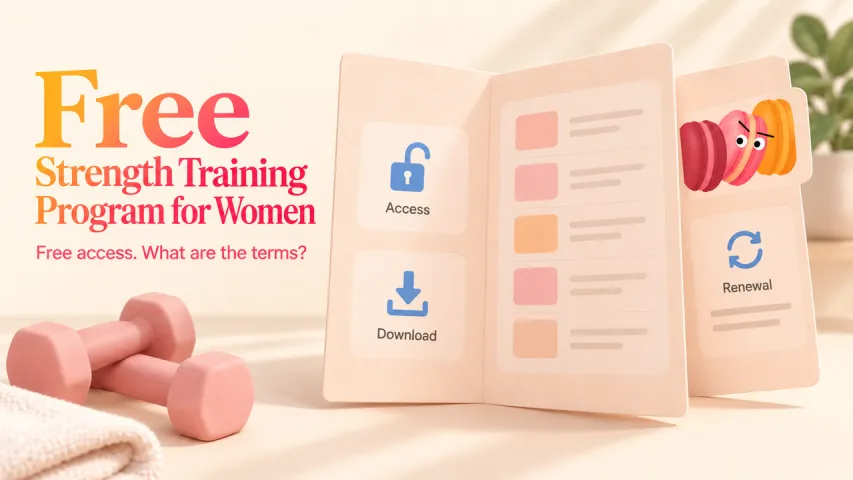
After training fit, compare these advertised US-dollar commitments.
SBS’s checkout requests name and email. Future’s prepaid offers have separate early-exit calculations. Check your offer, renewal, and refund route; confirm cancellation through the billing service.

Check the Evidence Behind Program Claims
Provider disclosures describe service mechanics, not independent proof of superior strength outcomes.
ACSM’s healthy-adult synthesis supports individualization and consistency; it is not a head-to-head test of these candidates. The CDC activity guidance places muscle-strengthening within broader adult activity. Benefits of that broader activity cannot all be credited to a branded resistance training program.
For a superiority claim, look for a relevant population, outcome, comparator, and timeframe. Missing service-specific evidence leaves the claim unresolved. Ratings and testimonials do not resolve it.
Match the Program to Your Experience
A strength training program for beginners should make starting assumptions, instructions, and the route to help clear. If you cannot understand the effort inputs or exercise setup, prioritize appropriate teaching before customization.
Independent intermediate users may value transparent rules and durable records. People who need frequent adaptations may prefer discussing changes with a qualified person, regardless of experience.
Difficulty recovering, repeated confusion, or a plan that cannot accommodate ordinary interruptions are reasons to reassess its fit. Pain, injury, or uncertainty about safe participation should pause the affected activity and prompt appropriate qualified guidance. A clinician or physical therapist should address medical or rehabilitation questions; a subscription cannot establish readiness.
Build Your Shortlist Without Declaring One Winner
The objective is a usable choice with a known decision owner. Apply this Shortlist Evidence Card to the same problem for each candidate.
Hypothetical example: You miss a session and temporarily lose access to familiar equipment. You want to continue an existing plan without guessing at a replacement.
Action: inspect the relevant instructions or ask the responsible person. Check: can you explain the next step and who approved it? If the answer remains guesswork, hold that candidate and seek clarification or a service with suitable support.
The comparison is done when the important constraints are addressed, remaining unknowns are explicit, and the commitment is understood. Among online strength training programs, the best-fit next check may be template comprehension, an app’s editing behavior, or a coach’s feedback agreement.

FAQ
Can a purchased program be shared with family members?
Check before choosing for a household. SBS does not disclose a family license on the bundle page. Boostcamp prohibits account sharing without authorization; Future grants personal, non-transferable access. Ask about separate users rather than assuming one purchase covers everyone. These are provider-specific terms, not universal legal rights.
What happens when a program creator stops providing updates?
Separate local files from hosted access and support. SBS gives no clear bundle-update cadence; Boostcamp’s terms allow content removal. Future’s ongoing coaching is not a perpetual archive promise. Before choosing a long-term resource, ask what remains usable if updates stop and retain permitted records in a usable format.
Can users switch coaches without losing program history?
Future documents free switches during active membership through Change Coach. Its help page says the new coach reviews workout history and your profile. If continuity affects your choice, confirm whether messages, attachments, and private coach notes transfer too; those details are not fully specified there.
Who owns notes added inside a coach-led training platform?
Future distinguishes user content from its own intellectual property while taking a broad service-use license. Before storing sensitive coaching notes, distinguish your entries from a coach’s records and ask who can access or retrieve them. Ownership does not itself establish confidentiality or a complete export.
Can wearable data be exported from an online program?
Verify the needed file before choosing around an existing device. Boostcamp describes HealthKit and Health Connect sharing; Future documents wearable connections. Neither reviewed route establishes a complete wearable-file export. Ask which fields, format, and dates are included. SBS’s editable templates do not establish wearable support.
Conclusion
Choose the format that resolves your training decisions with appropriate support. The best strength training program for you combines useful progression and feedback with practical fit, clear responsibilities, and manageable commitments.
Previous posts








Apply to become Macaron's first friends
Read & discover
עוזר אישי מבוסס בינה מלאכותית
Free calculators


