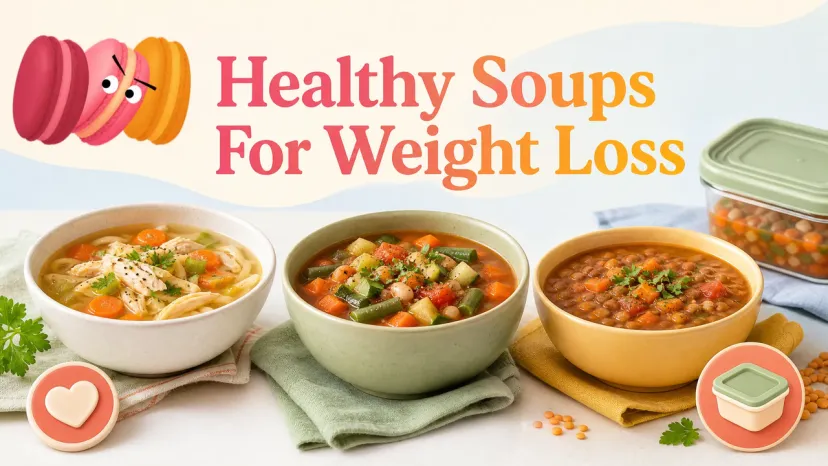
A pot of soup rarely keeps one job. It may begin as Tuesday dinner, become Wednesday lunch, and end as a smaller bowl beside toast on Thursday. The recipe has not changed much, but the role of the soup has.
That is why healthy soups for weight loss are better understood as meal patterns than as a list of low-calorie recipes. A bowl that works as a complete dinner may contain beans, chicken, noodles, rice, or another substantial ingredient. A lighter broth may work well beside a sandwich. Neither version earns a better grade simply because one has fewer calories, and no single soup can determine a person’s weight outcome.
Useful soup notes can stay short: what kind of soup it was, whether it stood alone, what went with it, and whether another meal sounded appealing soon afterward. That record gives the bowl context instead of saving “one bowl of soup” as though every ladle were interchangeable.
Soup Can Be Light, Filling, or Both
“Light” can describe texture, ingredients, portion, or how a meal feels afterward. It does not automatically mean complete, satisfying, or appropriate for every appetite.
A clear vegetable broth may leave someone looking for more food soon, while a chunky lentil soup may carry lunch. A creamy soup may still need a side to feel complete. A calorie value describes energy; it does not describe the bowl’s meal role or guarantee how satisfying it will feel to a particular person.
The evidence supports a narrower point. A USDA evidence review found that portion size and energy density independently affect energy intake in adults and older adults. That does not make every soup a weight-loss food or predict one person’s fullness. It means portion and composition belong in the picture alongside the bowl’s role and the person’s observed response.
This is where lists of low calorie soup ideas or healthy soup recipes for weight loss become less useful. They may treat every “healthy chicken soup for weight loss” as equivalent even when the ingredients and meal roles differ.
For tracking purposes, begin with one decision: What job did the soup do?
Main meal: the bowl carried most of lunch or dinner.
Meal base: the soup was central but needed a planned side.
Side or starter: it supported another main dish.
Snack or comfort bowl: it was a smaller eating occasion rather than a full meal.
The role keeps a small side from being recorded like dinner or a substantial bowl from being dismissed as “just soup.”
What Makes a Soup Work as a Meal
Soup holds ingredients together, but each bowl may contain different proportions. Instead of rebuilding the recipe, look for meal anchors: substantial ingredients, meaningful additions, and sides.
Protein, beans, noodles, rice, cream, and toppings
Protein foods, beans, noodles, rice, potatoes, cream, cheese, oil, and toppings can all change what one bowl represents. They do not need to be treated as problems. They need to remain visible in the description.
Fiber can add useful context without turning the bowl into a formula. Beans, lentils, vegetables, and whole grains may contribute fiber; the MedlinePlus fiber overview explains that dietary fiber can increase fullness and also advises increasing it gradually because a rapid change may cause gas, bloating, or cramps. That general guidance does not guarantee that every fiber-containing soup will satisfy every appetite.
Use a quick ingredient map:
Soup layer
What to notice
Useful note
Protein or beans
chicken, fish, meat, tofu, lentils, or beans
absent, light, or substantial
Starch
noodles, rice, potatoes, dumplings, or bread on the side
part of soup or added beside it
Creamy element
cream, coconut milk, cheese, blended beans, or yogurt
built into recipe or added later
Cooking fat
oil, butter, rendered fat, or unknown restaurant preparation
known, estimated, or unknown
Toppings
cheese, tortilla strips, croutons, seeds, sour cream, or herbs
meaningful addition or garnish
Side
toast, sandwich, salad, fruit, or another dish
optional extra or part of the meal
The table is a tracking aid, not a formula. If a light soup repeatedly leaves you hungry, the note points toward meal context rather than failed willpower.
For a generic nutrition comparison, USDA FoodData Central can help distinguish broth, canned soup, homemade-style entries, and different preparations. For a branded can, carton, or frozen soup, the current package label should take priority over a generic database match. The FDA serving-size guidance explains that label values usually refer to one serving and that a serving size is not a recommendation of how much to eat. Record the amount actually used, including any additions, rather than treating the printed serving as the bowl’s required size.
Brothy, creamy, chunky, or blended
Brothy soup may be simple or may contain generous noodles, rice, dumplings, meat, or oil. Creamy soup may use dairy, coconut milk, blended vegetables, beans, or a combination. Chunky soup makes some ingredients easier to see, although each ladle may still differ. Blended soup hides the proportions, so the recipe, package label, or saved batch entry becomes more useful than visual guessing.
Avoid using “brothy” as shorthand for low calorie or “creamy” as shorthand for unhealthy. Those words describe format. A rough estimate should account for the ingredients you know and leave room for what you do not.
At a restaurant, identify the broad family first, then include obvious bread, cheese, oil, noodles, or toppings. Aim for a credible category, not a reconstruction of the kitchen.
Save Soup as a Repeatable Meal Pattern
Soup becomes easier to track when the saved entry remembers its role, not only its recipe name. A useful Soup Role Check has five fields:
soup name + bowl role + substantial ingredients + sides or toppings + leftover plan
Examples:
chicken and vegetable soup + main lunch + chicken and potatoes + bread + two lunches remaining
tomato soup + meal base + blended soup + grilled sandwich + dinner only
lentil soup + main dinner + lentils and vegetables + yogurt topping + freeze extra portions
packaged vegetable soup + side + label entry + toast and eggs + half carton left
Save the base batch once, then record what changed. Wednesday’s lunch might include bread; Thursday’s smaller bowl might become a side.
For soup meal prep, note the date made, approximate portions, storage location, and additions made after cooking. Keep person-specific noodles, cheese, or toppings outside the shared base entry.
Food safety should not be improvised from an old meal note. The USDA’s leftovers and food safety guidance advises dividing a large pot of soup into smaller, shallow containers for rapid cooling and refrigerating leftovers promptly. It also gives current storage and reheating guidance. Use the official safety instructions rather than treating a saved date as proof that a soup is still safe.
The distinction from crockpot content is simple: crockpot guidance owns the cooking method. This page owns soup format, bowl role, fullness, packaged products, and leftovers.
Watch Comfort and Fullness, Not Just Numbers
Soup can be easy to eat after a tiring day, convenient to share, or economical across several meals. Comfort is part of why it gets repeated.
Fullness also deserves a neutral note. After a soup meal, try one of four observations:
satisfying as served
wanted a side
hungry sooner than expected
too heavy for that occasion
These are not scores, diagnoses, or proof of weight change. They distinguish “I like this soup” from “this setup works as lunch.” If it is comforting but not sufficient alone, change its role next time. Treat the note as an observation about one occasion, not a promise that the same bowl will feel identical another day.
Sodium requires a separate boundary. Packaged broths, bouillon, canned soups, sauces, cheese, and processed meats can contribute sodium, and products with similar names can differ. MedlinePlus lists canned soups and bouillon among foods that can contain added sodium; see its sodium guidance. For ordinary tracking, check sodium per serving and the number of servings actually used; do not assume every broth or canned soup shares one value.
A food tracker should not set an individualized sodium limit or interpret symptoms. If a clinician has given you a sodium or fluid restriction, or if you have a medical concern affected by sodium, follow that care plan and ask the clinician or registered dietitian how soup should be handled. A general article cannot translate a label into personal medical advice.
If two reasonable entries would not change a useful decision, choose one and mark it rough. If logging creates anxiety, compensation, or pressure to make every bowl lighter, step back and seek qualified support.
How should users verify nutrition when using packaged broth or canned soup?
If the label is missing or unreadable, look for the exact product and package size on the manufacturer’s current page or ask the manufacturer. Do not copy values from a similar flavor, an older package, or another brand. Mark any temporary match as rough, then replace it when the exact label is available.
When should soup content link back to crockpot or dinner pages instead?
When one meal raises both questions, link to the page that owns the reader’s next action. Use the dinner guide for balancing the evening meal and the crockpot page for preparation timing or method. Keep this page as the record of bowl role and soup format instead of duplicating either set of instructions.
When should sodium or medical concerns be handled outside a food tracker?
If a saved label value seems to conflict with a prescribed limit, symptoms, or professional instructions, stop interpreting it in the tracker. Bring the exact product, amount used, and care instructions to the clinician or registered dietitian. Do not average conflicting limits or turn a general daily value into a personal target.
How should creamy vs brothy soups be logged differently?
For a blended or restaurant soup with an unknown base, choose the closest broad category and mark cream, oil, or portion details as unknown. Do not infer dairy from color or thickness. Record confirmed toppings and sides separately so uncertainty in the base does not erase what is visible.
What’s a practical way to track soup when it’s used as both lunch and dinner leftovers?
When a shared batch produces uneven bowls, keep the preparation and storage record at batch level. For each occasion, note a rough bowl size, its role, and that meal’s additions. Do not copy yesterday’s bread, toppings, or portion into today’s entry simply because the base soup is the same.
I’m Maren, a 27-year-old content strategist and perpetual self-experimenter. I test AI tools and micro-habits in real daily life, noting what breaks, what sticks, and what actually saves time. My approach isn’t about features—it’s about friction, adjustments, and honest results. I share insights from experiments that survive a real week, helping others see what works without the fluff.