Quick Healthy Breakfast Ideas for Busy Mornings
Quick Healthy Breakfast Ideas for Busy Mornings

7:43 AM. Fully dressed, keys in hand, staring blankly into the fridge. It's not that there's no food. It's that absolutely nothing in there requires less than twelve minutes and a dirty pan.
That's the fatal flaw with most breakfast advice: it assumes you have unlimited time, or that you're the kind of person who joyfully preps mason jars on Sundays. I'm not always that person. And on the mornings when I'm just trying to get out the door, I still need food that won't make me crash by 10 AM.
Here's what has actually worked for me — and the popular advice I've quietly stopped following.
What Makes a Breakfast Quick Enough to Repeat
Speed, low mess, and enough staying power
Quick doesn't just mean fast to make. It means fast enough that you'll actually do it tomorrow. A breakfast that takes eight minutes but destroys your kitchen might be fine once. It won't survive a Tuesday.
The three things I now look for:
- Under 5 minutes from fridge to eating (not counting things already assembled the night before)
- One surface, maybe two — cutting board, bowl, or just the counter
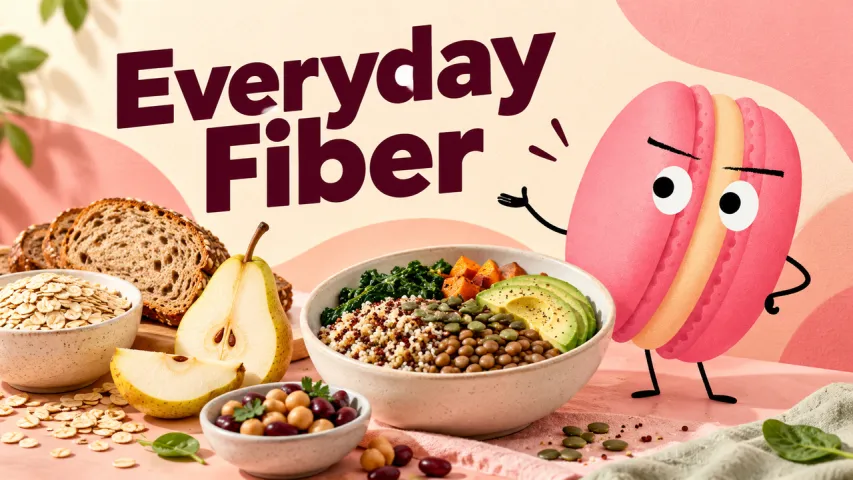
- Protein + something with fiber — not because I'm tracking macros, but because anything else leaves me hungry by 9:30
That last part matters more than people admit. A piece of toast is fast. It's also not a meal. Fast and satisfying is the combination worth chasing — and Harvard's Healthy Eating Plate guidance on protein and fiber explains exactly why pairing these two nutrients keeps blood sugar steadier through the morning, rather than spiking and crashing before your first meeting.

Quick and Healthy Breakfast Ideas by Situation
No-cook, five-minute, commute-friendly, and warm options
Not every morning looks the same, so I stopped pretending one solution covers all of them.
When I have literally no time (under 2 minutes):
- Greek yogurt with a handful of granola and whatever fruit is already cut. High protein, no cooking — and there's solid research on Greek yogurt's effect on satiety showing it increases the feeling of fullness faster than higher-fat alternatives. Takes longer to find a clean bowl than to assemble.

- A banana and a small handful of nuts — not glamorous, genuinely works
- Overnight oats made the night before (30 seconds of assembly in the morning)
When I have five minutes and a microwave:
- Scrambled eggs in a mug: two eggs, splash of milk, microwave for 90 seconds, stir once at 45. Done.
- Cottage cheese with berries — high protein, zero cooking
- Whole grain toast with almond butter and a sliced banana
When I'm eating on the way somewhere:
- A wrapped tortilla with peanut butter and banana — I made this in the elevator hallway of my apartment once. Not proud, but it held up fine.
- Pre-portioned trail mix with dried fruit (I keep a bag in my bag)
- A protein bar I actually like — finding one you don't dread eating is worth the research
When I want something warm and have 8 minutes:
- Oatmeal with frozen berries microwaved in. The berries defrost in the heat, no extra steps needed.
- A soft-boiled egg (7 minutes on the timer, peel, eat over the sink if needed) with some crackers
How to Keep Breakfast Easy All Week
Pantry backups, fridge basics, and simple rotations
Here's something I figured out the hard way: the problem usually isn't the morning. It's that I didn't set myself up the night before — or didn't stock the right things.
My current "always have these" list:
Fridge:
- Greek yogurt (the plain kind — you can add things; the flavored kind is often mostly sugar)
- Eggs
- Berries (fresh or frozen — frozen last longer and are cheaper out of season)
- A block of cheese — even a slice of cheddar adds protein fast
Pantry:
- Rolled oats — beyond being cheap and fast, oat beta-glucan's role in fiber and morning satiety is one of the better-studied areas in breakfast nutrition, and the evidence is genuinely solid
- Nut butter (almond, peanut, whatever)
- Whole grain crackers or bread
- Granola
- A cereal I actually like that has some fiber in it
The rotation looks like: eggs two or three times a week, yogurt or oats on the others, something grab-and-go on the chaotic days. I don't eat the same thing every morning — that gets old fast — but I rotate between four or five things, which means I always know what I'm making.
Common Mistakes
Too little food, too much prep, and unrealistic morning plans
I've made all of these.
Eating too little because "it's just breakfast." A 150-calorie breakfast is not a breakfast for most adults — it's a snack. If you're dragging by mid-morning, this is probably why.
Choosing a recipe you can't actually repeat. The smoothie bowl with the toasted seeds and spirulina and fresh mango looked great when I made it on a Sunday. I made it exactly once. It required a blender, three different containers, and twenty minutes. That's lunch prep territory, not breakfast.
Planning for your best self, not your actual Tuesday-at-7am self. I used to make ambitious plans every Sunday. Meal-prepped egg muffins, elaborate overnight oat variations, the works. By Wednesday I was eating crackers and cheese over the sink because I'd run out of the prep and had no backup. Now I keep it simpler.
Ignoring protein entirely. This one's quieter but real. A piece of fruit and a coffee might feel like enough — it usually isn't. If you're not sure where to start, Harvard's guide to choosing healthy protein sources breaks it down without the jargon — eggs, nuts, yogurt, and beans all count, and any of them can be in your hand in under two minutes.

Quick Breakfast vs Breakfast Meal Prep
When speed matters more than batching
Meal prep has its place. Overnight oats, boiled eggs for the week, pre-portioned yogurt — all useful when you actually do them.
But here's the thing nobody says: meal prep only helps if you do it. And on the weeks I don't? I need options that don't require it.
That's the case for having "zero-prep backups" — things you can pull together with no advance work at all. Eggs, yogurt, nut butter, and fruit cover most of what you need. They don't require a Sunday session. They just require being in your fridge.

Meal prep and zero-prep options work best together. Use prep when you have the bandwidth. Fall back on no-cook basics when you don't. The goal is consistency, not perfection — and a breakfast you actually eat beats a beautiful meal-prep plan you abandoned by Wednesday.
This is also where something like Macaron can quietly take over some of the mental load. I've been using it to keep a running list of breakfasts I actually like — not ones I theoretically want to eat — and it remembers which ones I've flagged as "weekday-only" versus "takes too long." When I'm staring at the fridge at 7:43am, not having to think is the point.
FAQ
What is a quick healthy breakfast?
A quick healthy breakfast is something you can assemble in five minutes or less, that includes at least a small amount of protein, and that you'd realistically repeat on a Tuesday. It doesn't need to be elaborate. Greek yogurt with fruit, eggs in a mug, or whole grain toast with nut butter all count.
What can I eat when I have no time?
The most realistic zero-time options: Greek yogurt straight from the container, a banana and a handful of almonds, overnight oats you made the night before, or a protein bar you've actually tested and like. All of these are under two minutes. None of them require cooking.
Do I have to eat breakfast?
Not everyone needs breakfast at the same time. That said, if you're hungry in the morning and skipping it because of time — that's worth solving. Being hungry and rushing out the door is not a great combination for the next three hours.
Is overnight oats actually faster?
Yes, in the morning. The work happens the night before — five minutes to mix oats, milk or yogurt, and whatever toppings you like. In the morning, you open the jar. That's it. If the barrier is remembering to do it the night before, that's a habit problem, not a recipe problem.
I still have mornings where I eat standing at the counter with a spoon in one hand and my phone in the other. That's fine. The goal isn't a perfect breakfast routine — it's not skipping it entirely because the options felt too complicated.
Recommended Reads
Healthy Grocery List for Real-Life Shopping
Morning Routine Ideas: What Actually Makes a Difference











Apply to become Macaron's first friends
Read & discover
AI Personal Assistant
Free calculators


