Quick Healthy Snacks for Busy Days
Quick Healthy Snacks for Busy Days

I've been keeping a small note on my phone for about three weeks now. It's not a meal plan. It's not a habit tracker. It's just a list of snacks I tried to keep on hand and what actually got eaten before they went bad.
I started it because I'd burned through another round of quick healthy snacks that looked great in theory and stayed in my fridge until they didn't. Sliced cucumbers I'd never finish. A bag of edamame I forgot about. Three different kinds of trail mix, none of which I actually wanted at 3 p.m. The fridge was full and I was still standing in front of it eating crackers.
That's the actual problem with quick healthy snacks — most advice assumes the bottleneck is knowing what's healthy. For me, the bottleneck is whether I'll reach for it when I'm tired, distracted, and have about ninety seconds before my next call.
I'm Maren, and what I'm going to walk through is what survived three weeks of that test, where it broke down, and the kinds of snacking situations these actually solve.
What makes a snack quick enough to be useful
A snack isn't quick because the recipe is short. It's quick because the friction between "I'm hungry" and "I'm eating" is low enough that I don't quit halfway through and grab something else.
Grab speed, low prep, and enough satisfaction
The three things I started tracking: how many seconds to actually start eating, how much cleanup is involved, and whether it holds me until the next meal. The third one matters more than I thought. A snack that leaves me hungry forty minutes later isn't a snack — it's an appetizer for whatever I eat next, which is rarely better.
The Mayo Clinic guidance on this is straightforward: pair carbs with protein or fat so the snack actually does something for you, and aim for under 200 calories so it bridges to your next meal instead of replacing it. That's the bar I started using. Apple slices or baby carrots dipped in nut butter is the example their dietitians give in their sensible snacking guide, and the reason it works isn't the apple — it's the protein and fat layered onto the carb.

There's research backing this up. A small crossover study tracking high-protein yogurt vs high-fat crackers vs chocolate as afternoon snacks found the yogurt snack delayed the urge to eat again by about 30 minutes and led to ~100 fewer calories at dinner. Small sample, but it matched what I was seeing in my own notes — the snacks that held me weren't the lightest ones.
Quick healthy snacks by situation
This is where most snack lists fall apart for me. They give one big list as if my hunger at home, at my desk, and on the train were the same thing. They aren't.
Home snack, work break, commute snack, and post-errand snack

At home, fridge open: Greek yogurt with whatever's around — frozen berries, a spoon of nut butter, sometimes just cinnamon. About 45 seconds. Holds me roughly two hours.
Work break, no kitchen: A hard-boiled egg I cooked the night before plus a small handful of almonds. The egg is the part that took me a while to commit to — peeling it at my desk feels uncivilized — but it's the snack that survived longest in my rotation. The USDA's snacking tip sheet explicitly recommends pairing food groups, and protein plus nuts hits two without any prep on the day itself.
Commute or in-transit: A whole apple plus a single-serving cheese stick. I used to bring sliced apple in a container and it was always slightly brown by the time I ate it. Whole apple, no container, no problem. The version that worked was the one that required less of me, not more.
Post-errand, low blood sugar, can't think: A banana and a single-serve nut butter packet I keep in my bag. This sounds excessive. It is the only thing that's stopped me from buying a pastry on the way home for three weeks running.
What to keep on hand for low-effort snacking

The shopping list shifted once I stopped pretending I was going to slice things.
Shelf-stable picks, fridge picks, and emergency backups
Shelf-stable: roasted chickpeas, almonds, single-serving nut butter packets, whole fruit that doesn't bruise easily.
Fridge: Greek yogurt in single cups, hard-boiled eggs I cook six on Sunday, pre-portioned cheese, baby carrots only if I'll eat them within four days — past that it's pretend.
Emergency backups: a can of low-sodium beans I can rinse and eat with olive oil and salt when nothing else appeals, and roasted seaweed sheets which sound weird but have rescued more 4 p.m. moments than I'd like to admit.
The pre-portioned thing matters more than the food choice. There's solid evidence on the portion size effect — when portions are doubled, intake goes up roughly 35%. I'm not trying to micromanage calories. But I noticed I eat a single-cup yogurt and stop, and I eat from a big tub of yogurt and don't. Same yogurt.
Common mistakes
Things I had to stop doing.
Snacks that are too messy, too light, or too annoying to prepare
Too messy: Hummus and crackers at my desk. I love it. I'm not eating it during a Zoom call.
Too light: Rice cakes alone. Air. I'd eat one and be hungrier than before. Adding nut butter fixed it, but at that point it's a peanut butter sandwich on a worse bread.
Too annoying: Anything that requires me to open more than two containers. The week I tried doing "veggie sticks with three dips" I ate cookies four out of five days. The dips were great. The five containers killed it.
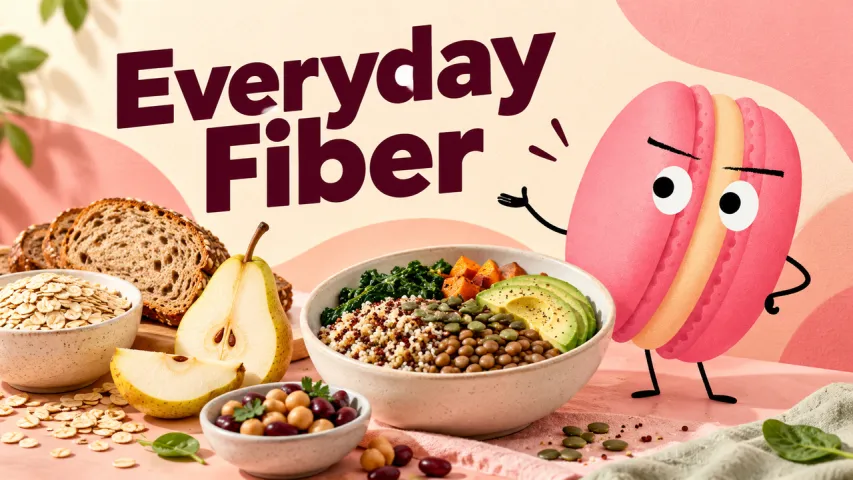
There's also a fiber issue worth flagging. Most US adults get about half the fiber they need, and snacks are one of the easier places to fix that without overhauling meals. Fruit with skin on, beans, whole grain crackers, nuts — these stack fiber into moments I'd otherwise be eating something processed.
Quick snacks vs on-the-go snacks vs work snacks
Matching the snack to the moment
These overlap but aren't the same thing.
Quick snacks = lowest friction at home. Maximum 90 seconds, fridge or pantry, eat standing up.
On-the-go snacks = portable, doesn't need refrigeration for at least four hours, won't leak, won't stain. Whole fruit, jerky, individually wrapped nuts, dried chickpeas. The Greek yogurt that's perfect at home is a disaster in a tote bag.
Work snacks = quiet, one-handed where possible, doesn't smell. Hard-boiled eggs technically smell. I eat them at my desk anyway. I'm not perfect.
When advice mixes these three buckets, I end up with a list that sort of fits each situation and perfectly fits none. The sorting was more useful than the food list itself.
Limits and trade-offs
What I'm describing won't work for everyone.
If you have a medical condition that affects what you eat — diabetes, kidney issues, food allergies — the satiety-and-convenience framing isn't the starting point and a registered dietitian is. The general nutrition principles I'm leaning on, like the protein-and-satiety relationship Harvard Health describes, apply broadly, but specific portions don't.

If your appetite cues are tied up with stress, anxiety, or a history of disordered eating, the "snack to stay ahead of hunger" approach can quietly turn into something else. In that case the question isn't what to eat — it's whether eating-by-system is helping or making things louder.
And if you cook a real lunch every day and already eat enough at meals, you may not need snacks at all. Some people don't. The whole framework assumes you're a person whose meals aren't quite holding you, which is most people I know but not everyone.
FAQ
What are quick healthy snacks to keep around?
Greek yogurt, hard-boiled eggs, whole fruit, almonds, single-serving nut butter, and roasted chickpeas — pick the three you actually eat and stop buying the rest. Reach speed beats variety.
What snacks work when I do not want to prep anything?
Whole apple plus a cheese stick, banana plus a nut butter packet, or a single-cup Greek yogurt with cinnamon. Zero prep, all under 90 seconds.
Do quick snacks need to have protein?
Not technically, but in my experience the ones that hold me through the afternoon do. The yogurt-vs-crackers research backs this up — protein-leaning snacks delayed the next meal by about 30 minutes.
Are pre-packaged snacks okay?
Some of them. Single-serving Greek yogurt, plain nuts, jerky with reasonable sodium, fruit. Granola bars and "protein" bars vary wildly — I check the sugar before I trust the label.
How is this different from snacks for work or on-the-go?
Quick = home, low friction. On-the-go = portable and stable for hours. Work = quiet, one-handed, doesn't smell. The same food doesn't always cross categories.
I'm still figuring out which of these survive a busier week than the one I'm in now. Travel will probably break some of them. The point of writing it down isn't that this is the answer — it's that the test runs cheaper when I stop trying to remember which snack worked on which kind of day. I'll see what holds at week six.
Previous posts:







Apply to become Macaron's first friends
Read & discover
AI Personal Assistant
Free calculators


