Study Planner: How to Build a Schedule You'll Use
Study Planner: How to Build a Schedule You'll Use

There's a version of you who studies from 9am to 12pm every day, takes a clean lunch break, and reviews notes before bed. That version does not exist. And building a study planner around her is why your last three planners are sitting unused in your Notes app.
Here's what actually works — and it's a lot less glamorous than the color-coded spreads on Pinterest.
Why Most Study Plans Fail in Week One
I've watched this happen to myself more times than I'd like to admit.
You sit down on a Sunday. You're feeling optimistic. You write out every subject, assign it to a day, leave yourself buffer time. It looks like a plan that works. Then Tuesday happens. You sleep through your first block. Or your shift runs long. Or you're just not in the mental state you assumed you'd be in.
And instead of adjusting, you abandon the whole thing.
Here's the problem: most study planners are built for your ideal week — the version where nothing runs over, your energy is consistent, and you actually want to open your textbook at 7pm on a Wednesday.
That week rarely shows up.
The APA's guidance on academic self-regulation and goal-setting in students consistently finds that rigid plans fail faster than flexible ones — not because people are undisciplined, but because the plans don't account for how humans actually behave. You're not broken. Your planner just doesn't fit you.
The fix isn't more color-coding. It's building something around the week you actually have.
How to Build a Study Planner Step by Step

Map Your Fixed Commitments First
Before you write a single study block, write everything that's already decided.
Classes. Work shifts. Standing appointments. The commute that takes 45 minutes but you always forget to budget for. The Wednesday night thing you never skip.
Do this in time blocks, not just a list. You need to see where the gaps actually are — not where you imagine they are.
Most people discover they have less free time than they thought. That's useful information. A study planner built on accurate data is more honest than one built on wishful thinking.
Add Study Blocks Around Them
Now look at what's left. Not what's ideal — what's actually there.
If you have two 90-minute windows on weekday afternoons and one longer stretch on Sunday, that's your reality. Work with it.
A few things I've found help here:
- Morning person or night person? Schedule harder subjects during the time of day your brain actually works. Don't put essay writing at 10pm if you're useless after 8.
- Back-to-back classes drain you. Don't schedule dense study sessions right after a four-hour lecture day.
- Leave one day lighter than you think you need to. Not as a lazy day — as a catch-up buffer that you will use.
How Long Each Block Should Be
This is where most advice gets it wrong.

The Pomodoro Technique is everywhere for a reason — 25-minute focused sprints followed by short breaks do reflect actual human attention spans. But 25 minutes isn't a rule. It's a starting point.
If your subject requires deep reading or long-form writing, 25 minutes might just be the time it takes you to settle in. In that case, try 45-50 minute blocks with a proper break.
If you're doing flashcard review or practice problems, shorter blocks work better.
The honest answer: experiment in week one. Notice when your attention actually drops. Build around that, not around someone else's system.
Daily vs Weekly Study Planning

These aren't the same thing, and mixing them up is a common reason planners stop working.
Weekly planning is the big picture. Which subjects are you covering this week? Which deadlines are coming? Where are your longer blocks for harder material? Do this on Sunday or Monday — somewhere between 15 and 30 minutes.
Daily planning is the actual execution. The night before (or morning of), look at your weekly plan and decide what goes in today's specific blocks. Be realistic about your energy. If you know you had a brutal day yesterday, don't schedule your hardest subject first thing.
The weekly plan gives you direction. The daily plan gives you permission to adapt.
Most people try to do only one of these. Weekly plans without daily check-ins become vague and forgettable. Daily plans without a weekly view make you feel like you're always scrambling.
The weekly planning approach recommended by UNC's Learning Center puts it plainly: set aside a regular time each week — around 15 to 30 minutes — to map out your obligations and study blocks together. Then use a shorter daily check-in to stay specific. You need both — but they take different amounts of time and attention.
How to Handle Falling Behind
This is the part no study planner article wants to talk about. I'm going to talk about it.
You will fall behind. Probably in week two. Maybe sooner.
Missed a session? Here's the actual decision tree:
If it was one session: Don't try to make it up in full. Catch up on the highest-priority material only. A 30-minute session covering the most critical content is worth more than skipping the whole week because you "ruined" the plan.
If you missed a few days: Redistribute. Pull out your weekly plan and shift things around. Move what was most urgent to the next available block. Accept that something might not get covered this week — and decide which thing that is, rather than letting chaos decide for you.
If you've gone more than a week: Start fresh without guilt. Don't try to catch up everything you missed. Instead, figure out what's actually due soon and what you genuinely need to understand to move forward. Let the rest go — seriously.
The biggest study planner mistake isn't missing sessions. It's not knowing what to do when you do, and letting one missed day turn into two weeks of avoidance.
There's no perfect recovery. There's just getting back in. Smaller than you planned, if you have to. That's still forward.
Study Planner vs Study Schedule — What's the Difference?
People use these words interchangeably, but they describe two different things.
A study schedule is a timetable. It tells you when you're studying. Monday: 4pm–6pm. Tuesday: 7pm–8:30pm. It's the structure.
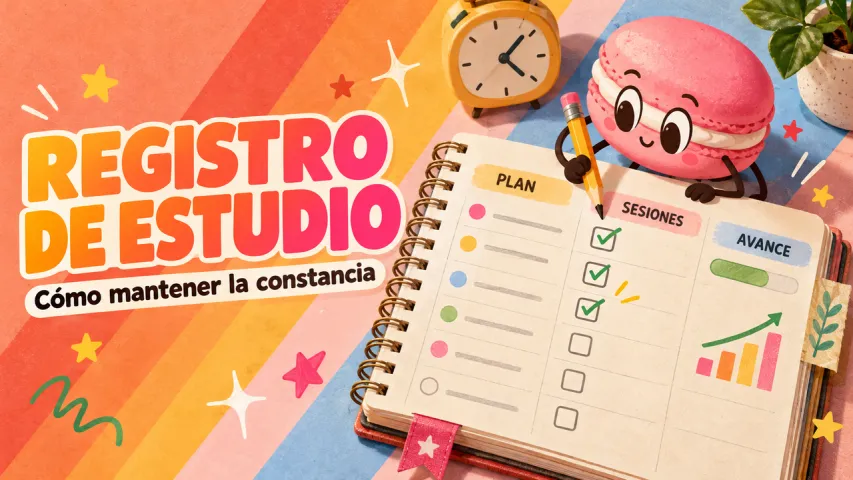
A study planner goes further. It includes what you're studying in each block, how you'll approach it, and — ideally — some kind of tracking so you can see what you've covered and what still needs attention.
You need both. A schedule without content planning is just blocked-out time that's easy to procrastinate through. A content plan without a schedule is a list of intentions.
The combination is what actually moves you forward.
If you've tried study schedules and found them too rigid, it's often because they were schedules without plans — no flexibility, no recovery route, no sense of whether the time you spent was actually useful.
A good study planner also tracks progress. Not in an obsessive way — just enough that you can look back on a week and know what happened. That visibility is what helps you adjust.
FAQ
How Many Hours a Day Should I Study?
There's no universal answer, and anyone who gives you one without knowing your course load isn't helping you.
Research on the spacing effect on long-term learning retention consistently shows that spaced, shorter sessions outperform marathon cramming — even when total study time is identical. So four hours spread across a week will usually produce better retention than four hours in one sitting.

A rough starting point for full-time students: 2–3 hours of studying per class per week, adjusted for difficulty. For a challenging subject, that number goes up. For one you find easy, it might be less.
Track how long things actually take you for two weeks. That data is more accurate than any formula.
What's the Best Study Planner App?
Honestly? The one you'll actually open.
A lot of people spend more time setting up their planner app than studying. That's not the app's fault — it's a setup problem.
If you want something that adapts to your schedule rather than making you adapt to it, Macaron's AI friend builds personalized study trackers in one sentence — you describe what you need, and it generates a tool around your actual week. No templates to configure, no blank pages to fill. It remembers your schedule and adjusts with you, which is a different experience from a static planner.
That said — a simple paper planner or a plain calendar app works fine for a lot of people. Start simple. Add complexity only if you need it.

Should I Plan Study Sessions the Night Before or Week Ahead?
Both. For different things.
Week-ahead planning gives you the full picture — deadlines, available time, which subjects need more attention. The Studying 101 guide from UNC's Learning Center recommends picking one consistent day each week — Sunday night or Saturday morning — to map out each subject and estimate how long each task will take. That becomes your anchor for the week.
Night-before planning is where you get specific: which exact chapters, which practice problems, what the goal of tomorrow's session actually is. This takes five minutes and makes a real difference to whether you start the session with direction or spend the first 20 minutes figuring out what you're doing.
Week ahead: 20–30 minutes, once. Night before: 5 minutes, every day.
It's been a while since I had a strict study schedule — my work doesn't work that way anymore. But I remember exactly what it felt like to build the perfect plan and watch it collapse by Thursday.
What I wish someone had told me then: the goal isn't a flawless week. The goal is a system that's easy to restart. One you can come back to after a missed day without feeling like you've already failed.
Build for the week you actually have. Plan for the moment you fall behind. That's really it.
If you want something that remembers your schedule and adjusts as your week changes, Macaron lets you describe your study needs in plain language and builds a tracker around you — not the other way around. Worth trying if you're tired of planners that don't know anything about you.











Apply to become Macaron's first friends
Read & discover
AI Personal Assistant
Free calculators


