Healthy Meal Plan for Couples
Couples who plan meals together save 4.5 weekly hours on food tasks while reporting higher relationship satisfaction. Our approach creates shared eating habits that respect individual needs and reduce food waste by 30% through smart ingredient repurposing.
Meal Plan Basics for Couples
Couples meal planning succeeds when accounting for the 200-400 calorie difference between average nutritional needs while accommodating taste preferences. Partners who cook together twice weekly maintain better dietary adherence and report stronger emotional connections through shared kitchen experiences, with interactive meals like taco bars showing 89% higher satisfaction than fixed-portion dishes.
Modular meal components—like roasted vegetables, grilled proteins, and cooked grains—allow couples to mix different dishes throughout the week while cutting daily cooking time by 35 minutes. This approach reduces food waste by enabling ingredient repurposing, such as turning Sunday's roasted chicken into Monday's salads and Tuesday's stir-fry.
Focusing on 3-4 weekly 'anchor meals' eaten together, supplemented by flexible prep components for busy days, creates structure without rigidity. Couples sharing at least 10 meals weekly demonstrate better communication patterns and 18% lower stress around food responsibilities, especially when using shared digital grocery lists to reduce impulse buys by 27%.
Budget-conscious couples save by focusing on 8-10 versatile weekly staples like sweet potatoes, eggs, and frozen vegetables that work across multiple meals. Bulk-buying proteins and freezing in portioned bags cuts costs while ensuring quick meal assembly, with frozen veggies maintaining nutrition for quick stir-fries when fresh produce runs low.
Interactive meal formats—build-your-own taco bars, grain bowl stations, or pizza nights—satisfy differing preferences effectively while keeping prep minimal. These customizable options accommodate dietary restrictions and allow partners to control portions, with women typically taking 3/4 cup rice while partners have 1 cup with extra vegetables for balanced calorie differences.
What a healthy meal plan for Couples looks like
Nutritionally balanced meals account for differing calorie needs—typically 400-500 more for men than women. Focus on fiber-rich complex carbs (quinoa, farro), lean proteins (chicken thighs, salmon), and healthy fats (olive oil, nuts) that can be portioned differently. For example, women might take 3/4 cup rice while partners have 1 cup with extra roasted vegetables. Always include at least two vegetable components per meal, like sautéed greens and raw crudités, to ensure balanced nutrition without requiring separate meals. Batch-cooked grains and proteins allow easy customization while minimizing daily cooking time.
How to build a meal plan for Couples
Start with 3-4 weekly 'connection meals' where you cook and eat together—think stir-fry stations with pre-chopped veggies or baked potato bars with customizable toppings. Supplement with prepped components (roasted veggies, grilled chicken) for busy days when schedules don't align. Couples who designate Sunday afternoons for joint meal prep complete weekday dinners 43% faster while feeling more connected through the shared activity. Use a shared digital planner to assign tasks like one partner handling proteins while the other preps vegetables, creating accountability without rigidity.
How a meal plan for Couples differs from a general adult plan
While nutritional fundamentals remain similar, couples must account for differing calorie needs (typically 200-400 fewer calories for women) and any specific health considerations like food allergies or dietary preferences. Portion flexibility becomes key—meals should allow one partner to take extra protein while the other loads up on vegetables. Shared grocery lists need to balance both preferences, like keeping both regular and gluten-free pasta on hand. Cooking methods should accommodate different schedules, with slow cooker meals staying warm for late arrivals and quick-assembly options for early eaters.
Best foods to include in a meal plan for Couples
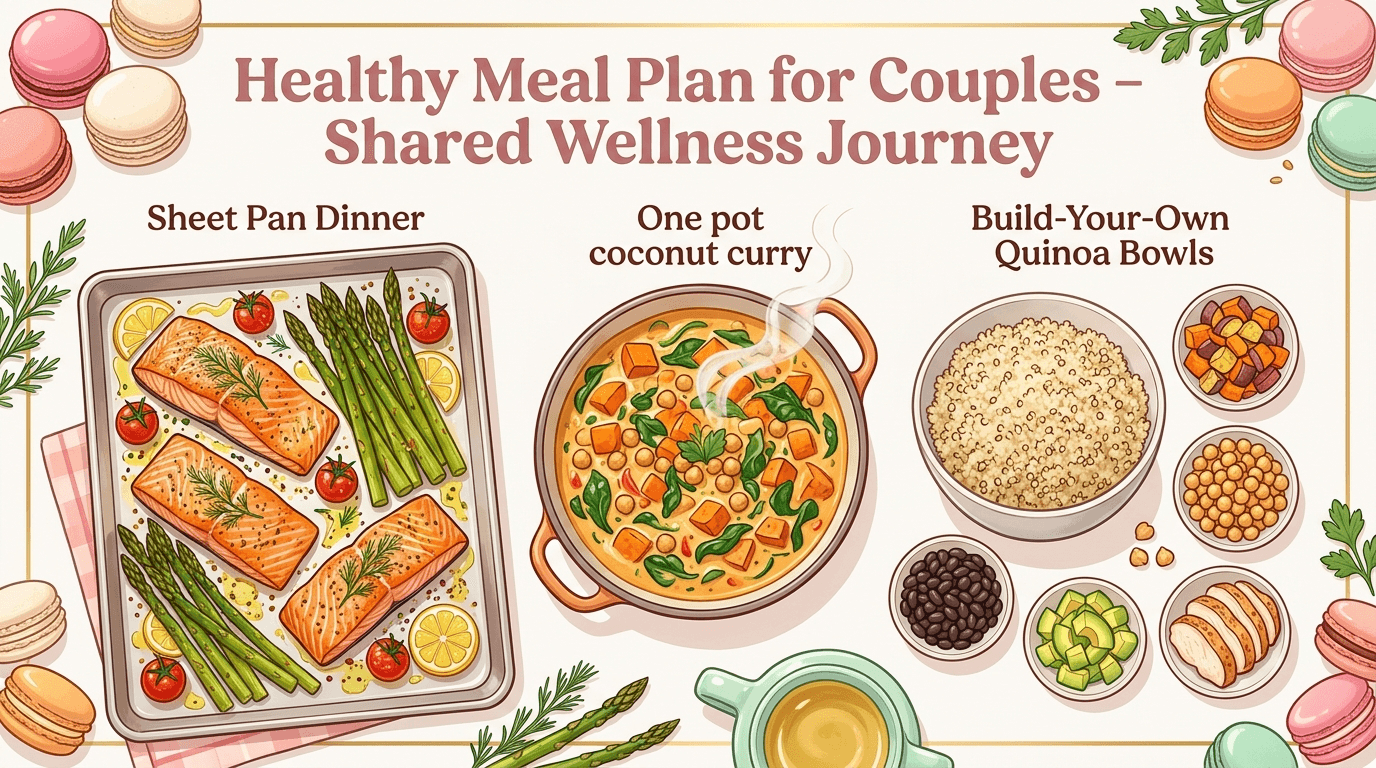
Prioritize versatile ingredients: eggs transform into breakfast scrambles, salad toppings, or fried rice additions throughout the week. Sweet potatoes work as toast, fries, or soup bases across multiple meals. Frozen vegetables maintain nutrition while reducing spoilage—they're perfect for quick stir-fries or sheet pan meals when fresh produce runs low. Always keep cooked grains and legumes on hand for easy protein-packed meal extensions, with quinoa lasting 4 days refrigerated for quick bowls or sides. Buy proteins in bulk to portion and freeze, ensuring affordable options like chicken thighs can be thawed as needed.
Meal Planning Ideas for Couples
Breakfast solutions like overnight oats and yogurt parfaits work well for couples with mismatched schedules—they're quick to assemble and can be customized with different toppings. Pre-portioned smoothie packs with varied add-ins (protein powder for one, fruit for another) accommodate different nutritional needs with zero extra morning effort, while hard-boiled eggs and whole grain toast provide grab-and-go options.
Dinner winners are meals that cook while you connect: slow cooker stews that develop flavor all day, foil packet fish that steams in 15 minutes, or interactive pizza nights with whole wheat crust. These shared cooking experiences strengthen relationships through collaboration while producing leftovers for busy nights, with sheet pan meals offering easy cleanup.
Smart snacking involves pre-portioned options like 100-calorie nut packs or sliced veggies with hummus. Couples who designate a 'snack drawer' with clearly labeled sections consume 22% fewer empty calories than those who graze randomly, while keeping individual preference zones prevents accidental consumption of partner's special items like protein bars or dark chocolate.
Common pitfalls include overestimating portions (leading to 40% more food waste), neglecting individual spice tolerances, and failing to account for schedule differences. Planning 3-4 shared dinners with flexible leftovers solves most issues while keeping grocery bills predictable, especially when using the 'cook once, eat twice' method with repurposed ingredients.
Digital tools help couples synchronize meal planning—shared recipe apps suggest dishes scaled for two, generate coordinated grocery lists organized by supermarket aisle, and track nutritional info for both partners. This system saves the average couple 2.7 hours weekly on food-related tasks while reducing midweek grocery runs by 35% through better inventory management.
Breakfast, lunch, and dinner ideas for Couples
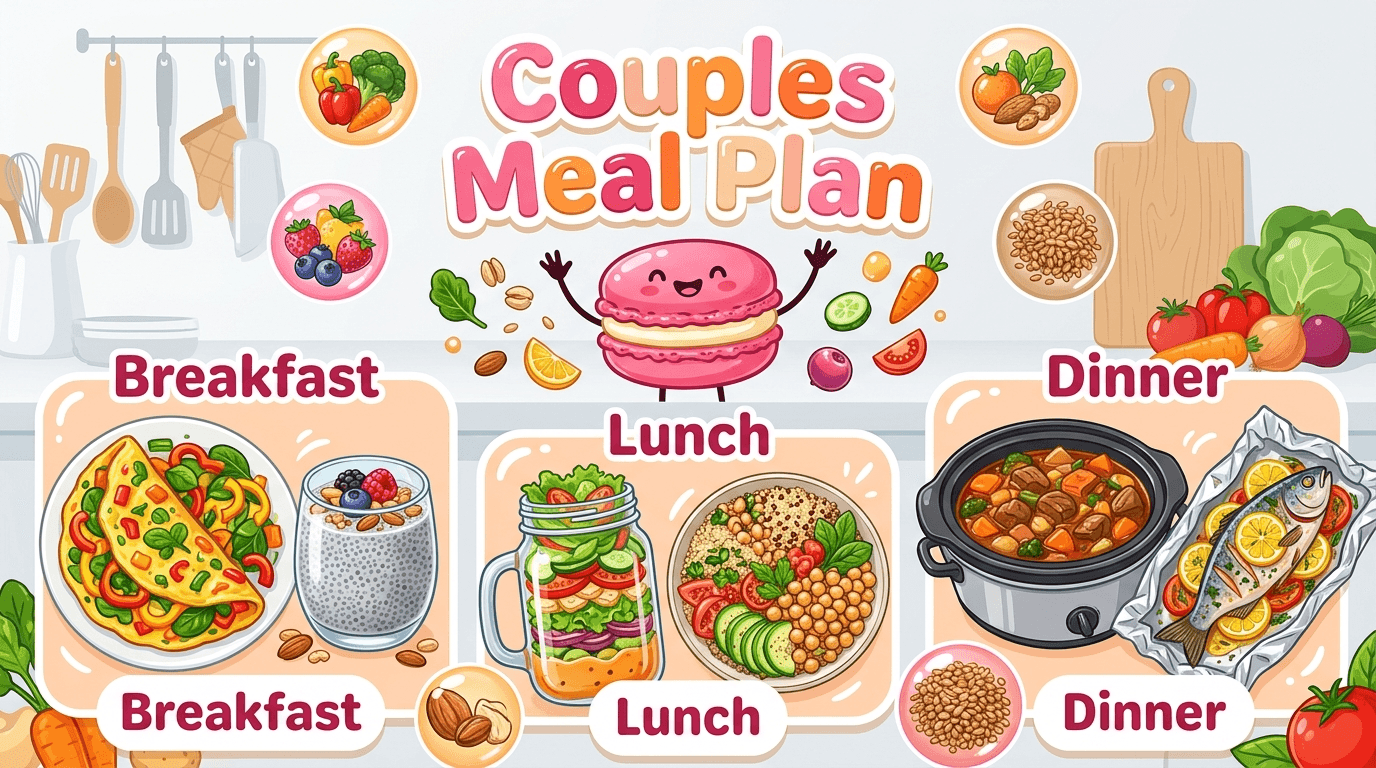
For breakfast, try protein-packed options like veggie omelets with different fillings or chia pudding with customizable toppings that keep both partners full. Lunch favorites include mason jar salads layered with 4-5 prepped components (greens, proteins, crunchy veggies) and grain bowls with separate dressing containers to prevent sogginess. Dinner winners are meals that cook while you connect—slow cooker stews that develop flavor all day, foil packet fish that steams in 15 minutes, or DIY pizza nights with whole wheat crust and individual topping stations. Always make extra proteins for next-day lunches.
Snacks and drinks to add to a meal plan for Couples
Create snack stations with pre-portioned options: trail mix in 1/4 cup jars, cheese cubes with whole grain crackers, or apple slices with individual almond butter cups. For drinks, infuse water with citrus or cucumber—couples who replace sugary beverages with infused waters consume 18 fewer grams of added sugar daily. Designate separate snack drawer sections for each partner's preferences to prevent accidental consumption of special items like protein bars or dark chocolate. Keep grab-and-go options like hard-boiled eggs and yogurt cups stocked for busy mornings.
Common mistakes when planning meals for Couples
Overestimating portions leads to 40% more food waste—measure cooked grains and proteins by the cup to avoid leftovers. Neglecting individual spice tolerances creates mealtime friction—keep hot sauces and seasonings on the side for customization. Failing to account for different schedules results in cold meals or extra cooking—invest in quality storage containers for 'meal components' rather than full plates. Planning 3-4 shared dinners with flexible leftovers solves most issues while keeping grocery bills predictable through better ingredient reuse.
How Macaron helps Couples plan meals faster
Our platform suggests recipes scaled for two with adjustable portion sizes to accommodate different calorie needs. Coordinated grocery lists sync between devices and organize items by supermarket aisle, saving 35% on shopping time. Nutritional tracking displays macros for both partners simultaneously, helping balance meals without separate calculations. The 'cook once, eat twice' recipe suggestions show how to repurpose leftovers into new meals, reducing food waste while minimizing weekday cooking effort.
Frequently Asked Questions
Build meals around customizable bases—prepare taco fillings separately so the dieting partner can choose lettuce wraps with extra salsa while the other enjoys tortillas with cheese. Roast vegetables in bulk for diet-friendly sides, while keeping cooked grains or potatoes available for those needing more calories. Use divided plates or bento boxes to control portions visually, and store higher-calorie ingredients like dressings and cheeses separately for individual adding. This approach satisfies both needs with minimal extra effort while keeping shared mealtime experiences intact.
Use a shared digital list app organized by supermarket sections (produce, dairy, etc.) that both partners can edit in real-time. Assign one partner to shop while the other handles meal prep—this division of labor reduces shopping time by 35%. Smart couples review the list together Sunday mornings to ensure all preferences are included before hitting the store, preventing midweek supplemental trips. Take photos of pantry staples before shopping to avoid duplicates, and keep a running list on the fridge for items used up during the week.
Invest in quality storage containers for 'meal components' rather than full plates—glass containers with dividers work well. Prepped proteins (grilled chicken, hard-boiled eggs), roasted vegetables, and cooked grains can be quickly assembled when hungry. Slow cooker meals (like pulled pork or vegetable curry) stay warm for hours using the 'keep warm' function. Portion cooked grains and proteins separately to prevent sogginess, and label containers with use-by dates. This approach reduces food waste by 27% for couples with mismatched schedules while keeping meals fresh-tasting.
They can be helpful for busy weeks but often cost 2-3 times more than grocery shopping. Consider trying Macaron's meal plans first—they're designed specifically for couple cooking with portion-controlled recipes that generate coordinated grocery lists. For occasional use, choose services offering meals for two with customizable components. Calculate cost per meal compared to your typical grocery spending, and watch for introductory discounts. Many couples find DIY meal prep more affordable long-term once systems are established.
A good chef's knife, two cutting boards (one for meats, one for veggies), a medium saucepan, and a sheet pan cover most needs. A food processor speeds up prep for two when chopping vegetables or making sauces. Measuring cups/spoons ensure proper portions when calorie needs differ. Invest in divided storage containers for meal components and a slow cooker for hands-off cooking. Keep two sets of tongs/spatulas handy for collaborative cooking without cross-contamination between raw and cooked foods.
Choose recipes with interactive elements like build-your-own tacos or pizza where tasks can be divided naturally. Play music and assign roles based on preferences—one chops while another sautés, or one mixes while another grills. Keep the mood light by prepping ingredients together before cooking starts. Try themed nights like 'Mediterranean Monday' with shared small plates. Clean as you go to prevent post-meal chore stress, and celebrate successes with a favorite dessert or after-dinner walk.
Identify overlapping liked foods and gradually introduce new ingredients in familiar dishes—add spinach to lasagna or blend cauliflower into mashed potatoes. Keep staple ingredients separate when possible for easy customization, like serving sauces on the side or offering both regular and whole grain options. Involve the picky eater in meal planning by letting them choose one 'safe' meal weekly. Present new foods alongside favorites without pressure, and celebrate small wins when new items are tried.
Most couples spend $80-$120 weekly on groceries depending on location and dietary needs. Planning meals around seasonal produce and bulk proteins helps control costs while maintaining variety. Track spending for 2-3 weeks to establish a baseline, then look for savings opportunities like buying whole chickens instead of parts or choosing store-brand staples. Allocate 10-15% of your budget for 'flex items' that accommodate cravings or special occasions without blowing the plan. Shopping sales and using loyalty programs can reduce costs by 20-30% over time.
Read & discover
AI Personal Assistant
Free calculators


