Healthy Meal Plan for Low Sodium
Evidence-based low sodium strategies focusing on fresh food prioritization, surprising sodium sources in common pantry items, creative seasoning techniques, and practical meal prep solutions to make reduced-salt eating enjoyable and sustainable.
Meal Plan Basics for Low Sodium
Effective low sodium eating requires understanding sodium distribution across food categories. While bread averages 150-200mg per slice, unexpected items like cottage cheese can range from 60-400mg per serving depending on brand. Pre-brined poultry often contains 400mg sodium per serving, while 'healthy' packaged snacks like veggie chips frequently exceed potato chips in sodium content. Even within canned goods, sodium varies dramatically - tomatoes range from 15mg to 300mg per serving between no-salt-added and regular versions.
Flavor adaptation follows a predictable 3-week timeline as taste buds reset. Successful transitions incorporate acidic ingredients like lemon juice and balsamic vinegar, umami boosters such as dried mushrooms and nutritional yeast, and spice blends featuring smoked paprika or garlic powder. Ethnic markets often carry salt-free spice blends at lower prices than specialty stores, with dried shiitake mushrooms being particularly effective for adding depth without sodium.
Smart grocery shopping starts in the produce section, then carefully selects center-aisle items labeled 'no salt added' - especially crucial for canned beans, tomatoes, and broths where sodium content varies widely. Frozen vegetables without sauces typically have 0mg sodium, while plain frozen fruits make excellent smoothie bases without added sugars or preservatives. Bulk bins allow small purchases of experimental seasonings to test flavor combinations.
Restaurant meals present the biggest challenge, with some entrees containing a full day's sodium allowance (2000mg) in one dish. When dining out, prioritize ethnic cuisines with clear preparation methods like sushi (request low-sodium soy sauce) or tandoori grilled meats over mixed dishes like casseroles. Always request dressings and sauces on the side, as just one tablespoon of Caesar dressing can contain 800mg sodium - equivalent to half the daily limit.
Potassium-rich foods help counterbalance sodium's effects through natural electrolyte balance. Convenient options include plain frozen vegetables (0mg sodium), air-popped popcorn with nutritional yeast (200mg per cup), and carefully selected whole grain cereals (under 5mg per serving). Fresh herbs, citrus juices, and vinegars add bright flavors without salt, while umami-rich ingredients like tomato paste and dried mushrooms enhance savoriness in reduced-sodium cooking.
How a meal plan for Low Sodium works
A true low sodium diet means consuming less than 2,000mg daily, with optimal targets around 1,500mg for those with hypertension. While fresh produce forms the foundation, sodium content varies dramatically - instant rice contains 200mg per cup versus brown rice at just 5mg. Even 'healthy' packaged foods often contain hidden sodium, requiring label scrutiny for phrases like 'reduced sodium' which may still exceed limits. Practical tracking involves focusing on three main meals under 500mg each plus two snacks under 100mg, leaving room for minor variations.
How to build a meal plan for Low Sodium
Beyond label reading, effective techniques include soaking and rinsing canned beans (reducing sodium by 40%), choosing fresh poultry over pre-brined options (watch for 'enhanced with solution' labels), and using citrus zesters to maximize flavor from herbs. Meal prep containers with compartments help portion balanced meals while ensuring adequate vegetables. Ethnic markets offer affordable salt-free spice blends, while bulk bins allow small purchases of experimental seasonings. Weekly planning should account for restaurant meals by balancing with lower-sodium home-cooked days.
Best foods to include in a meal plan for Low Sodium
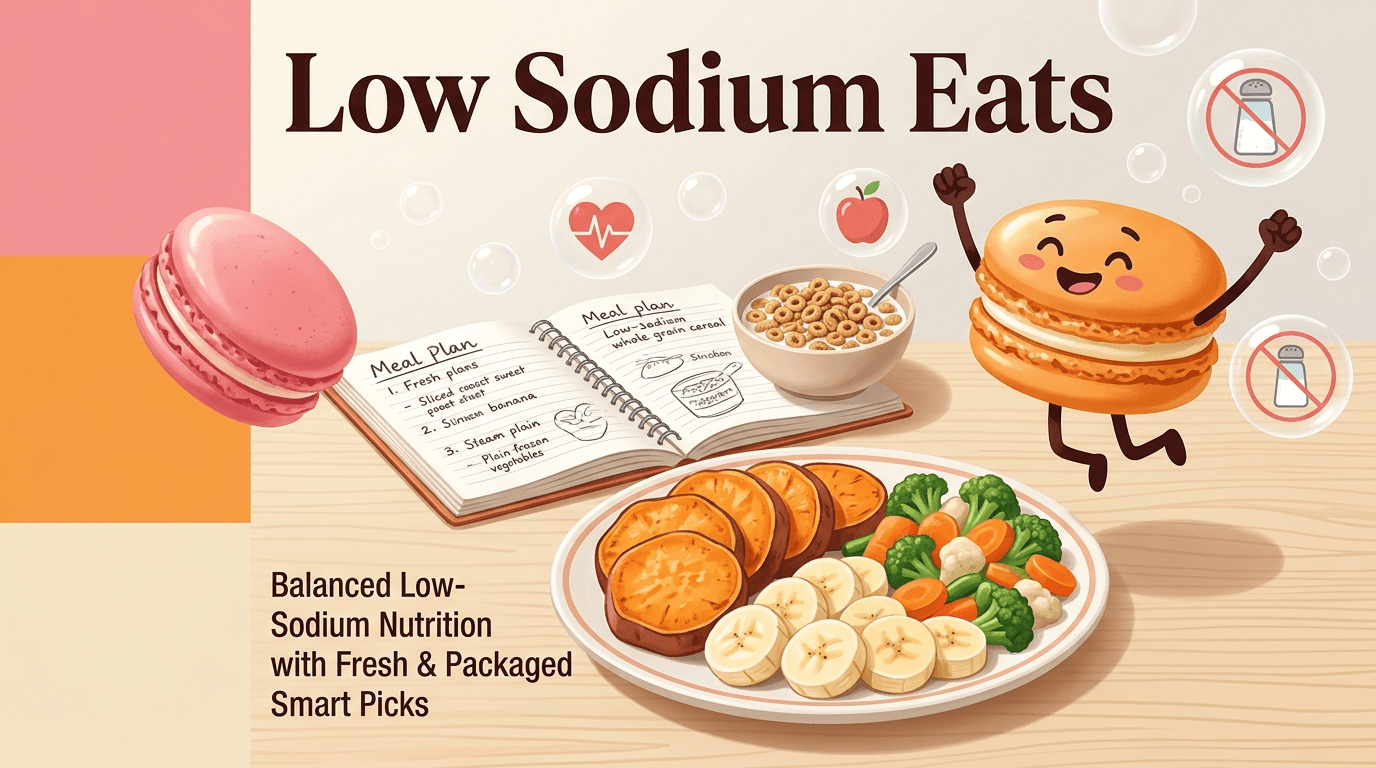
Prioritize potassium-rich foods like sweet potatoes, bananas, and white beans that help regulate fluid balance. Convenient staples include plain frozen vegetables (0mg sodium), air-popped popcorn with nutritional yeast (200mg per cup), and select whole grain cereals (under 5mg per serving). Fresh herbs, citrus juices, and vinegars add bright flavors without salt, while umami-rich ingredients like dried mushrooms and tomato paste enhance savoriness. German pumpernickel (60mg per slice) makes a better bread choice than commercial sandwich bread (150-200mg per slice).
Meal plan for Low Sodium vs a balanced meal plan
While both emphasize whole foods, low sodium specifically limits processed items, canned goods, deli meats, and restaurant meals that often contain hidden salt. A balanced plan may include moderate amounts of these higher-sodium foods, while low sodium requires stricter avoidance or careful substitution with no-salt-added versions. Both benefit from potassium-rich foods, but low sodium places greater emphasis on their inclusion. Practical differences include more label reading for low sodium and greater reliance on fresh preparation versus convenience foods.
Meal Planning Ideas for Low Sodium
Batch cooking fundamentals include preparing unseasoned grains like quinoa with bay leaves or roasted sweet potatoes with cinnamon - neutral bases that can be customized throughout the week. Large batches of rinsed canned beans or no-salt-added lentils provide quick protein additions to salads and grain bowls. These building blocks allow for varied meals while maintaining sodium control, with portioned containers helping visualize balanced plates.
Grocery shopping requires vigilance with poultry labels - 'enhanced with solution' indicates added brine containing up to 400mg sodium per serving. Rinsing canned beans reduces sodium by about 40%, while opting for no-salt-added versions of tomatoes and broths can save 300mg per serving. Ethnic markets often carry affordable salt-free spice blends, and bulk bins allow small purchases of experimental seasonings like sumac or smoked paprika.
Breakfast often becomes the highest-sodium meal due to processed cereals and breads. Steel-cut oats (5mg per serving) with fresh berries, egg white scrambles with vegetables, or German pumpernickel (60mg per slice) with unsalted nut butter provide satisfying alternatives under 100mg sodium. Pre-made breakfast options like overnight oats with chia seeds and almond milk can be prepared in low-sodium versions for busy mornings.
Condiments represent hidden sodium traps that can derail daily limits. Regular soy sauce contains 1000mg per tablespoon versus 140mg in low-sodium versions, while ketchup (160mg per tbsp) can be replaced with fresh salsa (10mg). Keeping a small spray bottle of lemon juice or vinegar in the fridge provides instant flavor enhancement without salt shakers. Homemade herb blends using dried basil, oregano, and thyme offer shelf-stable alternatives to commercial seasoning mixes.
Successful low sodium eating requires planning for travel and busy days. Portable snacks like unsalted nuts, fresh fruit, or homemade trail mix with no-salt-added dried fruit and seeds prevent reliance on convenience foods. When eating out unexpectedly, grilled proteins with steamed vegetables and plain baked potatoes are reliably low-sodium choices. Many restaurant chains now provide online nutrition information to identify safer menu items in advance.
A 1-day meal plan for Low Sodium
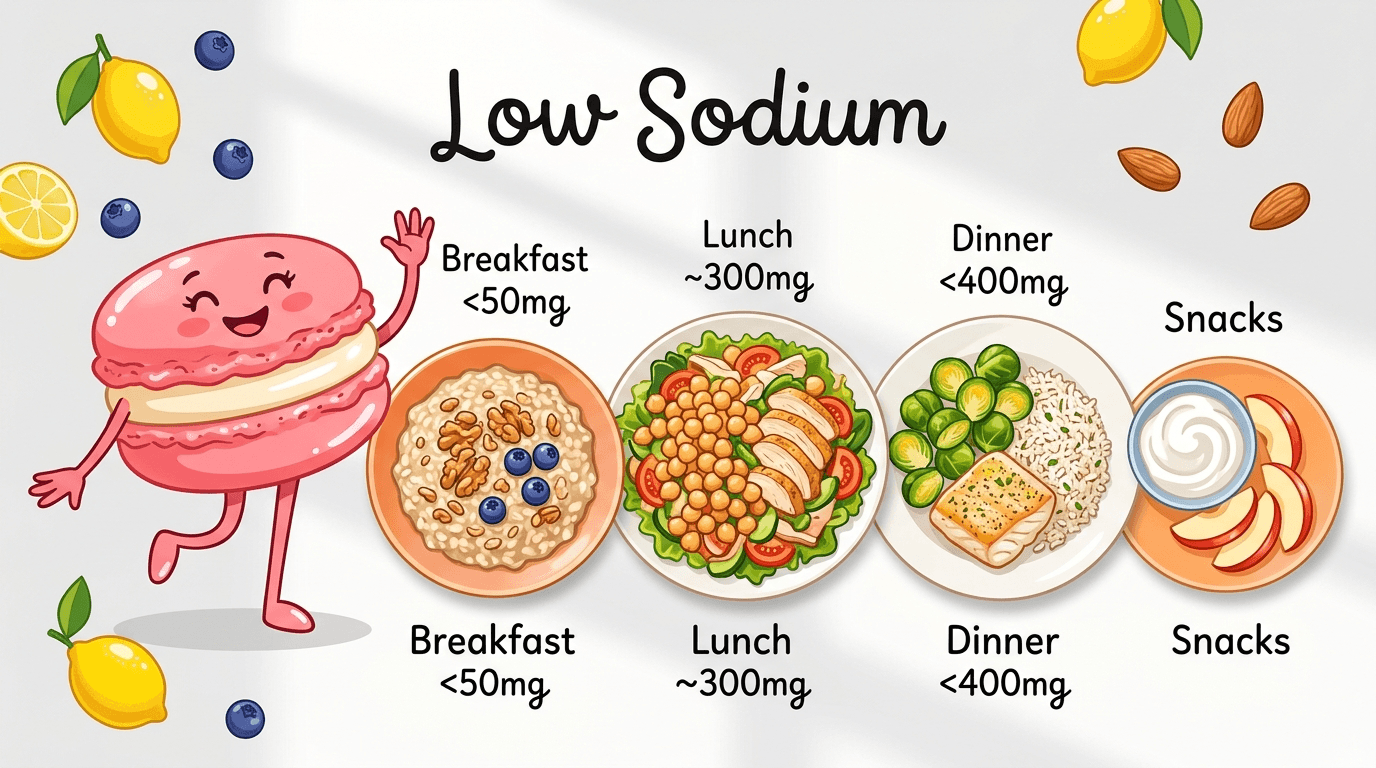
Breakfast: Steel-cut oats with walnuts and blueberries (under 50mg sodium) provides lasting energy without salt. Lunch: Large salad with oil/vinegar dressing, rinsed chickpeas, and grilled chicken breast (total ~300mg) offers protein and fiber. Dinner: Baked cod with lemon, roasted Brussels sprouts, and wild rice (under 400mg) delivers omega-3s and potassium. Smart snacks like plain Greek yogurt with honey or apple slices with unsalted almond butter keep daily totals manageable while preventing energy crashes. This structure allows room for minor variations while staying under 1500mg.
Snacks, swaps, and grocery shortcuts for a Low Sodium meal plan
Look for 'no salt added' versions of pantry staples - some brands offer canned tomatoes with 15mg versus 300mg in regular versions. Fresh mozzarella (85mg per ounce) beats processed slices (400mg) for cheese lovers. Air-popped popcorn with nutritional yeast (200mg per cup) satisfies crunchy cravings better than pretzels (500mg per ounce). Bulk bins allow small purchases of experimental seasonings, while frozen fruit sections offer convenient smoothie bases. Ethnic markets often carry affordable salt-free spice blends unavailable in mainstream grocery stores.
Common meal plan mistakes on Low Sodium
Overlooking condiments like soy sauce/ketchup, not accounting for restaurant meals, and assuming 'reduced sodium' means low sodium are frequent pitfalls. 'Light soy sauce' may still contain 600mg per tablespoon, while restaurant dressings can add 800mg per tablespoon. Many underestimate portion sizes of higher-sodium foods like bread or cereal, where multiple servings quickly exceed limits. Neglecting potassium-rich foods that help balance sodium's effects is another common oversight, as is failing to plan for travel days when convenience foods tempt.
How Macaron helps you stick to a Low Sodium meal plan
Macaron's meal planning tools suggest low sodium recipes based on your preferences and track daily intake across meals. The system flags high-sodium ingredients during recipe selection and calculates cumulative totals, helping balance higher-sodium meals with lower ones. For restaurant meals, it can estimate sodium content based on dish types and portion sizes. The app also stores your frequently used low-sodium substitutions for quick reference during grocery shopping.
Frequently Asked Questions
Foods with 140mg sodium or less per serving qualify as low sodium, while 'very low sodium' means 35mg or less per serving. These benchmarks are crucial when selecting packaged foods - for example, no-salt-added canned tomatoes may contain 15mg per serving while regular versions exceed 300mg. Fresh produce and plain frozen vegetables typically contain negligible sodium, making them safe foundations. When building meals, aim for main dishes under 500mg sodium and snacks under 100mg to stay within daily limits.
Yes, with strategic ordering: Choose restaurants with visible preparation methods like grill stations or sushi bars, avoiding mixed dishes where sodium hides. Request 'no added salt' and get sauces/dressings on the side - Caesar dressing can contain 800mg per tablespoon. Ethnic restaurants often have naturally lower-sodium options like Vietnamese pho (ask for no fish sauce) or Indian tandoori dishes. Many chains provide online nutrition information to identify safer menu items in advance, and some will accommodate special preparation requests if asked politely.
Most people experience reduced bloating within 3-5 days as fluid balance improves. Blood pressure changes typically appear in 2-4 weeks, with research showing 5-6mmHg drops in systolic pressure at the 1,500mg level. Taste perception shifts around week 3 - previously bland foods start tasting naturally flavorful as salt sensitivity resets. Energy levels often improve as the body adjusts to more balanced hydration without sodium-induced fluid retention. These changes reinforce the habit as tangible benefits become noticeable.
No - while they contain trace minerals, they're still primarily sodium chloride. The amount needed for health benefits would exceed sodium limits. For flavor enhancement, focus on salt-free alternatives like citrus zest, garlic powder, smoked paprika, or umami-rich ingredients such as dried mushrooms and nutritional yeast. These provide satisfying taste without sodium overload. Vinegars (balsamic, apple cider) and hot sauces (check labels) offer tang and heat to replace salty flavors in cooking and at the table.
Active individuals may need slightly more sodium but still benefit from focusing on whole foods. Post-workout, choose potassium-rich foods like bananas, sweet potatoes, and white beans over salty snacks to replenish electrolytes naturally. For endurance athletes, small amounts of salted nuts or pretzels can help replace lost sodium without exceeding daily limits. Hydration with water or low-sodium coconut water is preferable to sports drinks that often contain excessive sodium. Monitor individual needs based on sweat rate and activity duration.
Yes, Macaron's nutrition tracker automatically calculates daily sodium from logged meals and compares it to your targets. The system flags high-sodium ingredients during recipe selection and provides running totals throughout the day. For restaurant meals, it can estimate sodium content based on dish types and portion sizes. The app also stores your frequently used low-sodium substitutions for quick reference during grocery shopping, helping maintain consistency in your eating pattern.
Build flavor with garlic/onion powder, citrus zest, smoked paprika, cumin, turmeric, and black pepper. Fresh herbs like basil, cilantro, and dill add brightness, while salt-free blends like Mrs. Dash offer convenience. Umami-rich ingredients such as dried mushrooms, nutritional yeast, and tomato paste enhance savoriness without salt. Vinegars (balsamic, apple cider) and hot sauces (check labels for sodium content) provide tang and heat to replace salty flavors. Ethnic markets often carry unique salt-free spice blends unavailable in mainstream stores.
Preventive reduction helps maintain healthy blood pressure long-term. Most people consume double the recommended sodium, so moderating intake supports cardiovascular health even without current issues. The gradual taste adaptation makes reduced-sodium eating more sustainable when started proactively rather than as a reactive measure. Those with family history of hypertension particularly benefit from establishing lower-sodium habits early. The diet also naturally emphasizes whole foods, providing additional nutritional benefits beyond sodium reduction.
Read & discover
AI Personal Assistant
Free calculators


