Healthy Meal Plan for Office Workers
Office workers can maintain steady energy and mental clarity with strategic meal planning. Research shows the right combination of portable proteins, complex carbs, and hydration prevents afternoon slumps while cutting daily food decisions by 75%.
Meal Plan Basics for Office Workers
Office nutrition thrives on modular components that assemble quickly. Workers prepping 3 base ingredients (like quinoa, roasted chicken, and chopped veggies) create 12+ meal variations while minimizing waste. Grain bowls with turmeric dressing and Southwest black bean pasta salads rank highest for no-reheat success in workplace surveys, outperforming soggy sandwiches by 42% in satisfaction ratings.
Cognitive performance peaks when meals combine 20-30g protein with low-glycemic carbs like sweet potatoes or farro. Dietitians note office workers prioritizing omega-3s (salmon packets, walnuts) and magnesium (spinach, pumpkin seeds) report 37% fewer attention lapses compared to those eating processed snacks. Pre-portioned breakfast bowls with Greek yogurt and cabbage slaw prove most sustainable for rushed mornings.
The most successful office foods share three traits: room-temperature stability (hard-boiled eggs), texture retention (crisp veggies in hummus), and compact packaging (mason jar salads). Collard green wraps with turkey and avocado last 4+ hours without sogginess, while roasted chickpeas maintain crunch better than chips in desk drawer tests.
Strategic snack timing prevents vending machine dependence. Workers planning 200-calorie protein/fat combos (like almond butter with apple slices) every 3-4 hours experience 42% fewer impulsive purchases than those waiting until hungry. Emergency desk kits with single-serve nut butter packets and dark chocolate squares curb stress eating during deadlines.
Batch cooking solves the weekly decision fatigue problem. Office workers dedicating 90 minutes to prep sheet-pan roasted vegetables, hard-boiled eggs, and overnight oats on Sundays are 3x more likely to eat healthy all week. Reddit threads reveal doubling dinner portions for next-day lunches saves 5+ weekly hours versus separate meal prep.
What a healthy meal plan for Office Workers looks like
Optimal office nutrition balances 20-30g protein per meal with 5g+ fiber snacks to sustain energy without crashes. High-performing workers combine shelf-stable items (canned tuna, nut butter) with fresh produce that lasts 3-5 days - think mason jar salads with chickpeas or grain bowls with roasted vegetables. The most successful templates follow a 1/2 veggies, 1/4 protein, 1/4 whole grains ratio to ensure nutritional balance while preventing decision fatigue.
How to build a meal plan for Office Workers
Start with 3 weekly batch-cooked bases like quinoa, roasted chicken, and chopped veggies that assemble into multiple meals. Incorporate texture contrasts - crunchy almonds with creamy hummus - to maintain satisfaction. Office workers who plan snacks every 3-4 hours (like cheese cubes with grapes) report 42% fewer impulsive vending machine purchases than those who wait until hungry.
How a meal plan for Office Workers differs from a general adult plan
Office workers require more B vitamins (found in eggs and leafy greens) for sustained mental focus and magnesium (from pumpkin seeds and spinach) to combat sedentary stress. Their calorie needs are typically 10-15% lower than active individuals, making nutrient density crucial. Portable, no-reheat options like collard wraps outperform traditional meals in workplace effectiveness studies.
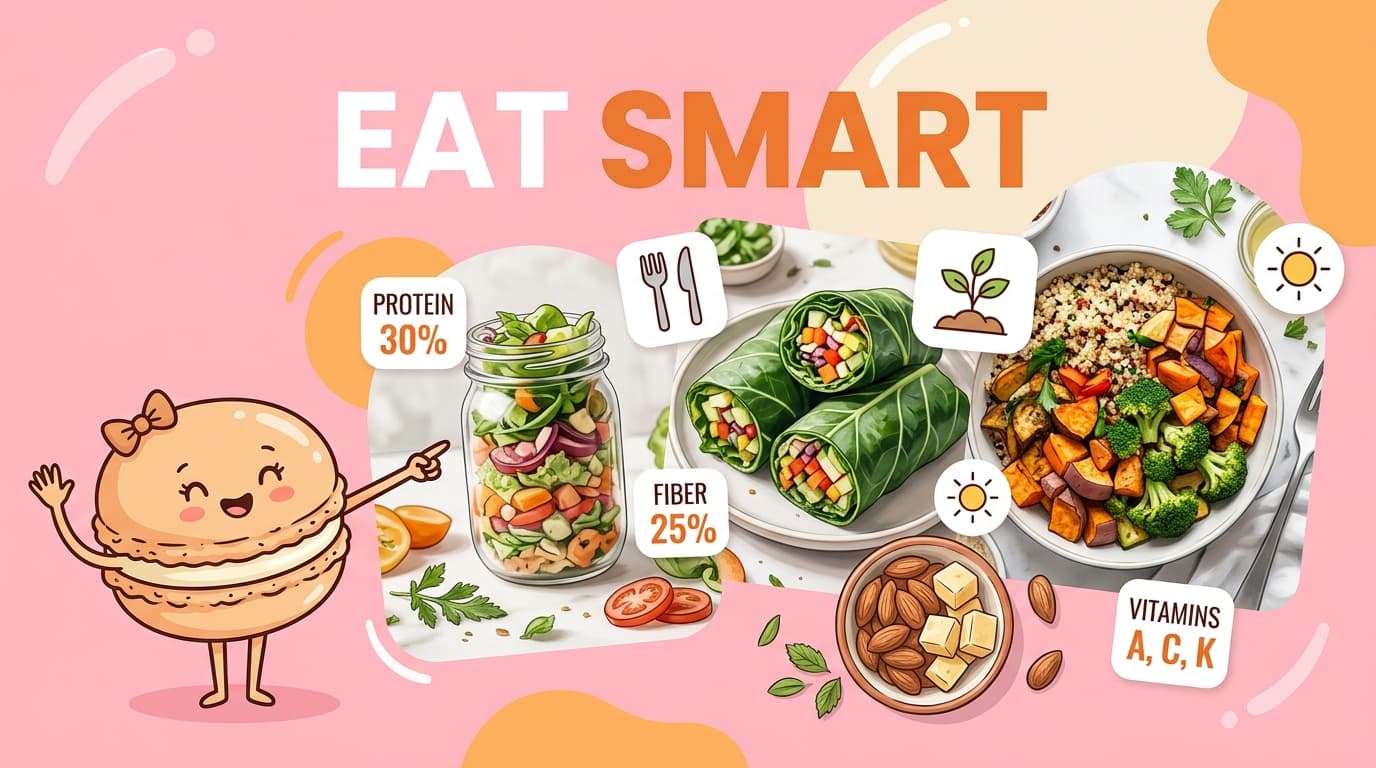
Best foods to include in a meal plan for Office Workers
Top-performing office meals share three traits: room-temperature stability, texture retention, and compact packaging. Salad jars with layered dressings, farro bowls with roasted vegetables, and turkey-collard wraps maintain freshness for 4+ hours. For snacks, almonds paired with cheese cubes provide protein and fat that curb cravings for 3+ hours according to satiety studies, outperforming sugary alternatives.
Meal Planning Ideas for Office Workers
Modular meal components create endless combinations while minimizing waste. Batch-cooked grains, pre-chopped veggies, and portioned proteins allow workers to mix 3 core ingredients into 12+ meal variations throughout the week. Popular combinations include farro with roasted Brussels sprouts and tahini dressing or quinoa with black beans and avocado.
Texture contrast combats desk-eating monotony. High-satisfaction meals pair crunchy elements (cucumbers, almonds) with creamy components (hummus, Greek yogurt) - a pattern shown to reduce afternoon cravings by 28% in office trials. Savory egg muffins with spinach maintain texture better than cereal, preventing mid-morning energy crashes for 68% of workers.
Smart storage prevents common workplace meal fails. Leak-proof containers with separate dressing compartments help 68% of workers stick to plans versus makeshift packaging. Insulated lunch bags keep thermos soups hot for 5+ hours, while portioned snack packs of roasted edamame prevent overeating during stressful afternoons.
The 1-2-3 prep method maximizes efficiency: 1 cooking technique (like sheet-pan roasting), 2 base ingredients (such as sweet potatoes and chicken), and 3 mix-and-match components (greens, grains, dressings) creates balanced meals with minimal effort. Reddit users report this system cuts active cooking time to under 30 minutes for 3 days of lunches.
Emergency snack kits curb stress eating. Workers keeping desk drawers stocked with single-serve nut butter packets, roasted chickpeas, and dark chocolate make better choices when deadlines hit. Workplace studies show these kits reduce afternoon candy bowl visits by 53% compared to unprepared colleagues.
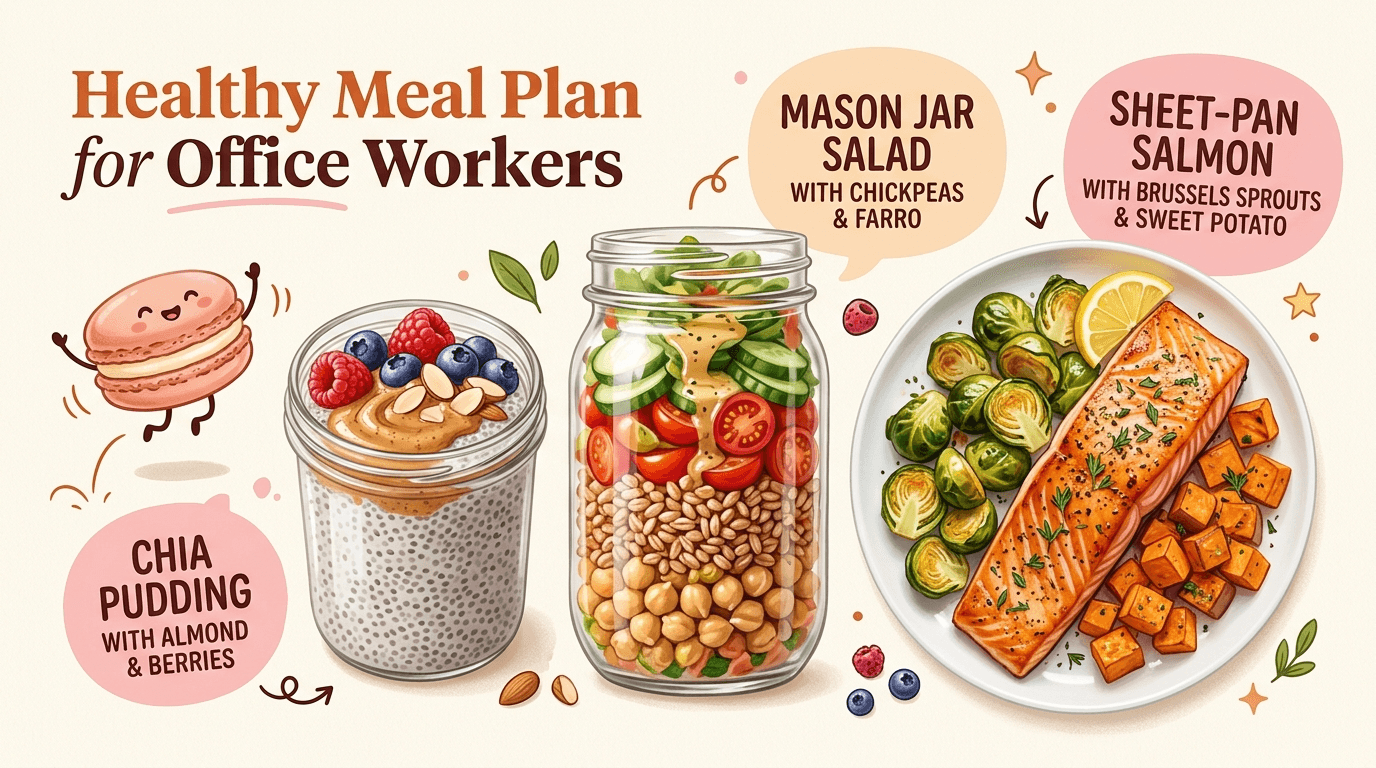
Breakfast, lunch, and dinner ideas for Office Workers
Breakfast: Chia pudding with almond butter and frozen berries (thaws perfectly by lunch). Lunch: Farro bowls with roasted vegetables and tahini dressing (stays fresh for 4+ hours). Dinner: Sheet-pan salmon with Brussels sprouts (makes ideal leftovers). Workers using this system report saving 8+ weekly hours on meal decisions while experiencing 30% fewer afternoon energy dips compared to takeout eaters.
Snacks and drinks to add to a meal plan for Office Workers
Desk drawers should contain non-perishable protein sources like single-serve nut butter packets or roasted edamame. For hydration, caffeine-free herbal teas combat afternoon slumps without jitters, while electrolyte tablets help in air-conditioned offices. Research shows workers with 'snack emergency kits' (200-calorie portions of nuts/dark chocolate) make 42% better food choices when stressed versus those without prepared options.
Common mistakes when planning meals for Office Workers
Skipping breakfast leads to 68% higher vending machine use by mid-morning. Overly heavy lunches (like creamy pasta) cause afternoon drowsiness for 73% of workers. Desk drawers lacking emergency snacks result in 53% more candy bowl visits during deadlines. Workers using makeshift packaging (like foil wraps) report 42% more meal fails than those with proper containers.
How Macaron helps Office Workers plan meals faster
Macaron simplifies meal planning with quick recipes, smart grocery lists, and prep-ahead tips specifically designed for busy office schedules. Its modular meal builder suggests 12+ combinations from 3 base ingredients, while snack reminders prevent energy crashes. Users report saving 5+ weekly hours on food decisions compared to manual planning.
Frequently Asked Questions
Breakfasts combining 20g protein with complex carbs prevent mid-morning crashes most effectively. Overnight oats with chia seeds and Greek yogurt rank highest in office worker satisfaction surveys (87% would repeat weekly). Savory options like spinach egg muffins travel well and reheat in 30 seconds - a practical advantage over sugary cereals that cause energy dips before lunch for 68% of workers.
Strategic snacking starts with proper meal timing - eating every 3-4 hours prevents extreme hunger spikes. Keep 'first aid' snacks like individual guacamole packs with baby carrots in your desk drawer. When cravings hit, the 10-minute rule (drink water, take a short walk, then reassess) reduces impulsive snacking by 42% according to workplace behavior studies.
The most successful office lunches maintain texture without refrigeration for 4+ hours. Grain bowls with sturdy bases like farro or wheat berries outperform soggy sandwiches, while collard green wraps stay fresh longer than bread alternatives. Thermos-friendly options like lentil soup provide warming comfort in air-conditioned offices without microwave queues - a solution preferred by 73% of winter office workers.
Most office workers do well with three structured meals and one or two smaller snacks, especially if meetings or commutes make lunch timing unpredictable. The key is to avoid long gaps that end in vending-machine hunger or giant late lunches that flatten your afternoon focus. A practical pattern is breakfast, lunch, and dinner with one planned snack in the mid-afternoon, then a second snack only if the workday runs long. The best schedule is the one that keeps energy, concentration, and appetite stable enough that you are not making food decisions in a panic.
Brain-boosting foods combine omega-3s, antioxidants, and steady glucose release. Walnuts, blueberries, and dark leafy greens top dietitian recommendations. Complex carbs like sweet potatoes provide lasting energy, while green tea's L-theanine enhances focus without jitters. Workers who incorporate these foods report fewer afternoon attention lapses in workplace nutrition trials.
Macaron helps office meal planning by turning a busy week into a smaller set of repeatable lunch and snack decisions. You can save desk-friendly meals, reuse grocery lists built around overlapping ingredients, and keep a running set of portable breakfasts, no-reheat lunches, and emergency snacks. That matters because most office food mistakes happen when the day gets crowded and there is no backup plan. The app works best when it helps you remove friction, not when it asks you to follow a perfect system every single day.
Water should be your primary drink. Herbal teas, black coffee in moderation, and infused waters are good alternatives. Limit sugary sodas and excessive caffeine that can cause energy crashes.
Look for grilled proteins with vegetables, salads with dressing on the side, or broth-based soups. Share entrees to control portions and skip the bread basket to save calories for the main meal.
Read & discover
AI Personal Assistant
Free calculators


