Healthy Meal Plan for Paleo
The Paleo diet emphasizes whole, unprocessed foods similar to what our ancestors ate. Learn smart meal planning strategies, nutrient-dense food swaps, and common pitfalls to avoid for sustainable Paleo success with practical weekly prep systems.
Meal Plan Basics for Paleo
The Paleo framework naturally eliminates inflammatory modern foods while emphasizing nutrient-dense options like grass-fed meats, wild-caught seafood, and organic produce. Many followers report improved digestion and energy when focusing on vegetable diversity over meat-heavy meals, incorporating fermented foods like kimchi and gut-supporting bone broth. Meal prep becomes essential with proteins batch-cooked on Sundays and pre-chopped vegetables stored in glass containers for quick assembly.
Active individuals often need to consciously include starchy vegetables like sweet potatoes and winter squash for adequate carbohydrates, while others thrive on lower-carb versions emphasizing leafy greens and healthy fats. The elimination of processed foods frequently leads to natural appetite regulation, though portion awareness remains important with calorie-dense nuts, seeds, and oils that can stall progress if overconsumed.
Practical adaptations make Paleo sustainable long-term: cauliflower rice replaces grains, coconut aminos substitute soy sauce, and nut flours work in baking. Many restaurants now accommodate Paleo requests when you specify no grains, dairy or processed ingredients - grilled proteins with double vegetables being a reliable fallback option for dining out without derailing progress.
Common beginner mistakes include over-relying on processed Paleo snacks, not prepping enough vegetable variety, or failing to plan for busy days when cooking time is limited. Successful followers typically rotate through 3-4 protein anchors weekly (like salmon, chicken thighs, grass-fed beef) and prep versatile components like roasted root vegetables and hard-boiled eggs for mix-and-match meals.
The diet's flexibility allows customization based on individual needs - some include limited white potatoes around workouts while others avoid them completely. What remains consistent is the emphasis on food quality, with many prioritizing wild-caught seafood, pasture-raised eggs, and organic produce when possible to maximize nutrient density.
How a meal plan for Paleo works
The Paleo framework centers on whole, unprocessed foods our ancestors might have eaten, systematically eliminating inflammatory triggers like gluten and lectins found in grains and legumes. Many successful followers use a modified plate method: half non-starchy vegetables, one quarter quality protein (like grass-fed steak or wild salmon), and one quarter healthy fats (avocado or olive oil), with optional berries for dessert. This approach naturally increases micronutrient density while reducing empty calories from processed foods. Some include limited white rice or potatoes around workouts if needed for performance, though strict versions avoid all grains completely.
How to build a meal plan for Paleo
Start by selecting 3-4 protein anchors for the week - perhaps salmon fillets, chicken thighs, grass-fed ground beef, and eggs. Build meals around these with varied vegetable preparations: raw salads with lunch, roasted Brussels sprouts at dinner, and spiralized zucchini noodles for texture contrast. Include strategic fats like coconut milk in curries or ghee for sautéing to enhance nutrient absorption. Prep components like marinated meats and chopped vegetables in advance, storing them in clear glass containers for easy visibility. Many find success dedicating 2 hours on Sundays to batch cook proteins and roast vegetables for effortless assembly during busy weekdays.

Best foods to include in a meal plan for Paleo
Prioritize omega-3 rich foods like wild salmon and sardines, antioxidant-packed berries, and mineral-rich leafy greens. Include gut-supporting fermented foods like sauerkraut and coconut yogurt, plus collagen-rich bone broth for joint health. For fats, focus on avocado, olive oil, coconut products, and nuts/seeds in moderation. Starchy vegetables like sweet potatoes and winter squash provide sustainable energy for active individuals. Many followers report better results when emphasizing vegetable diversity over meat quantity, aiming for 6-8 different colored vegetables daily to ensure broad phytonutrient intake.
Meal plan for Paleo vs a balanced meal plan
Unlike conventional diets, Paleo eliminates all grains, legumes and dairy while emphasizing higher protein and healthy fat intake. This often leads to reduced processed food consumption and increased micronutrient density from whole food sources. Many report better blood sugar control on Paleo, though athletes may need to consciously increase carbohydrate intake from starchy vegetables for performance. The diet naturally limits empty calories but requires more planning for adequate fiber without grains - solved by emphasizing diverse vegetables, chia seeds, and flaxseeds.
Meal Planning Ideas for Paleo
Effective Paleo meal planning balances convenience with nutrition through strategic batch cooking. Sunday prep might include roasting two sheet pans of mixed vegetables (like Brussels sprouts and carrots), cooking a large pork shoulder in the slow cooker, and hard-boiling a dozen eggs. These components then get repurposed throughout the week - pork becomes lettuce wraps for lunch, roasted veggies get added to omelets, and eggs serve as grab-and-go snacks with almond butter.
Smart grocery shortcuts include buying frozen wild-caught seafood (often more affordable than fresh), pre-spiralized zucchini noodles, and pre-washed organic greens to reduce prep time. Many followers keep emergency snacks like individual packs of olives, single-serving nut butter packets, and shelf-stable jerky in their bags and desks to avoid non-compliant options when hungry away from home.
For optimal nutrient variety, rotate protein sources weekly between grass-fed beef, pasture-raised poultry, wild fish, and occasional game meats. Include all colors of vegetables - dark leafy greens for magnesium, bright peppers for vitamin C, purple cabbage for antioxidants, and orange squash for vitamin A. This
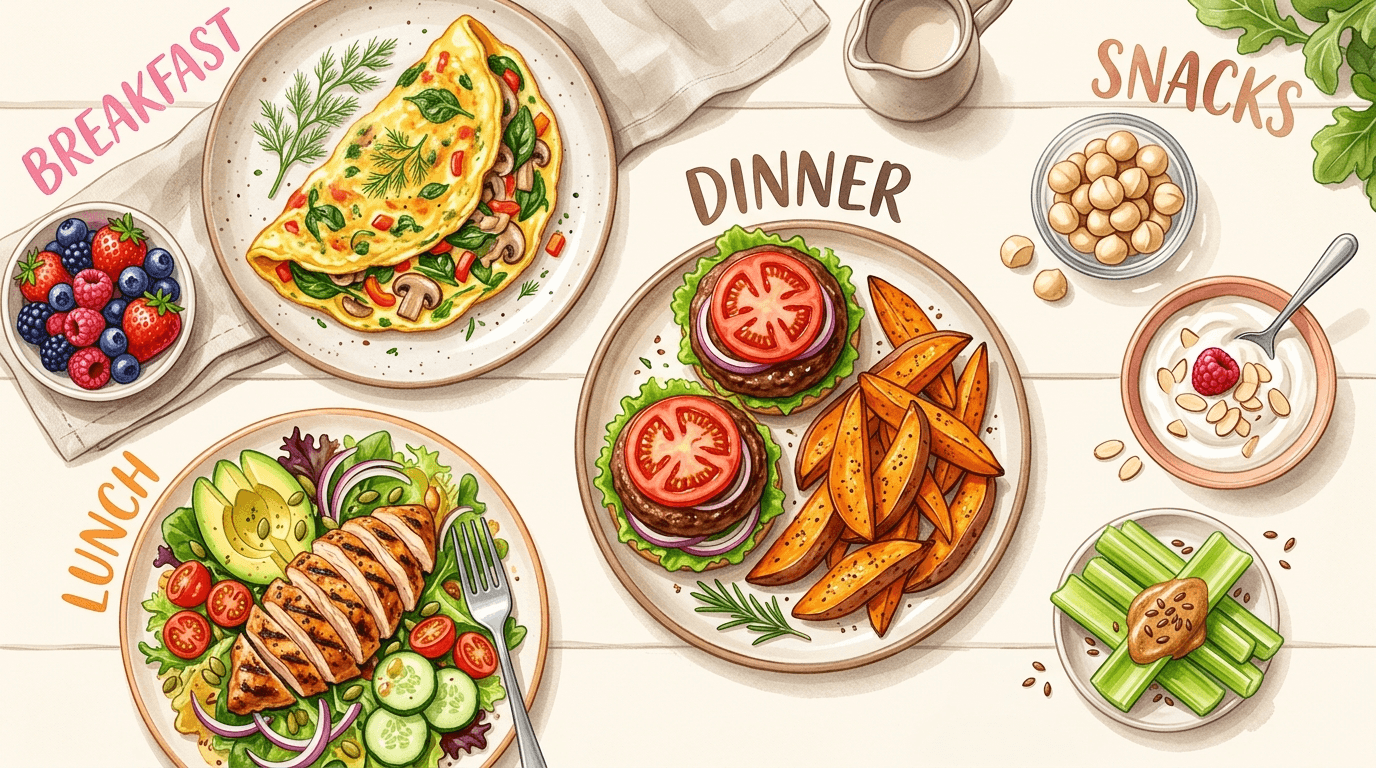
A 1-day meal plan for Paleo
Breakfast could feature a veggie-packed omelet with spinach, mushrooms and avocado cooked in ghee, with a side of blueberries for antioxidants. Lunch might be a large kale salad with grilled chicken, pumpkin seeds, olive oil dressing and roasted beets for balanced macros. For dinner, try herb-crusted salmon with roasted Brussels sprouts and mashed cauliflower for nutrient density. Smart snacks include macadamia nuts for healthy fats, coconut yogurt with cinnamon for gut health, or celery sticks with almond butter for sustained energy between meals. Hydrate with herbal teas or infused water instead of sugary drinks.
Snacks, swaps, and grocery shortcuts for a Paleo meal plan
Keep pre-cut vegetables and hard-boiled eggs ready for quick snacks. Swap grains for cauliflower rice or zucchini noodles, use coconut aminos instead of soy sauce, and try almond flour for baking. At the store, shop the perimeter first for fresh foods, then hit the freezer section for wild-caught seafood and organic vegetables. Look for compliant pantry staples like coconut milk, ghee and nut butters to round out your staples. Many save time by buying pre-spiralized zucchini, pre-washed organic greens, and frozen wild-caught fish fillets that cook quickly from frozen.
Common meal plan mistakes on Paleo
Beginners often over-rely on processed Paleo snacks like bars and chips instead of whole foods, missing the diet's nutrient density benefits. Others underestimate vegetable needs, failing to prep enough variety and ending up with repetitive meals. Some struggle with dining out, not realizing most restaurants will substitute extra vegetables for grains when asked. Portion control with calorie-dense foods like nuts and dried fruit trips up many - measuring servings initially helps avoid overconsumption. Successful followers plan for travel and busy days with shelf-stable snacks like jerky and individual nut butter packets.
How Macaron helps you stick to a Paleo meal plan
Macaron simplifies Paleo adherence with customizable meal plans that automatically generate grocery lists based on your selected recipes. The app helps balance weekly macros by suggesting complementary side dishes when you choose a protein main. Smart notifications remind you when to prep components for upcoming meals, while the recipe database offers creative ways to use leftovers. For dining out, quick reference guides help identify Paleo-friendly menu choices at various restaurant types.
Frequently Asked Questions
Traditional Paleo excludes all dairy as it wasn't consumed during Paleolithic times. However, some modified versions allow grass-fed butter or ghee due to their minimal lactose content. If including dairy, opt for fermented options like kefir and watch for digestive reactions. Many find eliminating dairy reduces inflammation, particularly for those with sensitivities. When reintroducing, try small amounts of high-quality, full-fat dairy like organic cream or aged cheeses first to assess tolerance.
Sweet potatoes are widely accepted due to their nutrient density, while white potatoes are more controversial. If including white potatoes, consume them with the skin for fiber and in moderation, ideally around workouts. Athletes often benefit from the additional carbohydrates these starchy vegetables provide. Some strict versions exclude all nightshades (including white potatoes), while others permit them if well-tolerated. Listen to your body's response when introducing them.
Focus on non-starchy vegetables like Brussels sprouts, broccoli and kale, which provide more fiber per calorie than most grains. Include chia seeds, flaxseeds, and avocado for additional fiber sources. Many Paleo followers actually increase their fiber intake by emphasizing 6-8 servings of diverse vegetables daily. Fermented foods like sauerkraut also support gut health. If transitioning from a grain-heavy diet, gradually increase vegetable intake to allow your digestive system to adjust.
Paleo can support weight management by reducing processed foods and stabilizing blood sugar levels. The high protein and fiber content promotes satiety, potentially reducing overall calorie intake naturally. However, weight loss still depends on maintaining a calorie deficit, so portion control with nuts, oils and dried fruits is important. Many report reduced cravings and improved appetite regulation on Paleo without strict calorie counting, especially when emphasizing vegetable diversity at meals.
Yes, with smart strategies. Choose restaurants with whole-food options like steak houses or farm-to-table spots. Opt for grilled meats, salads with olive oil dressing, and steamed vegetables. Specify no grains, dairy or processed ingredients - most kitchens can accommodate by substituting extra vegetables. Ethnic restaurants often have compliant options like lettuce-wrapped tacos or curry without rice. Review menus online beforehand and don't hesitate to make special requests - many chefs appreciate the challenge.
Whole food options include hard-boiled eggs, individual packs of olives, celery with almond butter, and small portions of nuts like macadamias. Pre-cut vegetables with guacamole make convenient snacks, as do single-serving packs of wild-caught tuna. For sweet cravings, try frozen grapes or coconut yogurt with cinnamon. Many keep emergency snacks like compliant jerky and nut butter packets in their bags. Avoid over-relying on processed Paleo bars - while convenient, they lack the nutrient density of whole food snacks.
Macaron provides customizable Paleo meal plans that automatically adjust portion sizes based on your goals. The app generates smart grocery lists organized by store section, and allows easy swapping of recipes while keeping nutritional balance. Cooking timers and prep reminders help stay on track, while the dining out guide suggests Paleo-friendly menu hacks. The recipe database emphasizes whole food ingredients with options to filter by cooking time and available ingredients.
Many find Paleo sustainable by focusing on variety and flexibility within the framework. Successful long-term followers typically rotate through seasonal produce, vary protein sources, and allow occasional non-Paleo foods in moderation. The key is viewing it as a template rather than rigid rules - some reintroduce limited white rice or dairy if well-tolerated. Regular self-assessment helps adjust the approach as needs change, whether for athletic performance, digestive health, or other factors.
Read & discover
AI Personal Assistant
Free calculators


