Healthy Meal Plan for PCOS Diet
A PCOS-optimized eating plan simplifies blood sugar management with hormone-supportive nutrients, strategic food pairings, and timed meals designed specifically for insulin resistance and inflammation reduction.
Meal Plan Basics for PCOS Diet
PCOS nutrition thrives on strategic carb pairing—combining low-glycemic options like barley or buckwheat with proteins and fats (think lentil soup with olive oil) prevents blood sugar spikes better than carb elimination. Cruciferous vegetables do double duty by providing fiber for satiety and compounds like sulforaphane that support estrogen metabolism. Many find soaking nuts overnight improves digestibility while maintaining their magnesium content crucial for PCOS-related cravings.
Practical adaptations include using riced cauliflower as a pizza crust base or blending silken tofu into smoothies for creaminess without dairy. Unlike general healthy eating, PCOS benefits from intentional meal sequencing—eating protein/fat components first (like the chicken on your plate), then complex carbs 10 minutes later significantly reduces glucose spikes, especially helpful for dinners when insulin sensitivity tends to be lowest.
The modified plate method works best: half non-starchy vegetables (zucchini, mushrooms), one-quarter lean protein (tempeh, eggs), and one-quarter complex carbs (black rice, roasted squash) with 1-2 tbsp added fats (tahini, ghee). This structure naturally provides the 3:1 fiber-to-net-carb ratio that research links to better insulin response in PCOS, while eliminating the need for calorie counting.
Top PCOS-supportive foods serve multiple functions—sardines deliver omega-3s and protein in one package, chia seeds offer fiber and anti-inflammatory fats, while broccoli sprouts contain concentrated sulforaphane. Recent studies suggest incorporating 1 tsp Ceylon cinnamon daily (in overnight oats or roasted veggies) may help regulate cycles, while spearmint tea shows promise for reducing androgen levels when consumed twice daily.
While similar to Mediterranean eating, PCOS-specific plans emphasize low-glycemic fruits (pears over pineapple), prioritize magnesium-rich foods (pumpkin seeds, cacao nibs), and often limit dairy based on individual tolerance. Batch-cooking versatile bases like quinoa or roasted chickpeas makes sticking to the plan easier, while keeping nori seaweed snacks on hand satisfies crunch cravings without blood sugar disruption.
How a meal plan for PCOS Diet works
This approach strategically combines low-glycemic carbs like teff or black rice with proteins and fats to minimize blood sugar spikes. Cruciferous vegetables provide fiber and compounds that support hormone metabolism, while lean proteins like turkey or tempeh improve insulin sensitivity. Many find soaking almonds overnight improves digestibility while maintaining their magnesium content that helps reduce PCOS-related cravings. Adding 1-2 tbsp of fats like tahini or olive oil to meals slows digestion and enhances absorption of fat-soluble vitamins crucial for PCOS management.
How to build a meal plan for PCOS Diet
Structure meals using the modified plate method: half non-starchy vegetables (asparagus, peppers), one-quarter protein (salmon, lentils), and one-quarter complex carbs like roasted squash or quinoa. Add 1-2 tablespoons of healthy fats (walnut oil, avocado) to slow digestion. Those with severe insulin resistance may benefit from 'food sequencing'—eating protein/fat components first, then carbs 10 minutes later. Batch-cooking versatile bases like buckwheat or chickpeas makes weekday meals effortless while maintaining nutritional balance.
Best foods to include in a meal plan for PCOS Diet
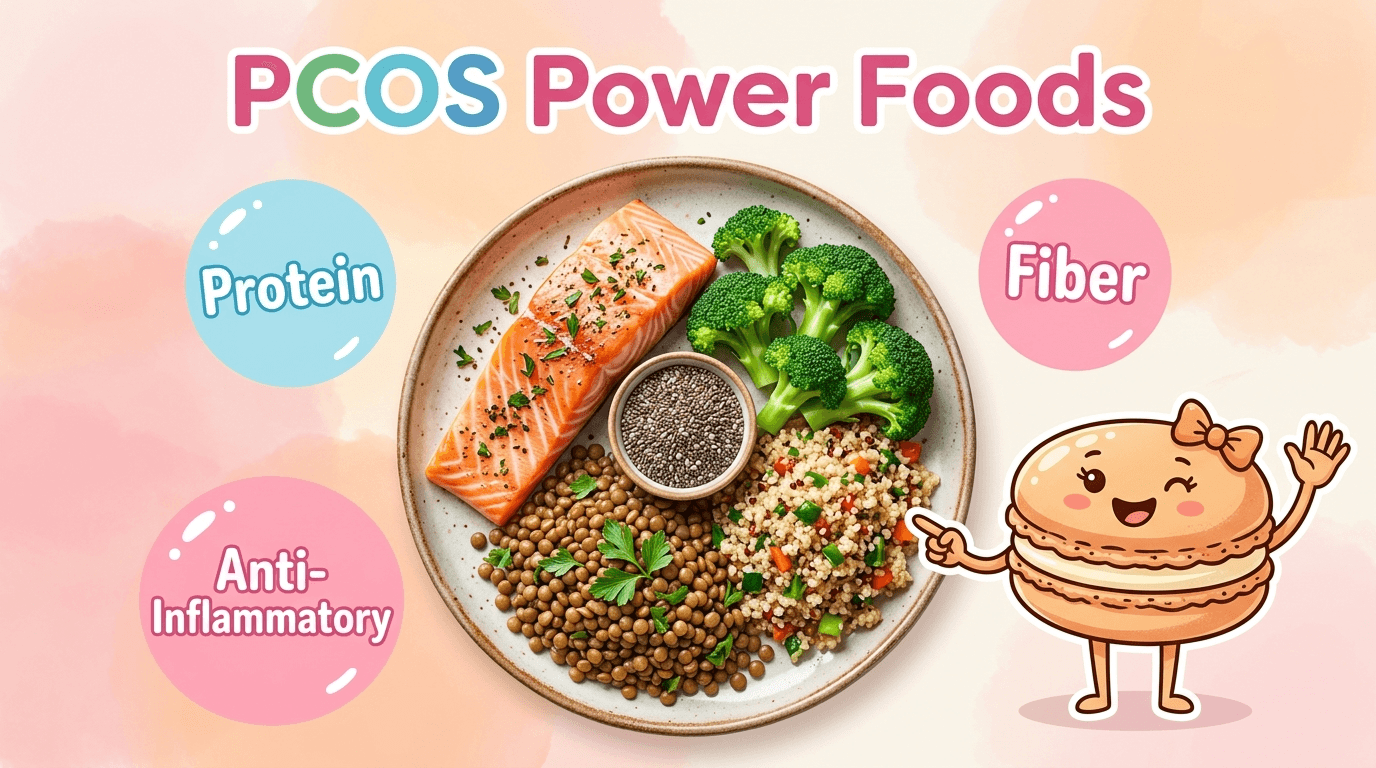
Prioritize foods that serve multiple functions: sardines provide omega-3s and protein, chia seeds offer fiber and anti-inflammatory fats, while broccoli sprouts contain concentrated sulforaphane for hormone metabolism. Buckwheat stands out as a gluten-free grain with complete protein and low glycemic impact. Recent studies suggest incorporating 1 tsp Ceylon cinnamon daily may help regulate cycles when added to meals like chia pudding. Soaked pumpkin seeds provide magnesium that many women report helps reduce sugar cravings associated with PCOS.
Meal plan for PCOS Diet vs a balanced meal plan
While both emphasize whole foods, PCOS eating specifically limits high-glycemic fruits (mango, pineapple) and often reduces dairy based on individual tolerance. It increases omega-3 rich foods (sardines, flaxseeds) and magnesium sources (cacao, pumpkin seeds) more aggressively than general healthy eating. The PCOS plate method also emphasizes strategic food sequencing—eating proteins/fats before carbs—which isn't typically necessary in standard balanced diets. Many find fermented foods like kimchi particularly beneficial for PCOS due to their gut-hormone axis support.
Meal Planning Ideas for PCOS Diet
Smart PCOS meal prep relies on strategic shortcuts: pre-portioning roasted edamame into snack bags, keeping frozen riced broccoli for quick sides, and stocking canned salmon for instant omega-3s. Many find sourdough bread a better option than regular wheat due to its fermentation process lowering glycemic impact—toast topped with almond butter and hemp seeds makes a balanced breakfast that stabilizes energy for hours.
Common pitfalls include grazing on dried fruit alone (which spikes blood sugar faster than fresh) or choosing processed 'protein bars' with hidden sugars. Tracking fiber-to-carb ratios proves more effective than calorie counting for PCOS, as it naturally guides choices toward blood sugar stability—aim for at least 3g fiber per 10g net carbs in meals like black bean tacos with avocado on almond flour tortillas.
For severe insulin resistance, the 'food sequencing' approach—eating protein/fat components first (like the tofu and greens in your bowl), then the complex carbs 10 minutes later—can reduce glucose spikes by up to 40%. This tactic works particularly well at lunch when cortisol levels are naturally higher. Keeping hard-boiled eggs and pre-cut jicama in clear containers at eye level increases compliance with healthy snacking habits between meals.
Hydration plays a surprising role—drinking 16oz of water before meals may improve insulin response by 10-15%. Herbal teas like spearmint show promise for reducing androgen levels when consumed regularly, while hibiscus tea provides antioxidants without caffeine that can disrupt cortisol. Those with PCOS often benefit from spacing meals 4-5 hours apart to allow insulin levels to normalize, rather than constant grazing.
Macaron's PCOS tools help visualize nutrient balance across meals while suggesting alternatives based on personal tolerances—like swapping dairy yogurt for coconut yogurt with pea protein. The app's progress tracker correlates symptom changes with dietary patterns, helping identify individual triggers like high-glycemic fruits or specific dairy products over 2-3 menstrual cycles for more personalized adjustments.
A 1-day meal plan for PCOS Diet
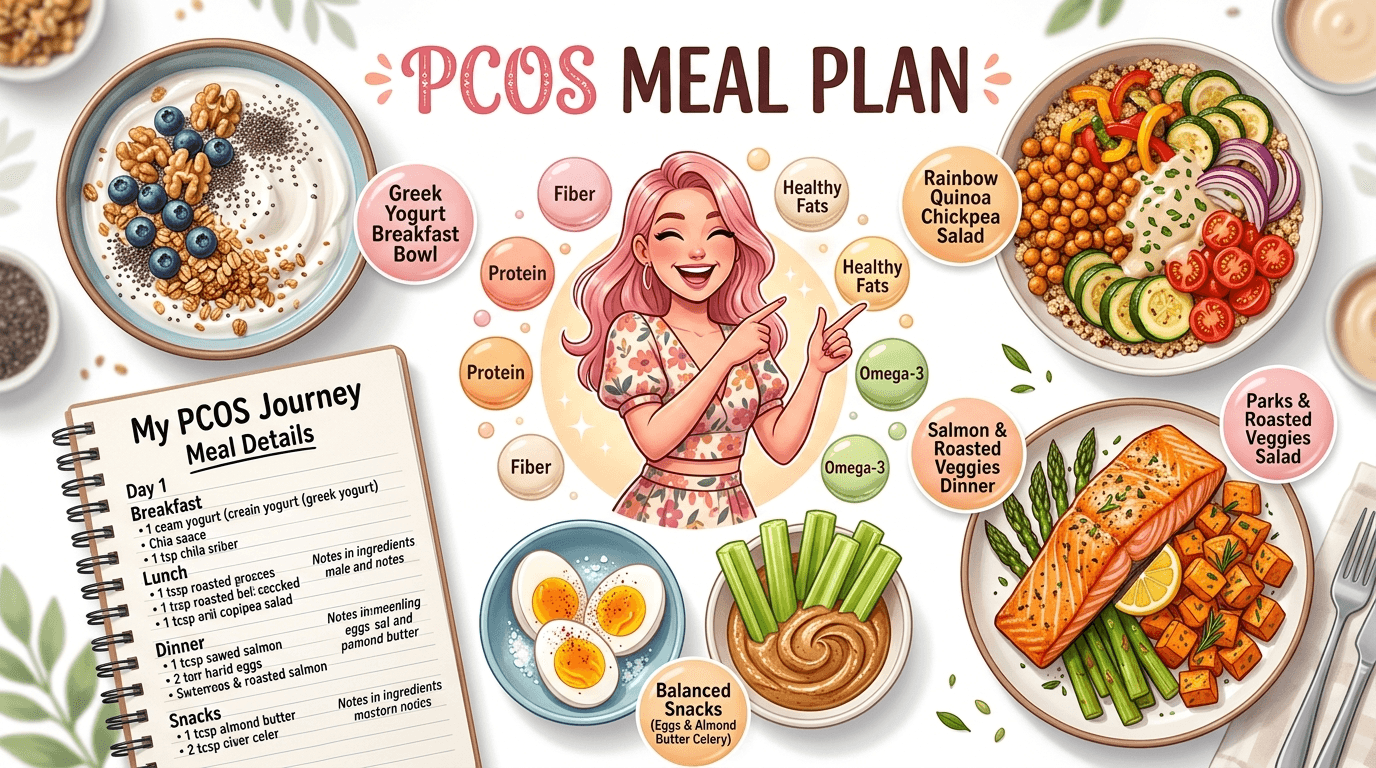
Breakfast: Coconut yogurt with walnuts, hemp seeds, and raspberries provides protein, healthy fats, and low-glycemic fruit. Lunch: Quinoa bowl with roasted chickpeas, kale, and tahini dressing balances complex carbs with plant protein and anti-inflammatory fats. Dinner: Baked cod with roasted Brussels sprouts and black rice offers omega-3s with fiber-rich sides. Snacks: Celery with almond butter or nori seaweed sheets with guacamole provide crunch without blood sugar spikes. Herbal spearmint tea supports hormone balance between meals.
Snacks, swaps, and grocery shortcuts for a PCOS Diet meal plan
Keep roasted edamame, individual guacamole packs, and nori seaweed snacks for blood-sugar-friendly options. Swap white rice for riced cauliflower (frozen works well), chips for roasted chickpeas, and sugary dressings for olive oil-based vinaigrettes with apple cider vinegar. Pre-cut jicama sticks and hard-boiled eggs in clear containers increase healthy snacking compliance. Many find sourdough bread a better option than regular wheat due to its lower glycemic impact—toast with almond butter makes a balanced snack.
Common meal plan mistakes on PCOS Diet
Many unintentionally spike blood sugar by eating high-glycemic fruits alone (like dates) or relying on processed 'protein bars' with hidden sugars. Others underestimate hydration needs—drinking water before meals directly improves insulin response. Meal skipping triggers cortisol spikes that worsen insulin resistance, while overly restrictive approaches often lead to rebound overeating. Surprisingly, some 'healthy' habits like excessive green tea consumption may interfere with folate absorption important for PCOS management.
How Macaron helps you stick to a PCOS Diet meal plan
Macaron's PCOS tools generate grocery lists organized by priority foods like proteins and fibrous veggies. Its recipe database highlights meals with optimal 3:1 fiber-to-net-carb ratios, such as lentil soups with added flaxseeds. The progress tracker correlates symptom changes with dietary patterns over 2-3 cycles, helping identify personal triggers like dairy or specific fruits. Smart substitutions suggest alternatives like coconut yogurt when dairy tolerance is uncertain.
Frequently Asked Questions
Yes, with strategic timing and pairing. Enjoy treats alongside protein/fat combos—like dark chocolate with almonds or berries with coconut yogurt—to slow sugar absorption. Research suggests having sweets immediately after a balanced meal causes less blood sugar disruption than eating them alone. For regular indulgences, monk fruit or allulose sweeteners often work better than sugar alcohols like erythritol, which may cause digestive issues. Keeping portions small (like 1 square of 85% dark chocolate) satisfies cravings without significant insulin impact.
Hormonal changes typically take 2-3 menstrual cycles, but many notice improved energy and reduced cravings within 3-4 weeks. Blood sugar stabilization often shows first through fewer afternoon crashes. Track non-scale victories like improved skin, regular bowel movements, or better sleep quality to maintain motivation. Consistency with 80% of meals yields better long-term results than perfectionism—allow flexibility for special occasions while maintaining core PCOS-friendly eating patterns most days.
Individual tolerance varies widely. Fermented dairy like yogurt and kefir often work best due to their probiotics supporting gut-hormone balance. Some find A2 dairy (from specific cow breeds) causes less inflammation. A 3-week elimination trial helps identify tolerance—if reintroducing, start with cultured products like skyr or aged cheeses and monitor for acne or bloating. Many successfully include dairy when paired with anti-inflammatory foods like turmeric or omega-3 rich fish, but alternatives like coconut yogurt work well for those sensitive.
Focus first on food quality and meal composition. The PCOS plate method naturally regulates appetite hormones without calorie counting—its balance of protein, fiber, and healthy fats promotes satiety. Some find tracking helpful temporarily to learn portion sizes, but long-term success comes from mastering hunger cues through balanced meals. Prioritize hitting protein targets (25-30g per meal) and fiber goals (3g per 10g net carbs) over calorie math for sustainable PCOS management.
When properly balanced, smoothies can be excellent PCOS meals. Include 20-30g protein (collagen, silken tofu), healthy fats (avocado, almond butter), and low-glycemic fruits like berries. Adding chia or flaxseeds boosts fiber to slow digestion—aim for at least 5g fiber per serving. Avoid fruit-dominant blends—even with 'natural' sugars, the liquid form spikes blood sugar faster than whole fruit. Many find drinking smoothies with a spoon to slow consumption improves satiety signals compared to gulping.
While not guaranteed, reducing insulin resistance often leads to gradual, sustainable weight loss over 3-6 months. Combine the PCOS diet with strength training for best results—muscle building improves glucose metabolism. Focus on body composition changes rather than scale weight, as inflammation reduction may initially cause water weight shifts. Those with severe insulin resistance may need to adjust carb timing (eating them later in the day) for optimal results while maintaining energy for workouts.
A variety works best—rotate between lentils, tempeh, salmon, turkey, and eggs to get different amino acid profiles and nutrients. Fatty fish like sardines provide bonus omega-3s, while plant proteins like edamame offer fiber. Those with insulin resistance may benefit from slightly higher protein intake (30g per meal) to improve glucose response. Soaking legumes overnight improves digestibility while maintaining their protein and magnesium content crucial for PCOS management.
Macaron auto-generates grocery lists organized by PCOS priority foods like proteins and fibrous veggies. Its recipe database highlights meals with optimal 3:1 fiber-to-net-carb ratios, such as black bean soup with added flaxseeds. The progress tracker correlates symptom changes with dietary patterns over 2-3 cycles, helping identify personal triggers. Smart substitutions suggest alternatives like coconut yogurt when dairy tolerance is uncertain, making adjustments effortless as you learn what works best for your body.
Read & discover
AI Personal Assistant
Free calculators


