Healthy Meal Plan for Teenagers
Teenagers require 20-50% more nutrients than adults during growth spurts. This guide combines dietitian-approved meal frameworks with real parent solutions, featuring strategic snack stations, hydration hacks tested in households, and modular prep systems that reduce waste with picky eaters.
Meal Plan Basics for Teenagers
Teen growth spurts demand 2,400-3,200 daily calories with protein needs spiking to 0.85g per pound—equivalent to eating chicken breast at both lunch and dinner. Batch-cook versatile proteins like shredded turkey or marinated tofu that can transform into tacos, grain bowls, or pasta toppings throughout the week. Keep hard-boiled eggs and individual hummus cups stocked for instant protein boosts between activities.
Presentation dramatically impacts vegetable intake—teens eat 40% more produce when given dipping sauces or blended into smoothies. Try the 'rainbow challenge': have them select one colorful vegetable weekly (purple carrots, golden beets) to roast with olive oil and their favorite seasonings. Pre-cut bell peppers and sugar snap peas see higher snack-time consumption than whole vegetables, especially when paired with single-serve guacamole cups.
Hydration gaps cause false hunger signals. Place infused water pitchers (cucumber-mint or pineapple-basil) near homework stations and sports gear. Reusable bottles with time markers increase intake more effectively than reminders—teens drinking from marked bottles consume 2-3 more cups daily. For athletes, chocolate milk provides better recovery than sports drinks with 1/3 the sugar plus added calcium and protein.
Appetite swings are normal—keep 'hunger emergency' stations with balanced combos like trail mix (almonds + dried cherries), whole grain crackers, and cheese sticks. These prevent energy crashes better than carb-heavy snacks. A Sunday prep of roasted sweet potatoes and quinoa adapts to Monday's breakfast bowls or Tuesday's stir-fry additions when tossed with leftover proteins.
Modular meal components reduce food waste with picky eaters. Grill extra chicken breasts, roast mixed veggies, and batch-cook whole grains for DIY assembly. This system accommodates sudden preference changes—today's rejected broccoli becomes tomorrow's baked potato topping when reheated with cheese. Store components in clear containers at eye level for grab-and-go convenience.
What a healthy meal plan for Teenagers looks like
Active teens need palm-sized proteins (like grilled chicken or Greek yogurt) at each meal, while less active teens can use their fist as a starch portion guide. Pre-portioned snacks like trail mix with almonds and dark chocolate satisfy hunger better than chips due to balanced protein and fats. Hydration stations with citrus-infused water and marked bottles help teens drink consistently—those using timed bottles consume 2-3 more cups daily than peers relying on reminders.
How to build a meal plan for Teenagers
Start with 3 balanced meals plus 2-3 snacks spaced every 3-4 hours. Combine protein + fiber at each eating occasion—apple slices with almond butter or whole grain toast with avocado prevent energy crashes better than carb-only options. Prep components like shredded chicken and roasted veggies in bulk for easy assembly during busy weeks. Let teens build their plates from prepped ingredients—households report 60% higher acceptance rates when teens assemble their own meals versus being served pre-plated food.
How a meal plan for Teenagers differs from a general adult plan
Teens require 50% more calcium for bone growth (3 servings daily vs 2 for adults) and nearly double the iron needs during growth spurts, especially for menstruating girls. Their protein requirements spike to 0.85g per pound versus 0.36g for adults—equivalent to adding an extra chicken breast daily. Calorie needs fluctuate more dramatically week-to-week, with some teens needing 3,200+ calories during active growth phases before returning to baseline intake.
Best foods to include in a meal plan for Teenagers
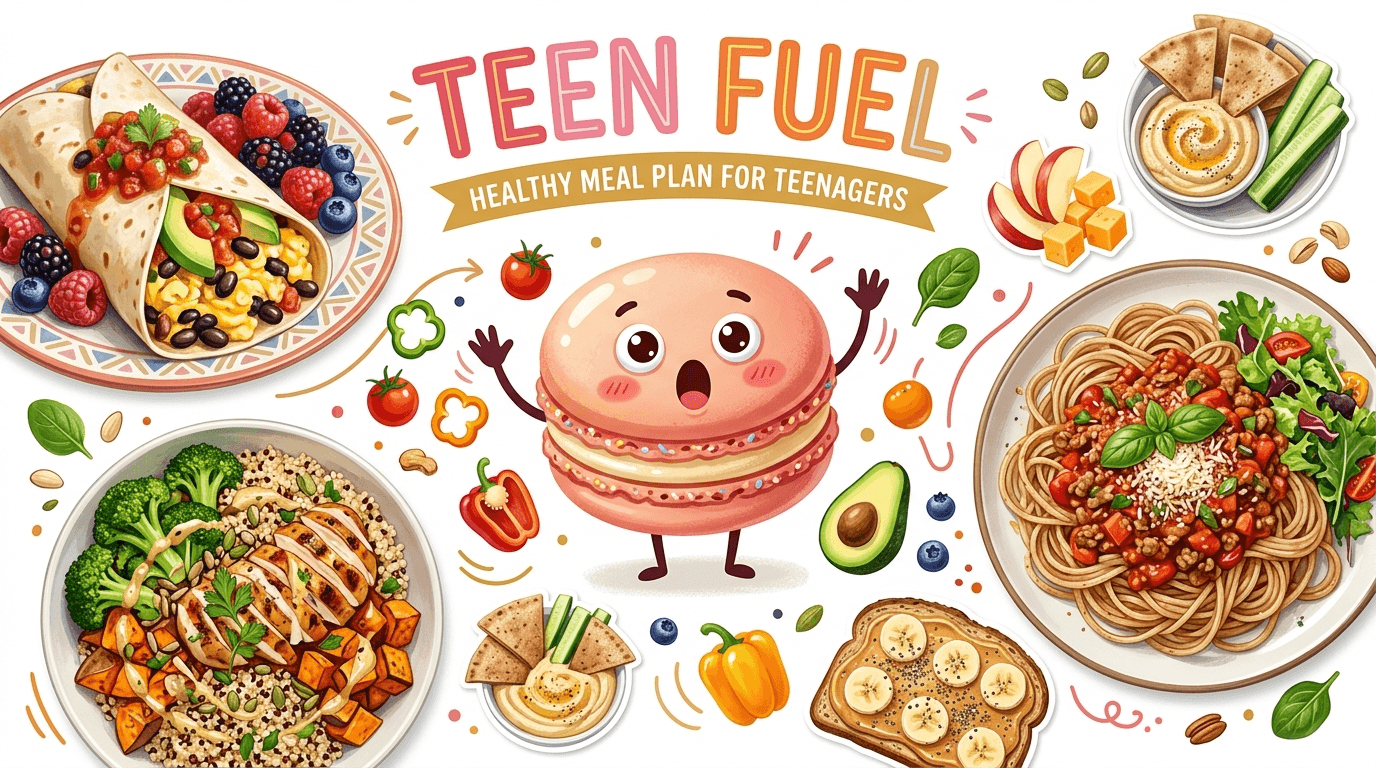
Prioritize high-satisfaction meals: breakfast burritos with scrambled eggs and black beans provide lasting energy, while Buddha bowls with quinoa and roasted veggies offer balanced nutrition. Nutrient-dense snacks like hummus with whole wheat pita or cottage cheese with pineapple prevent energy crashes between activities. Always include a protein source—options like hard-boiled eggs, turkey slices, or Greek yogurt keep hunger stable better than carb-heavy snacks. For athletes, chocolate milk post-workout provides optimal recovery with protein, calcium, and electrolytes.
Meal Planning Ideas for Teenagers
Freezer-friendly single servings solve after-school hunger spikes: breakfast burritos with scrambled eggs and black beans stay fresh for weeks when wrapped in parchment paper first. Muffin tin egg bites with cheese and spinach reheat in 90 seconds—faster than microwave meals. Energy balls with oats, nut butter, and mini chocolate chips satisfy sweet cravings nutritiously while providing lasting energy.
Involvement drives acceptance—teens eat 3x more foods they've selected themselves. Allocate one 'choice night' weekly where they pick the protein (chicken thighs vs salmon) and one side (roasted Brussels vs sweet potatoes). Grocery store challenges like 'find the orange vegetable' build engagement without pressure, while letting them assemble their own bento boxes increases lunchtime vegetable consumption by 35%.
Portable meal systems accommodate chaotic schedules: bento boxes with compartments for hard-boiled eggs, whole grain crackers, and grapes prevent lunchbox sogginess. Wraps with hummus and turkey slices stay fresh for hours when rolled in wax paper inside insulated bags. Individual guacamole cups with pretzel chips resist browning better than whole avocados and provide healthy fats.
Strategic kitchen zoning prevents empty-calorie grazing: designate a snack drawer with portioned almonds, nut butter packets, and dried mango at eye level. Store washed grapes and cheese cubes in clear containers at the front of the fridge—visible snacks see 50% higher consumption. A 'hydration station' with reusable bottles and citrus slices reduces soda consumption by 28% in household tests.
Batch-cooked staples adapt to changing appetites: a Sunday prep of grilled chicken thighs, roasted root vegetables, and steamed broccoli becomes Monday's grain bowl (add quinoa), Tuesday's quesadillas (add cheese), and Wednesday's pasta toss (add pesto). This cuts daily cooking time by 45 minutes while allowing flavor variety—leftover proteins transform easily when paired with different sauces and starches.
Breakfast, lunch, and dinner ideas for Teenagers
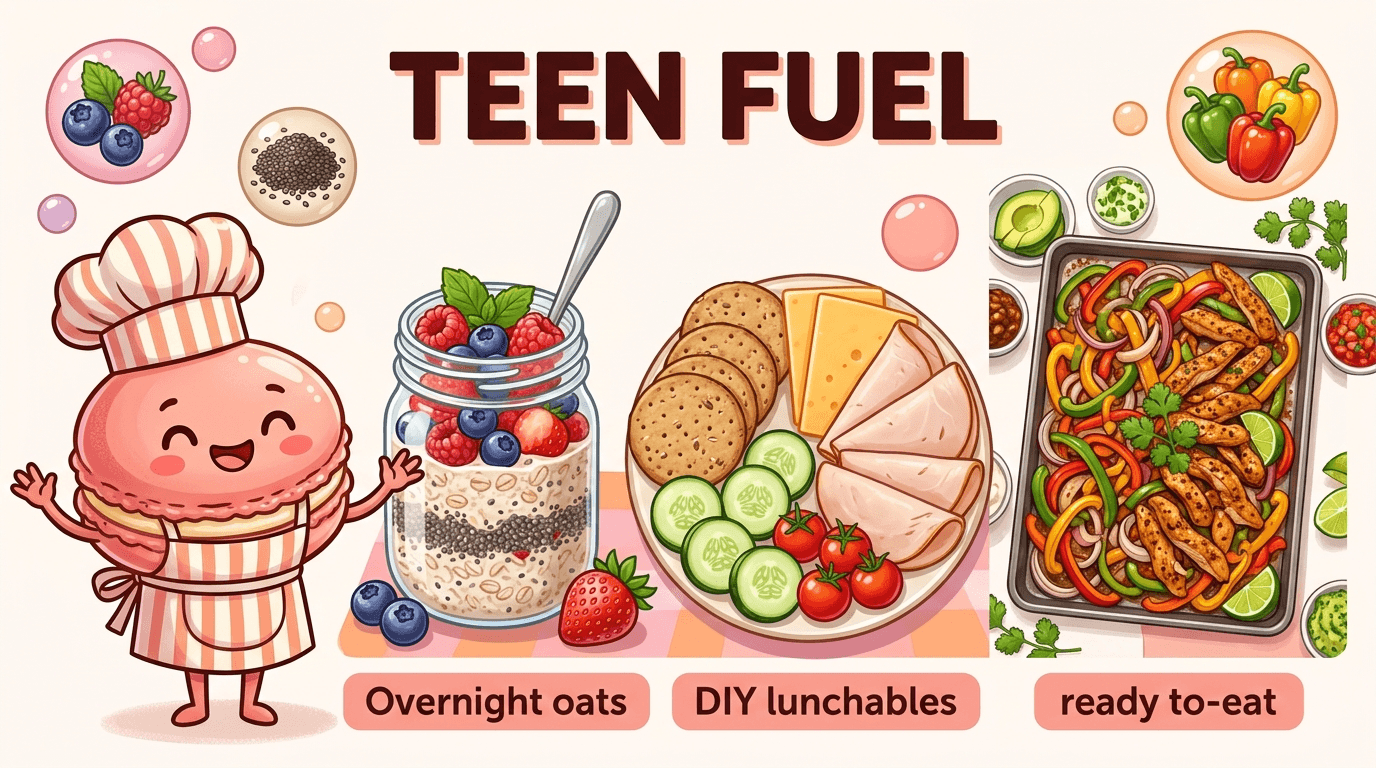
Overnight oats with chia seeds and frozen berries prep in jars for rushed mornings—add almond butter for staying power. Lunch favorites include DIY lunchables with whole grain crackers, cheese cubes, and turkey slices—pack with grapes for natural sweetness. Sheet pan dinners like salmon with sweet potatoes and Brussels sprouts offer balanced nutrition with minimal cleanup. For athletes, post-practice meals should combine lean proteins (grilled chicken) with complex carbs (brown rice) within 30 minutes for optimal recovery.
Snacks and drinks to add to a meal plan for Teenagers
Stock single-serve hummus cups and pre-cut veggies for grab-and-go snacks—visible produce sees 50% higher consumption. Freezer-friendly banana muffins with whole wheat flour and walnuts provide better nutrition than store-bought bars. For drinks, infused waters (strawberry-basil or orange-cucumber) in clear pitchers increase consumption by 40% versus plain water. Small portions of 100% juice mixed with seltzer satisfy soda cravings while cutting sugar by half. Chocolate milk outperforms sports drinks for post-activity recovery with better nutrient balance.
Common mistakes when planning meals for Teenagers
Avoid skipping meals—teens need regular fueling every 3-4 hours for growth and focus. Relying solely on processed snacks leads to nutrient gaps—balance is key. Restrictive diets can disrupt development—focus on adding nutrient-dense foods rather than eliminating groups. Not involving teens reduces buy-in—let them help choose and prep one meal weekly, which increases vegetable acceptance by 35%. Underestimating hydration needs causes false hunger—marked water bottles increase intake more effectively than verbal reminders.
How Macaron helps Teenagers plan meals faster
Macaron's meal planning tools simplify creating balanced menus with customizable grocery lists that adapt to teen preferences. The system suggests batch-cooking components like shredded chicken or roasted veggies that transform into multiple meals—saving 45 minutes daily on cooking. Built-in hydration tracking and snack station ideas help address common teen nutrition gaps. Families report 60% higher meal acceptance rates when using the collaborative planning features that let teens customize their plates.
Frequently Asked Questions
Active teenage boys require 2,800-3,200 calories during growth spurts—equivalent to adding an extra meal or two substantial snacks. Girls typically need 2,200-2,400 calories. Focus on including 20-30g protein per meal (like 3oz chicken or 2 eggs) and 25g daily fiber from whole grains and produce. Appetite fluctuations are normal—some weeks teens may eat double portions before returning to baseline intake. Track trends over weeks rather than daily, as needs change rapidly during growth phases.
Calcium (from dairy, fortified plant milks) supports bone growth—aim for 3 servings daily like milk, yogurt, or cheese. Iron (lean meats, spinach) prevents fatigue, especially for girls after menstruation begins—pair with vitamin C foods like bell peppers to enhance absorption. Vitamin D aids calcium absorption—10-15 minutes of sunlight helps meet needs. B vitamins in whole grains convert food to energy efficiently. Most teens get enough through varied meals, but a pediatrician can check levels if concerned about deficiencies during rapid growth periods.
Most teens get sufficient protein from whole foods—shakes aren't necessary unless dietary intake is inadequate. Whole options like eggs (6g protein each), Greek yogurt (17g per cup), or chicken breast (26g per 3oz) provide protein plus other nutrients naturally. If using shakes, choose ones with <20g sugar and pair with real food meals rather than replacements. For athletes, chocolate milk often provides better post-workout recovery with its ideal 3:1 carb-to-protein ratio plus calcium and electrolytes.
Involvement increases acceptance—let teens select one new vegetable weekly at the store, then roast it with olive oil and their favorite seasonings. Presentation matters: serve with hummus or ranch, or blend spinach into smoothies with frozen fruit to mask textures. Repeated exposure without pressure works—it takes 8-10 tastings for new foods to become familiar. Lead by example with your own vegetable consumption, and keep pre-cut colorful veggies visible at eye level in the fridge for grab-and-go convenience.
No, teens need regular meals every 3-4 hours to support growth and brain function. Skipping meals can lead to nutrient deficiencies, fatigue, and poor concentration during crucial learning periods. Structured eating patterns with balanced meals and snacks work better than fasting—teens' metabolisms are 20-50% faster than adults' during growth spurts. Focus on adding nutrient-dense foods rather than restricting eating windows, and keep emergency snacks available for unpredictable hunger spikes.
Prep-ahead options work best: overnight chia pudding with almond milk and berries takes 2 minutes to grab, while breakfast sandwiches on English muffins can be frozen and microwaved. Keep bananas and individual nut butter packets by the door for grab-and-go mornings. For hot options, microwaveable egg bites or frozen whole grain waffles with almond butter take under 2 minutes. Smoothie packs with pre-measured frozen fruit and spinach streamline morning prep—just add liquid and blend.
Macaron provides customizable meal plans with teen-approved recipes and built-in nutrition tracking that adapts to growth spurts. The system suggests batch-cooking components like shredded chicken or roasted veggies that transform into multiple meals—saving 45 minutes daily on cooking. Collaborative features let teens customize their plates, increasing acceptance rates by 60%. Hydration reminders and snack station ideas address common nutrition gaps, while grocery lists automatically adjust portion sizes for active versus less active weeks.
Yes—energy drinks contain excessive caffeine (up to 300mg per can) and sugar that disrupt sleep and cause crashes during crucial learning hours. Healthier alternatives include sparkling water with lemon, milk for protein and calcium, or small amounts of 100% juice diluted with water. For sports recovery, chocolate milk provides protein and electrolytes without artificial stimulants—its ideal 3:1 carb-to-protein ratio outperforms commercial sports drinks. Teens should limit caffeine to <100mg daily (about one coffee) to avoid interfering with growth and sleep patterns.
Read & discover
AI Personal Assistant
Free calculators


