Healthy Meal Plan for Vegans
75+ balanced vegan meal ideas with grocery hacks, batch cooking templates, and nutrient tracking to thrive on plant-based eating without stress or nutritional gaps.
Meal Plan Basics for Vegans
Successful vegan meal planning combines strategic protein pairings with flavor diversity - think lentil stews with citrus-dressed kale (iron + vitamin C) or peanut noodles with edamame (complete protein). Meal preppers who cook versatile bases like marinated tempeh and quinoa on Sundays report 45% less weekday cooking stress while maintaining nutrient density compared to daily scratch cooking.
Texture variety prevents palate fatigue - combining creamy avocado, crunchy roasted chickpeas, and chewy mushrooms in bowls satisfies better than single-texture meals. Dietary surveys show this approach increases vegetable intake by 3+ servings daily while reducing reliance on processed meat substitutes that often contain excess sodium and preservatives.
Budget-conscious shoppers save $25+ weekly by prioritizing dried beans (cook in Instant Pots for speed), frozen vegetables for off-season use, and bulk bin nuts/seeds. Umami boosters like nutritional yeast, miso paste and smoked paprika add depth to simple meals without expensive specialty ingredients.
Transitioning vegans should gradually increase fiber intake to avoid discomfort - start with 1/2 cup daily of lentils or beans, soaked overnight for better digestibility, before scaling up. Staying hydrated and including fermented foods like kimchi or sauerkraut supports gut adaptation during the adjustment period.
Nutritionally complete vegan meals follow the 'rainbow plate' principle: 3+ colorful vegetables from different plant families paired with complementary proteins like rice + peas or hummus + whole wheat. This ensures optimal amino acid profiles while providing diverse phytonutrients from purple cabbage, orange sweet potatoes and dark leafy greens.
What a healthy meal plan for Vegans looks like
Optimal vegan plates combine protein sources strategically throughout the day - think chickpea curry with brown rice (complete protein) for lunch and almond butter on whole grain toast at breakfast. Aim for 1 cup cooked legumes daily, rotating between black beans (iron-rich), lentils (folate-packed) and edamame (complete protein) for mineral diversity. The visual '50/25/25' plate guide ensures balance: half non-starchy vegetables like broccoli or zucchini, one-quarter plant proteins like tempeh or seitan, and one-quarter whole grains or starchy veggies like roasted sweet potatoes. Include 1-2 tablespoons of seeds or nuts daily for healthy fats and minerals.
How to build a meal plan for Vegans
Start by batch-cooking 3 protein staples like baked tofu (flavored differently each week), lentil soup, and chickpea salad to mix-and-match. Pair iron-rich spinach with vitamin C-packed bell peppers in wraps or stir-fries to boost absorption by up to 6x. Keep fortified plant milks and nutritional yeast on hand for easy calcium and B12 - stir into oatmeal or blend into creamy sauces. Meal prep surveys show pre-chopping weekday veggies on Sundays reduces cooking stress significantly while increasing vegetable consumption. Create a rotating pantry list of 10 versatile ingredients like quinoa, canned tomatoes, and frozen peas to streamline shopping.
How a meal plan for Vegans differs from a general adult plan
Vegan meal plans require more intentional iron sources (lentils, pumpkin seeds), zinc (cashews, chickpeas), and omega-3s (flax, chia) compared to omnivorous diets. They also need reliable B12 supplementation through fortified foods or supplements, as this nutrient isn't reliably available from plants. Protein combinations must be considered across meals - pairing grains with legumes or nuts/seeds ensures complete amino acid profiles. Calcium sources shift from dairy to fortified plant milks, tofu set with calcium sulfate, and leafy greens like collard greens and bok choy.
Best foods to include in a meal plan for Vegans
Nutritional powerhouses include lentil stews with kale (iron + vitamin C), chia pudding with berries (omega-3s + antioxidants), and tahini-dressed grain bowls (calcium + whole grains). For beginners, black bean sweet potato tacos with avocado provide complete protein, healthy fats, and fiber in one familiar format. Meal preppers swear by freezer-friendly chili and curried chickpea salads that improve in flavor over 3-4 days. Keep convenient proteins like canned beans, pre-marinated baked tofu, and shelled edamame for quick meals when time is limited.
Meal Planning Ideas for Vegans
Weekly meal preppers reduce decision fatigue by preparing versatile components like roasted vegetable medleys (cauliflower, carrots, Brussels sprouts) and cooked grains that transform into different meals - toss with tahini for grain bowls, wrap in tortillas with beans, or stir-fry with tofu. This modular approach increases vegetable consumption by 2+ daily servings according to food journal analysis.
Cost-effective kitchen hacks include making almond milk ($0.50/quart vs $4 store-bought), buying frozen spinach (retains 90% nutrients at half fresh cost), and using aquafaba (chickpea liquid) as an egg substitute in baking. Bulk purchases of lentils, oats and nutritional yeast provide pantry staples at 30-50% savings compared to small packages.
Time-saving tools like immersion blenders for creamy soups and food processors for homemade hummus cut prep time significantly. Pre-chopped frozen onions/garlic eliminate tedious prep while maintaining flavor integrity - ideal for busy nights when making chili or curry from scratch feels overwhelming.
Common nutritional gaps like zinc (found in pumpkin seeds) and omega-3s (from flax/chia) are easily addressed by strategic additions - sprinkle ground flax on oatmeal, add hemp seeds to smoothies, or include tahini in dressings. Tracking apps help identify individual needs, with many long-term vegans requiring only B12 supplementation when eating diverse whole foods.
Global flavors prevent culinary boredom while broadening nutrient sources - keep miso paste for Japanese soups, harissa for North African stews, and coconut milk for Thai curries. These ingredients introduce varied preparation methods that make plant proteins like tofu and tempeh more exciting through marinating, grilling or braising techniques.
Breakfast, lunch, and dinner ideas for Vegans
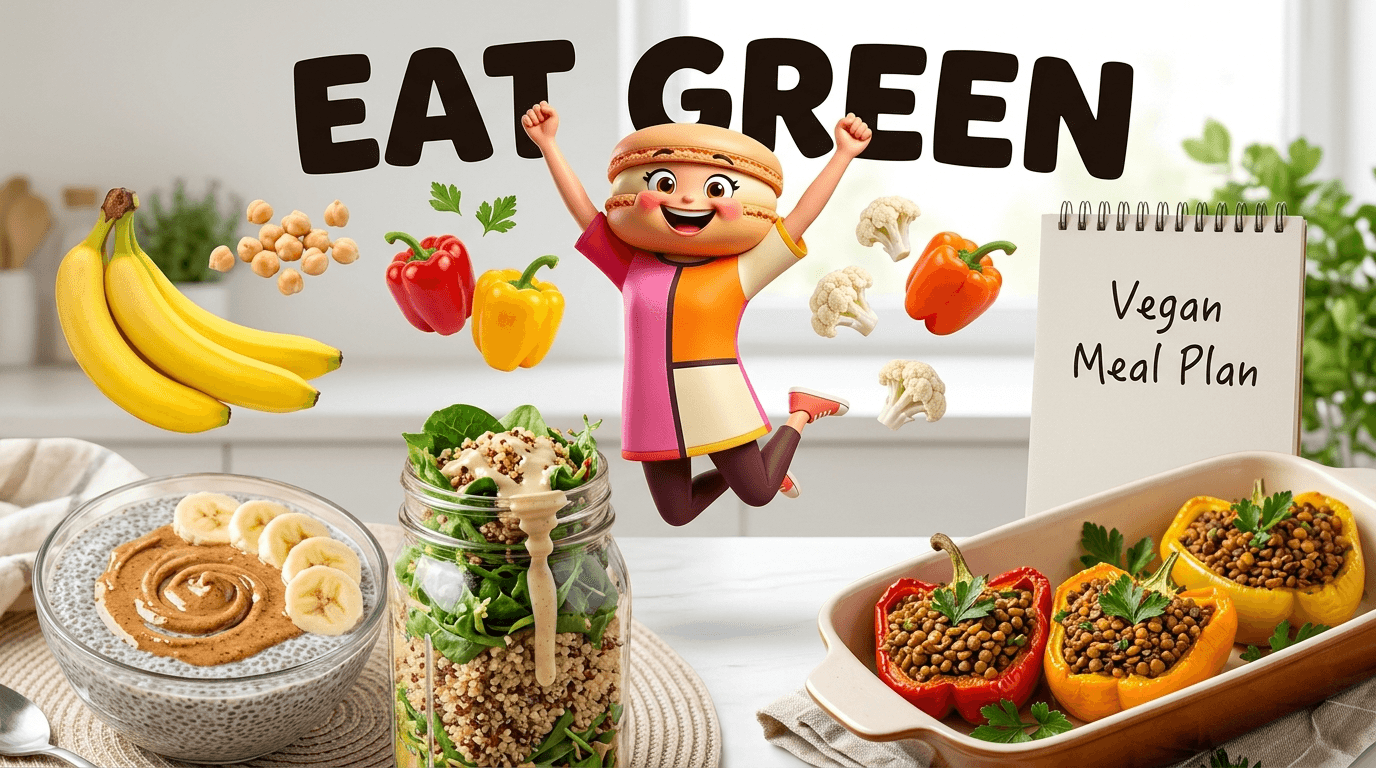
Morning: Overnight oats with chia seeds, almond butter and banana or savory tofu scramble with turmeric and spinach. Lunch: Mason jar salads with quinoa, roasted chickpeas and tahini dressing or peanut noodle bowls with edamame and shredded veggies. Dinner: Stuffed bell peppers with lentils and walnuts or coconut curry with chickpeas and cauliflower over jasmine rice. Repurpose leftovers creatively - turn roasted veggies into next-day grain bowls with added greens and hemp seeds, or blend extra soup into a sauce for pasta.
Snacks and drinks to add to a meal plan for Vegans
Nutrient-dense snacks include roasted edamame (11g protein per 1/2 cup), hemp seed energy balls with dates (omega-3s), and apple slices with almond butter. For hydration, try hibiscus tea (iron-rich) or golden milk with turmeric and oat milk (anti-inflammatory). Pre-workout, banana with peanut butter provides quick energy, while nighttime might call for magnesium-rich pumpkin seeds to support muscle recovery. Keep portable options like individual nut butter packets, roasted chickpeas, and trail mix for on-the-go needs.
Common mistakes when planning meals for Vegans
New vegans often overlook zinc sources (pumpkin seeds, cashews), rely too heavily on processed meat substitutes high in sodium, or don't account for higher calorie needs from whole foods. Another pitfall is skipping fortified foods for B12/calcium - nutritional yeast and fortified plant milks help fill these gaps conveniently. Some underestimate transition time for increased fiber intake, leading to discomfort - gradually introduce legumes and stay hydrated. Meal planning without protein pairings (like eating only fruit for breakfast) can leave energy levels unstable.
How Macaron helps Vegans plan meals faster
Our meal planner suggests balanced vegan combinations based on your pantry items, tracking key nutrients like iron, calcium and B12 to prevent gaps. The grocery list generator organizes items by store section (produce, bulk bins) to streamline shopping. Batch cooking templates provide adaptable recipes for Sunday prep that create multiple meals - like roasting trays of vegetables that become grain bowls, wraps and stir-fry bases throughout the week. Nutrient reports highlight areas to focus on in upcoming meals.
Frequently Asked Questions
Most vegans easily meet protein needs through daily combinations of legumes, whole grains, nuts and seeds. A typical day might include oatmeal with peanut butter (12g protein), quinoa salad with chickpeas (18g), and tofu stir-fry with brown rice (22g) - totaling about 70g protein. Athletes can focus on higher-protein options like seitan (25g per 3oz) or edamame (17g per cup), while incorporating protein-rich ancient grains like teff (10g per cooked cup). Strategic pairings like rice + beans or hummus + whole wheat provide complete amino acid profiles without special planning.
Top plant iron sources include fortified cereals (18mg per serving), cooked lentils (6.6mg per cup), and pumpkin seeds (2.5mg per ounce). Cooking acidic foods like tomato sauce in cast iron increases iron content by up to 16%. Absorption improves dramatically when paired with vitamin C - try citrus-dressed spinach salads or adding red bell peppers to bean soups. Avoid coffee/tea within 1 hour of iron-rich meals as tannins inhibit absorption. Soaking beans and grains reduces phytates that can block mineral absorption.
Calcium-set tofu (up to 400mg per half cup) and fortified plant milks (300mg per cup) provide concentrated sources. Leafy greens like collards (268mg per cooked cup) and bok choy (158mg per cup) offer bioavailable calcium when cooked. Sesame seeds (88mg per tbsp) can be blended into tahini for dressings or sprinkled on salads. Those avoiding fortified foods may benefit from calcium-rich mineral waters or algae-based supplements. Include calcium sources at multiple meals since plant-based calcium isn't absorbed as efficiently as dairy calcium.
The foundation of vegan eating - beans, grains, and seasonal produce - costs less than meat-centric diets. Dried lentils provide protein at $0.17 per 10g compared to $0.83 for chicken. Smart shoppers save further by buying bulk nuts, frozen veggies, and making their own plant milks. Costs rise only when relying heavily on specialty items like vegan cheeses or mock meats - these can be used sparingly as flavor accents rather than staples. Ethnic markets often offer better prices on tofu, spices and bulk grains than conventional supermarkets.
B12 supplementation is essential as it's not reliably found in plant foods. Vitamin D (especially in winter months), algae-based omega-3s, and iodine (from seaweed or supplements) may also be recommended depending on individual needs. A blood test after 3-6 months can identify specific requirements - some thrive with just B12 while others benefit from additional support. Focus first on diverse whole foods before adding supplements, using fortified foods like nutritional yeast for B12 between supplement doses.
Flax/chia eggs (1 tbsp ground seeds + 3 tbsp water per egg) work well in muffins and quick breads, adding omega-3s. Mashed banana or applesauce (1/4 cup per egg) adds moisture to cakes and pancakes. Silken tofu blended with leavener mimics eggs in custards and cheesecakes. Commercial egg replacers work for delicate recipes like soufflés. For binding in burgers or meatballs, try mashed beans, cooked oatmeal or potato starch. Each substitute works best in specific applications - flax eggs brown nicely while banana adds sweetness.
15-minute options include chickpea salad wraps with pre-shredded veggies, peanut noodle bowls with frozen edamame, and black bean tacos with avocado. Keep cooked grains and marinated tofu ready for instant grain bowls - just add greens and dressing. One-pot meals like minestrone with beans or coconut curry with chickpeas provide leftovers for next-day lunches. Frozen vegetable blends stir-fried with canned beans and sauce make an easy skillet meal. Pre-made sauces like pesto or peanut sauce transform simple ingredients into flavorful dishes quickly.
Most restaurants offer vegan options or can modify dishes - Italian places often have pasta with marinara, Mexican restaurants can make bean burritos without cheese, and burger joints may have veggie patties. Ethnic cuisines like Indian (dal, vegetable curries), Thai (tofu pad thai), and Mediterranean (falafel, hummus) typically have naturally plant-based choices. Call ahead for special occasions, and look for menus marked with vegan symbols. Chain restaurants increasingly offer dedicated vegan options like the Beyond Burger or cauliflower wings.
Read & discover
AI Personal Assistant
Free calculators


