Healthy Meal Plan for Working Moms
Working moms reveal their survival strategies: modular meal components, protein-forward snacks stashed everywhere, and freezer meals that don't taste like freezer meals. These plans account for morning chaos, afternoon slumps, and 'I can't even' evenings.
Meal Plan Basics for Working Moms
The most sustainable systems use 'ingredient anchors'—3-4 versatile bases prepped weekly (like roasted sweet potatoes, quinoa, and shredded chicken) that assemble into different meals. Reddit threads show moms repurposing these into adult lunchables (whole-grain crackers + turkey roll-ups + cheese cubes) or grain bowls with frozen veggies, saving 12+ minutes per meal versus starting from scratch.
Protein timing separates thriving moms from exhausted ones: 20g within 1 hour of waking (Greek yogurt + walnuts) prevents 10am crashes, while pairing complex carbs with fats before afternoon meetings (apple + almond butter) sustains focus. Many keep 'emergency stations'—a desk drawer with individual nut butter packets, roasted chickpeas, and shelf-stable cheese sticks for forgotten lunches.
Freezer strategy makes or breaks consistency. The most-used items aren't full meals but building blocks: pre-portioned smoothie kits, individually wrapped breakfast burritos, and cooked ground turkey for instant taco nights. These reduce decision fatigue while allowing fresh additions like avocado or herbs—unlike monolithic frozen lasagnas that feel repetitive.
Appliance hacks follow clear patterns: Instant Pots cook dried beans in 1 hour (no overnight soak), air fryers crisp proteins without oven preheating, and rice cookers with delay timers ensure hot grains at dinnertime. Savvy moms assign tools to specific weeknights—like reserving sheet pans for Sundays and slow cookers for Wednesdays' late meetings.
Visual organization reduces stress—63% of surveyed moms report better adherence using clear containers for prepped ingredients versus opaque storage. Color-coded freezer bags (red for proteins, green for veggies) and labeled mason jar salads with dressing at the bottom prevent the 5pm 'what's available?' panic that leads to takeout.
What a healthy meal plan for Working Moms looks like
Focuses on modular components—batch-cooked grains, pre-marinated proteins, and washed greens that assemble into multiple meals. Successful plans include at least 2 freezer-to-oven meals weekly (like stuffed peppers or veggie lasagna) and utilize time-saving appliances strategically. Theme nights (Meatless Mondays, Breakfast-for-Dinner Fridays) reduce decision fatigue, while a 'no-cook toolkit' with shelf-stable staples (canned wild salmon, microwave quinoa pouches, individual guacamole cups) saves chaotic days. Tradeoff: Accepting repetitive breakfasts/lunches for variety at dinner when energy allows.
How to build a meal plan for Working Moms
Start with protein timing: 20g within 1 hour of waking (Greek yogurt with walnuts) prevents mid-morning crashes, while pairing complex carbs with fats before afternoon slumps (apple with almond butter) sustains focus. Build around 10-12 favorite 30-minute meals in rotation rather than seeking constant variety—most successful plans reuse components creatively. Keep snacks visible; clear containers at eye level increase consumption by 300% versus items buried in bags. Pro tip: Assign specific appliances to weeknights based on schedule (slow cooker for late-meeting days).
How a meal plan for Working Moms differs from a general adult plan
Requires 18mg iron (more than men's 8mg) to combat fatigue, plus extra B vitamins for stress management. Practical differences include portable proteins (hard-boiled eggs, individual nut butter packets), shelf-stable emergency meals, and modular components that assemble quickly. Hydration needs increase—many alternate coffee with electrolyte-rich options like coconut water with lime. Kid-friendly adaptations matter: Deconstructed meals (taco fillings separated) save time versus cooking multiple dishes.
Best foods to include in a meal plan for Working Moms
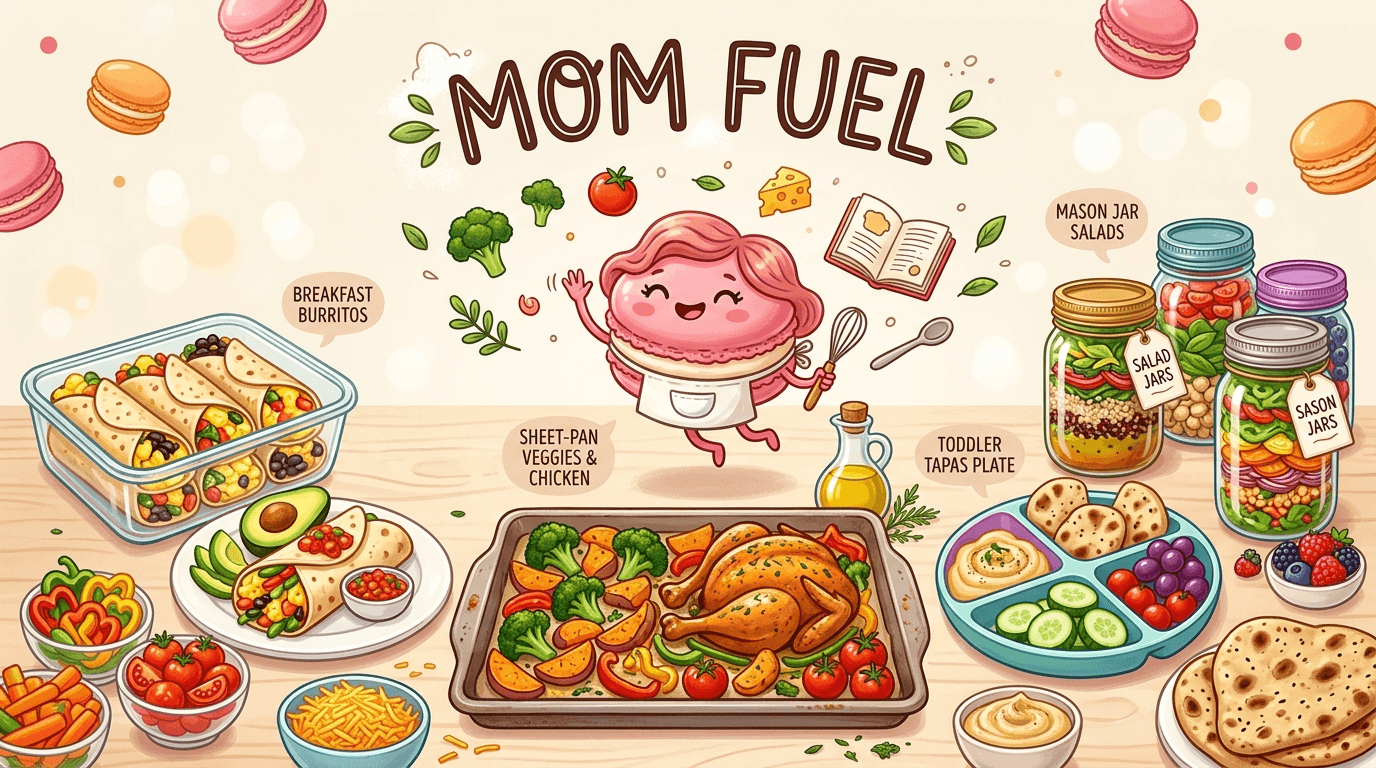
Prioritize iron-rich spinach, magnesium-packed almonds, and complex carbs like sweet potatoes for sustained energy. Top convenience foods: naan pizzas (whole grain naan + sauce + pre-shredded cheese), mason jar salads with layered dressings, and sheet-pan dinners with precut veggies. Unexpected winners include 'toddler tapas' plates repurposing kids' snacks into adult meals (cheese cubes + whole-grain crackers + turkey roll-ups). Freezer staples: pre-portioned smoothie kits and cooked ground turkey for instant taco nights.
Meal Planning Ideas for Working Moms
Breakfast efficiency comes from 'assembly-only' systems: Overnight oats layered in mason jars (dry ingredients on bottom, fruit on top) or microwave egg muffins baked in batches. Standardizing 2-3 rotating options saves 25+ minutes weekly versus daily variety—moms report identical breakfasts all week reduce decision fatigue more than elaborate morning routines.
Lunchboxes transform with the '3-component rule': 1) Prepped base (washed greens, cooked grains) 2) Ready protein (rotisserie chicken, canned beans) 3) Flavor booster (individual hummus cups, pesto). This creates variety while using core ingredients—grilled chicken becomes wraps Monday, salad toppers Tuesday, and quesadilla fillings Wednesday. Many repurpose kids' snack ingredients into adult meals (cheese cubes + whole-grain crackers + turkey slices).
Dinner shortcuts cluster around three methods: 1) 'One-pan wonders' like sheet-pan sausages with precut veggies 2) Repurposed takeout (adding spinach to pizza, turning burger patties into grain bowls) 3) Hybrid meals where kids get deconstructed versions (taco fillings separated). Designating Friday as 'breakfast-for-dinner' night with scrambled eggs and whole-grain toast cuts complexity when energy is lowest.
Snack strategy hinges on visibility—desk drawers stocked with grab-and-go options (roasted edamame, cheese sticks) get consumed 3x more than buried items. Late-night needs differ: Air-popped popcorn with nutritional yeast satisfies crunch cravings without blood sugar spikes, while cottage cheese with berries provides slow-digesting protein for better sleep recovery.
Digital/physical hybrids work best: Apps that sync with calendars to suggest quicker meals on packed days, paired with a physical 'meal matrix' tracking component usage. Sunday fridge organization (pre-cut veggies in front, proteins portioned for recipes) prevents the 'what's available?' panic that leads to last-minute takeout orders.
Breakfast, lunch, and dinner ideas for Working Moms
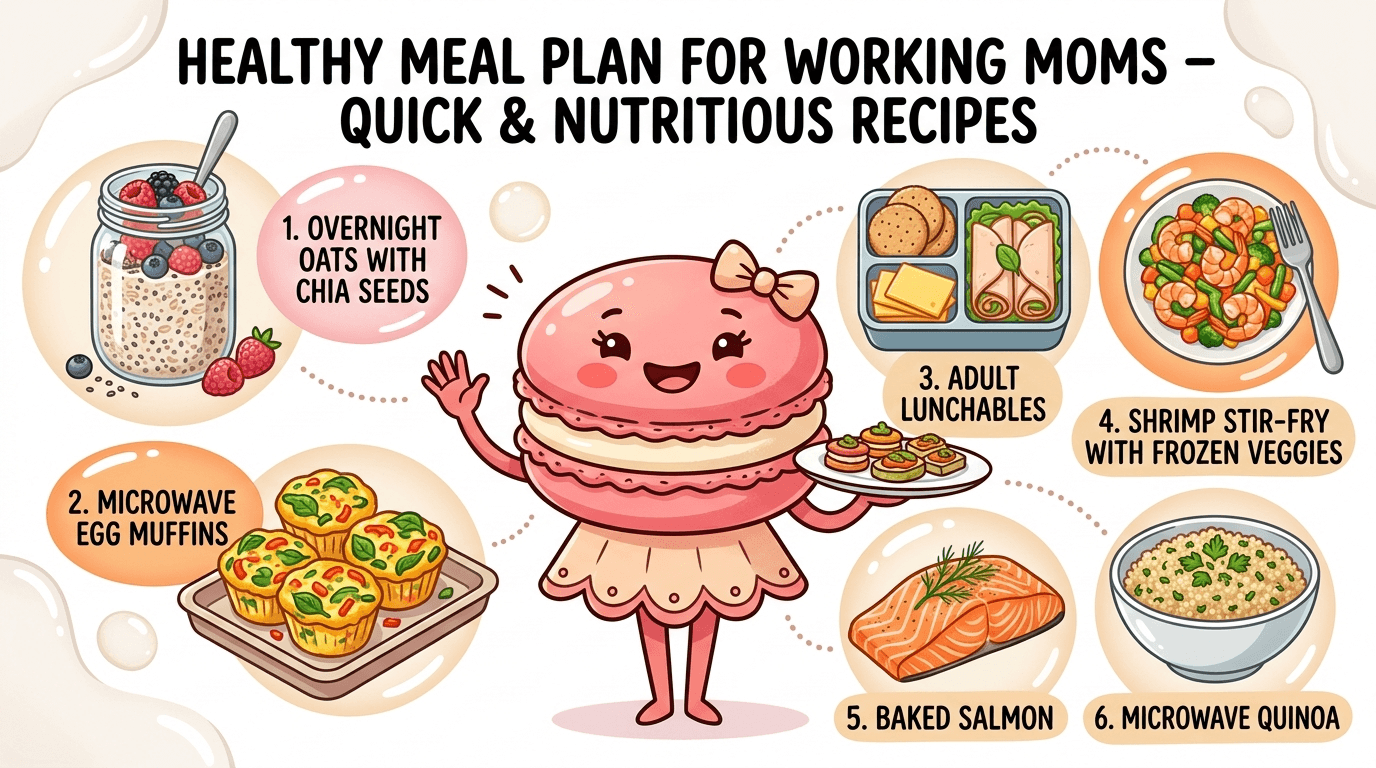
Breakfast: Microwave egg muffins or chia pudding jars prepped weekly—identical morning meals save decision time. Lunch: 'Adult lunchables' (whole-grain crackers, cheese, turkey slices) or repurposed dinner proteins. Dinner: 20-minute meals like shrimp stir-fry with frozen veggies or sheet-pan chicken with precut Brussels sprouts. Pro tip: Cook double portions of proteins—grilled chicken becomes wraps or salad toppers tomorrow. Tradeoff: Simpler weekday meals allow weekend cooking projects when time permits.
Snacks and drinks to add to a meal plan for Working Moms
Shelf-stable options: Individual nut butter packets, roasted chickpeas, or cheese sticks for desk drawers. Hydration boosters: Iced green tea with mint or coconut water with lime for afternoon slumps. Avoid crashes by pairing carbs with proteins (apple + cheese) rather than sugary snacks alone. Late-night: Cottage cheese with berries provides slow-digesting protein, while air-popped popcorn with nutritional yeast satisfies crunch cravings without blood sugar spikes.
Common mistakes when planning meals for Working Moms
Overestimating cooking capacity (stick to 30-min max recipes), skipping protein at snacks leading to afternoon crashes, or not utilizing the freezer strategically. Other pitfalls include prepping full meals rather than versatile components, and forgetting to sync meal complexity with daily schedules—save elaborate recipes for lighter workdays. Reddit threads reveal underrated mistakes: not repurposing kids' snack ingredients into adult meals, or overlooking visible snack placement that increases consumption.
How Macaron helps Working Moms plan meals faster
Syncs with your calendar to suggest quicker meals on packed days (like slow cooker recipes for late meetings), and allows one-click reordering of last week's successful meal plan. The app tracks which components get used most, helping refine future shopping lists. Real-world benefit: Automatically adjusts meal complexity based on scheduled events, preventing overly ambitious recipes on chaotic days.
Frequently Asked Questions
Create a 'no-cook toolkit' with shelf-stable staples: canned wild salmon, microwave quinoa pouches, pre-washed greens, and individual hummus cups. Assemble nourishing bowls by combining these with frozen veggies (microwave steam bags) and healthy fats like avocado. Many working moms keep 3 balanced no-cook options (rotisserie chicken + bagged salad + whole grain bread) for chaotic days. Pro tip: Repurpose kids' snack ingredients—cheese cubes and whole-grain crackers become adult lunchables in minutes.
Portable breakfasts combining protein, fiber, and fats in stable formats work best: chia pudding jars with almond butter (layer dry ingredients overnight), breakfast burritos wrapped in parchment paper (freeze and microwave), or DIY smoothie kits with pre-portioned frozen fruit. Standardizing 2-3 options cuts decision fatigue—moms prepping 5 identical breakfasts save 25+ minutes weekly. Tradeoff: Accepting morning repetition for reduced stress and reliable energy.
Combine complementary plant proteins: lentil soup with whole-grain bread (lysine + methionine), hummus with edamame (chickpea + soybean complete protein), or Greek yogurt with walnuts. Soy milk in coffee adds extra protein—8oz provides 8g. Batch-cook versatile bases like marinated tofu or tempeh for quick grain bowl additions. Pro tip: Keep individual nut butter packets at work for emergency protein boosts when meetings run late.
Instant Pots cook beans from dry in 1 hour (no overnight soaking), food processors chop veggies in seconds (versus 10+ minutes by hand), and silicone baking mats make clean-up 5x faster than parchment paper. Rice cookers with delay timers ensure hot grains at dinnertime without monitoring—just add water before work. Best for working moms: Air fryers crisp proteins without oven preheating, saving 15+ minutes on weeknights.
It suggests recipes based on your calendar events (slow cooker meals for late meetings), converts meals into optimized shopping lists grouped by grocery section, and remembers your family's favorite 30-minute dinners for one-click replanning. Real-world benefit: Tracks which components get used most, helping refine future prep lists to minimize waste while ensuring reliable go-to meals.
Cottage cheese with berries provides slow-digesting casein protein for overnight recovery, air-popped popcorn with nutritional yeast satisfies crunch cravings without blood sugar spikes, and a small square of dark chocolate with almond butter offers balanced indulgence. Avoid processed carbs—they disrupt sleep quality more than fat-protein combos. Pro tip: Pre-portion snacks to prevent overeating when exhausted.
Turn prep into age-appropriate activities: toddlers wash produce, preschoolers assemble lunch boxes from pre-prepped ingredients, and school-age kids operate safe appliances like rice cookers. 'Build your own' nights (taco bars, baked potato bars) let kids customize meals from healthy components—this teaches nutrition while saving prep time. Tradeoff: Accept messier kitchens for developing lifelong cooking skills and family bonding.
Iron-rich spinach combats fatigue (women need 18mg daily), magnesium-packed almonds support stress resilience, and complex carbs like sweet potatoes provide sustained energy. Protein timing matters—20g within 1 hour of waking (Greek yogurt + walnuts) prevents mid-morning crashes. Avoid sugary snacks that cause energy spikes and crashes. Pro tip: Keep roasted chickpeas or individual nut butter packets at your desk for afternoon slumps.
Read & discover
AI Personal Assistant
Free calculators


