What Should I Eat for Anemia?
Evidence-based meal planning for anemia that maximizes iron absorption through strategic timing, food pairings, and cooking methods. Macaron helps you avoid common pitfalls while building iron-rich meals.
How to Eat for Anemia
Fortified cereals paired with vitamin C sources like orange juice outperform many whole food options in bioavailability studies, delivering 100% DV per serving when consumed separately from calcium-rich foods. This breakfast combo proves particularly effective for those who struggle with traditional iron-rich foods.
Fermented grains and legumes show 20-30% higher iron absorption rates compared to standard preparations. Sprouted lentils in salads or sourdough bread with meals provide easier-to-absorb plant-based iron while maintaining dietary preferences.
Meal sequencing significantly impacts absorption - consuming iron blockers like eggs or turmeric 2 hours before/after iron-rich meals preserves nutrient uptake. This scheduling flexibility allows for dietary preferences without compromising iron absorption.
Cast iron cooking adds 2-3mg iron per tomato-based meal, complementing modern nutrition strategies. This traditional method proves especially valuable for those avoiding supplements, with acidic foods like tomato sauce showing the highest iron transfer.
Reddit communities reveal practical hacks like adding lemon juice to spinach or choosing honey bunches of oats cereal. These real-world adaptations demonstrate how small dietary tweaks can significantly impact iron levels without major lifestyle changes.
A practical way to eat for Anemia
Combine heme and non-heme sources strategically - try grass-fed beef stir-fry with broccoli (heme iron + vitamin C) for dinner, then iron-fortified oatmeal with prune puree (non-heme + vitamin C) for breakfast. This alternating pattern covers absorption bases while preventing dietary fatigue. Even simple additions like roasted red pepper strips in bean salads can boost uptake by 50%.
How to eat for Anemia
Structure meals around absorption windows - enjoy calcium-rich yogurt at 10am, iron-rich lunch at noon, and avoid tea until 2pm. This rhythm allows nutrient optimization without eliminating favorite foods. Those preferring plant-based diets should prioritize sprouted legumes and fermented grains, which show clinically higher iron bioavailability than standard preparations.
Best foods for Anemia
Beyond obvious choices like spinach and red meat, consider lesser-known options like venison (4mg/serving), fortified pasta (3mg/cup), and prune puree (3mg/1/4 cup). These diversify iron sources while accommodating different dietary preferences. For children, focus on safe options like mashed white beans in pasta sauce or iron-fortified cereal with banana slices.
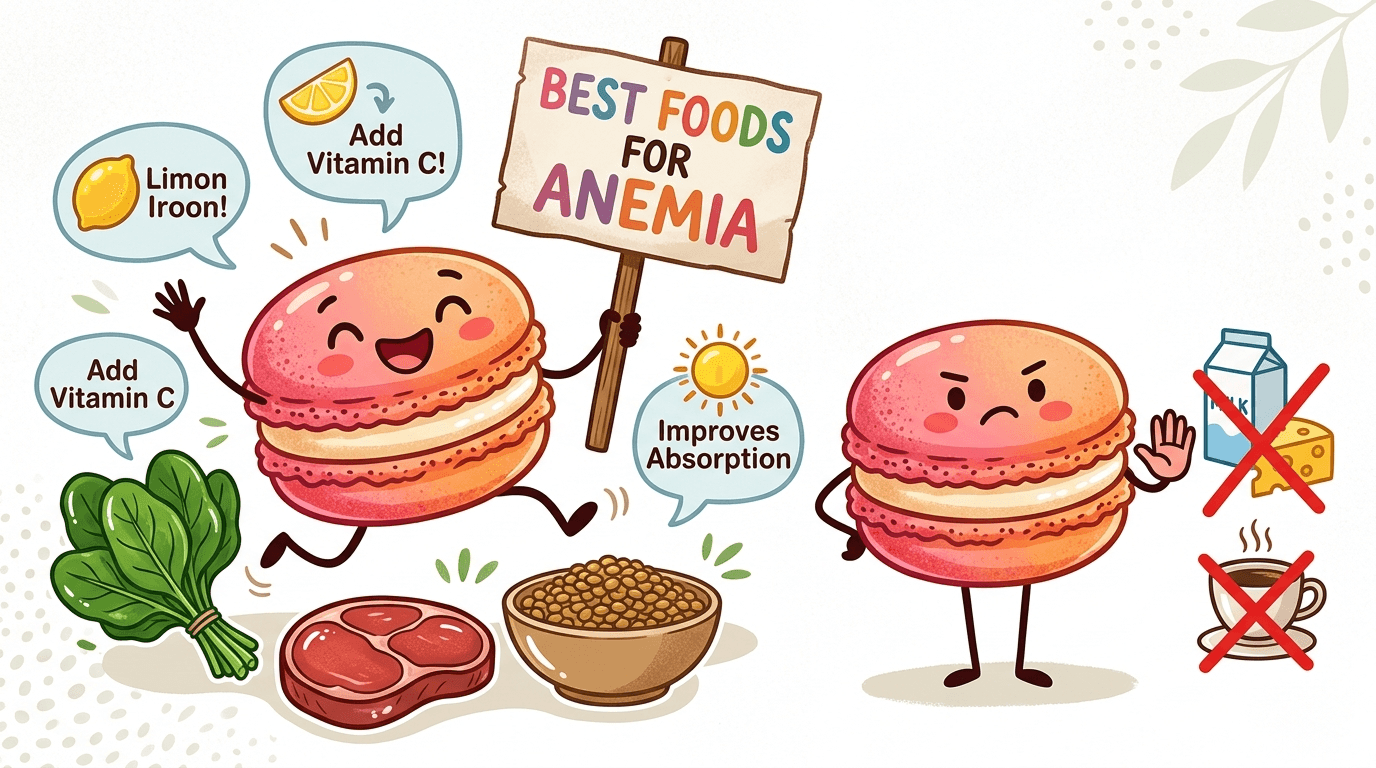
Best foods for Anemia vs Foods to Limit
Time dairy carefully by enjoying cheese with whole grain crackers as a mid-afternoon snack rather than with meals. Similarly, schedule turmeric-spiced dishes for evenings when iron-rich lunches have been fully absorbed. These adjustments maintain culinary enjoyment while preventing the 50-60% absorption reduction seen when consumed together.
Meal Planning Ideas for Anemia
A high-impact day could start with fortified cereal (6mg iron) plus orange slices, followed by sprouted lentil salad with roasted peppers (4mg iron + vitamin C), ending with venison (4mg/serving) and steamed broccoli. This rotation delivers 14+ mg iron with optimized absorption at each point.
Mid-morning snacks present a golden window for iron uptake - pumpkin seeds with clementine segments or dried apricots with kiwi slices avoid calcium competition while providing 2-3mg iron through synergistic pairing.
Batch cooking strategies should prioritize acidic preparations - tomato-based lentil soups, vinegar-marinated beans, or citrus-marinated tofu. These preserve iron content better during storage while naturally enhancing absorption upon reheating.
Common preparation errors include using turmeric in iron-rich curries or drinking decaf coffee too close to meals. Even herbal teas can inhibit absorption, requiring 90-minute buffers around iron intake windows.
Macaron's algorithm identifies overlooked opportunities like using prune puree in oatmeal (3mg iron per 1/4 cup) or pairing iron-fortified pasta with vitamin C-rich sauces. The system flags timing conflicts with common items like eggs or high-fiber snacks.
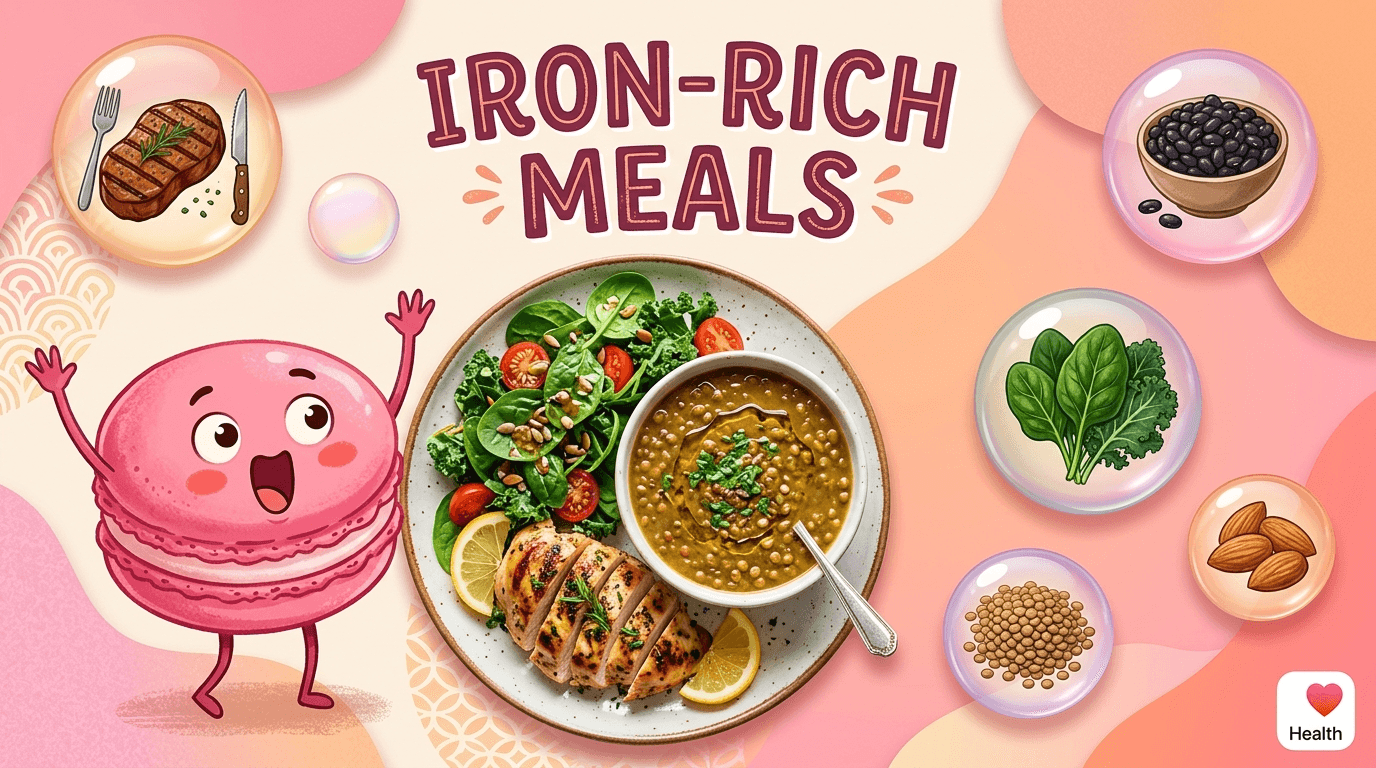
A Simple 1-Day Meal Idea for Anemia
Start with iron-fortified cereal and orange slices (6mg iron + vitamin C), followed by a lunch of spinach salad with chickpeas and lemon dressing (4mg iron). Dinner could feature grass-fed beef (3mg heme iron) with roasted Brussels sprouts (vitamin C). This rotation delivers 13+ mg of iron with optimized absorption at each meal.
Snacks and Drinks for Anemia
Start your day with a blueberry and spinach smoothie that combines iron-rich ingredients with vitamin C for enhanced absorption. For lunch, a white bean and veggie salad complemented by an orange can provide a refreshing option. For dinner, try sheet-pan roasted vegetables with quinoa, which is both filling and beneficial for managing anemia.
Common Mistakes When Eating for Anemia
Many people consume iron blockers like tea, coffee, or calcium supplements too close to meals. Others overcook vegetables, reducing iron content. The most effective approach spaces these items 1-2 hours from iron-rich meals and uses gentle cooking methods like steaming to preserve nutrients in plant-based sources.
How Macaron Helps You Plan Meals for Anemia
While no single food can cure anemia, Macaron supports meal planning by helping you create a balanced diet rich in dark leafy greens, nuts, seeds, seafood, meats, and beans. This practical approach empowers you to manage your symptoms effectively. Using Macaron ensures your meals are iron-rich, enjoyable, and varied.
Frequently Asked Questions
Heme iron from animal products absorbs at 15-35% efficiency without enhancers, making it reliable for consistent intake. Non-heme plant sources vary from 2-20% absorption but respond well to strategic pairing - vitamin C can triple uptake, while fermentation improves bioavailability by 20-30%. Including both types creates dietary flexibility while ensuring baseline absorption.
Yes, but with smart timing. Greek yogurt with morning berries provides calcium benefits without competing with lunch's iron absorption. Hard cheeses paired with whole grain crackers make an ideal afternoon snack when spaced 2+ hours from iron-rich meals. This separation prevents calcium's 50-60% absorption interference while maintaining dairy's nutritional benefits.
Focus on acidic preparations that preserve and enhance iron: tomato-based lentil soups, vinegar-marinated chickpea salads, or citrus-braised greens. These hold well for 3-4 days while naturally boosting absorption. For quick options, keep roasted pumpkin seeds (2mg/oz) and dried apricots (1mg/5 halves) ready for vitamin C pairing with fresh fruits.
Acidic foods simmered in cast iron absorb iron from the cookware - tomato sauce gains 2-3mg per cup after 20 minutes. This method works particularly well for soups, stews, and fruit compotes. While not replacing dietary iron, it provides meaningful supplementation, especially when combined with vitamin C-rich ingredients in the same dish.
Citrus fruits, kiwis, strawberries, and papayas are excellent vitamin C sources that support iron uptake. Dried fruits like apricots and raisins also provide iron. Pair these with iron-rich meals or snacks for maximum benefit.
Combine legumes with grains (like rice and beans) or nuts with leafy greens (spinach salad with almonds). These pairings create complete proteins while providing iron. Adding vitamin C-rich dressings or sides further boosts absorption.
Macaron creates customized meal plans based on your dietary preferences and nutritional needs. For iron-deficiency anemia, it suggests iron-rich recipes with proper nutrient pairings while avoiding absorption inhibitors in your meal timing.
Beyond the usual suspects like coffee and dairy, eggs contain a protein that inhibits iron uptake, and high-fiber foods can bind minerals if consumed in large quantities with iron sources. Even healthy choices like turmeric and red wine (due to polyphenols) may reduce absorption. Enjoy these foods separately from your main iron-rich meals.
Read & discover
AI Personal Assistant
Free calculators


