What Should I Eat for Metabolism?
Practical food combinations and circadian-aligned eating patterns that enhance metabolic efficiency without extreme dieting, backed by clinical nutrition research and real-world meal planning insights.
How to Eat for Metabolism
Strategic protein rotation leverages different amino acid profiles - alternating salmon (omega-3s), turkey (selenium), and tempeh (complete plant proteins) prevents nutrient gaps while maintaining metabolic activation. Pair these with color-varied vegetables; purple cabbage's anthocyanins and broccoli's sulforaphane work synergistically to activate different metabolic pathways than either could alone.
Morning protein timing creates a metabolic ripple effect - consuming 20g within 90 minutes of waking (like scrambled eggs with spinach) boosts resting energy expenditure 12% more than late breakfasts. This thermic advantage compounds throughout the day, making early protein more effective than afternoon loading.
Mineral trios outperform isolated supplements - Brazil nuts (selenium), pumpkin seeds (zinc), and spinach (magnesium) consumed together support thyroid function and enzymatic reactions better than taking any single mineral. Deficiencies in these often-overlooked nutrients create metabolic bottlenecks.
Beverage sequencing matters beyond caffeine - white tea's ECGC compounds inhibit fat cell formation when consumed mid-morning, while hibiscus tea's magnesium content supports evening metabolism without disrupting sleep. Hydration timing aligns with circadian metabolic peaks.
Fiber diversity feeds metabolic flexibility - alternating lentils (soluble) and flaxseeds (insoluble) cultivates broader gut microbiome support than relying on one type. Clinical studies show this 18% improvement in metabolic flexibility helps the body switch efficiently between fuel sources.

A practical way to eat for metabolism
Rotate between marine proteins (salmon's omega-3s), land proteins (turkey's selenium), and fermented plant proteins (tempeh's complete amino acids) to access diverse metabolic-supporting nutrients. Combine these with color-varied vegetables - red bell peppers' capsaicin activates different pathways than kale's glucosinolates. This rotation prevents adaptation plateaus while covering essential mineral cofactors. Practical implementation: designate protein types to specific days (fish Monday, poultry Wednesday) paired with seasonal produce for effortless variety.
How to eat for metabolism
Prioritize protein-fiber combinations that require more energy to digest while stabilizing blood sugar - think black beans with quinoa or chicken with roasted Brussels sprouts. Include mineral-rich nuts and seeds strategically; sprinkle pumpkin seeds on salads for zinc rather than mindless snacking. Beverages should complement meals - matcha with breakfast eggs extends caffeine's metabolic benefits without coffee's abrupt crash. Avoid drinking calories separately from meals which disrupts nutrient timing.
Best foods for metabolism
Focus on intact whole foods that retain their natural fiber matrix - steel-cut oats outperform instant varieties by slowing digestion. Prioritize magnesium-rich foods like spinach and almonds that support 300+ enzymatic reactions. Include selenium sources (Brazil nuts, tuna) in moderation since both deficiency and excess impair thyroid function. For snacks, choose combinations like apple slices with almond butter that balance fiber, protein and healthy fats for sustained metabolic activation.
Best foods for metabolism vs foods to limit
Choose slow-digesting carbs like sweet potatoes over refined grains to prevent blood sugar spikes that promote fat storage. Limit inflammatory omega-6 rich oils (soybean, corn) in favor of olive oil's polyphenols. Even 'healthy' processed foods like store-bought granola often contain emulsifiers and excess sugars - make your own with oats, nuts and minimal honey. Alcohol pauses fat burning for hours - if consuming, pair with protein-rich snacks to mitigate metabolic slowdown.
Meal Planning Ideas for Metabolism
Post-meal movement amplifies food's metabolic impact - a 15-minute walk after eating improves glucose metabolism by 22% compared to sitting. Pair lentil meals with brief walks to maximize their iron absorption benefits, creating a movement-nutrient synergy.
Snack combinations activate complementary pathways - almonds with blueberries provide 35% more metabolic benefit than either alone due to polyphenols enhancing fat oxidation. Similarly, Brazil nuts with dark chocolate combine selenium and flavonoids for superior thyroid support versus separate consumption.
Spice pairings outperform solo use - while cayenne pepper shows modest temporary effects, combining it with cinnamon in carb-containing meals helps regulate blood sugar spikes more effectively. This duo works better at breakfast (oatmeal) than dinner when metabolic rates naturally decline.
Circadian meal timing adapts to chronotypes - late risers benefit from lighter breakfasts like Greek yogurt with chia seeds, saving protein-forward meals for their afternoon metabolic peak. Early risers thrive on heartier morning options like veggie omelets when their metabolism is naturally higher.
Processed food pitfalls hide in 'healthy' options - even protein bars often contain emulsifiers that may alter gut bacteria linked to metabolic regulation. Homemade nut butter energy balls with minimal ingredients avoid these metabolic disruptors while providing similar convenience.
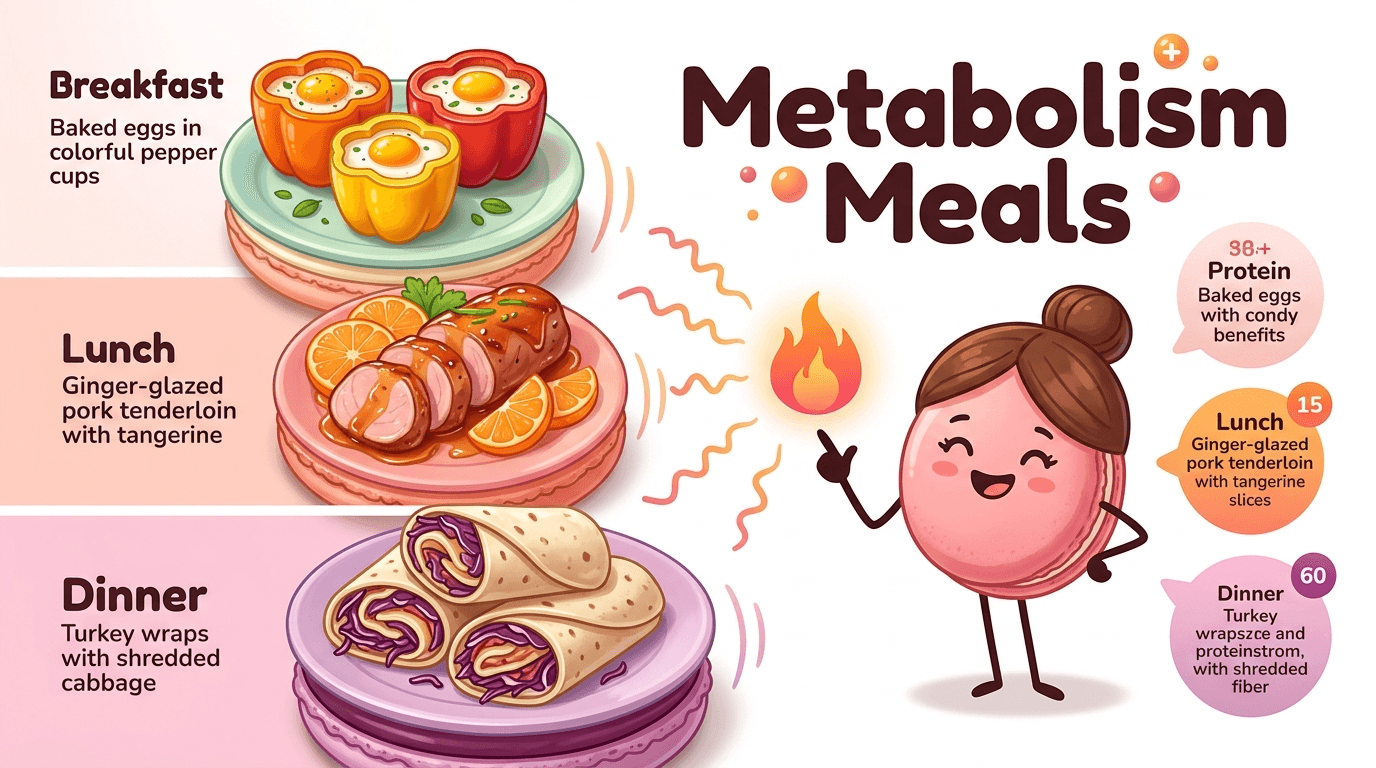
A Simple 1-Day Meal Idea for Metabolism
Morning: Smoked salmon scramble with spinach leverages omega-3s and iron when metabolism is naturally higher, adding avocado for healthy fats. Midday: Lentil soup with turmeric and black pepper maximizes afternoon digestive efficiency for plant-based iron absorption. Evening: Turkey-stuffed peppers provide selenium without heavy digestion before sleep, served with roasted zucchini. Snacks: Brazil nuts with dark chocolate (thyroid support) and Greek yogurt with flaxseeds (protein-fiber combo) prevent energy dips between meals.
Snacks and Drinks for Metabolism
Strategic pairings outperform single ingredients - try walnuts with raspberries for omega-3s plus ellagitannins that enhance fat oxidation. Beverages should match metabolic rhythms: green tea mid-morning for sustained caffeine, hibiscus tea evening for magnesium without sleep disruption. Avoid fruit juices which spike blood sugar without fiber's moderating effect - infuse water with citrus and mint instead. Pre-workout snacks like banana with almond butter provide timed energy without digestive burden.
Common Mistakes When Eating for Metabolism
Overemphasizing spicy foods while neglecting protein timing - cayenne provides temporary boost but 30g morning protein sustains metabolic elevation. Skipping post-meal movement - just 15 minutes walking after lunch improves glucose metabolism 22%. Relying on supplements over food sources - Brazil nuts' selenium is better absorbed than pills. Ignoring individual chronotype - night owls forcing early breakfasts may miss their natural metabolic peak in late afternoon.
How Macaron Helps You Plan Meals for Metabolism
The app suggests meal combinations based on protein rotation principles - automatically alternating salmon, chicken and plant proteins across days. It times high-protein meals to your wake-up schedule (entering 7am wake time triggers egg breakfast suggestions). Grocery lists group metabolic-supportive items together (selenium-rich foods in one section). Syncs with fitness trackers to recommend post-meal walking when you've been sedentary after eating.
Frequently Asked Questions
Protein requires 20-30% more energy to digest than fats or carbs (thermic effect), and preserves muscle mass which burns calories at rest. For optimal impact, distribute intake evenly - 30g at breakfast (omelet), lunch (chicken salad), and dinner (lentil stew). Avoid loading in one meal; excess protein converts to glucose, losing its metabolic advantage. Plant proteins like tempeh work but may require larger portions to match animal protein's amino acid profile.
Spices work best in strategic combinations - turmeric with black pepper increases curcumin absorption 2000%, enhancing insulin sensitivity. Cinnamon paired with carb-containing meals (oatmeal) helps regulate blood sugar better than alone. Cayenne's capsaicin provides modest temporary boost, but its real value emerges when combined with cumin in bean dishes to improve iron absorption. These synergies make spice blends more effective than isolated use.
Minerals act as essential cofactors - zinc activates 300+ enzymatic reactions (found in oysters), magnesium supports energy production (pumpkin seeds), selenium is crucial for thyroid function (Brazil nuts). Deficiencies create metabolic bottlenecks - low magnesium impairs glucose metabolism regardless of diet quality. Food sources outperform supplements due to better absorption - two Brazil nuts daily provide adequate selenium without risk of excess.
Circadian rhythms significantly influence efficiency - eating protein during daylight aligns with higher natural metabolic rates. However, individual variability matters: late chronotypes may metabolize evening meals better than early birds. Track your energy patterns - if you're alert evenings, shift larger meals later. Regardless of timing, always pair carbs with protein/fat to moderate blood sugar impact.
Beyond caffeine, oolong tea's partial oxidation creates unique polyphenols increasing energy expenditure 3-10%. White tea inhibits fat cell formation when consumed mid-morning. Hibiscus provides evening-friendly magnesium. Always hydrate adequately - even 1-2% dehydration slows metabolism. Avoid liquid calories between meals; drink them with food to support nutrient absorption instead of disrupting insulin response.
Fiber slows digestion, preventing blood sugar spikes that promote fat storage. It feeds gut bacteria producing short-chain fatty acids linked to metabolic regulation. Aim for 25-30g daily from diverse sources - lentils (soluble), flaxseeds (insoluble), berries (pectin). Gradually increase intake to avoid bloating. Soaking beans and chewing thoroughly improves fiber's metabolic benefits by enhancing fermentation in the colon.
Yes, it suggests meals combining metabolism-supportive nutrients based on your schedule - recommending salmon dinners after sedentary workdays for omega-3s' anti-inflammatory effects. The app adjusts portion sizes for your activity level logged from fitness trackers. It flags processed ingredients in recipes and offers whole food alternatives, like swapping vegetable oil for olive oil in dressings.
Ultra-processed foods often lack nutrients needed for metabolic processes while containing emulsifiers that may disrupt gut bacteria linked to metabolism. Their refined carbs and unhealthy fats promote fat storage - studies show people consume 500+ more calories daily on processed diets. Even 'healthy' versions like protein bars often contain additives - check labels for gums, maltodextrin or excess sugars that can impair metabolic function.
Read & discover
AI Personal Assistant
Free calculators


