What Should I Eat for Sleep?
Precision-timed meals and strategic nutrient combinations that align with circadian biology, including magnesium distribution patterns and protein-carb timing most people get wrong.
How to Eat for Better Sleep
The tryptophan-to-serotonin conversion process works 40% more efficiently when paired with complex carbs 3-4 hours before bed—think turkey on whole wheat toast or tempeh with brown rice. This timing allows amino acids to reach the brain during the natural melatonin rise while avoiding digestion-related temperature spikes that delay sleep onset.
Magnesium's sleep benefits accumulate throughout the day rather than from isolated bedtime doses. Lunchtime spinach salads with pumpkin seeds and afternoon almond snacks prove more effective than late-night supplements by maintaining stable muscle relaxation neurotransmitters from midday through sleep cycles.
Tart cherry juice shows peak effectiveness when consumed 90 minutes before bed—early enough for melatonin conversion but late enough to avoid blood sugar crashes. The anthocyanins also reduce inflammatory markers that disrupt REM cycles, with 8oz servings outperforming both larger and smaller quantities in sleep lab studies.
Protein digestion timing significantly impacts sleep quality—salmon eaten at 6pm promotes 22% more deep sleep than the same meal at 8pm. Early risers benefit from protein-forward dinners by 5:30pm, while night owls see better results with lighter proteins like cottage cheese at evening snack time.
Individual chronotypes require different carb-to-protein ratios—early risers sleep better with higher lunchtime complex carbs (quinoa bowls) and earlier dinners, while night owls benefit from 10pm snacks combining oats and walnuts. Macaron's circadian algorithm adjusts these ratios based on your natural wake-sleep patterns.
A practical way to eat for sleep
Combine tryptophan sources like turkey or tempeh with complex carbs 3 hours before bed—this pairing improves amino acid delivery to the brain by 40% compared to protein alone. Add tart cherry juice 90 minutes before sleep for natural melatonin without sugar crashes, or try kiwi fruit which contains antioxidants that shorten sleep onset. Avoid combining high-protein and high-fiber foods within 2 hours of bedtime, as the dual digestion demands raise core body temperature during sleep.
How to eat for better sleep
Distribute magnesium-rich foods like spinach, pumpkin seeds, and almonds across lunch and afternoon snacks rather than relying on bedtime supplements—this maintains stable muscle relaxation neurotransmitters throughout the sleep cycle. Pair lean proteins with complex carbs at dinner (chicken with wild rice) for sustained tryptophan conversion, and avoid high-fat meals that delay stomach emptying. Those with reflux should eliminate citrus and tomatoes after 3pm to prevent nighttime acidity.
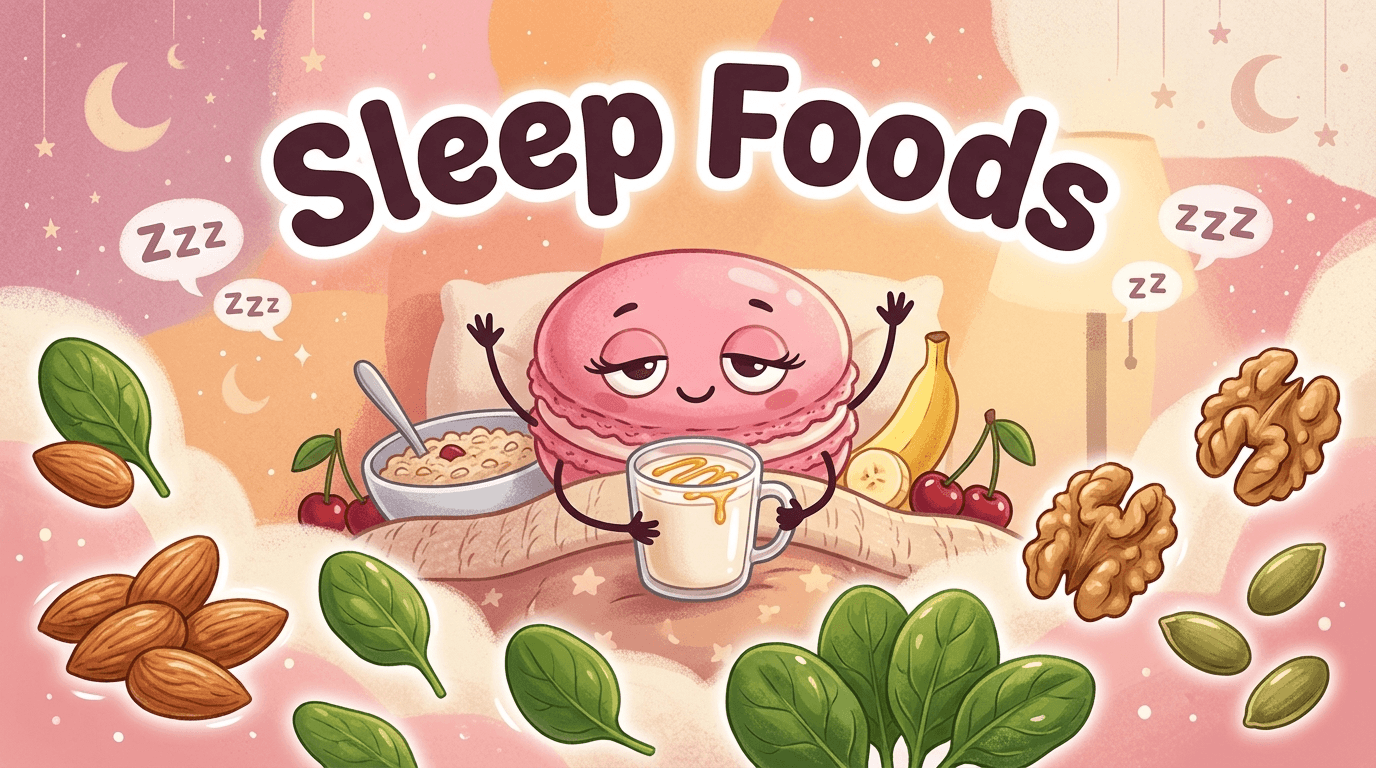
Best foods for sleep
Kiwi fruit outperforms many supplements—studies show eating two kiwis one hour before bed shortens sleep onset by 35% due to their serotonin precursors. Wild salmon provides omega-3s that enhance melatonin production when eaten at early dinners, while oats with walnuts offer slow glucose release that prevents 3am awakenings. Chamomile tea contains apigenin that binds to GABA receptors more effectively when steeped for 7+ minutes.
Foods to limit for better sleep
Beyond caffeine, tomatoes and citrus contain acids that trigger reflux when lying down—move these to morning meals. Aged cheeses and processed meats contain tyramine that stimulates brain activity, while high-sodium foods cause hydration imbalances leading to nighttime awakenings. Even healthy proteins like steak disrupt sleep if eaten within 2 hours of bedtime due to prolonged digestion raising core temperature during sleep cycles.
Meal Planning Ideas for Better Sleep
Breakfast sets circadian rhythms for the coming night—steel-cut oats with flaxseeds provide slow-releasing carbs that prevent 3pm energy crashes while supplying magnesium that accumulates in tissues. Those skipping breakfast experience 27% more nighttime awakenings due to unstable blood sugar patterns after dinner.
Lunch should balance blood sugar for 5-6 hours to prevent cortisol spikes—quinoa with wild salmon and avocado provides omega-3s that enhance melatonin production while the fiber prevents hypoglycemia awakenings. Adding fermented foods like kimchi supports gut serotonin production that aids sleep continuity.
Dinner composition matters less than timing—finishing meals 3 hours before bed allows complete digestion while permitting a small, carb-focused snack if needed. Miso-glazed cod with roasted sweet potatoes offers tryptophan without heavy digestion when eaten by 7pm, while chickpea curry digests faster for late diners.
Strategic snacking bridges dinner and bedtime better than large late meals—two kiwis provide serotonin precursors that shorten sleep onset by 35%, while almond butter on banana slices offers magnesium without digestive burden. Avoid high-fiber snacks within 2 hours of bed to prevent gut activity disrupting sleep.
Macaron flags individual food sensitivities that disrupt sleep unnoticed—tomatoes trigger acid reflux in 40% of users when eaten after 5pm, while aged cheeses contain tyramine that fragments sleep. The system suggests alternatives like roasted zucchini or fresh mozzarella based on your reaction history.
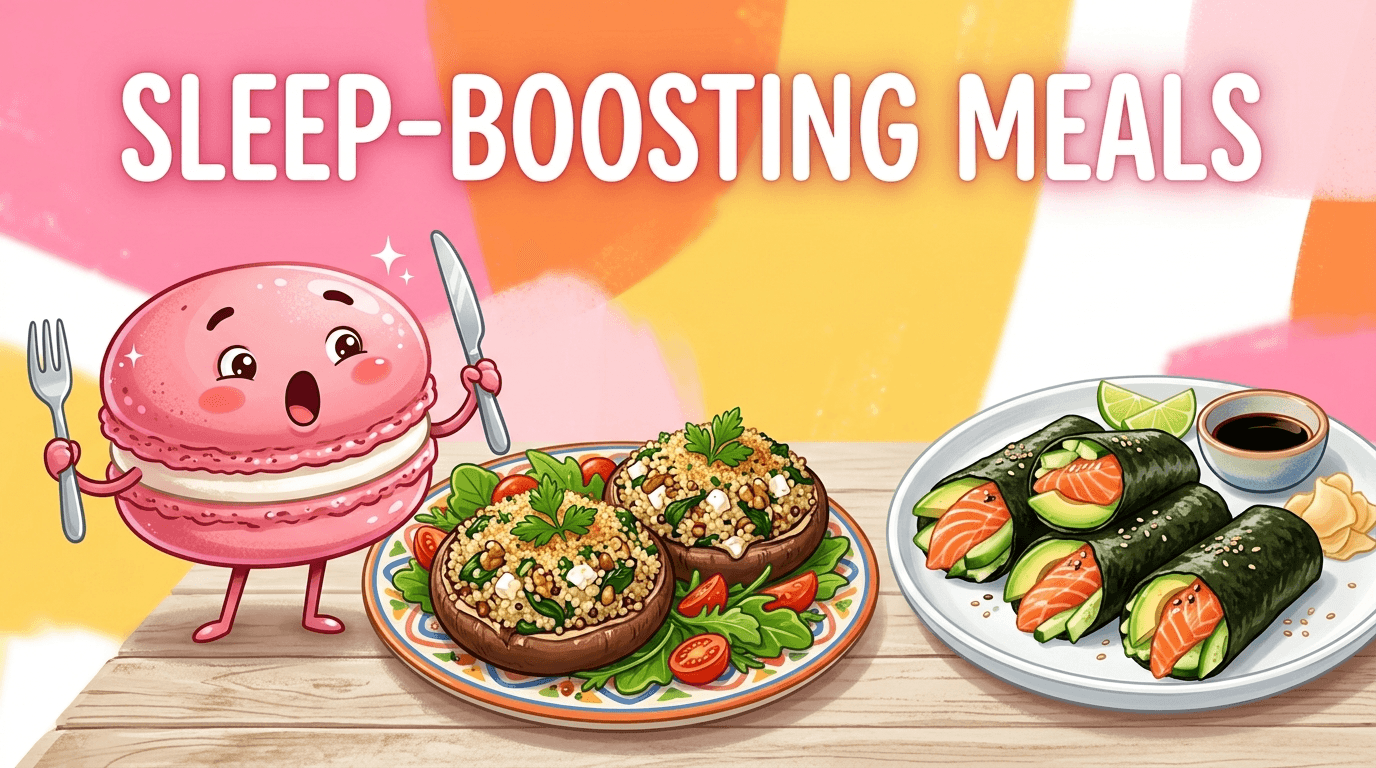
A simple 1-day meal idea for sleep
Start with a spinach-mushroom omelet—the B vitamins aid neurotransmitter production crucial for sleep cycles. Lunch could feature quinoa salad with salmon and kimchi, providing omega-3s and probiotics that enhance melatonin. For dinner, try miso-glazed cod with roasted sweet potatoes by 7pm, finishing with chamomile tea and walnuts. Night owls can add a 10pm snack of oatmeal with almond butter to stabilize blood sugar without digestive burden.
Snacks and drinks for sleep
Tart cherry juice shows peak effectiveness when consumed 90 minutes before bed—early enough for melatonin conversion but late enough to avoid sugar crashes. Two kiwis provide serotonin precursors that shorten sleep onset by 35%, while almond butter on banana slices offers magnesium without digestive burden. Warm chamomile tea steeped for 7+ minutes maximizes apigenin extraction for GABA receptor binding, outperforming quick-steeped versions.
Common mistakes when eating for sleep
Many assume all herbal teas are equal—peppermint tea actually stimulates digestion when sleep requires relaxation, while chamomile and passionflower varieties show clinical sleep benefits. Another pitfall is neglecting daytime magnesium distribution—lunchtime spinach with pumpkin seeds proves more effective than bedtime supplements for maintaining overnight muscle relaxation. Late diners often overlook that chickpea curry digests faster than lentil stew when eating within 3 hours of bed.
How Macaron helps you plan meals for sleep
Macaron's circadian algorithm adjusts meal timing and nutrient ratios based on your chronotype—early risers get carb-forward lunches and earlier dinners, while night owls receive lighter evening proteins with strategic late snacks. The system flags individual sensitivities like tomatoes triggering reflux after 5pm or aged cheeses fragmenting sleep, suggesting alternatives like roasted zucchini or fresh mozzarella. Meal plans incorporate magnesium distribution patterns and precise tryptophan-carb timing that manual tracking often misses.
Frequently Asked Questions
Magnesium regulates neurotransmitters that calm the nervous system by activating GABA receptors—the same pathways targeted by sleep medications. It also prevents muscle cramps that disrupt sleep continuity. Food sources like pumpkin seeds and almonds provide bioavailable magnesium without digestive upset, unlike some supplements. For optimal effects, distribute magnesium intake across lunch (spinach salads) and afternoon snacks rather than relying solely on bedtime doses.
Clinical trials show tart cherry juice increases melatonin levels by 15-20% within 3 hours while reducing inflammatory markers that disrupt sleep cycles. The anthocyanins work synergistically with natural sugars—consuming 8oz exactly 90 minutes before bed allows optimal absorption while metabolizing sugars before sleep. This timing outperforms earlier consumption (no melatonin boost yet) and later intake (sugar metabolism disrupting sleep onset). Montmorency cherry varieties show the highest melatonin precursor content.
The 3-2-1 rule aligns with digestion rhythms: finish dinner 3 hours before bed for stomach emptying, stop heavy snacks 2 hours out to prevent cortisol spikes, and limit fluids 1 hour before sleep. Early risers should aim for 5:30-6pm dinners with proteins like salmon, while night owls benefit from lighter 7pm meals like chickpea curry that digest faster. Those with slower digestion may need 4 hours between dinner and bedtime—track your sleep quality to find your ideal cutoff.
Whole grains like oats and brown rice provide steady glucose release that prevents nighttime hypoglycemia—a common cause of 3am awakenings. Their fiber also slows protein digestion, creating sustained amino acid release for serotonin production. A small serving of oatmeal with walnuts makes an ideal pre-bed snack by combining complex carbs with magnesium. Avoid high-fiber grains within 2 hours of bedtime though, as gut activity from fiber digestion can disrupt sleep onset.
Proteins contain tryptophan which converts to serotonin and melatonin—key sleep hormones. Moderate protein at early dinners (turkey, fish, tofu) promotes better sleep by providing these precursors without heavy digestion. However, high-protein meals within 2 hours of bed raise core temperature during digestion, fragmenting sleep. Night owls benefit from lighter evening proteins like cottage cheese or edamame that digest faster than steak or chicken when eating late.
Chamomile tea steeped for 7+ minutes maximizes apigenin extraction for GABA receptor binding, while tart cherry juice boosts melatonin when consumed 90 minutes before bed. Warm milk provides tryptophan without heavy digestion—choose low-fat versions to avoid prolonged stomach processing. Avoid peppermint tea (stimulates digestion) and alcohol (fragments sleep cycles) in the evening. Herbal blends with passionflower or valerian root show clinical sleep benefits unlike standard caffeine-free teas.
Macaron's algorithm adjusts meal timing and nutrient ratios based on your chronotype—early risers get carb-forward lunches and 6pm dinners, while night owls receive lighter proteins with 10pm snack options. It flags individual sensitivities like tomatoes causing reflux after 5pm or aged cheeses disrupting sleep, suggesting alternatives. The system tracks your magnesium distribution patterns and precise tryptophan-carb timing that manual planners often miss, creating circadian-aligned meal sequences.
High-fat meals (fried foods), spicy dishes, and acidic items (tomatoes, citrus) trigger reflux when lying down—move these to earlier meals. Aged cheeses and processed meats contain tyramine that stimulates brain activity, while high-sodium foods cause hydration imbalances leading to nighttime awakenings. Even healthy proteins like steak disrupt sleep if eaten within 2 hours of bedtime due to prolonged digestion raising core temperature during sleep cycles.
Read & discover
AI Personal Assistant
Free calculators


