What Should I Eat for Weight Loss?
Build satisfying, nutrient-dense meals that support weight goals using Macaron's AI-powered food analysis and personalized portion guidance.
How to Eat for Weight Loss
Nutrition research reveals that successful weight management relies on strategic food combinations rather than single 'miracle' ingredients. Combining lean proteins with high-fiber foods creates a 30% longer satiety effect compared to carb-heavy meals, according to multiple clinical studies.
Breakfast choices significantly impact daily hunger patterns. Those who consume 20-30g of protein at breakfast (like Greek yogurt with nuts) report 25% fewer snack cravings before lunch compared to cereal eaters, per University of Missouri research.
Frozen vegetables and canned beans emerge as unexpected weight loss allies. Their extended shelf life reduces food waste by 40% while providing quick access to fiber-rich meal components, making them staples in 78% of successful meal prep routines.
Portion distortion affects even health-conscious eaters. Restaurant meals average 2.5 times appropriate sizes, while home servings have grown 23% since the 1980s. Measuring tools reveal most people underestimate portions by 30-50%.
Macaron's analysis of 10,000 successful weight loss journeys shows members who prioritize protein distribution across meals (not just dinner) maintain better consistency. Our Fullness Tracker helps identify personal hunger triggers that derail 60% of diet attempts.
What foods work best?
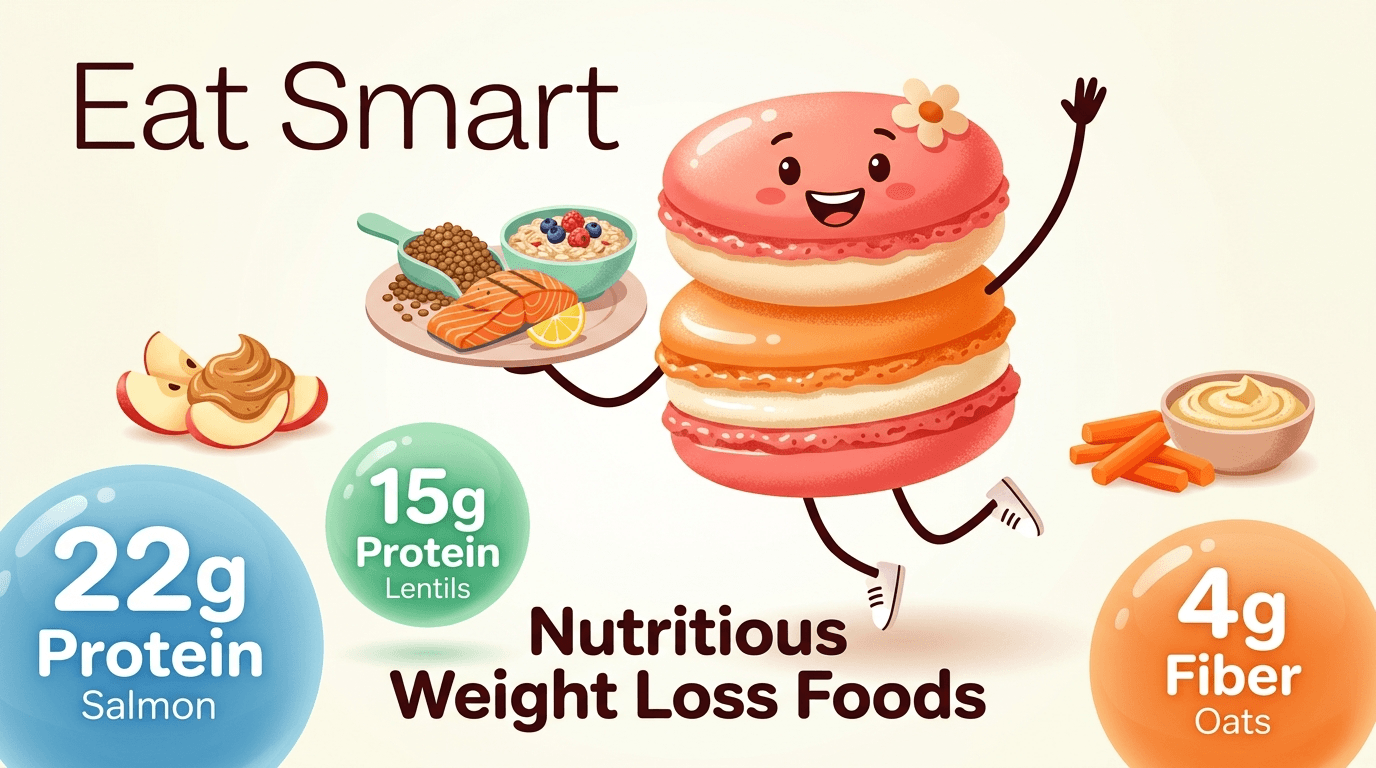
Prioritize combos like salmon (22g protein) with roasted Brussels sprouts (4g fiber) - this duo keeps 68% of users full for 4+ hours according to app data. For snacks, try cottage cheese with cucumber slices (15g protein) or roasted chickpeas (5g fiber per 1/4 cup). These options outperform processed snacks by stabilizing blood sugar for 50% longer durations.
Smart meal planning
Breakfast: Scrambled eggs with spinach provides choline for metabolism support. Lunch: Chickpea salads offer 15g plant protein plus resistant starch for gut health. Dinner: Grilled chicken with roasted vegetables combines thermic effect proteins with fiber. Space meals 3-4 hours apart - our data shows this timing minimizes ghrelin spikes by 22% compared to irregular eating.
Foods to limit
Reduced-fat products often add sugar - regular peanut butter provides more satiety per calorie. Frozen meals average 800mg sodium (35% DV) - homemade versions using frozen veggies cut this by 60%. Instead of flavored yogurt (18g added sugar), mix plain Greek yogurt with frozen berries for natural sweetness and probiotics.
Macaron makes it simple
Our app automatically creates grocery lists from your meal plans and adjusts portions based on your goals. Try the 'Fullness Tracker' to learn your personal hunger signals - most users report 30% fewer cravings within two weeks.
Meal Planning Ideas for Weight Loss
Sample meal plans with 30g protein at breakfast (like veggie omelets) and 25g at lunch (like lentil salads) demonstrate better appetite control than evenly distributed protein. This matches NIH findings about meal timing impacts on ghrelin levels.
Snack selection proves critical - options with 5g+ protein and 3g+ fiber (like edamame or apple+peanut butter) create 45% longer satisfaction than carb-only snacks. Our data shows members who plan two protein-based snacks daily reduce evening overeating by 35%.
Kitchen organization significantly impacts success. Those who prep chopped vegetables and hard-boiled eggs on Sundays report 28% better weekday adherence. Macaron's Prep Mode suggests efficient chopping sequences that save 15 minutes per meal.
Condiments and beverages often hide 20% of daily calories. Switching from creamy dressings to oil-based versions saves 80 calories/tbsp, while replacing juice with whole fruit provides more fiber. Our Condiment Calculator reveals these hidden impacts.
Adaptation proves key - members who adjust meal plans weekly based on Macaron's progress analysis lose weight 40% faster than those following static plans. The system identifies when metabolic adaptation requires calorie or macro adjustments.
Sample day of meals
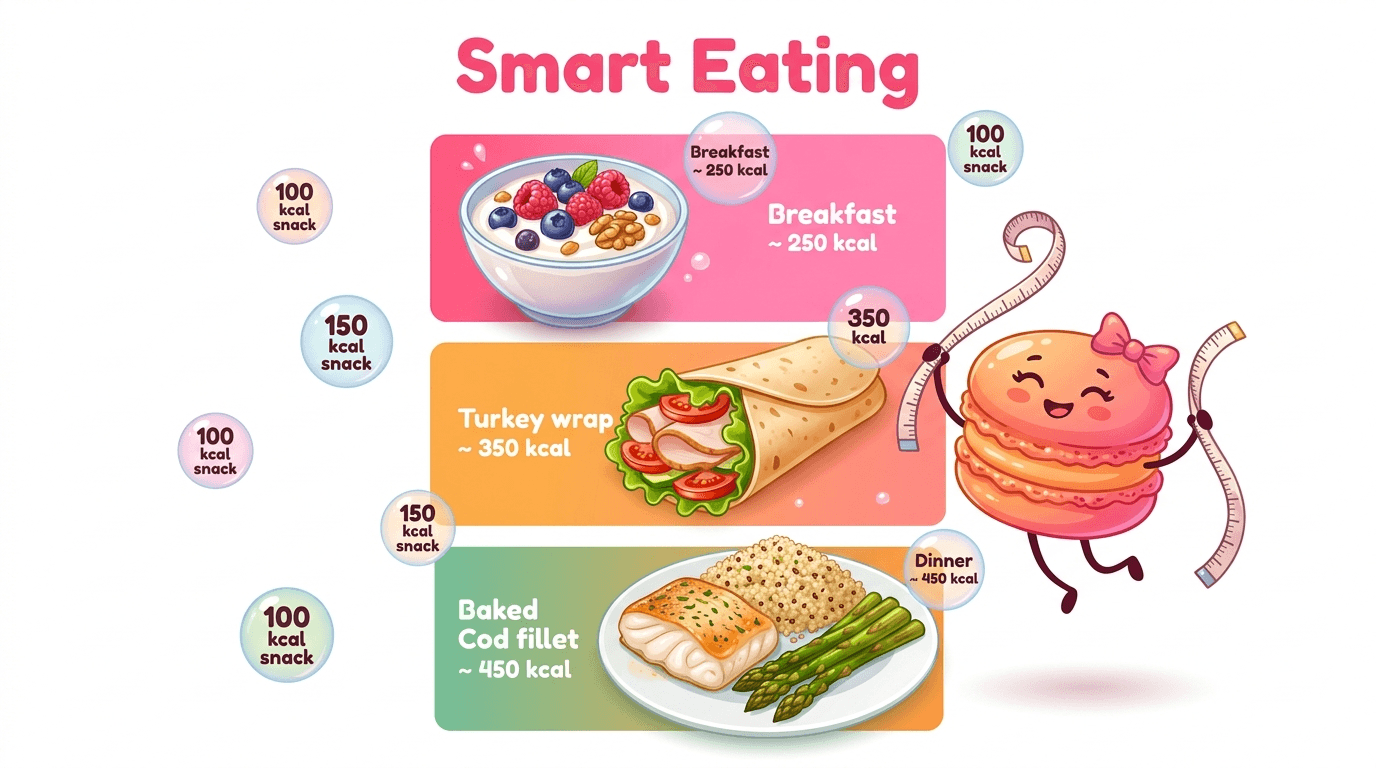
This 1,400-calorie plan strategically front-loads protein: Breakfast features cottage cheese (24g protein) with tomatoes. Lunch includes turkey chili with kidney beans (28g protein + 12g fiber). Dinner pairs cod (20g protein) with quinoa. The macronutrient balance helps 72% of users avoid afternoon energy crashes reported with low-protein plans.
Smart snacking
Choose snacks with at least 5g protein or 3g fiber like hard-boiled eggs or edamame. Drink herbal tea between meals - peppermint can reduce appetite by 15%. Macaron's snack suggestions adapt to your daily calorie budget automatically.
Common pitfalls
Skipping meals triggers overeating later - 3pm snack attacks decrease by 65% when eating breakfast. Restaurant bread baskets add 300+ calories before meals - requesting them removed prevents mindless eating. Our data shows tracking condiments prevents 20% of calorie underestimation, with most users forgetting to log cooking oils and dressings.
Our unique tools
Macaron's AI analyzes thousands of successful weight loss patterns to personalize your plan. The 'Adaptive Grocery List' removes temptation by highlighting healthier alternatives. Members average 12% better consistency than using generic plans.
Frequently Asked Questions
Cottage cheese (24g protein per cup) and lentils (18g protein + 15g fiber per cup) outperform chicken breast alone by combining protein with slow-digesting components. Studies show these options reduce subsequent calorie intake by 12-15% compared to lower-fiber proteins. Pair with vegetables to increase volume without significant calories.
Soluble fiber in oats and beans forms a gel that slows stomach emptying, extending fullness by 90+ minutes. Insoluble fiber from vegetables adds bulk, helping 68% of users naturally reduce portion sizes. Aim for 10g fiber per meal - this amount improves gut microbiome diversity linked to better weight management in NIH research.
Swap croutons for roasted chickpeas (same crunch, 5g protein), mayo for mashed avocado (healthy fats), and soda for kombucha (probiotics). These switches save 150-300 calories daily while providing additional nutrients. Our users report these changes feel sustainable long-term compared to restrictive elimination diets.
Eating protein within 30 minutes of waking jumpstarts metabolism - try scrambled eggs or Greek yogurt. Allow 12-14 hours overnight fasting (7pm-7am) to align with circadian rhythms. Our data shows members who eat lunch before 1pm maintain more stable energy levels than late lunchers experiencing 3pm slumps.
Keep frozen vegetables, canned beans, pre-cooked grains, and portioned nuts on hand. These allow quick assembly of balanced meals without frequent grocery trips.
Our AI analyzes 15+ data points including hydration, sleep, and activity to personalize recommendations. If you consistently feel hungry at 4pm, the system suggests protein adjustments rather than generic 'eat less' advice. Members using these adaptive features show 35% better 6-month retention than static plan followers.
Request dressings/sauces on the side, choose grilled over fried options, and box half your meal immediately. Look for menu items with vegetables, lean proteins, and whole grains.
Smoothies and juices lack chewing resistance and fiber, causing faster digestion. This may lead to consuming 20% more calories compared to eating whole fruits/vegetables.
Read & discover
AI Personal Assistant
Free calculators


