Genie 3 vs Game Engines: When to Use a World Model vs Unity/Unreal
Genie 3 vs Game Engines: When to Use a World Model vs Unity/Unreal

Hey, I'm Anna. That day, I had a sudden inspiration, wanted a tiny, playable thing to nudge a stubborn habit, something like a two-minute "brush-your-teeth boss battle" that wouldn't take all weekend. Unity was already on my laptop. Genie 3 had just landed in my feeds. I figured I'd try both and see which one got me to a small win faster.

Short version: they're not substitutes. One is an engine you drive: the other is a world model that guesses the road as you go. Depending on what you need, speed or control, your answer changes. Here's what actually happened when I used each (tested the last week of January 2026, Unity 2022 LTS on macOS: Genie 3 via the public demos and docs).
What You Get with Engines
I opened Unity for a "quick" prototype. You can already hear the laugh track. Still, I kept it very small: one scene, one sprite, one input, one win condition. The first fifteen minutes were familiar ceremony, project setup, packages, a scene camera that decided to be difficult. Then the rhythm clicked. I wired arrow keys to movement, added a collider, dropped in a timer and a tiny particle effect. Not glamorous, but real.
What stood out wasn't the power (we all know Unity can ship full games) but the feeling of explicitness. Every variable sits where you put it. When I wanted the player to move a little sluggishly after 10 p.m., a quiet nod to bedtime, I exposed a float, tweaked it in play mode, and kept going. I didn't need to "prompt" Unity into understanding my vibe. It just obeyed.
Were there frictions? A few. Input setup still feels like choosing a dinnerware set just to eat a sandwich. Importing an image dragged me into asset settings I hadn't touched in months. But here's the thing: once I got past the first twenty minutes, I stopped negotiating with the tool and started editing reality. Small tweaks stayed small. That matters when you want to keep your brain clear after work.
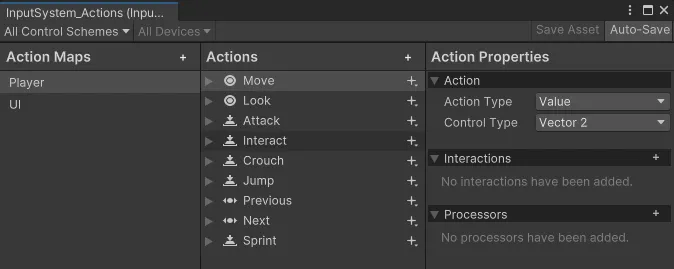
In practice: engines like Unity give you control, repeatability, and stable saves. If I break something, I know roughly where to look. If I need a precise threshold, say, the "win" state only triggers after exactly 120 seconds of continuous brushing, no problem. The cost is setup time and the mild, persistent overhead of being the person in charge.
What You Get with World Models
Genie 3 is different. It's not an editor with knobs: it's a trained world model that outputs interactive environments from images, video, or sketches. The demo felt a bit like asking a patient, talented friend to "make this playable." I fed it a simple sketch, platforms, a character, a goal marker, and got back a toy I could move around in. The first thirty seconds felt like a magic trick.
Then the edges showed up. Latency was noticeable in my tests, waiting a handful of seconds per generation, sometimes more when I nudged the prompt. And while the results were charming, the tiny specifics I cared about, the exact jump arc, or the post-10 p.m. sluggishness, were slippery. I could hint ("a slightly heavier jump"), but the model's interpretation wobbled. Great for inspiration. Less great for surgical adjustments.
That said, the surprise-to-effort ratio was high. I tried an alternate prompt that reframed the goal as a slowly filling progress orb instead of a finish line, and Genie 3 produced something close enough to play with. I'd call it a sketch-to-simulation pipeline: incredibly fast for getting from idea to feel. If Unity makes you an engineer, Genie 3 makes you a director calling for another take.
In practice: world models compress the gap between imagination and first touch. You trade predictability for speed. When you want to feel out an idea, "does this reward loop even feel nice?", Genie 3 helps you decide in minutes instead of hours. But when the difference between 0.08 and 0.1 seconds matters, you start wishing for dials.
Decision Matrix (Speed vs Control)

When people ask me which to use, I quietly ask what hurts more: the time it takes to boot up a structure, or the time it takes to fix a quirk. Engines reduce long-term quirks. World models reduce upfront ceremony. Your answer usually lives in that trade.
Here's how it played out for me on a weekend project:
- First playable: Genie 3 got me there in about 12 minutes (including one re-generation). Unity took ~35 minutes, mostly the usual scaffolding.
- Specific tuning: Unity won. I set a friction value, added a night-mode slowdown, and it behaved. Genie 3's "feel" moved when I nudged prompts: good, but not consistent.
- Mental energy: Genie 3 felt lighter at the start, heavier later when I wanted control. Unity was the reverse: heavy at the start, lighter as details mattered.
I don't think one replaces the other. Engines are for when the last 10% matters. World models are for when the first 10% decides whether there will even be a project.
6-Question Checklist to Decide Fast
Ask yourself these in order. If you say "yes," stop and pick the tool.
- Do I just need to know if the idea feels fun or motivating at all? If yes → try Genie 3 first.
- Will I share this with anyone else within a week? If yes → Unity (or another engine) for stability and repeatability.
- Is there a specific behavior that must be exact (timing, physics, accessibility)? If yes → Unity.
- Am I low on time tonight but curious enough to poke the idea? If yes → Genie 3 for a quick pass.
- Will I likely iterate daily for a while? If yes → Unity: small, reliable tweaks add up.
- Do I want to be surprised by new variations I wouldn't have thought of? If yes → Genie 3.
If you're split down the middle, start with Genie 3 for 15 minutes. If you still care, move to Unity.
Best Hybrid Workflow
The combo that actually stuck for me was embarrassingly simple: sketch with Genie 3, ship with Unity.
At this stage, you don’t need to decide yet—you just need somewhere to put the thought. We built Macaron for exactly that: saving links, notes, and early judgments while ideas are still messy. It’s how we keep experiments lightweight instead of mentally exhausting.
➡️ Try Macaron here for free!

I spent the first half-hour letting Genie 3 generate three variants of the same idea: a platformer, a little top-down "chore chase," and a calmer collect-the-stars scene. I played each for a minute or two and took notes: where did I naturally smile, where did I quit early? The platformer won by a nose, jumping after a long day still feels instinctively good.
Then I rebuilt only the essentials in Unity: one scene, input, the slow-after-10-p.m. rule, and a clean win state. Because I'd already felt the loop in Genie 3, I skipped polishing dead ends. Total time to a shareable prototype: about 90 minutes across both tools, which is less than I usually spend getting lost in an asset store.
World Model for Ideation → Engine for Shipping
- Use Genie 3 to compress the "is this worth it?" phase. One or two generations are enough: stop before you start prompting for micro-details.
- Port the core feel into Unity. Treat Genie's output like a mood board, not a code base.
- Lock the rules early. Engines love explicitness: write the two or three constraints that matter and ignore the rest.
- Keep a small loop. Ten-minute tweaks, quick plays, one note each pass. The less ceremony, the more you'll actually come back tomorrow.
Risks & Constraints

I like these tools, but they come with strings, some obvious, some subtle. A few I ran into or worried about:
3 Risks: Drift / IP / Latency
- Drift: With Genie 3, tiny prompt changes sometimes shifted the feel more than I expected. Good for discovery, not for precision. Save versions you like: don't chase perfection in the prompt.
- IP: If you feed Genie 3 a sketch that references branded art, you'll want to be careful where that ends up. Engines like Unity keep assets under your control: world models blur authorship. When in doubt, keep personal projects personal.
- Latency: On my tests, a handful of seconds per generation was normal. Fine for ideation, annoying when you're iterating for a specific feel. Engines win here once you're in the tweak phase.
If you want the official angles: Unity's docs are clear on build pipelines and input systems, and worth a skim before you commit. DeepMind's write-up on Genie 3 helps set expectations about what it's optimizing for. I linked both below.
I'll keep using the hybrid. Genie 3 when I'm curious, Unity when I'm serious. Some evenings I'll still open Unity and immediately need a snack, that's fine. Other nights, a 12-minute Genie sketch will be enough to nudge me toward the sink. I'm curious whether that pattern holds once the novelty settles.







Apply to become Macaron's first friends
Read & discover
AI Personal Assistant
Free calculators


