Updated July 7, 2026. Sources checked July 7, 2026. This guide is for everyday food logging, not medical nutrition advice.
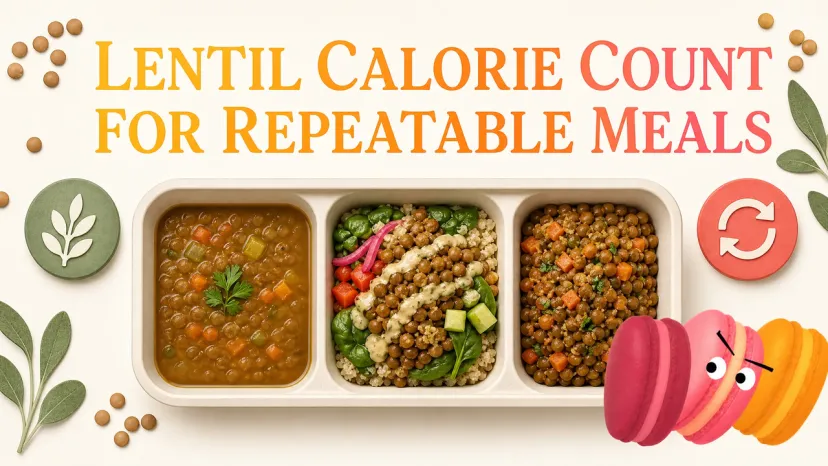
A lentil calorie count is usually not about plain lentils sitting alone in a bowl. It is about lentil soup, dal, curry, stew, salad, meal prep bowls, rice plates, or leftovers that taste slightly different every day.
The most useful lentil note in my kitchen was not a number. It was masking tape on a container: “5 bowls, coconut milk version, rice separate.” That one note saved more tracking confusion than rebuilding the recipe every time.
Official data still helps. USDA FoodData Central lists cooked boiled lentils without salt at about 116 calories per 100 grams, with protein and fiber included in that plain lentil entry. That is the source fact. The practical interpretation is this: plain lentils give you a base estimate, but the dish determines the real meal entry.
Lentils Are Usually Tracked Inside a Dish
Lentils are rarely eaten like a single ingredient. They absorb liquid, thicken soups, disappear into stews, and stretch across multiple containers. That is exactly why they work so well for meal prep, and exactly why they can be annoying to log.
A scoop of lentils in a salad is different from lentil curry with coconut milk. Lentil soup is different from a thick lentil stew. Lentils over rice are different from lentils with bread. A family-size pot is different from a single prepared package with a label.
USDA MyPlate’s beans, peas, and lentils guidance treats these foods as meaningful parts of a healthy eating pattern. That does not mean every lentil dish has the same calorie count. It means lentils can be a useful protein- and fiber-containing base, while the full recipe still matters.
For tracking, lentils are best handled as a meal pattern, not a loose ingredient floating through the log.
A better first question is not “How many calories are in lentils?” It is:
What kind of lentil dish is this?
How many portions did the pot make?
What was added besides lentils?
Did I eat it alone, with rice, with bread, or as a side?
Will the leftovers be the same tomorrow?
That structure turns lentils from a vague mixed dish into something repeatable.
Why Cooking Style Changes the Estimate
Cooking style changes the estimate because lentils take on the personality of the dish around them.
Plain boiled lentils are one starting point. Lentils cooked into soup with broth and vegetables are another. Lentils simmered with coconut milk, oil, sausage, ghee, rice, or bread become a different meal. None of those versions is automatically “better” or “worse.” They are just different entries.
The biggest tracking mistake is using one plain lentil number for every lentil meal. That can undercount rich dishes and overcomplicate simple ones.
Soup, stew, curry, salad, or bowl
Lentil soup is often diluted by broth, tomatoes, vegetables, and water. A large bowl may look substantial, but the lentil density depends on how much liquid is in the pot.
Lentil stew is thicker. It may use more lentils per serving, less broth, and more oil or toppings. A stew entry should usually be treated differently from soup.
Lentil curry often depends on the cooking fat and sauce base. Coconut milk, oil, ghee, cream, or nut-based sauces can change the estimate more than the lentils themselves.
Lentil salad usually has less liquid but may include olive oil, dressing, nuts, cheese, grains, or avocado. It can be easy to count the lentils and forget the dressing.
A lentil bowl is the most flexible version. It may include rice, quinoa, potatoes, greens, yogurt sauce, eggs, tofu, chicken, or vegetables. That is where a saved meal pattern helps most.
The same lentil base can become five different calorie entries depending on format.
Oil, coconut milk, rice, bread, or toppings
The estimate usually changes most with add-ons.
Oil matters because it gets absorbed into the dish and stops looking separate. Coconut milk matters because it changes both texture and energy density. Rice and bread matter because they may be part of the meal, not just “on the side.” Toppings matter because yogurt, cheese, seeds, nuts, chili crisp, fried onions, or extra dressing can shift the entry.
Portion: number of containers or bowls the batch made.
Do not make the lentils responsible for ingredients that belong to the whole dish.
The FDA serving size guidance explains that serving sizes on Nutrition Facts labels are based on what people typically consume, not recommendations for how much an individual should eat. For packaged lentils, canned lentils, or prepared lentil soups, the label can help. For homemade lentil meals, your batch portion usually matters more than a generic serving.
Build a Reusable Lentil Meal Entry
A reusable lentil entry starts with the batch, not the spoonful.
Use this template:
Lentil meal prep note
Dish type: soup, stew, curry, salad, or bowl.
Lentil source: dry cooked at home, canned, packaged, or restaurant/prepared.
Batch size: full pot made 4, 5, or 6 portions.
Main add-ons: oil, coconut milk, tomatoes, broth, vegetables, spices.
This is where lentils are different from a simple side dish. A batch can become several meals, and the most accurate log is often a saved pattern you adjust slightly.
For canned lentils, use the can label when available. Canned lentils may differ from cooked-from-dry lentils in serving size, sodium, added ingredients, and drained weight. For cooked-from-dry lentils, use a plain cooked lentil entry as the base and build the dish around it.
For leftovers, food safety should sit next to tracking. FoodSafety.gov cold storage guidance gives short refrigerator time limits for many cooked foods and leftovers, commonly around 3 to 4 days depending on the food. For lentil meal prep, label the date and keep toppings separate when you can. That helps both safety and logging.
Fullness Matters More Than Perfect Math
Lentils often show up in high fiber meals, meal prep plans, and plant-based bowls because they can be filling. But fullness is still personal. A lentil soup may hold one person for hours and leave another person looking for toast.
CDC healthy eating guidance emphasizes overall eating patterns rather than single-food judgments. Applied here, that means lentils are not a magic weight-loss food and not a food you need to fear. They are one ingredient that can help build a meal pattern.
If a lentil meal feels too light, the answer may be more structure: rice, bread, potatoes, yogurt, eggs, tofu, chicken, olive oil, or a side. If it feels too heavy, the next batch may need more vegetables, broth, or smaller portions. That is not failure. That is recipe feedback.
The best lentil log is the one that helps you repeat a meal that actually works.
If you have diabetes, kidney disease, digestive conditions affected by fiber, or a prescribed nutrition plan, lentil portions may need individualized guidance. If calorie tracking creates guilt, restriction, or anxiety, it is reasonable to step back from precision and seek support. Food logging should make meals clearer, not make eating feel unsafe.
FAQ
What if lentils are mixed into a family-size dish?
Start with the batch, not your bowl. Note the main ingredients, then estimate how many portions the pot made. If one family member adds rice, another adds bread, and another eats the lentils plain, keep the base dish shared and log personal add-ons separately.
A practical note might be: “Lentil stew, 6 servings. My bowl + rice. Kid bowl + bread. Leftovers plain.” That is more useful than forcing one exact entry onto everyone.
How should canned and cooked-from-dry lentils be separated?
Use the label for canned lentils when you have it, especially if sodium, added ingredients, or serving size matters. If the canned lentils are drained and added to a recipe, note that separately from the sauce or dressing.
For cooked-from-dry lentils, use a plain cooked lentil base entry, then add what changed the dish: oil, broth, coconut milk, rice, vegetables, or toppings. Canned lentils are product-specific; cooked-from-dry lentils are more batch-specific.
When does a lentil side become the main meal?
A lentil side becomes the main meal when it carries most of the plate: a large bowl of lentils, lentils over rice, lentil curry, lentil stew, or lentils with toppings and protein.
If the lentils are a few spoonfuls next to another main dish, keep the log simple. If the lentils are the center of lunch or dinner, log the full structure: lentils, sauce, starch, toppings, and protein if added.
How should lentil-based leftovers be logged across multiple days?
Create one saved batch entry, then adjust the daily add-ons. The lentil base may stay the same, but Monday’s rice bowl and Tuesday’s soup-with-bread are different meals.
A simple leftover system:
Day 1: lentil curry + rice.
Day 2: lentil curry + greens + yogurt.
Day 3: lentil curry + bread.
Keep the batch date visible so food safety does not get lost behind tracking.
What’s a practical way to track lentil meals when the recipe changes slightly each time?
Save a flexible entry instead of a fixed recipe. Use:
“Lentil meal: base + format + add-ons + portion.”
Then adjust only what changed. If the dish has more coconut milk this time, change that. If you added rice, log rice. If it is the same soup but with extra vegetables, keep the same base and note the difference only if it affects your estimate.
You do not need to rebuild every lentil recipe from scratch. You need a repeatable entry that is honest enough for real meals.
I’m Maren, a 27-year-old content strategist and perpetual self-experimenter. I test AI tools and micro-habits in real daily life, noting what breaks, what sticks, and what actually saves time. My approach isn’t about features—it’s about friction, adjustments, and honest results. I share insights from experiments that survive a real week, helping others see what works without the fluff.