Healthy Meal Plan for Anti Inflammatory
Practical anti-inflammatory eating combines clinical research with meal strategies that work. This guide focuses on inflammation-reducing food synergies, time-saving prep methods, and tracking progress through both biomarkers and daily wellbeing improvements.
Meal Plan Basics for Anti Inflammatory
Clinical studies show consistent anti-inflammatory eating can lower CRP markers by 20-40% within weeks, but real-world success comes from strategic additions rather than restrictive eliminations. Turmeric paired with black pepper (3-4x weekly) boosts curcumin absorption 2000%, while frozen berries retain 95% of antioxidants at half fresh berry costs. Many report improved energy and reduced joint stiffness within 14 days by focusing on these high-impact, practical swaps.
Six synergistic food categories form the foundation: omega-3 rich seafood (8-12oz weekly), polyphenol-packed berries (1-2 cups daily), cruciferous vegetables, fermented foods, nuts/seeds, and extra virgin olive oil. Canned wild salmon in water offers comparable EPA/DHA to fresh at lower cost, while fermented dairy like kefir enhances nutrient absorption from other anti-inflammatory foods through probiotic activity.
The 'inflammatory plate method' optimizes meals: half non-starchy vegetables, one-quarter fatty fish or legumes, one-quarter fiber-rich carbs like quinoa, plus 1-2 tbsp healthy fats. This balance stabilizes blood sugar - crucial for inflammation control - while maximizing phytonutrient diversity. Sweet potatoes provide more anti-inflammatory anthocyanins than white potatoes, and black rice outperforms brown rice in antioxidant content.
Common pitfalls include underestimating calorie-dense foods (1/4 cup walnuts = 200 calories) and over-restricting favorites, which often triggers rebound eating. Successful adopters use the 80/20 rule - batch prepping roasted cruciferous veggies and chia pudding on Sundays while allowing occasional indulgences. Pre-chopped frozen vegetables save 15+ minutes daily while retaining comparable nutrients to fresh.
Compared to standard healthy eating, anti-inflammatory patterns specifically target CRP reduction through clinically proven foods while strictly limiting triggers. Wild salmon replaces chicken for EPA/DHA content, blueberries are preferred over bananas for higher anthocyanins, and spices like ginger are used strategically rather than just for flavor.
How a meal plan for Anti Inflammatory works
This approach strategically combines foods with clinically demonstrated inflammation-lowering mechanisms. Fatty fish like salmon provide EPA/DHA omega-3s that reduce inflammatory cytokines, while polyphenols in berries and dark leafy greens combat oxidative stress. Fermented foods like kefir enhance bioavailability - their probiotics improve absorption of anti-inflammatory compounds from other foods. The synergy between these components creates greater effects than isolated nutrients. For example, pairing turmeric with black pepper increases curcumin absorption 2000%, while olive oil boosts uptake of fat-soluble antioxidants in vegetables.
How to build a meal plan for Anti Inflammatory
Structure meals using the 'inflammatory plate method': half non-starchy vegetables (like kale or broccoli), one-quarter quality protein (especially fatty fish or lentils), one-quarter fiber-rich carbs (quinoa or black rice), plus 1-2 tablespoons healthy fats (EVOO or avocado). This balance optimizes nutrient absorption while stabilizing blood sugar - a key factor in inflammation control. Batch prep components like roasted cruciferous veggies and cooked quinoa on Sundays for easy assembly. Keep frozen riced cauliflower and berries on hand for quick meals when fresh isn't available.
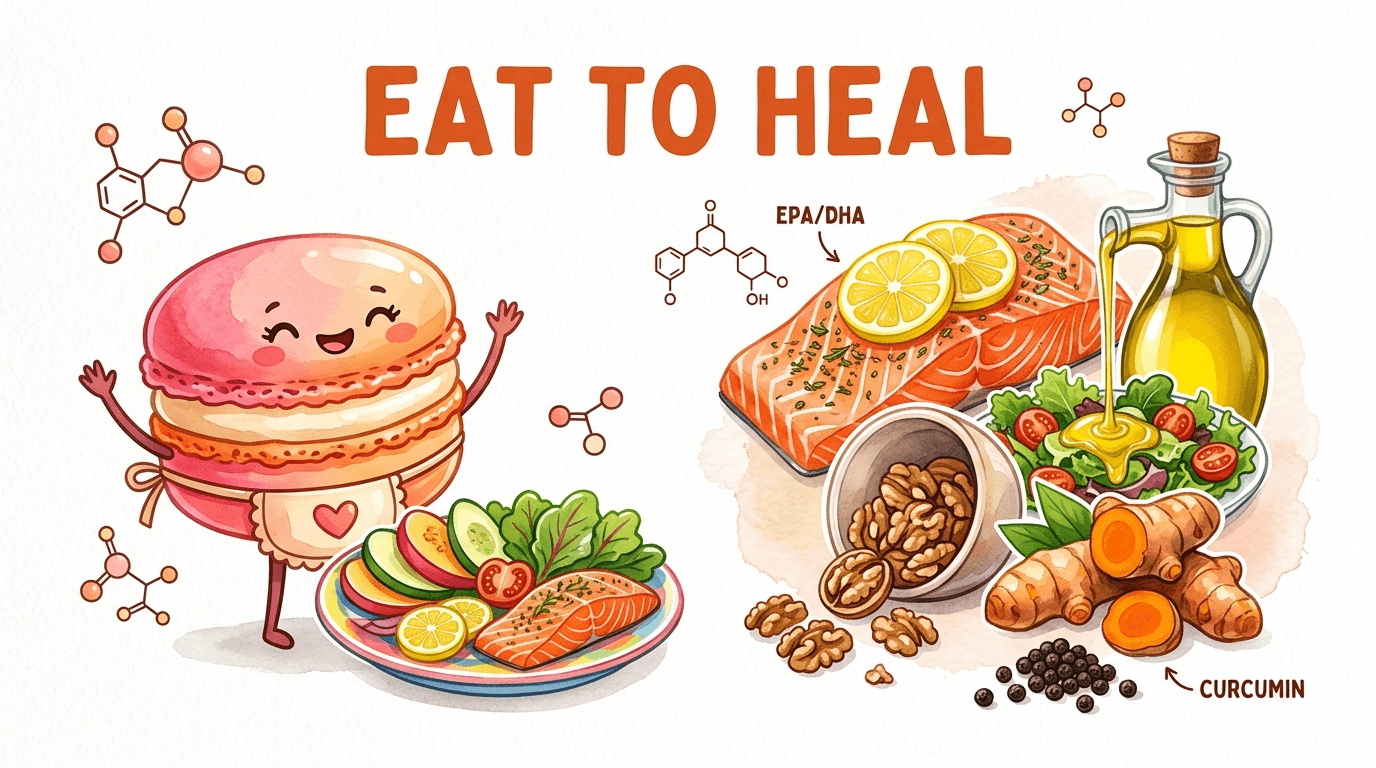
Best foods to include in a meal plan for Anti Inflammatory
Top evidence-based choices include wild-caught salmon (8-12oz weekly for EPA/DHA), walnuts (1oz daily for ALA), extra virgin olive oil (2-3 tbsp daily for oleocanthal), and turmeric (paired with black pepper). Frozen berries retain 95% of antioxidants with year-round affordability, while fermented foods like kimchi support gut health. Dark leafy greens provide lutein, and black rice offers more antioxidants than brown. Canned sardines are a budget-friendly omega-3 source, and frozen riced cauliflower makes low-glycemic swaps easy.
Meal plan for Anti Inflammatory vs a balanced meal plan
While both emphasize whole foods, anti-inflammatory eating specifically targets inflammation-reducing nutrients and limits potential triggers more strictly. Wild salmon replaces chicken for its EPA/DHA content, blueberries are preferred over bananas for higher anthocyanins, and spices like ginger are used strategically. Processed foods and refined carbs are minimized beyond standard healthy eating guidelines. The focus extends to food preparation methods - favoring olive oil over butter, and grilling over frying to avoid advanced glycation end products.
Meal Planning Ideas for Anti Inflammatory
Time-saving strategies bridge theory and practice: frozen berry smoothie packs retain nutrients while cutting prep time by 60%, pre-chopped cruciferous veggies streamline cooking, and canned wild salmon provides quick protein. Batch-cooking turmeric-spiced quinoa and roasting mixed vegetables on Sundays ensures 3-4 days of ready-to-assemble meals. Frozen riced cauliflower offers lower glycemic impact than grains with similar prep time.
Breakfast optimization delivers powerful compounds first thing: chia pudding with berries combines omega-3s and polyphenols, turmeric-spiced oatmeal with walnuts creates curcumin+ALA synergy, while spinach omelets with avocado pair lutein with healthy fats. Studies show morning meals high in polyphenols have lasting anti-inflammatory effects throughout the day - frozen cherries in overnight oats provide consistent anthocyanins year-round.
Lunch and dinner rotations emphasize color variety - deep greens (kale), bright reds (tomatoes), and vibrant oranges (sweet potatoes) provide different phytonutrients. Restaurant hacks include requesting olive oil instead of butter, doubling vegetable portions, and choosing grilled over fried proteins. Sheet-pan dinners with salmon, Brussels sprouts and sweet potatoes cook in 20 minutes while combining three anti-inflammatory power foods.
Smart snack strategies combine protein, fiber and healthy fats: almond butter with apple slices (quercetin + vitamin E), hummus with cucumber (plant protein + hydration), or walnuts with dark chocolate (ALA + flavonoids). These combinations blunt blood sugar spikes while delivering nutrients between meals - crucial for stable energy. Single-serving nut packs prevent overeating while providing portable anti-inflammatory benefits.
Tracking goes beyond biomarkers: notice changes in workout recovery (less post-exercise soreness), skin clarity (reduced redness), digestion (regularity), and energy consistency (fewer afternoon crashes). Many report these subjective improvements before CRP changes appear, with gut microbiome shifts beginning within 72 hours. Keeping a simple symptom journal helps identify which food combinations work best individually.
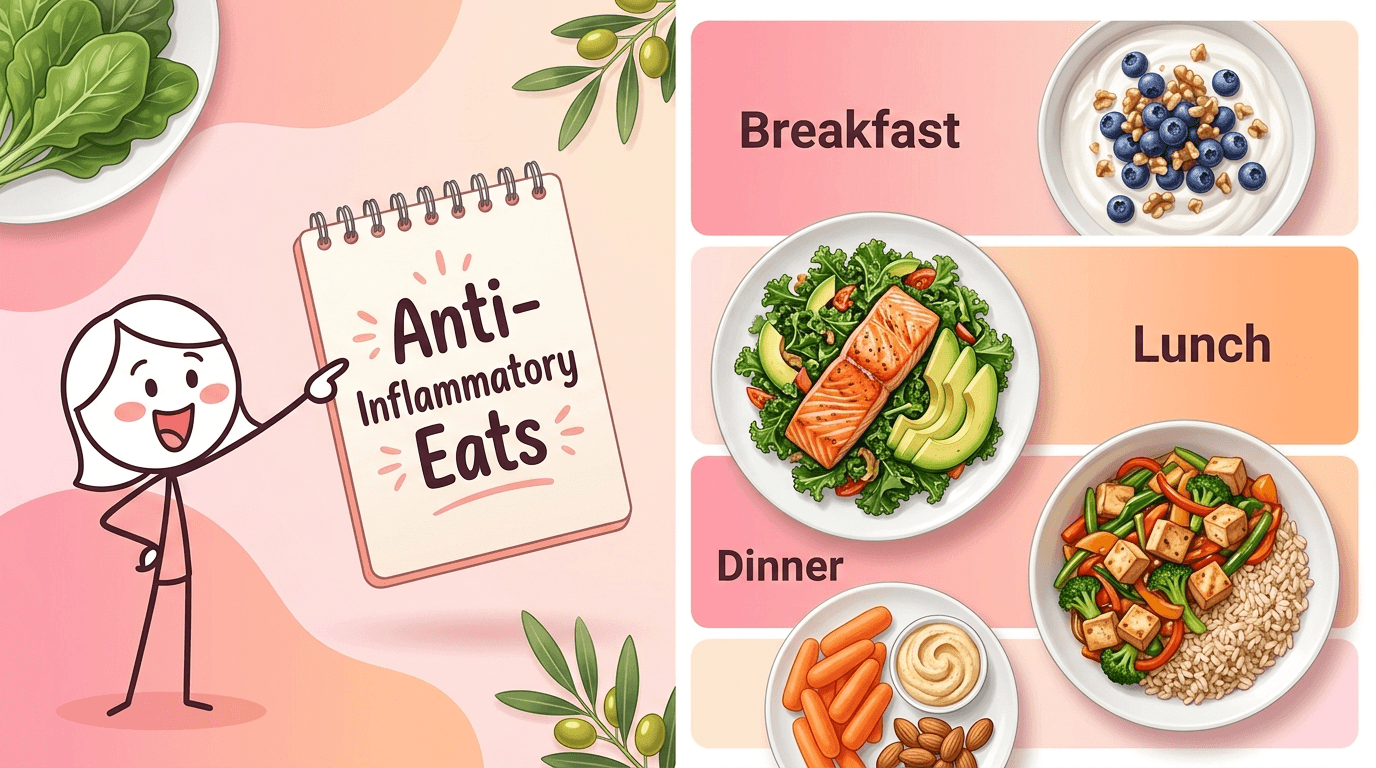
A 1-day meal plan for Anti Inflammatory
Breakfast: Greek yogurt with blueberries and walnuts combines probiotics, anthocyanins and ALA omega-3s. Lunch: Kale salad with grilled salmon, avocado and olive oil dressing provides EPA/DHA, lutein and healthy fats. Dinner: Stir-fried vegetables with tofu over black rice offers plant protein, fiber and antioxidants. Snacks: Carrots with hummus (fiber + plant protein) and almonds (healthy fats). This rotation delivers all six anti-inflammatory food categories while being practical for meal prep - frozen berries and pre-chopped veggies save time without sacrificing benefits.
Snacks, swaps, and grocery shortcuts for a Anti Inflammatory meal plan
Frozen fruits/veggies preserve nutrients at peak ripeness while cutting costs 30-50% versus fresh. Choose canned fish in water or olive oil over soybean oil varieties. Swap white rice for black rice (higher in anthocyanins) or riced cauliflower for lower glycemic impact. Pre-cut veggies and single-serving nut packs prevent convenience food temptations. Budget buys include frozen berries, canned sardines, bulk turmeric and walnuts. Time-savers include pre-made olive oil dressings and frozen riced cruciferous veggies for quick stir-fries.
Common meal plan mistakes on Anti Inflammatory
Overlooking spice synergies is common - black pepper boosts turmeric absorption 2000%, while fats enhance vegetable antioxidant uptake. Other errors include inadequate hydration (worsening inflammation) and excessive restriction (leading to rebound eating). Portion control matters even with healthy foods - just 1oz walnuts provides the daily ALA without excess calories. Many underestimate prep time; solutions include Sunday batch cooking and frozen berry smoothie packs. Restaurant pitfalls include hidden inflammatory oils - request olive oil instead of butter.
How Macaron helps you stick to a Anti Inflammatory meal plan
Macaron simplifies adherence by suggesting recipes based on anti-inflammatory ingredients you enjoy and tracking your nutrient intake. The smart grocery list feature helps stock key items efficiently, while progress tracking highlights both biomarker improvements and subjective benefits like energy levels. Meal planning tools account for prep time constraints, suggesting time-saving options like frozen berry smoothies or sheet-pan dinners. The app gradually introduces more anti-inflammatory foods while maintaining personal preferences - making dietary shifts sustainable long-term.
Frequently Asked Questions
Focus on fiber-rich carbohydrates that support gut health and stable blood sugar - key factors in inflammation control. Aim for 25-35g daily fiber from slow-digesting sources like steel-cut oats, quinoa, sweet potatoes, and legumes. These provide resistant starch that feeds beneficial gut bacteria while minimizing blood sugar spikes compared to refined grains. Even fruits like berries and apples have demonstrated anti-inflammatory effects despite their carb content when consumed in proper portions. Black rice offers more antioxidants than brown rice while providing complex carbohydrates.
Biomarker studies show measurable CRP reductions within 2-3 weeks of consistent anti-inflammatory eating, while subjective benefits like reduced joint stiffness often appear in 10-14 days. Maximum effects typically require 6-8 weeks as your microbiome adapts. Track non-scale victories: improved sleep quality (especially reduced nighttime inflammation), faster workout recovery, and clearer skin often precede lab test changes. Gut microbiome shifts begin within 72 hours, so digestive improvements may be early indicators. Consistency with key foods like fatty fish and berries yields cumulative benefits over time.
Black coffee contains polyphenols like chlorogenic acid with antioxidant properties. Limit to 1-2 cups daily and avoid inflammatory creamers or sugars - try cinnamon instead for added anti-inflammatory benefits. Those sensitive to caffeine might switch to green tea for its EGCG content - studied for arthritis and metabolic syndrome benefits. Timing matters: consuming coffee with meals can reduce iron absorption from plant foods, so space it 30+ minutes before/after meals if iron levels are a concern. Cold brew tends to be less acidic for those with gut sensitivity.
Fermented dairy like plain Greek yogurt and kefir can be beneficial due to their probiotics, which support gut health and inflammation control. Grass-fed varieties are higher in anti-inflammatory CLA fats. Individual tolerance varies - some find reducing dairy helps symptoms, while others tolerate fermented forms well. If including dairy, prioritize unsweetened fermented options and pair with anti-inflammatory foods like berries or turmeric. Avoid processed cheeses and sugary flavored yogurts that may promote inflammation. A2 milk may be better tolerated than conventional milk for some individuals.
Fatty fish like salmon provides the most direct anti-inflammatory benefits through EPA/DHA omega-3s, with 8-12oz weekly being ideal. Plant proteins like lentils, black beans and tofu offer fiber and polyphenols without potential inflammatory triggers. For meat, opt for lean poultry in moderation over processed meats - pasture-raised options have better fatty acid profiles. Eggs from pasture-raised chickens contain more omega-3s. Canned sardines and wild salmon are budget-friendly seafood options that require minimal prep time.
All fruits and vegetables offer benefits, but nightshades (tomatoes, eggplants, peppers) may bother some people with arthritis. Otherwise, variety is key for diverse nutrients - rotate between leafy greens, cruciferous veggies, and colorful options. Frozen varieties are nutritionally comparable to fresh and often more affordable. Prioritize deeply pigmented produce like purple sweet potatoes and blackberries for higher antioxidant content. Those with IBS may need to moderate high-FODMAP options like cauliflower and apples while focusing on well-tolerated choices like spinach and blueberries.
Macaron suggests recipes based on anti-inflammatory ingredients you enjoy while accounting for prep time constraints. The app tracks your nutrient intake to ensure adequate omega-3s, polyphenols and fiber while gradually incorporating more beneficial foods. Smart grocery lists prioritize staples like frozen berries, canned salmon and bulk spices. Progress tracking highlights both biomarker improvements and subjective benefits like energy levels. The system adapts recommendations based on your food tolerances and schedule - suggesting sheet-pan dinners on busy nights and meal prep strategies for weekends.
Absolutely. Choose grilled over fried foods to avoid inflammatory cooking oils, ask for dressings/sauces on the side to control ingredients, and opt for vegetable sides instead of fries. Select dishes with colorful vegetables and lean proteins - salmon salads or stir-fries with extra veggies are good options. Mediterranean and Japanese restaurants often have suitable choices. Avoid bread baskets and instead request olive oil for dipping. Ethnic restaurants frequently use more anti-inflammatory spices like turmeric and ginger compared to standard American fare.
Read & discover
AI Personal Assistant
Free calculators


