Healthy Meal Plan for Carnivore Diet
The carnivore diet eliminates all plant foods, focusing exclusively on nutrient-dense animal products. This guide provides research-backed meal strategies, optimal meat selections, practical adaptation tips, and budget-friendly prep methods for both beginners and experienced followers.
Meal Plan Basics for Carnivore Diet
The carnivore diet's strict animal-only approach requires strategic planning to meet nutritional needs without plant foods. Fatty ruminant meats like ribeye and lamb provide optimal 2:1 omega-6 to omega-3 ratios when grass-fed, while organ meats deliver essential micronutrients like copper and vitamin A that muscle meats lack. Many followers report better results rotating 3-5 primary protein sources weekly rather than eating the same meat daily.
Transition periods typically involve 2-4 weeks of digestive adaptation as the body shifts to zero-carb metabolism. Tracking data shows successful carnivore dieters consume 1.5-2.5 pounds of meat daily, adjusting based on activity levels - athletes may need 3+ pounds while sedentary individuals often eat less naturally. Initial 'keto flu' symptoms frequently improve with extra salt (1-2 tsp daily) and electrolyte supplementation.
Budget-conscious approaches focus on cheaper fatty cuts like chuck roast, pork belly, and 80/20 ground beef bought in bulk. Meal prep efficiency comes from batch-cooking large roasts in slow cookers or sous vide, then portioning for quick reheating. Many keep shelf-stable emergency options like canned salmon, beef jerky, or pork rinds in their bags for meals on-the-go.
Unlike balanced diets, carnivore eliminates all fiber sources - surprisingly many report improved digestion after initial adjustment despite this. However, micronutrient diversity requires intentional inclusion of varied animal products: liver (1-2x weekly), bone broth for collagen, and fatty fish for vitamin D. Some incorporate raw dairy like aged cheeses after the initial 30-day elimination period.
Community reports show meal frequency naturally decreases over time - many long-term followers eat just 1-2 large meals daily without hunger between. Cooking method variety (grilling, sous vide, pan-searing) creates flavor diversity from limited ingredients. Dining out requires careful selection of plain grilled meats without marinades or plant-based seasonings.
How a meal plan for Carnivore Diet works
This zero-carb approach includes all animal products while eliminating plants completely, including spices and coffee in strict versions. Unlike keto which allows some plant matter, carnivore focuses exclusively on meat, fish, eggs, and select dairy. Grass-fed ruminant meats like ribeye and lamb provide superior 2:1 omega-6 to omega-3 ratios compared to conventional grain-fed beef. Many followers report better energy when getting 70%+ calories from fat, achieved through fatty cuts like pork belly and bone marrow.
How to build a meal plan for Carnivore Diet
Prioritize fatty cuts (ribeye, 80/20 ground beef) over lean meats to maintain energy levels - many report better satiety with 2:1 fat-to-protein ratios by weight. Include organ meats like liver 1-2 times weekly for nutrients like copper and vitamin A that muscle meats lack. Meal timing often self-regulates - beginners typically start with 2-3 meals daily, while many long-term followers naturally shift to one large meal. Batch cooking 3-5 pounds of chuck roast on Sundays saves weekday prep time.

Best foods to include in a meal plan for Carnivore Diet
Grass-fed beef and lamb provide optimal fatty acid profiles, while fatty fish like salmon offer vitamin D and omega-3s. Eggs serve as complete protein sources with all essential amino acids, and bone broth supplies collagen for joint health. Those including organ meats (especially liver and heart) report better long-term adherence and fewer micronutrient deficiencies. Budget-conscious options include bulk-bought chuck roast, chicken thighs, and canned sardines - all providing good nutrition at lower cost points.
Meal plan for Carnivore Diet vs a balanced meal plan
Unlike balanced diets, carnivore eliminates all fiber sources, plant nutrients, and carbohydrates completely - requiring significant digestive adaptation. Without vegetables or grains, electrolyte management becomes crucial, especially during the initial transition period. Meal planning simplifies ingredient-wise (just animal products) but requires more attention to fat ratios and micronutrient diversity. Many report improved digestion despite zero fiber intake, though adaptation periods vary from days to weeks.
Meal Planning Ideas for Carnivore Diet
Effective carnivore meal planning balances simplicity with nutritional optimization. Tracking data reveals successful followers rotate 3-5 primary protein sources (beef, salmon, eggs, lamb) while incorporating organ meats weekly. Many find sous vide cooking ideal for preserving moisture in leaner cuts when adjusting fat ratios - a common solution for those experiencing loose stools from too much fat initially.
Practical meal prep often involves cooking large batches of fatty cuts like chuck roast or pork belly in slow cookers, then portioning for the week. Cost analysis shows subscription services like ButcherBox provide 15-20% savings on grass-fed cuts compared to grocery stores. Many keep rendered tallow or lard on hand for quick cooking fats that add needed calories.
For those transitioning from keto, the complete elimination of plant matter means paying extra attention to electrolyte balance. Community reports suggest adding 1/4 tsp salt to water 2-3x daily during the first month, along with magnesium glycinate supplements. Some find drinking bone broth helps manage cravings better than plain water.
Dining out requires careful selection - plain grilled ribeye or burger patties without buns are safest options. Many carnivore dieters report success keeping emergency rations like Chomps beef sticks, pork rinds, or hard-boiled eggs in their work bags. Some restaurants will accommodate special requests like extra butter with steak if asked politely.
Contrary to assumptions, meal variety comes from cooking methods rather than ingredients. Grilling creates Maillard reaction flavors, slow cooking yields tender textures, while sous vide preserves moisture in leaner cuts. Many report better digestion when separating fatty and lean protein meals rather than mixing them.
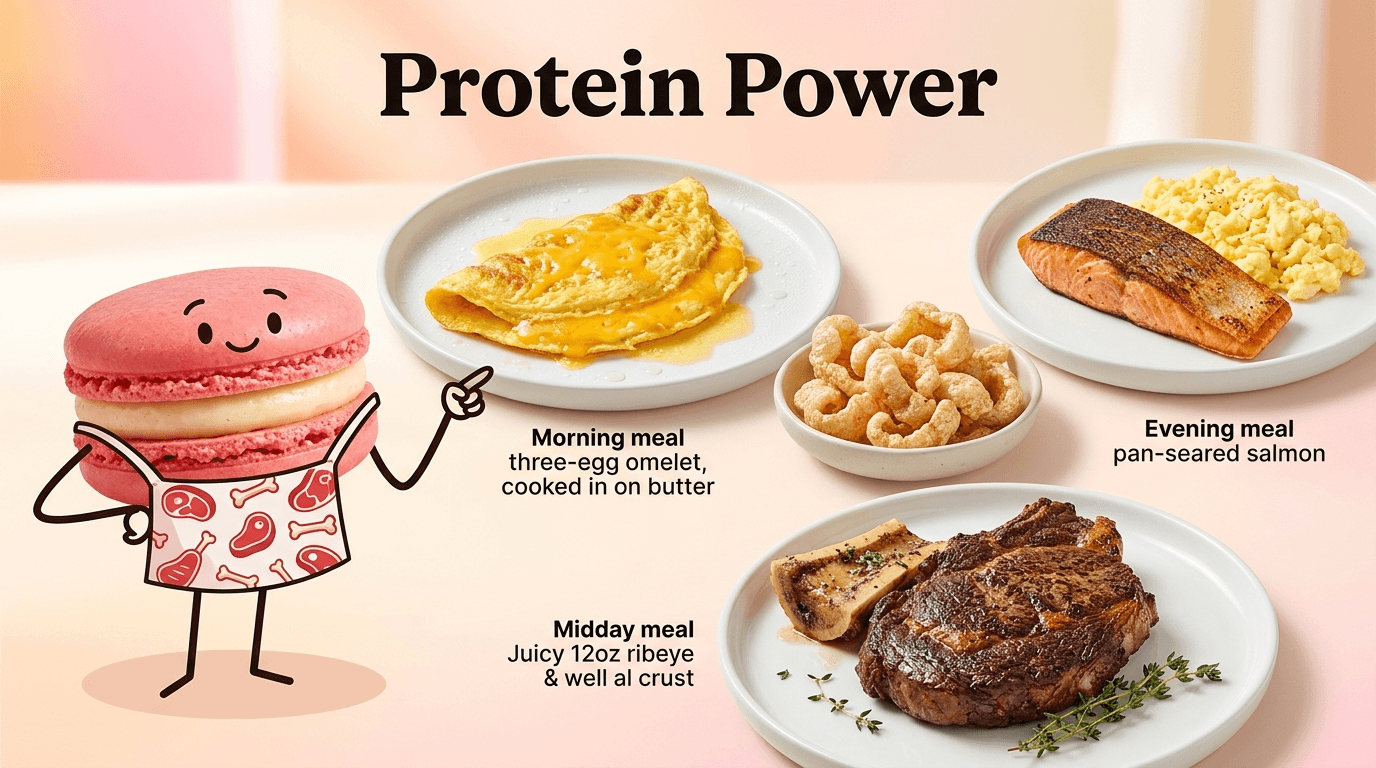
A 1-day meal plan for Carnivore Diet
Morning: 3-egg omelet cooked in butter with 2oz cheddar cheese provides a high-fat start. Midday: 12oz ribeye with roasted bone marrow offers concentrated nutrients and calories. Evening: Salmon pan-seared in tallow with scrambled eggs balances omega-3s and protein. This rotation provides approximately 70% calories from fat - a ratio many long-term followers find sustainable according to community tracking data. Snacks like pork rinds or beef jerky can be added for active individuals needing extra calories.
Snacks, swaps, and grocery shortcuts for a Carnivore Diet meal plan
Cost-effective options include buying 80/20 ground beef in 10lb bulk packs (divide and freeze), choosing chicken thighs over breasts for better fat content, and using canned sardines for portable omega-3s. Price comparisons show subscription services like ButcherBox provide better per-pound rates for quality cuts than most grocery stores. Many save time by rendering their own tallow from beef fat trimmings for cooking. Hard cheeses and butter can help those tolerating dairy add quick calories.
Common meal plan mistakes on Carnivore Diet
Eating too lean (like chicken breast without added fats) often leads to energy crashes and cravings. Neglecting organ meats may cause micronutrient gaps over time. Under-salting foods and not supplementing electrolytes frequently causes headaches during adaptation. Many overlook the importance of adjusting fat intake based on activity levels - sedentary individuals may need less fat than athletes. Some struggle by not planning emergency meals, leading to accidental cheat meals when hungry away from home.
How Macaron helps you stick to a Carnivore Diet meal plan
Macaron's meal tracking features help carnivore dieters monitor protein intake and fat ratios to maintain optimal energy levels. The app's bulk meal planning function assists with preparing large batches of meats for efficient weekly prep. Community features provide support for troubleshooting common issues like electrolyte imbalances. Shopping list generators help users track cost-effective bulk purchases of preferred cuts. Progress tracking helps identify which meat sources and fat ratios work best for individual energy needs.
Frequently Asked Questions
Black coffee is permitted by many carnivore practitioners despite being a plant product, though strict adherents avoid it. Those who consume it report better tolerance when pairing with fat sources like butter or heavy cream to mitigate caffeine's potential blood sugar effects. Some find coffee helps with initial transition energy slumps, while others eliminate it due to digestive irritation. If including coffee, many recommend limiting to 1-2 cups before noon to avoid sleep disruption.
Appetite self-regulation typically develops after 2-3 weeks as hunger signals normalize. Most consume 1.5-2.5 pounds of meat daily (about 1lb per 100lbs body weight), adjusting based on activity levels - athletes may need 3+ pounds while sedentary individuals often eat less naturally. Tracking data shows meal frequency decreases over time, with many long-term followers eating just 1-2 large meals daily without intentional calorie restriction. Let hunger guide portions rather than fixed meal schedules.
Least problematic dairy includes butter, ghee, and hard cheeses due to minimal lactose content. Many followers eliminate all dairy initially for 30 days to assess baseline health, then gradually reintroduce single products. Raw dairy often causes fewer digestive issues than pasteurized varieties for those with sensitivities. Some tolerate heavy cream in coffee but react to milk. Individual tolerance varies widely - lactose-free dairy options like aged cheddar may work when fresh cheeses don't.
Weight loss commonly occurs due to reduced calorie intake from eliminated food groups and increased satiety from protein/fat. Tracking data shows average losses of 1-2 lbs weekly initially, tapering after 3-6 months as the body finds its new equilibrium. Those with metabolic issues often see more dramatic initial results. Maintaining loss requires attention to fat ratios - too much fat can stall progress, while too little causes energy crashes. Many report easier weight maintenance compared to standard diets due to reduced hunger signals.
Research remains limited on extended carnivore diet use beyond a few years. Some individuals thrive for decades while others use it temporarily for specific health goals. Regular health monitoring including blood work (especially lipids and kidney function) is recommended for those maintaining the diet beyond 6 months. Many long-term followers incorporate periodic organ meats and seafood to ensure micronutrient adequacy. Individual responses vary significantly based on genetics, activity levels, and pre-existing conditions.
The diet contains no fiber since plants are excluded completely. Surprisingly, many report improved digestion despite this, though adaptation periods vary from days to weeks. Some experience temporary constipation during transition that typically resolves with proper hydration (1/2 oz water per pound body weight) and adequate fat intake. Those struggling may try increasing salt intake or incorporating bone broth before considering fiber supplements, which technically break carnivore protocol.
Macaron helps track meat intake quantities and fat ratios to maintain optimal energy levels. The app's meal planning features assist with organizing bulk cooking sessions and tracking preferred protein sources. Electrolyte tracking helps manage sodium, potassium, and magnesium levels during adaptation. Community features connect users with experienced carnivore dieters for troubleshooting common issues. Progress tracking helps identify which meat sources and meal timing patterns work best for individual energy needs and digestive comfort.
Yes, though performance may dip initially during the 2-4 week adaptation period as the body shifts to fat-adaptation. Many athletes report full recovery of strength and endurance after several weeks, with some experiencing improved recovery times. Electrolyte management becomes crucial for active individuals - many supplement with extra sodium before workouts. Some find training fasted works well once adapted, while others perform better with a small protein/fat meal 1-2 hours pre-workout.
Read & discover
AI Personal Assistant
Free calculators


