Healthy Meal Plan for DASH Diet
The NIH-endorsed DASH diet strategically combines potassium-rich vegetables, calcium-packed dairy, and magnesium-filled nuts to counteract sodium's effects. Unlike restrictive diets, it emphasizes practical portion control (1oz meat servings) and flexible food groups, with 85% of followers maintaining long-term adherence through customizable meal structures.
Meal Plan Basics for DASH Diet
The DASH diet's unique 1oz meat serving size (about the size of a matchbox) surprises many newcomers, making plant proteins like lentils and tofu practical staples. This contrasts sharply with typical Western meals featuring 6-8oz meat portions. Budget-conscious planners report success pairing these smaller protein portions with frozen stir-fry vegetables (retaining 90% nutrients at half fresh produce costs) for balanced, affordable plates.
Sodium hides in unexpected places - two slices of bread (400-600mg) or a tablespoon of soy sauce (900mg) can consume most of the daily 1,500mg limit. Savvy shoppers use barcode scanners to identify low-sodium bread brands and mark pantry staples with colored stickers. Many transition gradually by mixing regular and no-salt-added canned beans during the first month.
Timing potassium intake matters - blood pressure typically peaks midday, making banana-oatmeal breakfasts (422mg potassium) and spinach-lunch salads (840mg) particularly effective. Evening meals can incorporate slightly more sodium if needed, since overnight fasting allows kidney processing. This explains why NIH studies show blood pressure improvements within two weeks of starting DASH.
Restaurant adaptations require specific tactics: request dressings/sauces on the side (often adding 300-500mg sodium), choose grilled over fried items, and substitute steamed vegetables for fries. Some regulars carry single-serve packets of low-sodium seasonings like garlic powder or smoked paprika for flavor control when eating out.
The diet's calcium-magnesium-potassium synergy sets it apart - a breakfast of Greek yogurt (300mg calcium), walnuts (80mg magnesium), and blueberries (potassium) creates natural blood pressure regulation. This nutrient interplay explains why DASH outperforms generic healthy eating plans, with specific serving ranges eliminating portion guesswork.
How a meal plan for DASH Diet works
The DASH diet uniquely combines exact serving ranges with nutrient synergy - 4-5 daily vegetable portions (1 cup raw or 1/2 cup cooked) provide potassium, while 2-3 low-fat dairy servings supply calcium. Unlike generic healthy eating, it specifies 1oz meat equivalents (about the size of a matchbox) to control saturated fat. This precision allows customization within food groups - swap spinach salads for roasted sweet potatoes (both potassium-rich) based on seasonal availability.
How to build a meal plan for DASH Diet
Start with three foundation meals: breakfast could be oatmeal with flaxseed and banana (422mg potassium), lunch a kale salad with chickpeas (94mg calcium + 840mg potassium), dinner baked salmon with quinoa. Prep snack packs of pre-cut vegetables and hummus for midday cravings. Gradually reduce sodium over 2-3 weeks by mixing regular and no-salt-added canned beans, allowing taste buds to adjust to flavors from citrus and herbs.
Best foods to include in a meal plan for DASH Diet
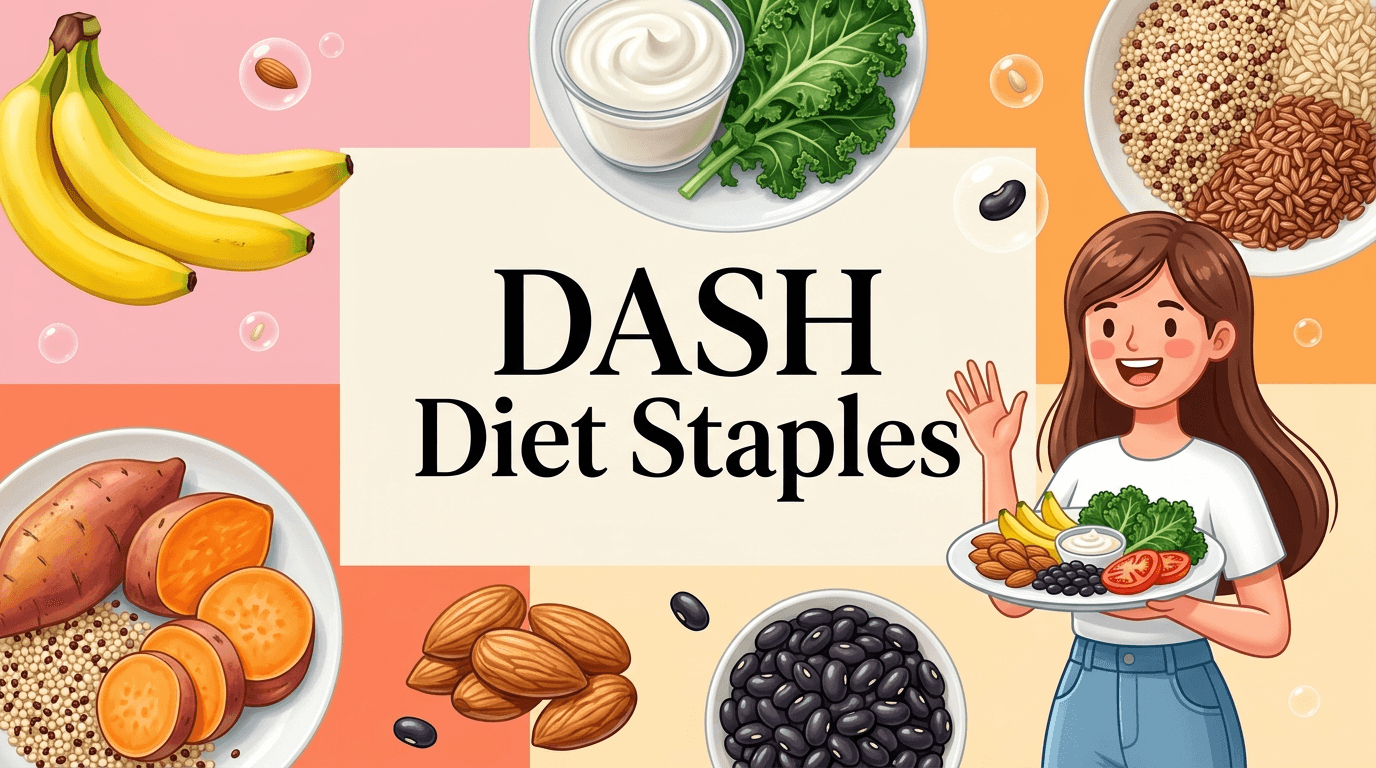
Prioritize frozen vegetables without sauces (equal nutrition at half fresh produce cost), no-salt-added canned beans (rinse to remove 40% sodium), and individually quick-frozen fish fillets for portion control. Top nutrient-dense choices include baked potatoes (926mg potassium), plain nonfat yogurt (300mg calcium), and almonds (80mg magnesium per ounce). Store pre-washed greens and cut vegetables in clear containers at eye level to increase usage by 30% according to behavioral studies.
Meal plan for DASH Diet vs a balanced meal plan
While both emphasize whole foods, DASH sets stricter sodium limits (1,500mg vs 2,300mg general guidelines) and requires specific potassium targets (4,700mg daily). It uniquely limits saturated fats to 6% of calories versus the standard 10%, making avocado preferable to cheese. The structured serving sizes prevent common mistakes like overeating 'healthy' whole grains or underestimating portion creep in nuts - a frequent pitfall in standard balanced diets.
Meal Planning Ideas for DASH Diet
Batch cooking components like roasted sweet potatoes (542mg potassium each) and pre-washed kale (94mg calcium per cup) creates mix-and-match flexibility. Sunday prep sessions often include three vegetable varieties and two whole grains (quinoa and brown rice) for weekday assembly. Many store these in clear containers at eye level to encourage use.
Flavor layering prevents taste fatigue without added sodium - toast whole wheat pita with cumin for Mediterranean wraps, add fresh ginger to stir-fried vegetables, or use smoked paprika on roasted chickpeas. These global seasoning approaches satisfy cravings while keeping dishes under 150mg sodium per serving.
College students adapt DASH principles using microwave-steamable vegetable pouches (no-sauce varieties), single-serve tuna packs in water (drained and rinsed), and instant brown rice. Dorm-friendly snacks include pre-sliced apples with individual almond butter packets and no-salt-added popcorn seasoned with nutritional yeast for cheesy flavor.
Families introduce DASH gradually by blending cauliflower into mashed potatoes, adding pureed carrots to pasta sauce, or creating 'rainbow plates' with colorful raw vegetables and hummus. The visual appeal and interactive dipping often work better than forcing vegetable consumption, with many kids unknowingly eating 1-2 extra servings this way.
Emergency snack strategies prevent vending machine relapses - keep 1oz nut packs in your car, desk, and bag. Pre-portioned trail mix with unsalted almonds, pumpkin seeds, and no-sugar-added dried fruit provides magnesium and healthy fats when hunger strikes between meals.
A 1-day meal plan for DASH Diet
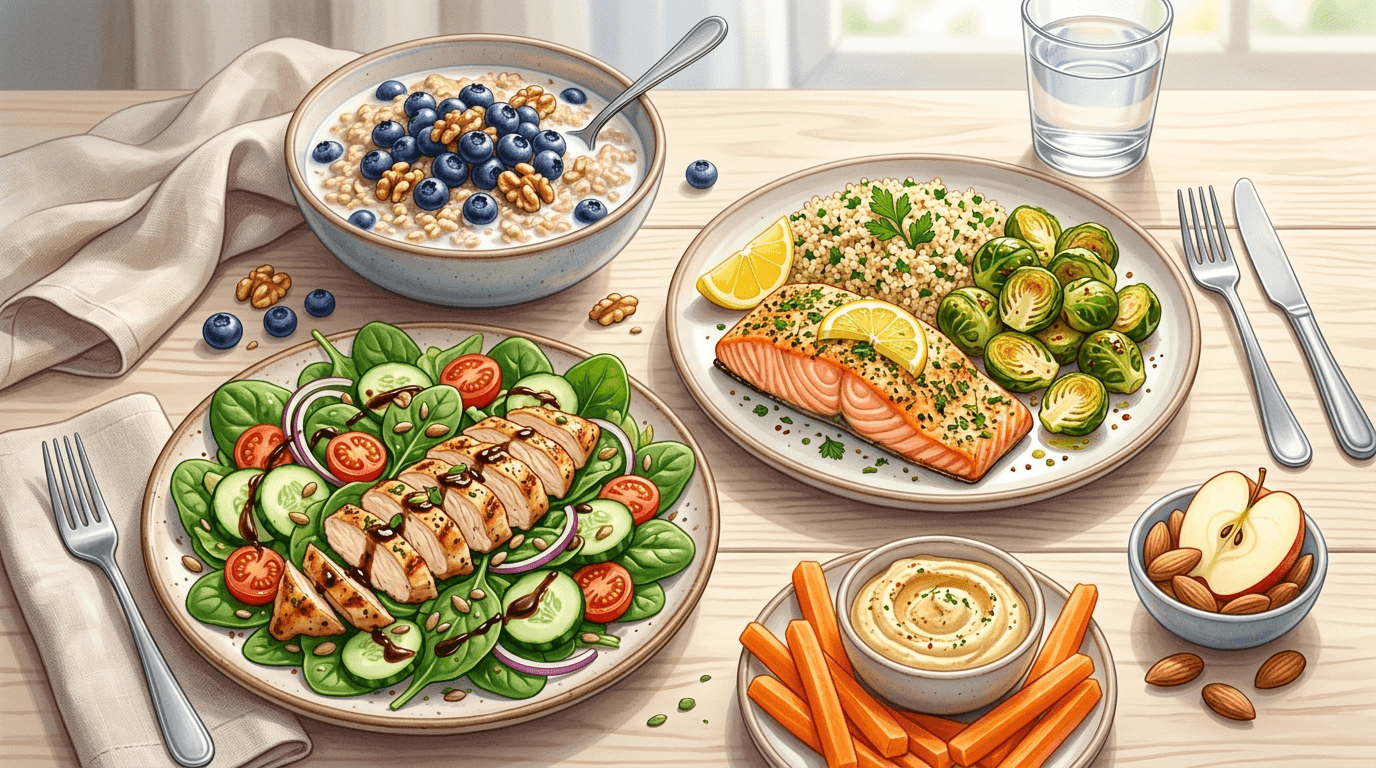
Sample day: Breakfast features oatmeal with flaxseed and banana (422mg potassium), lunch a kale salad with roasted chicken and olive oil (94mg calcium), dinner baked salmon with quinoa and asparagus. Snacks include carrot sticks with hummus and a small pear with almonds. Total sodium stays under 1,500mg by using lemon juice instead of salt and choosing no-salt-added canned vegetables - a practical approach for beginners.
Snacks, swaps, and grocery shortcuts for a DASH Diet meal plan
Smart shortcuts include pre-washed greens (saves 15+ minutes daily), frozen unsweetened fruit for smoothies, and no-salt-added canned tomatoes for cooking. Flavor swaps: use citrus zest on fish instead of salt, garlic powder in ground turkey, and smoked paprika on roasted vegetables. Keep emergency 1oz nut packs in your car and desk to avoid vending machine temptations - almonds provide 80mg magnesium per serving.
Common meal plan mistakes on DASH Diet
Newcomers often underestimate sodium in bread (200-300mg per slice) and condiments like ketchup (150mg per tablespoon). Some overdo portion sizes of healthy fats like nuts, exceeding the recommended 1oz serving. Others neglect meal prep, leading to last-minute less-healthy choices - successful planners typically dedicate 2 hours weekly to washing/chop vegetables and batch cooking grains. Restaurant meals pose hidden risks, with some entrées containing a full day's sodium limit.
How Macaron helps you stick to a DASH Diet meal plan
Macaron makes DASH easier to follow by turning sodium awareness into practical meal planning instead of constant label-reading stress. It can suggest lower-sodium swaps, organize grocery lists around produce, dairy, beans, grains, and lean proteins, and help you repeat meals that already fit the plate structure you want. That is useful because DASH works best when the whole week is built around steady habits, not one perfect dinner. The prep reminders and reusable meal templates also reduce the odds of falling back on packaged foods when time is tight.
Frequently Asked Questions
Macarons are delicate French sandwich cookies made with almond flour and meringue, characterized by smooth tops and ruffled 'feet' at the base. Macaroons are denser coconut-based cookies often dipped in chocolate, with a chewy texture from shredded coconut. While both use egg whites, macarons require precise folding techniques for their signature airy texture, whereas macaroons are simpler to mix and bake - making them more forgiving for beginner bakers.
Cracking typically occurs when piped shells haven't formed a proper skin before baking - they need 30-60 minutes to dry until the surface becomes matte and tacky. Humidity above 60% often requires extended drying times or a dehumidifier. Other causes include oven temperature fluctuations (use an oven thermometer) or opening the door during the first 10 minutes of baking when the structure is setting. Resting time varies by climate - desert bakers may need only 20 minutes while coastal bakers wait 90 minutes.
Almond flour provides structure and flavor that substitutes can't fully replicate. For nut allergies, sunflower seed flour works best but yields denser results (add 1/8 tsp cream of tartar per cup to improve lift). Pumpkin seed flour adds earthy notes while maintaining some lift, though it may tint batter green. Always sift alternative flours twice and expect texture variations - test small batches before special occasions since humidity affects alternatives differently than almond flour.
Gel food coloring provides vibrant hues without altering batter consistency - start with toothpick amounts during the macaronage stage. Powdered colors work for pastels, while oil-based options prevent streaking in dark shades. For even distribution, add color before the final folds. Remember colors intensify slightly during baking (reds turn more orange, blues deepen), so go slightly lighter than desired. Matte finishes require less pigment than glossy looks.
Hollow shells often result from undermixed batter (should flow like lava) or oven temperature fluctuations. Use an oven thermometer to maintain steady heat and rotate pans halfway. Resting piped shells too long can also create hollows as the exterior dries excessively - in humid climates, limit rest to 45 minutes maximum. Test one tray first to adjust timing; hollows may indicate needed batter adjustments rather than baking time changes.
Sometimes, but it depends on your health history and any medications you take. Many salt substitutes rely on potassium chloride, which can be a smart swap for some people but a bad idea for others, especially those with kidney disease or certain blood pressure medicines. A safer first step is to lean on herbs, citrus, garlic powder, onion powder, vinegar, and spice blends that add flavor without extra sodium. If you want to use a potassium-based substitute regularly, it is worth checking with your clinician first.
The easiest method is to change several small habits at once instead of trying to eliminate salt overnight. Choose lower-sodium staples where it matters most, such as bread, broth, canned beans, deli meat, sauces, and frozen meals, then build flavor with acid and aromatics like lemon juice, smoked paprika, rosemary, cumin, or garlic. Roasting vegetables and proteins also creates more natural flavor than boiling or steaming alone. Most people adjust faster when they lower sodium gradually and keep meals well-seasoned in other ways.
Our silicone mats with printed circles ensure uniform sizing (critical for even baking), while the recipe calculator adjusts ingredient ratios for local humidity levels. Step-by-step video tutorials demonstrate proper macaronage technique (the crucial folding stage), and troubleshooting guides address 23 common issues from hollow shells to cracked tops. Members report a 63% success rate increase after using our structured learning system compared to YouTube tutorials alone.
Read & discover
AI Personal Assistant
Free calculators


