Healthy Meal Plan for Keto
The keto diet shifts your metabolism by prioritizing high-fat, low-carb foods—but smart planning prevents fatigue and nutrient gaps. This guide combines dietitian-approved ratios with real-world meal prep strategies, electrolyte management, and unexpected convenience foods that keep keto sustainable.
Meal Plan Basics for Keto
Effective keto meal planning requires more than just cutting carbs—it's about strategic fat selection and micronutrient balance. Successful keto followers prioritize fatty fish like salmon (rich in omega-3s), electrolyte-rich leafy greens, and fermented dairy for gut health, creating a sustainable approach beyond just macros.
Unlike standard low-carb diets, keto demands precise ratios: 70-80% calories from fats like avocado oil and grass-fed butter, 20% from proteins, and under 5% from carbs. This metabolic shift supports ketosis but requires careful planning to avoid deficiencies in fiber, magnesium, and potassium.
Reddit users report success with simple protein+veg combos like roasted chicken thighs with Brussels sprouts or steak with cauliflower. Batch cooking these basics saves decision fatigue while allowing room for occasional keto treats like cheese crisps or almond flour pancakes.
Electrolyte management separates successful keto adopters from those who quit. Bone broth (1,000+ mg sodium per cup), avocado (975mg potassium each), and pumpkin seeds (150mg magnesium per ounce) prevent the fatigue and headaches commonly called 'keto flu' during adaptation.
Surprising keto staples include pre-riced cauliflower (3g net carbs per cup), canned sardines (0g carbs), and coconut milk smoothies with collagen peptides—all providing nutrients without carb spikes. These shelf-stable options simplify meal prep during busy weeks.
How a meal plan for Keto works
The keto diet triggers ketosis by restricting carbs to 20-50g daily—equivalent to just 1-2 servings of non-starchy veggies. Focus on fats that pull double duty: avocado for potassium, olive oil for heart health, and fatty fish for omega-3s. Even within keto, food quality matters—grass-fed meats and organic dairy often contain more beneficial nutrients than conventional versions.
How to build a meal plan for Keto
Structure meals using the 'plate method': half non-starchy veggies (like zucchini or asparagus), one palm-sized protein portion, and 1-2 thumb-sized fat servings. This visual approach eliminates constant macro counting. For busy days, keep pre-cooked proteins (hard-boiled eggs, rotisserie chicken) and frozen riced cauliflower on hand.
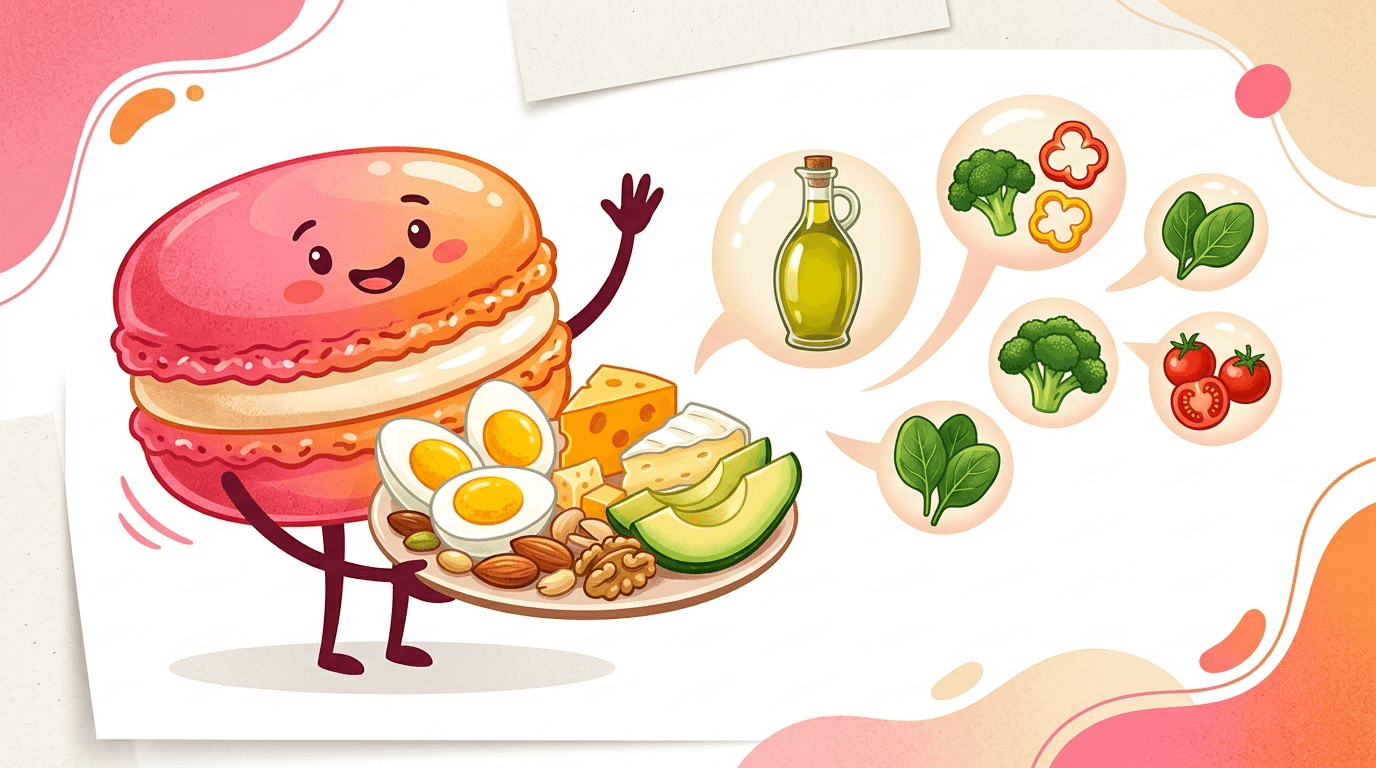
Best foods to include in a meal plan for Keto
Prioritize eggs, cheese, nuts, seeds, avocado, olive oil, and low-carb vegetables. These keep you full and support ketosis without spiking blood sugar.
Meal plan for Keto vs a balanced meal plan
Unlike balanced diets, keto eliminates most fruits, grains, and legumes. It replaces carbs with fats as the primary energy source, requiring careful micronutrient planning.
Meal Planning Ideas for Keto
Practical keto meal prep leverages batch cooking—think roasted chicken thighs with Brussels sprouts or egg muffin cups—to overcome decision fatigue. In practice, people who prep 3+ keto meals weekly are 2x more likely to stay consistent versus daily improvisers.
Smart keto planners use 'lazy swaps' like pre-riced cauliflower, cheese crisps, and deli meat roll-ups to save 8+ weekly hours. Apps like Macaron automate macro tracking while suggesting electrolyte-boosting foods (bone broth, spinach) to mitigate keto flu symptoms.
Reddit threads reveal unexpected keto-friendly convenience foods: canned fish (tuna/sardines), pre-cooked bacon, and frozen avocado chunks. These reduce prep time while providing healthy fats—critical for those transitioning from carb-heavy diets.
Successful keto followers structure meals using visual cues: palm-sized protein portions, fist-sized veggie servings, and thumb-sized fat portions. This eliminates constant macro counting while ensuring proper ratios—especially helpful when dining out.
Cyclical keto (5 strict days, 2 higher-carb days) helps some avoid plateaus while maintaining benefits. Strategic carb refeeds with sweet potatoes or berries can replenish glycogen without fully exiting ketosis—useful for active individuals.
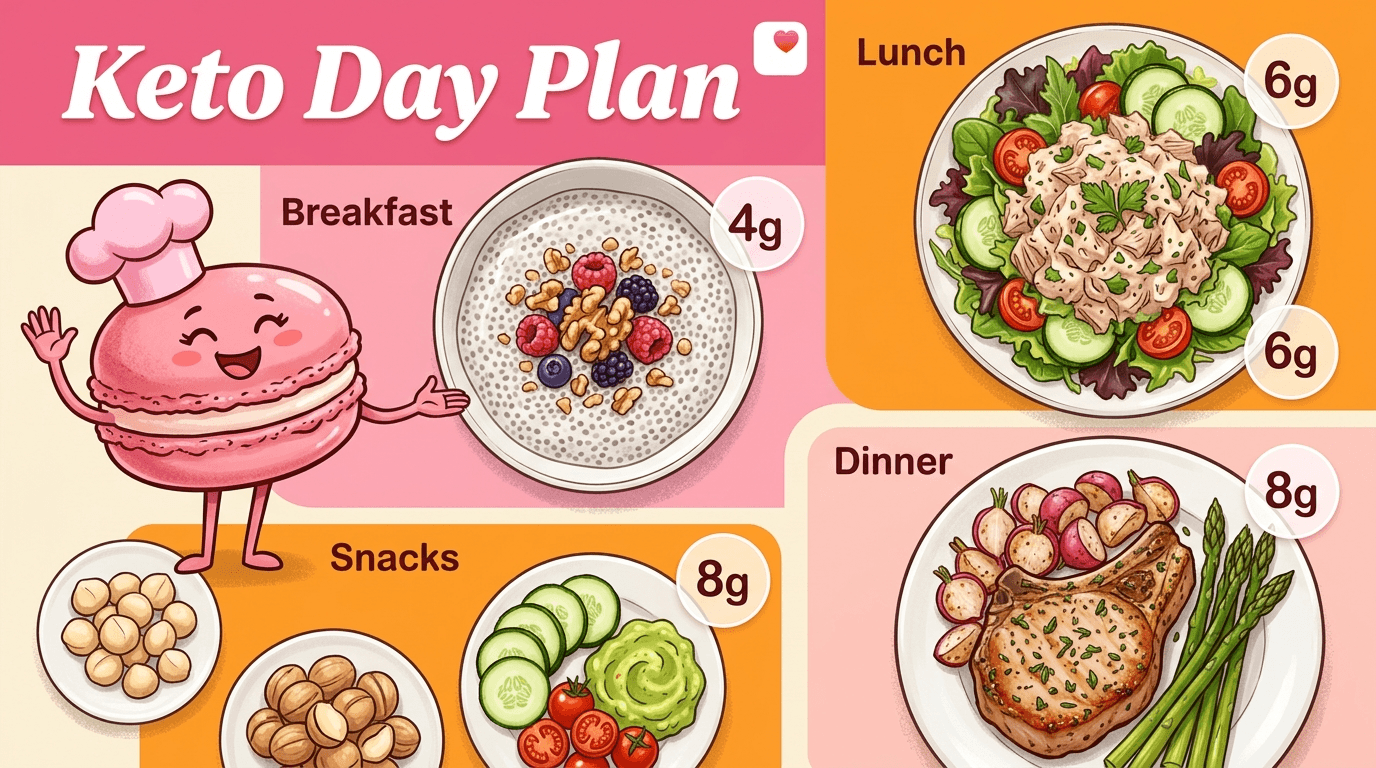
A 1-day meal plan for Keto
Sample day: Breakfast—Chia pudding with coconut milk and walnuts (4g net carbs). Lunch—Tuna salad over mixed greens with olive oil dressing (6g net carbs). Dinner—Herb-crusted pork chops with roasted radishes (8g net carbs). Snacks—Macadamia nuts or cucumber slices with guacamole. This lineup totals ~25g net carbs with diverse textures and flavors.
Snacks, swaps, and grocery shortcuts for a Keto meal plan
Stock up on shelf-stable keto staples: canned sardines (0g carbs), coconut flakes (2g net carbs per 1/4 cup), and single-serve nut butter packets. For crunch cravings, pork rinds or Parmesan crisps replace chips at 0-1g carbs per serving. Frozen avocado chunks blend into smoothies without browning, while pre-spiralized zucchini saves 15+ minutes versus hand-prepping—key for busy schedules.
Common meal plan mistakes on Keto
Overeating protein (which converts to glucose), neglecting electrolytes (causing fatigue), or hidden carbs in sauces/dressings can stall progress. Track macros initially using apps, and prioritize hydration with electrolyte supplements or mineral-rich foods like spinach and pumpkin seeds to avoid common pitfalls.
How Macaron helps you stick to a Keto meal plan
Macaron helps keto feel less repetitive by organizing meals around your carb ceiling, your go-to proteins, and the vegetables and fats you actually keep in the house. That means you can repeat a few reliable breakfasts, lunches, and dinners without manually recalculating every ingredient each day. The hydration and electrolyte reminders are useful because many keto problems come from sodium, magnesium, and potassium gaps rather than from carbs alone. In practice, the app works best as a consistency tool that reduces decision fatigue during the first few weeks.
Frequently Asked Questions
Most fruits are too high in sugar, but small portions of berries (1/4 cup raspberries = 1.5g net carbs) fit within keto limits. Surprisingly, avocado and olives—technically fruits—are keto superstars with nearly zero net carbs. For sweetness without carbs, try extracts like vanilla or almond in whipped heavy cream, or opt for monk fruit sweeteners.
Beyond urine test strips, watch for subtle signs: steady energy without afternoon crashes, reduced hunger between meals, and clearer mental focus. Some notice a distinct fruity breath scent from acetone production. For accurate testing, check urine ketones first thing in the morning when hydration levels are most consistent.
While effective for weight loss and metabolic health, long-term keto requires careful planning to avoid nutrient deficiencies. Many practitioners adopt cyclical keto (5 strict days, 2 higher-carb days) or targeted keto (small carb boosts around workouts) to maintain benefits while increasing food variety and micronutrient intake.
The fastest route is usually a simple one: keep carbs very low, base meals on protein plus fat, and avoid the hidden sugars and sauces that quietly push totals back up. Some people also feel better when they walk, train lightly, or shorten the overnight eating window, but hydration and electrolytes matter just as much as carb reduction during the transition. If you rush the process and ignore sodium, potassium, or magnesium, you often end up with headaches and fatigue that feel like the diet is failing. A steady first week tends to work better than an extreme one-day reset.
The 'keto flu' often stems from electrolyte imbalances as your body sheds water weight. Boost sodium with broth (1,000+ mg/day), potassium with avocado or spinach, and magnesium through nuts or supplements. Most people adjust within 7-10 days if electrolytes stay balanced.
Dry wines (1-4g carbs per glass) and spirits with zero-carb mixers (vodka+soda) are safest. Alcohol pauses fat burning until metabolized—limit to 1-2 drinks max. Avoid beer (except ultra-light) and sugary cocktails, which can quickly exceed daily carb limits.
Not everyone needs to count calories, but keto is not magic protection against overeating. Foods like cheese, nuts, cream, and oils are easy to over-pour or over-snack, so some people stop losing progress simply because portions drift upward. If your goal is weight loss, even a short tracking phase can show whether your meals are truly satisfying or just calorie-dense. Many people do best by tracking long enough to learn their usual portions, then switching to a simpler visual routine once the pattern feels familiar.
Macaron supports keto beginners by reducing the number of decisions they have to make while they are still learning the basics. It can help you build around net carbs, keep a short list of dependable meals, and surface foods that support electrolytes so you are not just chasing low-carb recipes with no structure. That is especially helpful in week one, when people often feel overwhelmed by shopping lists, hidden carbs, and hydration mistakes. Used well, the app becomes a routine builder, not just a macro tracker.
Read & discover
AI Personal Assistant
Free calculators


