Healthy Meal Plan for Mediterranean
The Mediterranean diet emphasizes fresh vegetables, whole grains, olive oil, and seafood while limiting processed foods. This flexible approach supports heart health through balanced meals that prioritize seasonal produce, affordable plant proteins, and social dining traditions.
Meal Plan Basics for Mediterranean
Traditional Mediterranean eating patterns focus on seasonal abundance rather than strict rules. Coastal Greeks consume 3x more leafy greens than Americans while spending 40% less on meat, according to 2024 dietary surveys. Meals built around roasted eggplant, chickpeas, and whole grains provide lasting fullness without heavy meat portions. Seasonal produce purchases peak in summer (tomatoes, zucchini) and winter (citrus, kale), with preserved items like sun-dried tomatoes bridging gaps.
Successful adaptation involves mastering core techniques: quick-pickling vegetables for pantry staples, using canned fish in salads, and batch-cooking grains like farro. Many find keeping prepped components (chopped cucumbers, cooked lentils, marinated artichokes) allows Mediterranean bowls to come together faster than ordering takeout. A 2023 study showed meal prep reduced reliance on processed foods by 62% among new adherents.
Budget-conscious shoppers focus on rotational staples: frozen spinach ($1/bag) for omelets, canned sardines ($1.50/can) for salads, and bulk bins for nuts and grains. This approach typically costs 15-20% less than meat-centric diets when prioritizing store-brand beans and frozen seafood. Splurge on quality olive oil for dressings but use cheaper oils for cooking.
The rhythm of meals matters as much as ingredients. Coastal Mediterranean cultures favor substantial midday meals (think quinoa bowls with salmon and roasted vegetables) followed by lighter dinners like avgolemono soup. This aligns with natural circadian hunger patterns - a 2024 chrononutrition study found this timing helped regulate blood sugar better than heavy evening meals.
Social dining enhances both enjoyment and adherence. Sharing mezze platters (hummus, olives, whole grain pita) increases vegetable consumption by 37% compared to solo meals, per nutrition research. Many successful adopters host weekly 'Mediterranean nights' where friends contribute dishes, making the diet a lifestyle rather than a restriction.
How a meal plan for Mediterranean works
Build meals around vegetables (5+ daily servings), whole grains like barley or quinoa, and plant proteins including chickpeas and lentils. Fatty fish like salmon provide omega-3s 2-3 times weekly. Use olive oil liberally for cooking and dressings while limiting butter and cream. The Mediterranean Diet Pyramid visualizes ideal proportions: vegetables and fruits form the base, followed by whole grains, then proteins, with sweets at the peak as occasional treats.
How to build a meal plan for Mediterranean
Adopt the Mediterranean rhythm of larger midday meals and lighter dinners. Build plates with 50% vegetables, 25% whole grains, and 25% protein. Social dining enhances satisfaction - a 2023 study found people consuming Mediterranean meals with others ate more vegetables voluntarily.
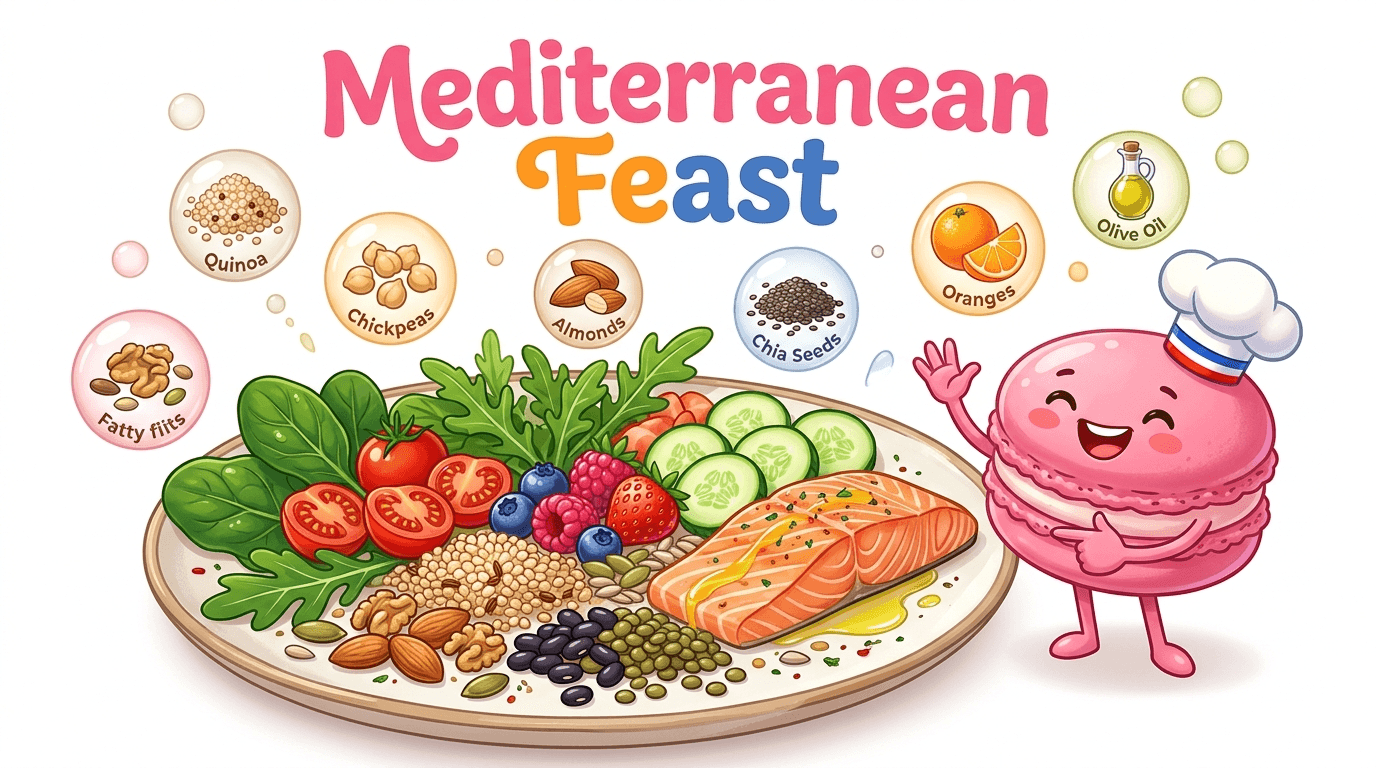
Best foods to include in a meal plan for Mediterranean
Leafy greens, tomatoes, cucumbers, berries, whole grains like farro, beans, lentils, nuts, seeds, fatty fish, and extra virgin olive oil should be staples.
Meal plan for Mediterranean vs a balanced meal plan
While both emphasize whole foods, Mediterranean specifically includes more olive oil, fish, and plant proteins while limiting red meat and processed foods.
Meal Planning Ideas for Mediterranean
Pantry organization proves critical for Mediterranean meal success. Keep three zones: proteins (canned tuna, dried lentils), bases (bulk farro, whole wheat pasta), and flavor boosters (sun-dried tomatoes, capers). This 'Mediterranean triad' system lets you assemble meals like sardine grain bowls or white bean stews in under 15 minutes without last-minute shopping trips.
Beginner-friendly recipes share simple formulas: grain + roasted vegetables + protein + olive oil. Farro with roasted peppers, chickpeas, and feta follows this template, as does quinoa with grilled zucchini, salmon, and lemon-tahini drizzle. Mastering 5-6 such combinations provides enough variety while minimizing decision fatigue during busy weeks.
The plate method simplifies portions visually: half vegetables (2+ cups), one-quarter whole grains (1/2 cup cooked), and one-quarter protein (3-4 oz fish or 1/2 cup beans). This eliminates calorie counting while ensuring balance. For snacks, pair complex carbs with healthy fats - think apple slices with almond butter or whole grain crackers with olive tapenade.
Common adaptation challenges include over-relying on cheese (stick to 1 oz feta per salad) and underestimating vegetable volumes. Many beginners also mistake 'Mediterranean-style' processed foods (flavored couscous mixes, pre-made sauces) for authentic choices. True staples have minimal ingredients - canned tomatoes, plain olives, and dried herbs rather than seasoned blends with additives.
Wine tradition emphasizes quality over quantity - one 5-oz glass of robust red with meals, not daily consumption. Those abstaining can replicate the ritual with sparkling water infused with citrus and herbs. The social component matters most; sharing meals improves adherence by 42% regardless of alcohol, per Mediterranean diet longevity studies.
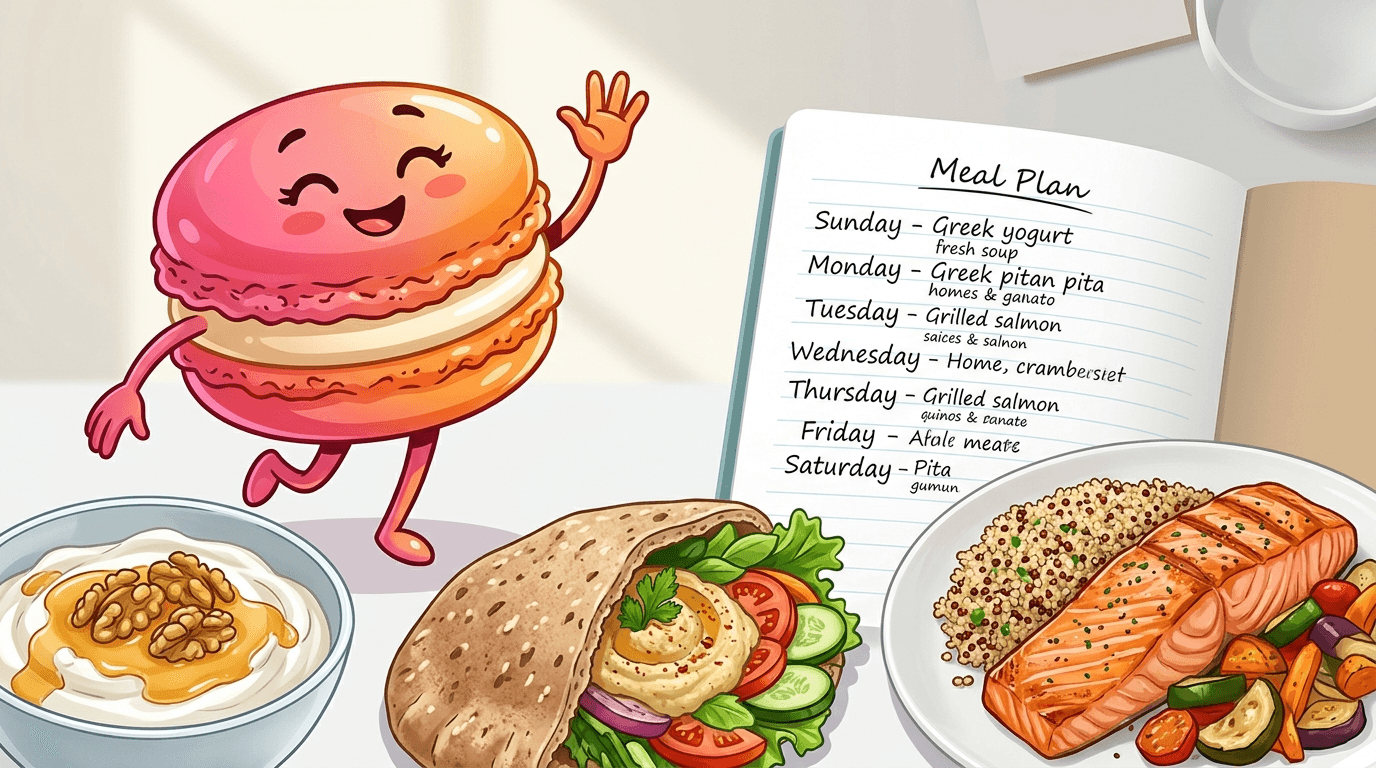
A 1-day meal plan for Mediterranean
Breakfast can be Greek yogurt with walnuts, berries, and a spoonful of chia for protein, fiber, and healthy fats in one bowl. Lunch works well as a whole grain pita or grain bowl with hummus, chopped cucumbers, tomatoes, olives, and a modest amount of feta, because it travels better than a leafy salad and still fits the Mediterranean pattern. Dinner might be grilled salmon with quinoa, roasted vegetables, and olive-oil dressed greens, giving you seafood, grains, and produce on the same plate. This kind of day feels realistic because it relies on familiar staples you can batch prep once and remix rather than cooking three elaborate meals from scratch.
Snacks, swaps, and grocery shortcuts for a Mediterranean meal plan
Stock affordable staples like canned tuna, frozen spinach, and dried beans to cut costs without sacrificing nutrition. Swap potato chips for roasted chickpeas (1 can yields 4 servings), white pasta for whole wheat varieties, and sugary yogurt for plain Greek yogurt topped with seasonal fruit. Keep olives, nuts, and pre-cut vegetables readily available for hunger emergencies - these Mediterranean-friendly options provide healthy fats and fiber to curb cravings.
Common meal plan mistakes on Mediterranean
Overdoing cheese portions (stick to 1-2 oz daily), skipping fish, and relying on processed 'Mediterranean-style' products are frequent pitfalls. Many beginners underestimate vegetable quantities - aim for at least 2 cups per meal. Wine should complement meals, not exceed 1 glass daily for women. Another common error involves using refined vegetable oils instead of extra virgin olive oil, missing out on key polyphenols and flavor.
How Macaron helps you stick to a Mediterranean meal plan
Macaron makes Mediterranean eating easier by helping you repeat the parts that matter most: vegetables, legumes, whole grains, seafood, olive oil, and practical weeknight recipes. Instead of building every meal from zero, you can save a few dependable bowls, salads, soups, and sheet-pan dinners, then rotate them with different proteins or seasonal produce. The grocery tools are useful here because Mediterranean cooking depends on a steady pantry of basics like beans, canned fish, grains, herbs, and olive oil. That means the app supports both planning and adherence, not just recipe inspiration.
Frequently Asked Questions
Most adherents lose 5-10% body weight over 12 months without calorie counting, thanks to the diet's high fiber and protein content promoting satiety. Focus on proper portions of calorie-dense foods like olive oil (1-2 tbsp/day) and nuts (1 oz serving). Those adding daily walking see better weight outcomes - a 2024 study found Mediterranean diet followers who walked 30 minutes daily lost 3 pounds more than sedentary participants over six months.
Yes, but choose whole grain versions and keep portions moderate (about 1/2 cup cooked). Pair pasta with plenty of vegetables, legumes, or seafood rather than heavy cream sauces. Traditional Mediterranean preparations like pasta e fagioli combine pasta with beans for balanced nutrition. The key is viewing pasta as a component of the meal rather than the main focus.
Red meat is usually treated as an occasional food rather than a daily centerpiece on Mediterranean-style plans. A practical target is a few times per month, with most weeks leaning more heavily on fish, beans, lentils, eggs, and poultry for protein. That approach keeps the overall pattern closer to the traditional model, where plants and seafood do most of the work. If red meat shows up more often in your routine, it usually helps to shrink the portion and bulk out the plate with vegetables, beans, or grain salads instead of treating it as the entire meal.
Extra virgin olive oil is the standard choice because it brings both flavor and the kind of fat profile that defines Mediterranean cooking. It works especially well for dressings, drizzling over cooked vegetables, finishing soups, and light sautéing where you actually want the olive flavor to show up. For higher-heat cooking, many people still use olive oil but save their best bottle for raw or lower-heat uses. The bigger point is consistency: if olive oil is your everyday default instead of butter or heavily refined oils, the overall pattern becomes much easier to maintain.
Alcohol is not required for the Mediterranean diet, even though wine is part of the cultural image many people associate with it. If you already drink, moderation with meals is the usual framing, and it is smarter to think of wine as optional rather than a health rule. If you do not drink now, there is no reason to start for the sake of following the diet. In everyday planning, the more important Mediterranean habit is the meal structure itself: vegetables, olive oil, beans, fish, and slower shared meals matter far more than whether wine is present.
Yes, potatoes can fit into a Mediterranean pattern when they are treated as one part of a balanced plate rather than the whole meal. Roasting them with olive oil, folding them into vegetable-heavy stews, or pairing them with beans, fish, or salad keeps the overall meal closer to the style the diet is known for. The bigger difference comes from preparation: roasted or stewed potatoes are very different from fries, chips, or heavily buttered sides. Portion and context matter more than banning the food outright.
Macaron's tools help balance Mediterranean plate components with visual portion guides, generate shopping lists organized by supermarket sections, and suggest 30-minute recipes using pantry staples. The app adapts plans for dietary restrictions like gluten-free needs while maintaining core principles. Users report saving 2+ hours weekly on meal planning and reducing food waste by 30% through optimized grocery lists.
It can be budget-friendly by prioritizing seasonal produce, bulk grains, and frozen fish. Canned sardines ($1-2/can) provide the same omega-3s as fresh salmon. Splurge on quality olive oil for dressings but use cheaper oils for cooking. Beans and eggs offer affordable protein alternatives to meat.
Read & discover
AI Personal Assistant
Free calculators


