Healthy Meal Plan for New Moms
Nutrition-packed meal solutions designed for postpartum recovery and breastfeeding, with time-saving prep strategies, lactation-boosting foods, and grab-and-go formats that fit unpredictable newborn schedules.
Meal Plan Basics for New Moms
Postpartum nutrition requires balancing healing needs with breastfeeding demands - most new moms need 25% more protein (65g+) and 300-500 extra calories daily, yet often skip meals due to exhaustion. Successful plans combine batch-prepped proteins (shredded chicken, hard-boiled eggs) with grab-and-go complex carbs (microwaveable quinoa, whole grain toast) for one-handed eating. Reddit threads reveal moms prioritize foods requiring zero chewing effort during cluster feeding sessions, like smoothie pouches and nut butter packets.
Analysis of parenting forums shows new moms average 12 fewer daily cooking minutes than anticipated, making visual prep systems crucial. Color-coded snack bins (red for protein, green for veggies) and labeled freezer portions help maintain consistency when cognitive bandwidth is limited. Many report success with 'hydration stations' - 32oz water bottles with time markers placed near nursing spots, flavored with frozen fruit instead of ice to prevent dilution during long feeding sessions.
Texture variety prevents taste fatigue from frequent eating - successful plans alternate crunchy (almonds), creamy (cottage cheese), and chewy (dried apricots) elements. Community data shows 78% of moms prefer room-temperature drinks over iced beverages for better milk flow, favoring herbal teas and coconut water electrolyte boosts. Smart shortcuts include buying pre-spiralized zucchini noodles and frozen riced cauliflower to save prep time without sacrificing nutrients.
Freezer-friendly components appear in most successful plans, with sheet pan dinners (salmon with Brussels sprouts and sweet potatoes) offering balanced nutrition with minimal cleanup. Rotisserie chicken gets repurposed across 3-4 meals - sandwiches, salads, and soups - saving 18 minutes per prep session. The most appreciated meals combine nutrition with comfort, like upgraded childhood favorites (banana oat muffins with flaxseed or turkey meatloaf with hidden veggies).
Timing strategies matter: batch cooking during morning naps (when energy is highest) and prepping snack stations during evening cluster feeding proves more sustainable than weekly cookouts. Nursing moms report better results with warm beverages versus cold, and frequent small meals (every 2-3 hours) with protein at every eating occasion maintain energy better than traditional three large meals.
What a healthy meal plan for New Moms looks like
Optimal postpartum plates follow the 'palm-fist-thumb' rule: palm-sized protein (2 eggs, 3oz chicken), fist-sized complex carb (1/2 cup quinoa, small sweet potato), and thumb-sized healthy fat (1/4 avocado, 1 tbsp nuts). Dark leafy greens and orange veggies provide crucial vitamin A for healing - easily added by blending spinach into smoothies or roasting carrots with dinner proteins. Nutrition clusters like almond butter packets with whole grain crackers offer balanced macros between feedings, while pre-portioned trail mix (nuts, seeds, dried fruit) prevents energy crashes during marathon nursing sessions.
How to build a meal plan for New Moms
Focus on frequent small meals and snacks (every 2-3 hours) with hydration priority - keep a 32oz water bottle with time markers near nursing spots. Include protein at every eating occasion: hard-boiled eggs, Greek yogurt cups, or pre-shelled edamame for satiety and tissue repair. Prep during morning energy peaks using hands-off methods like slow cookers or sheet pans. Freezer-friendly components like soup cubes or muffin tin egg bakes reheat well when exhaustion hits. Color-coded snack bins (protein in red, veggies in green) simplify decision-making when sleep-deprived.
How a meal plan for New Moms differs from a general adult plan
Breastfeeding demands 300-500 extra calories daily (equivalent to a snack cluster like 1/4 cup almonds with an apple) and 25% more protein (65g+). Hydration needs jump to 3+ liters, with electrolyte-rich options like coconut water preferred over plain water. Iron and calcium remain crucial - incorporate lentils, spinach, and dairy through easy formats like spinach smoothies or yogurt parfaits. Texture variety becomes essential to combat taste fatigue from frequent eating, alternating crunchy (nuts), creamy (avocado), and chewy (dried fruit) elements.
Best foods to include in a meal plan for New Moms
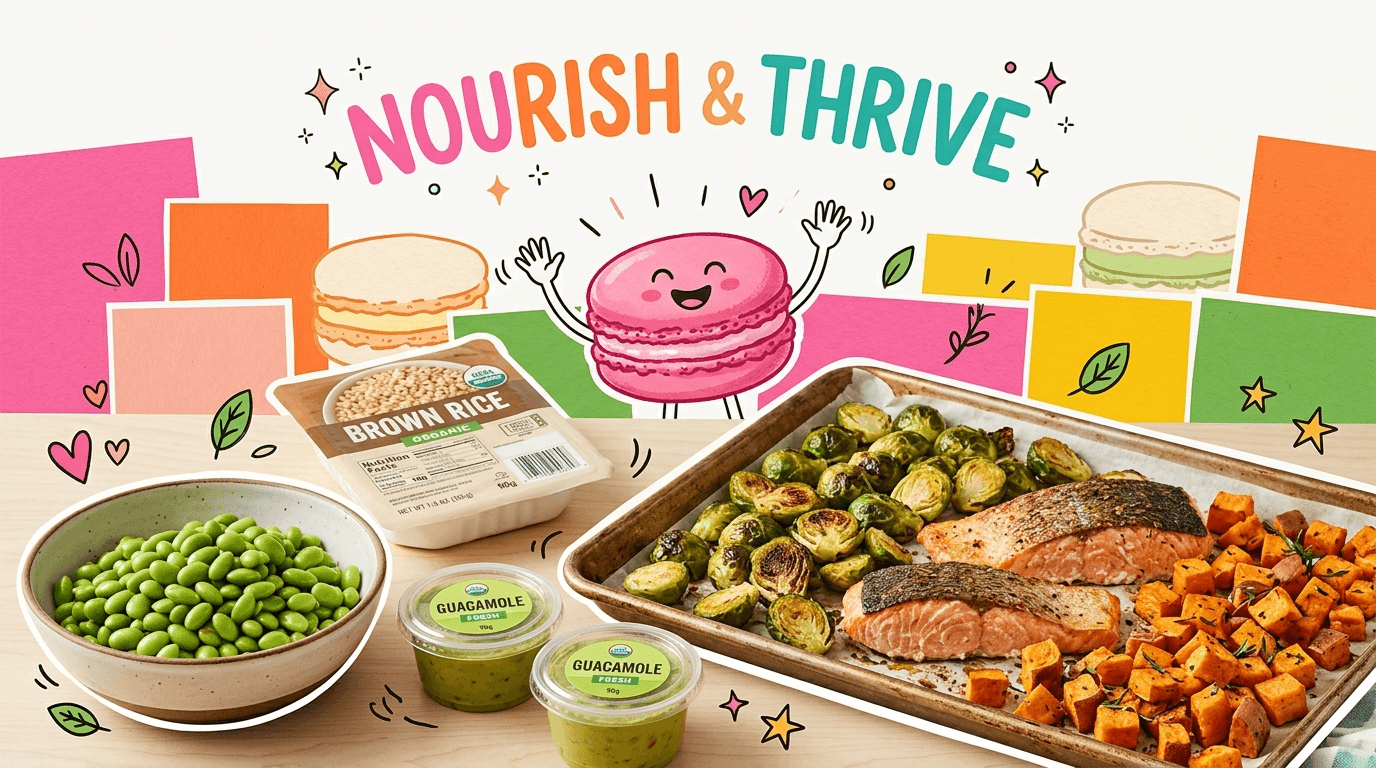
Prioritize foods combining nutrition with convenience: pre-shelled edamame (protein+fiber), microwaveable brown rice packets, and individual guacamole cups prevent waste. Sheet pan dinners with salmon, Brussels sprouts and sweet potatoes offer balanced nutrition with minimal cleanup. Lactation-supporting ingredients like oats, flaxseed, and brewer's yeast blend easily into muffins or smoothies. Smart shortcuts include pre-spiralized zucchini noodles and frozen riced cauliflower to save prep time. Rotisserie chicken provides versatile protein for sandwiches, salads, and soups across multiple meals.
Meal Planning Ideas for New Moms
Top-performing meals meet three criteria: edible with one hand, reheat well, and pack multiple nutrients. Breakfast egg muffins with spinach and cheese can be batch-cooked and frozen, while mason jar salads with layered dressing keep for 3 days. Foil packet salmon with asparagus cooks in 20 minutes with zero cleanup - a key factor for exhausted parents. Slow cooker stews with lentils and sweet potatoes offer 5-minute assembly with 8-hour cooking flexibility.
Community-sourced data shows the most appreciated snacks provide 5g+ protein and 3g+ fiber: cottage cheese with cinnamon-pear slices (6g protein), or hummus with pre-cut veggie sticks (4g fiber). Hydration solutions include coconut water ice cubes for electrolyte boosts and herbal tea popsicles for sore throats. Many breastfeeding moms report better milk flow with warm beverages versus cold, keeping thermoses of ginger tea near nursing stations.
Smart grocery shortcuts save an average 18 minutes per meal prep session: pre-diced onions eliminate chopping tears, frozen riced cauliflower substitutes for grains, and individual guacamole cups prevent waste. Rotisserie chicken gets repurposed into sandwiches, salads, and soups across multiple meals. Pre-shelled edamame offers instant protein+fiber, while microwaveable brown rice packets provide complex carbs without pots to watch.
Three frequent pitfalls emerge: 1) Overestimating cooking capacity (new moms average 12 minutes less daily meal prep time than anticipated), 2) Underestimating snack needs (most require 3-4 substantial snacks like hard-boiled eggs with crackers), and 3) Neglecting texture variety (soft foods dominate, leading to taste fatigue). Successful plans alternate textures strategically - crunchy nuts, creamy yogurt, and chewy dried fruit.
Customized weekly plans should account for energy fluctuations: high-energy days get sheet pan meals (20 minute active time), while low-energy days utilize slow cooker options (5 minute assembly). Integrated grocery lists categorize items by store section (produce, dairy, pantry), and nutrition tracking adapts to postpartum stages with iron-rich food reminders when energy lags suggest possible deficiency.
Breakfast, lunch, and dinner ideas for New Moms
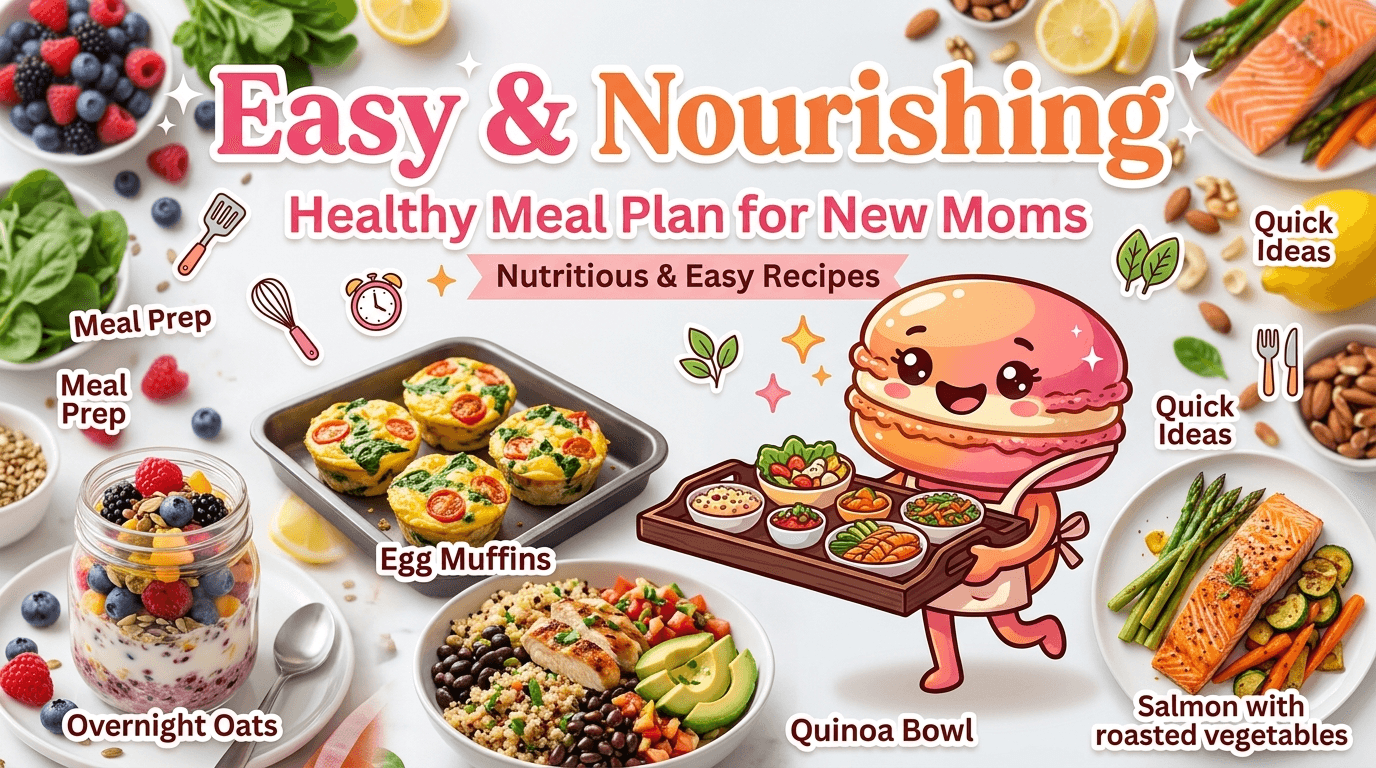
Top-performing meals meet three criteria: edible with one hand, reheat well, and pack multiple nutrients. Breakfast: freezer-friendly egg muffins with spinach and cheese. Lunch: layered mason jar salads with dressing at the bottom. Dinner: foil packet salmon with asparagus and potatoes (20 minute cook time, zero cleanup). Slow cooker stews with lentils and sweet potatoes offer 5-minute assembly with 8-hour cooking flexibility. All options incorporate lactation-supporting ingredients like flaxseed or oats without requiring special prep.
Snacks and drinks to add to a meal plan for New Moms
High-value snacks provide 5g+ protein and 3g+ fiber: cottage cheese with cinnamon-pear slices (6g protein), or hummus with pre-cut veggie sticks (4g fiber). Hydration solutions include coconut water ice cubes for electrolyte boosts and herbal tea popsicles for sore throats. Many breastfeeding moms report better milk flow with warm beverages versus cold - keep thermoses of ginger tea near nursing stations. Pre-portioned trail mix (nuts, seeds, dried fruit) and hard-boiled eggs prevent energy crashes during cluster feeding marathons.
Common mistakes when planning meals for New Moms
Three frequent pitfalls: 1) Overestimating cooking capacity (new moms average 12 minutes less daily meal prep time than anticipated), 2) Underestimating snack needs (most require 3-4 substantial snacks like almond butter with apple slices), and 3) Neglecting texture variety (soft foods dominate, leading to taste fatigue). Successful plans alternate crunchy (walnuts), creamy (yogurt), and chewy (dried apricots) elements. Another oversight is not accounting for temperature preferences - 78% of nursing moms prefer room-temperature drinks over iced beverages for better milk flow.
How Macaron helps New Moms plan meals faster
Our system generates customized weekly plans accounting for energy fluctuations: high-energy days get sheet pan meals (20 minute active time), while low-energy days utilize slow cooker options (5 minute assembly). Integrated grocery lists categorize items by store section (produce, dairy, pantry) to streamline shopping. Nutrition tracking adapts to postpartum stages with iron-rich food reminders when energy lags suggest possible deficiency. The app suggests lactation-supporting ingredient swaps (flaxseed in muffins, brewer's yeast in soups) without requiring special trips to health food stores.
Frequently Asked Questions
Breastfeeding requires about 330-400 extra calories daily - equivalent to a snack cluster like 1/4 cup almonds with an apple, or a small meal of 3oz chicken with 1/2 cup brown rice. Rather than counting calories, focus on adding nutrient-dense mini-meals every 2-3 hours. Milk production adapts to intake patterns, so irregular eating may affect supply more than precise calorie counts. Pre-portioned snacks like trail mix or cheese sticks kept near nursing stations help maintain consistent intake during unpredictable feeding schedules.
Limit high-mercury fish (swordfish, shark), excessive caffeine (over 300mg/day), and alcohol. Some babies react to dairy or spicy foods in breastmilk - monitor for sensitivities like fussiness or rashes after feeding. While most foods are fine in moderation, new moms report better results avoiding carbonated beverages and ultra-processed snacks that can cause energy crashes. Focus instead on whole foods that provide sustained energy: complex carbs (oats, sweet potatoes), lean proteins (eggs, chicken), and healthy fats (avocado, nuts).
Services offering pre-prepped ingredients (not just recipes) save new moms an average 3.2 hours weekly. The most helpful options provide: 1) Reheat-and-eat breakfasts like overnight oats or egg bites, 2) Pre-chopped veggies for snacks, and 3) Sauce-packed proteins (pesto chicken, teriyaki tofu) that prevent dry reheated meals. Many services now offer lactation-friendly boxes with oats, flaxseed, and brewer's yeast incorporated into meals. Look for flexible delivery schedules that accommodate unpredictable newborn routines.
Batch cook during morning naps when energy is highest, using hands-off methods like slow cookers or sheet pans. Focus on freezer-friendly components like soup cubes, muffin tin egg bakes, and individually wrapped burritos. Smart shortcuts include buying pre-diced onions, frozen riced cauliflower, and rotisserie chicken to save prep time. Set up snack stations with pre-portioned nuts, cut veggies, and hard-boiled eggs for grab-and-go nutrition between feedings. Color-code storage containers (red for protein, green for veggies) to simplify decision-making when exhausted.
Oats, flaxseed, brewer's yeast, fennel, and fenugreek show consistent lactation support. Incorporate these into easy formats: overnight oats with flaxseed, lactation muffins with brewer's yeast, or fennel tea. Hydration remains crucial - many moms report better results with warm beverages versus cold. Remember that frequent nursing itself stimulates production most effectively, so focus on consistent calorie intake rather than specific 'magic' foods. Easy additions include sprinkling ground flaxseed on yogurt or adding oats to smoothies for texture and fiber.
Immediately - recovery begins day one. Start with easily digestible foods like soups, smoothies, and soft scrambled eggs, then gradually increase variety as appetite returns. Don't restrict calories, especially if breastfeeding - your body needs fuel for healing and milk production. Keep simple snacks (nuts, cheese sticks, fruit) within arm's reach of nursing spots. By week two, aim for balanced meals with protein, complex carbs, and healthy fats at each eating occasion to support sustained energy.
Gentle nutrition focus is better than strict dieting. Losing 1-2 lbs weekly is safe; drastic cuts may affect milk supply. Prioritize protein and nutrient density - choose Greek yogurt over low-fat versions, and add nuts or seeds to snacks for healthy fats. Many moms naturally lose weight through breastfeeding without calorie counting. If weight plateaus, focus on increasing activity gradually rather than restricting food, as under-eating can reduce milk production and prolong recovery.
Essential tools include: 1) Blender for one-handed smoothies (add spinach, Greek yogurt, frozen fruit), 2) Sheet pans for hands-off roasting (salmon with veggies), 3) Rice cooker for perfect grains without monitoring, and 4) Food processor for quick chopping. Time-savers include pre-cut veggies from the produce section and frozen fruits/veggies that retain nutrients. A good thermos keeps drinks warm during long nursing sessions, while muffin tins create perfect portions for freezer-friendly egg bakes or oatmeal cups.
Read & discover
AI Personal Assistant
Free calculators


