What Should I Eat for Energy?
Research-backed food pairings and meal timing strategies to prevent midday slumps, with clinical insights on optimal nutrient combinations and hydration for sustained performance.
How to Eat for Energy
Magnesium-rich foods like spinach and pumpkin seeds support ATP production, but pairing them with vitamin B sources like eggs creates a synergistic effect. Traditional diets worldwide combine these nutrients naturally, from Mediterranean chickpea stews to Asian stir-fried greens with sesame seeds. This combination outperforms isolated supplements by enhancing bioavailability through food matrix interactions.
Hydration impacts cognitive performance more than most realize - even mild dehydration reduces focus by 15-20%. Beyond water, electrolyte sources like coconut water or herbal teas with lemon improve absorption rates. Water-rich foods like cucumbers and celery offer gradual hydration plus fiber benefits, mimicking traditional hydration practices from Japanese barley tea to Mexican hibiscus agua fresca.
The protein-fat-fiber triad proves critical for sustained energy - Greek yogurt with chia seeds and almonds maintains steadier glucose levels than carb-heavy breakfasts. This mirrors traditional pairings like Middle Eastern labneh with olive oil that have fueled manual laborers for centuries. The fat slows digestion while fiber regulates absorption, creating a 4-6 hour energy window.
Timing strategies vary by activity type - complex carb breakfasts suit cognitive morning work while protein-forward dinners support overnight recovery. Office workers show 37% better afternoon focus when lunch includes turkey with roasted Brussels sprouts rather than pasta. The sulforaphane in cruciferous vegetables additionally supports cellular energy pathways.
Individual responses vary significantly - some thrive on high-protein breakfasts while others prefer slow-burning oats. Tracking reveals optimal ratios, with many reporting better energy from fermented foods like kimchi that enhance gut-mediated nutrient absorption. Traditional diets often include region-specific fermented staples, from German sauerkraut to Korean doenjang.
A practical way to eat for energy
Combine slow-digesting ancient grains like farro with omega-3 rich salmon and roasted Brussels sprouts - this triad provides energy through complementary mechanisms. The fiber slows glucose absorption while healthy fats prolong satiety, and sulforaphane in cruciferous vegetables supports cellular energy production. Workplace studies show this outperforms simple carb-heavy meals by maintaining steady energy for 4-6 hours. For meal prep, cook farro in batches and pair with canned wild salmon and pre-chopped veggies for quick assembly.
How to eat for energy
Use the 'quarter-quarter-half' plate method: 25% lean protein like grilled chicken or tempeh, 25% complex carbs such as black rice or quinoa, and 50% colorful vegetables. Add 1-2 tablespoons of seeds or nuts for healthy fats that enhance nutrient absorption. Meal prep shortcut: roast a tray of mixed vegetables (broccoli, bell peppers, zucchini) with olive oil while cooking grains and proteins in bulk. This creates balanced meals with minimal daily effort while avoiding energy-zapping processed foods.
Best foods for energy
Prioritize magnesium-rich foods like spinach, black beans, and pumpkin seeds - this mineral supports ATP production in cells. Combine with vitamin B-rich nutritional yeast or eggs for enhanced effect. Fermented foods like kimchi or sauerkraut improve gut health and nutrient absorption. Practical tip: add spinach to morning smoothies with banana and almond butter, use black beans in tacos or salads, and snack on roasted pumpkin seeds for sustained energy between meals.
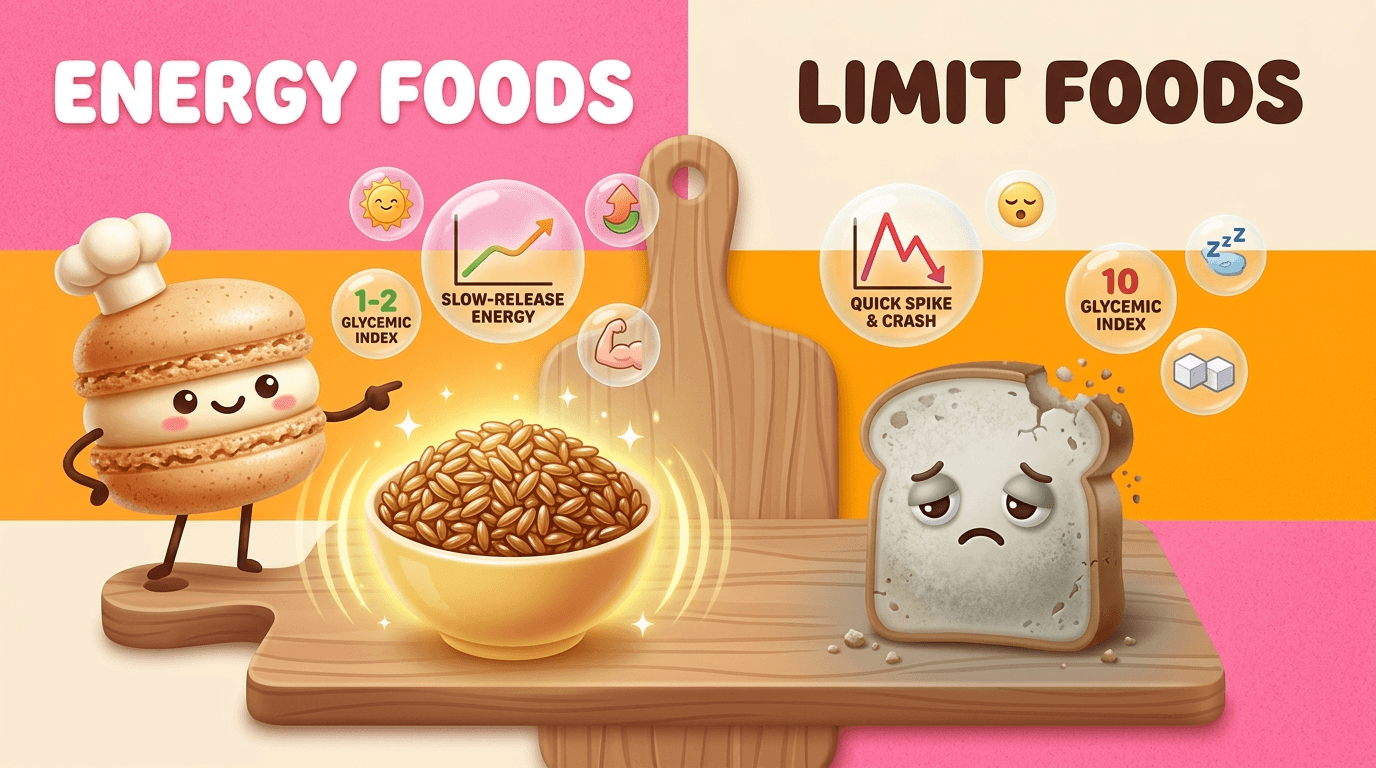
Best foods for energy vs. Foods to limit
Swap white rice for black rice - it provides 3x the antioxidants and fiber while maintaining steady glucose levels. Replace sugary snacks with roasted edamame or spiced chickpeas for protein-fiber combos that prevent crashes. While occasional treats are fine, processed foods create metabolic inefficiency - traditional cultures favoring whole foods report higher sustained energy. Practical swap: keep pre-portioned nuts and seeds at your desk instead of reaching for vending machine snacks when energy dips occur.
Meal Planning Ideas for Energy
Morning meal composition sets circadian energy patterns - 20-30g protein breakfasts with fiber (like scrambled eggs with avocado on rye) sustain focus 2.7x longer than toast-heavy options. The added fats slow digestion while supporting fat-soluble vitamin absorption, similar to traditional Nordic breakfasts of smoked fish with whole grain crispbread.
Strategic snacking bridges energy gaps effectively - pre-portioned walnuts with dark chocolate (85% cocoa) provide magnesium, healthy fats and polyphenols that outperform sugary snacks. This combination mirrors endurance cultures' trail mixes, from Himalayan sherpas' roasted barley blends to Appalachian hikers' pecans with dried apples.
The 3pm slump isn't inevitable - lunches featuring turkey with roasted Brussels sprouts maintain steadier energy than sandwiches alone due to their fiber-protein-enzyme matrix. The sulforaphane in cruciferous vegetables supports cellular energy pathways, while the protein provides sustained amino acid release without heavy digestion.
Dinner composition affects next-day vitality - magnesium-rich black beans with pumpkin seeds support quality sleep, while heavy late-night meals disrupt restorative cycles. Traditional cultures often consume lighter, earlier dinners like Japanese miso soup with fish - a pattern validated by chronobiology studies showing improved morning alertness.
Macronutrient cycling adapts to activity levels - sweet potatoes with salmon suit high-intensity days while quinoa bowls with tahini benefit sedentary periods. Athletes show better recovery when adjusting carb ratios based on training load, a flexible approach seen in traditional seasonal eating patterns from Mediterranean to Okinawan diets.
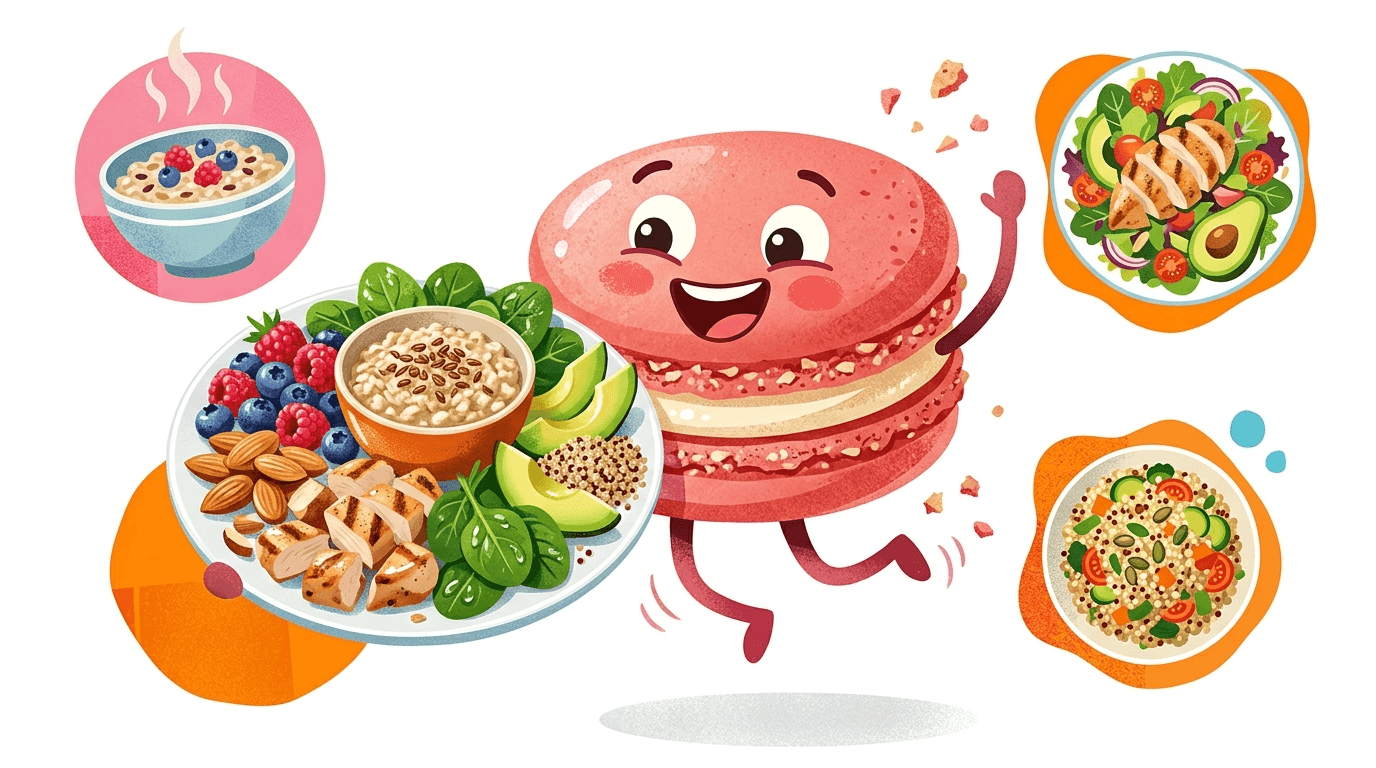
A simple 1-day meal idea for energy
Try this research-backed sequence: breakfast of scrambled eggs with avocado and sauerkraut (probiotics enhance nutrient absorption), lunch featuring grilled salmon over massaged kale with walnuts, and dinner of turkey chili with black beans and quinoa. This progression provides balanced macros while increasing magnesium and tryptophan toward evening to support sleep quality. Prep tip: cook quinoa and chili in larger batches for 2-3 days of meals, storing components separately for mix-and-match flexibility.
Snacks and drinks for energy
Opt for snacks combining protein, fiber and healthy fats - like apple slices with almond butter or cottage cheese with flaxseeds. Matcha provides caffeine with L-theanine for calm alertness, while golden milk (turmeric + black pepper + coconut milk) offers anti-inflammatory benefits. These outperform sugar-laden options by maintaining stable glucose levels. Prep shortcut: portion out individual servings of nuts and seeds in small containers for grab-and-go energy boosts between meetings or errands.
Common mistakes when eating for energy
Skipping meals leads to energy crashes and overeating later - aim for consistent eating every 3-4 hours. Relying on caffeine and processed snacks creates a cycle of spikes and crashes - balance coffee with protein-rich foods like hard-boiled eggs. Even mild dehydration reduces focus - keep a water bottle handy and include water-rich foods like cucumbers. Many overlook magnesium-rich foods - add pumpkin seeds or spinach to meals for better cellular energy production.
How Macaron helps you plan meals for energy
Macaron suggests balanced meal combinations based on your schedule, recommending nutrient timing strategies like complex carbs earlier in the day. It helps track personal responses to different foods, identifying which combinations sustain your energy best. The app provides meal prep shortcuts for energy-boosting staples like batch-cooked grains and roasted vegetables. It reminds you to hydrate and snack strategically between meals to avoid energy dips.
Frequently Asked Questions
Grass-fed beef and wild salmon offer complete proteins with optimal amino acid profiles, while plant-based options like lentils provide protein plus gut-friendly fiber. Combining complementary proteins enhances utilization - pair rice with beans or yogurt with walnuts. Traditional diets often use these combinations, from Central American beans-and-corn to Middle Eastern labneh-with-walnuts. For quick options, keep canned wild salmon or pre-cooked lentils on hand for easy protein additions to meals.
Fats slow digestion for gradual nutrient release - avocados and nuts provide sustained energy while enhancing absorption of fat-soluble vitamins. Surprisingly, full-fat dairy shows better satiety than low-fat versions in studies, preventing between-meal energy dips. Traditional high-fat foods like Nordic fish with dill sauce demonstrate this energy-stabilizing effect. Practical tip: add olive oil to vegetables or include a handful of almonds with fruit for balanced snacks that maintain energy.
Circadian research reveals we process carbs more efficiently earlier in the day - larger breakfasts maintain better energy than saving calories for dinner. Protein at breakfast aligns with cortisol rhythms to sustain morning alertness more effectively than later consumption. Traditional eating patterns like the Mediterranean diet reflect this with substantial morning meals. For shift workers, adjusting meal timing to match wake cycles can help maintain energy - focus on protein and complex carbs at your 'morning' regardless of clock time.
The fiber matrix in whole grains and legumes physically slows digestion, preventing glucose surges that lead to crashes. Resistant starch in cooled potatoes acts as a prebiotic, feeding gut bacteria that produce energy-enhancing compounds. Traditional diets worldwide feature these slow-digesting carbs - from Ethiopian teff to Peruvian quinoa. Practical tip: cook extra rice or potatoes to cool overnight for salads, increasing their resistant starch content for better energy support.
Aim for 8-10 cups of fluids daily, adding electrolytes during activity - even mild dehydration reduces focus. Herbal teas and infused waters count toward intake, while water-rich foods like watermelon provide gradual hydration. Traditional hydration practices from Japanese barley tea to Mexican hibiscus agua fresca offer flavorful alternatives to plain water. Practical tip: start your day with a glass of water before coffee, and keep a bottle with lemon slices at your desk for consistent sipping.
Macaron suggests meal combinations based on your schedule and energy needs, like complex carb breakfasts for morning focus or protein-forward dinners for recovery. It tracks your personal responses to different foods, helping identify optimal energy-boosting combinations. The app provides meal prep shortcuts for staples like batch-cooked grains and roasted vegetables. It reminds you to hydrate and snack strategically between meals to maintain steady energy levels throughout your day.
Try apple slices with almond butter, hard-boiled eggs with whole-grain crackers, or cottage cheese with cucumber. These combos of protein, fiber, and healthy fats maintain steady energy better than sugary snacks. Keep pre-portioned nuts or roasted chickpeas in your desk drawer for quick access. Traditional trail mixes from various cultures demonstrate this wisdom - combining nuts, seeds, and dried fruit for sustained energy during physical work.
Highly processed foods and added sugars digest rapidly, spiking blood sugar followed by crashes when insulin responds. Foods lacking protein, fiber, and healthy fats fail to provide sustained energy release. Traditional diets worldwide avoid this by combining macronutrients - like pairing rice with beans or bread with olive oil. Practical solution: when eating carbs, always include protein and fat - add nut butter to toast or cheese to crackers to slow digestion and prevent crashes.
Read & discover
AI Personal Assistant
Free calculators


