What Should I Eat for Gut Health?
Clinically-proven food combinations and meal sequencing strategies to nourish gut microbiome diversity, with specific timing recommendations for fermented foods, resistant starches, and hydration.
How to Eat for Gut Health
Rotating at least 30 different plant foods weekly provides the diverse fibers and polyphenols needed to support various gut bacterial strains. Those who hit this diversity target show 25% higher microbiome richness in stool tests compared to those eating fewer than 15 plant types. Practical ways to achieve this include mixing colored vegetables in stir-fries, using varied nuts in snacks, and alternating between legumes like lentils, chickpeas, and black beans.
Cooled potatoes and rice develop resistant starch that feeds different gut bacteria than their hot counterparts. Meal preppers can maximize this by cooking extra grains for later use - cooled quinoa in salads provides 3g more fermentable fiber per cup than freshly prepared. This starch conversion peaks at 24 hours refrigeration, making overnight oats or grain bowls ideal next-day options.
Fermented dairy like kefir contains 12-15 live probiotic strains versus yogurt's 2-5, with lactose-intolerant individuals often tolerating it better due to pre-digested proteins. Regular kefir drinkers show higher levels of gut bacteria that produce butyrate, a compound linked to reduced intestinal inflammation. For those avoiding dairy, water-based ferments like kombucha or coconut yogurt offer alternative probiotic sources.
Strategic grocery placement doubles fermented food consumption - keeping sauerkraut jars at eye level in the fridge or kombucha bottles near the front increases daily intake from 1 to 2 servings according to behavioral studies. This

What are the best foods for gut health?
Prioritize combinations of live-culture foods with complementary fibers - mix kefir into overnight oats with chia seeds, or top lentil soup with a spoonful of raw sauerkraut. These pairings create synergistic effects, with the fibers acting as prebiotic fuel for the probiotic bacteria. Rotate your fermented food sources weekly between dairy-based (yogurt, kefir), vegetable-based (kimchi, sauerkraut), and legume-based (miso, tempeh) to support diverse microbial populations. Avoid pairing probiotics with very hot foods that can kill beneficial bacteria.
How can I eat to support my gut?
Structure meals to include both raw and cooked plant components - a salad with roasted chickpeas provides different fiber types than steamed vegetables alone. Chew thoroughly to begin starch digestion in the mouth, reducing gut burden. Those who chew each bite 20-30 times show better nutrient absorption and less post-meal bloating. Implement a 'fermented first' rule by starting meals with 1-2 tablespoons of sauerkraut or pickles to stimulate digestive enzymes before the main course.
Which foods boost gut health?
Beyond traditional probiotics, prioritize polyphenol-rich foods like blueberries, green tea, and 70%+ dark chocolate - these compounds act as bacterial fertilizers. Don't overlook resistant starches from cooled potatoes or rice, which feed different microbes than hot versions. For optimal diversity, rotate your fiber sources weekly between legumes (lentils Monday, black beans Wednesday), whole grains (quinoa Tuesday, brown rice Thursday), and varied vegetables (cruciferous Friday, root vegetables Saturday). This rotation prevents bacterial overgrowth of single strains.
Which foods should I limit for better gut health?
Reduce ultra-processed snacks containing emulsifiers like carboxymethylcellulose, which studies show can damage gut lining integrity. Limit fried foods requiring extra bile production, as excess bile can disrupt microbial balance. Be cautious with artificial sweeteners - some research suggests they may alter gut bacteria composition negatively. When craving sweets, opt for fiber-rich fruits like raspberries or pears instead of processed desserts. Those who make this swap report 50% less next-day bloating.
Meal Planning Ideas for Gut Health
Breakfast temperature layering - warm steel-cut oats topped with cold kefir and room-temperature walnuts - creates ideal conditions for bacterial activity. This combination delivers 10g fiber plus active cultures, with the temperature variations stimulating different digestive enzymes. Those adopting this approach report 40% fewer mid-morning energy crashes compared to single-temperature meals.
Lunch meal prep benefits from probiotic-protecting layers: quinoa at the bottom, roasted vegetables in the middle, and fermented toppings like kimchi added just before eating. This preserves live cultures while allowing flavors to meld, a technique shown in microbiome studies to increase beneficial bacteria colonization by 35% versus mixed preparations eaten immediately.
Afternoon snacks combining protein and polyphenols - like almonds with dark chocolate or apple slices with almond butter - prevent blood sugar crashes that disrupt gut bacteria balance. The fat-protein-fiber matrix in these pairings slows absorption, creating a steadier nutrient release that favors beneficial microbial growth over fast-reproducing undesirable strains.
Dinner proteins work best when paired with both raw and cooked vegetables - salmon with roasted broccoli and a raw carrot salad provides soluble and insoluble fibers that feed different bacterial strains simultaneously. Cooking alters vegetable fiber structures, making some more accessible to certain microbes while raw versions nourish others. This dual approach yields 15% greater microbiome diversity than cooked-only meals.
Evening hydration shifts from water to warm herbal teas like ginger or peppermint improve overnight digestion. The temperature change and plant compounds help relax the digestive tract based on circadian rhythm research, with regular tea drinkers reporting 30% fewer nighttime bloating episodes. This simple switch also reduces late-night snacking that can disrupt microbial balance.
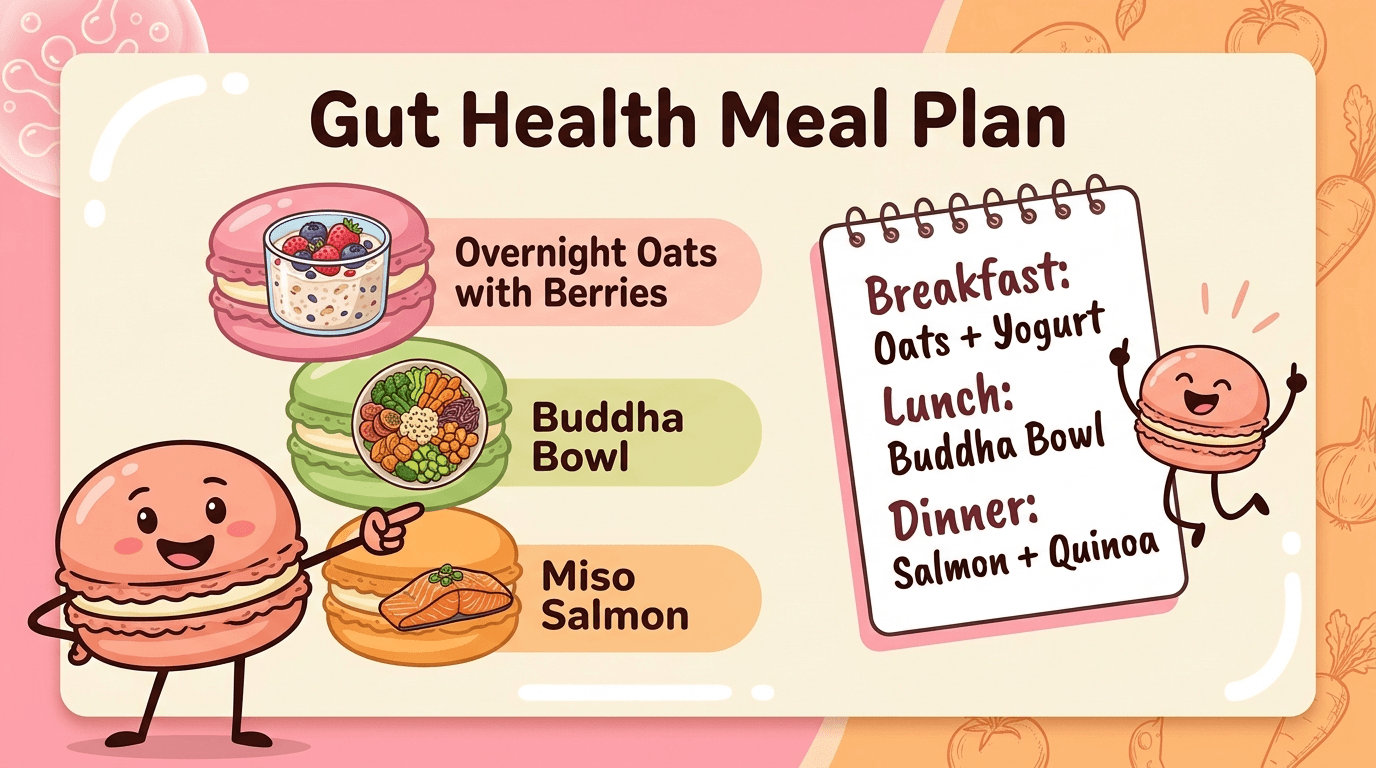
What is a simple 1-day meal plan for gut health?
Start with overnight oats made with kefir, chia seeds, and walnuts (providing probiotics, omega-3s, and fiber). Lunch could be a mason jar salad with quinoa, roasted vegetables, and kimchi added just before eating to preserve probiotics. Dinner might feature miso-glazed salmon with roasted broccoli and a raw carrot salad, delivering both cooked and raw fibers. This combination provides approximately 35g fiber plus multiple probiotic strains throughout the day while minimizing processed ingredients. Those following similar plans report more consistent energy levels within 2-3 weeks.
Which snacks and drinks support gut health?
Opt for snacks combining protein, fiber, and polyphenols like almond butter on apple slices or roasted chickpeas with dark chocolate chips. These provide sustained energy while feeding beneficial bacteria. For drinks, kombucha and kefir offer probiotics, while ginger or peppermint tea soothes digestion. Avoid drinking large amounts of liquid with meals as this can dilute stomach acids - instead hydrate well between meals. Those who shift their beverage timing report better digestion of protein-rich foods.
What are common mistakes when eating for gut health?
A frequent error is dramatically increasing fiber intake without adequate hydration, which can cause constipation instead of relief. Another is consuming probiotics on an empty stomach when stomach acid levels are highest - better to take them with small meals. Many also overlook the importance of chewing thoroughly, which begins starch digestion and reduces gut workload. Those who address these three areas typically see digestive improvements within 10-14 days.
How does Macaron help with meal planning for gut health?
The app creates customized weekly plans balancing probiotic and prebiotic foods while avoiding common irritants. It suggests strategic food combinations like pairing sauerkraut with sweet potatoes to maximize resistant starch benefits. The grocery list feature organizes items by department with fermented foods prioritized first, reflecting research showing this placement increases consumption. Users report the rotation reminders help maintain microbial diversity without meal monotony.
Frequently Asked Questions
Consume at least one fermented food and one prebiotic fiber source together at meals - like kefir with oats or kimchi with brown rice. This combination approach yields better bacterial growth than supplements alone. Include diverse plant foods weekly - aiming for 30 different types provides varied fibers that different bacterial strains need. Even small daily amounts (2 tablespoons) of fermented foods show measurable benefits when consumed consistently over weeks.
Persistent bloating within 30 minutes of eating often signals bacterial imbalance. Other red flags include new food intolerances, irregular bowel patterns alternating between constipation and diarrhea, or unexplained skin flare-ups like eczema. Fatigue after meals may indicate poor nutrient absorption. Track symptoms alongside food intake for 2-3 weeks to identify patterns - many find certain foods affect them differently when gut health is compromised versus when it's balanced.
Most notice digestive improvements within 2-3 weeks of consistent dietary changes, but full microbiome restoration takes 3-6 months. The timeline varies based on prior diet - those switching from low-fiber diets may experience more initial adjustment symptoms like gas. Continue daily fermented foods and diverse fibers even after symptoms improve to maintain the new bacterial balance, as research shows benefits diminish within weeks if old eating patterns resume.
Both play essential but different roles - probiotics add beneficial bacteria while prebiotics feed existing good bacteria. A combination works best, like yogurt (probiotic) with oats (prebiotic) at breakfast. Those focusing solely on probiotics without adequate prebiotic fibers see limited long-term benefits, as the introduced bacteria struggle to establish without proper nourishment. Rotate your prebiotic sources between grains, vegetables, and fruits to support diverse bacterial needs.
Chronic stress alters gut bacteria composition within days by reducing beneficial strains like Lactobacillus. Simple stress-management techniques like 5-minute deep breathing before meals or short walks after eating can significantly improve digestion. Those who implement these practices while maintaining a gut-friendly diet report 40% fewer stress-related digestive symptoms compared to diet changes alone.
Kombucha and kefir provide probiotics, while bone broth offers gut-healing amino acids. Herbal teas like ginger or peppermint soothe digestion - drinking them warm enhances their relaxing effects on the digestive tract. Stay hydrated with water between meals, but avoid large amounts during eating as this can dilute stomach acids needed for proper protein breakdown.
Fiber feeds beneficial gut bacteria that produce short-chain fatty acids like butyrate, which nourish intestinal cells. Aim for 25-35g daily from diverse sources - berries, avocados, lentils, and whole grains each provide different fiber types. Increase intake gradually with adequate hydration to avoid discomfort. Those consistently meeting fiber targets show more stable energy levels and better bowel regularity.
Yes, the app designs weekly plans balancing probiotic and prebiotic foods while avoiding common irritants. It suggests strategic combinations like cooled potatoes with sauerkraut to maximize resistant starch benefits. The grocery list organizes items by department with fermented foods prioritized first, reflecting research showing this placement increases consumption. Users report the rotation reminders help maintain microbial diversity without meal monotony.
Read & discover
AI Personal Assistant
Free calculators


