What Should I Eat for Stress?
Macaron's stress-smart meal planning combines cortisol-regulating omega-3s, gut-supporting probiotics, and blood sugar-stabilizing meals—like salmon bowls with kimchi or chia pudding with walnuts—for multi-pathway stress support.
How to Eat for Stress
Nutritional stress management works through three key pathways: regulating cortisol with omega-3s (found in salmon and walnuts), supporting gut-brain communication via fermented foods like kefir and kimchi, and stabilizing blood sugar with high-fiber whole grains paired with plant proteins. These mechanisms collectively help modulate the body's stress response more effectively than single-nutrient approaches.
Emerging research highlights specific food combinations that amplify stress relief—pairing magnesium-rich spinach with vitamin C-rich bell peppers enhances absorption, while combining probiotic yogurt with polyphenol-rich blueberries creates a gut-brain synergy. These food pairings show greater impact than isolated nutrients for managing daily stressors.
Blood sugar management proves critical for stress resilience. Complex carb and protein combinations like quinoa with lentils provide slower energy release than refined carbs, preventing the 3pm crash that exacerbates stress. Pre-portioned snacks like hummus with veggie sticks maintain this balance during busy days.
Practical implementation trumps perfection—keeping pre-cut vegetables, hard-boiled eggs, and single-serving nut packs available creates accessible stress-supportive eating. This strategy prevents reaching for processed snacks when time or energy is limited, maintaining nutritional support during high-stress periods.
Timing matters as much as food choices—eating protein-rich breakfasts within an hour of waking prevents mid-morning cortisol spikes, while magnesium-rich evening snacks like pumpkin seeds may support better sleep. Consistent meal timing regulates the body's stress response cycle more effectively than erratic eating patterns.
A practical way to eat for stress
Combine foods that address multiple stress pathways—like salmon (omega-3s) with roasted Brussels sprouts (fiber + antioxidants) or Greek yogurt (probiotics) with blueberries (polyphenols). These pairings provide broader support than single nutrients. Keep pre-portioned stress-supportive snacks like trail mix or hummus cups readily available for busy days when cooking isn't feasible.
How can I eat to alleviate stress?
Focus on meals combining protein, healthy fats, and complex carbs—like avocado toast on whole grain bread with smoked salmon, or stir-fried tofu with brown rice and broccoli. These combinations prevent blood sugar crashes that amplify stress. For snacks, try cottage cheese with pineapple (bromelain aids digestion) or celery sticks with tahini (magnesium + fiber). Herbal teas like ginger or chamomile provide calming alternatives to caffeine.
What are the best foods for stress relief?
Prioritize foods with clinically studied stress-modulating properties: fatty fish (3-4 weekly servings for EPA/DHA), dark leafy greens (magnesium for muscle relaxation), and fermented foods (daily probiotics for gut-brain axis). Surprisingly, dark chocolate (70%+) contains both magnesium and polyphenols that may help lower perceived stress when consumed in moderation (1-2 squares).
What foods should I limit for stress management?
Reduce intake of sugary foods and refined carbs which can spike cortisol within hours. Caffeine after noon may disrupt sleep cycles, worsening stress recovery. Processed snacks often lack the magnesium and fiber found in whole foods that help regulate the nervous system. Instead, focus on balanced meals with protein, healthy fats, and complex carbohydrates.
Meal Planning Ideas for Stress
Morning meals set the tone—overnight oats with chia seeds and walnuts combine fiber, omega-3s, and magnesium for sustained focus. Adding cinnamon helps regulate blood sugar, contrasting with sugary cereals that trigger cortisol spikes within 2-3 hours.
Lunch combinations leverage multiple stress-reducing nutrients simultaneously: lentil soup with whole grain bread provides plant proteins for steady energy, complex carbs for serotonin production, and anti-inflammatory compounds. Adding fermented vegetables like sauerkraut introduces probiotics for gut-brain support.
Strategic snacking prevents afternoon crashes—apple slices with almond butter offer fiber and healthy fats, while edamame provides protein and magnesium. These satisfy cravings while avoiding the blood sugar rollercoaster of processed snacks that worsen stress responses.
Dinner simplicity reduces decision fatigue—sheet pan meals with broccoli, sweet potatoes, and baked cod provide balanced nutrition with minimal cleanup. This approach works particularly well when energy reserves are low, preventing takeout temptations that often lack stress-supportive nutrients.
Beverage choices significantly impact stress levels—swapping afternoon coffee for matcha provides gentler caffeine with L-theanine for focus, while evening chamomile tea may lower nighttime cortisol. Tart cherry juice offers natural melatonin precursors, creating better sleep hygiene than alcohol or sugary drinks.
A simple 1-day meal idea for stress relief
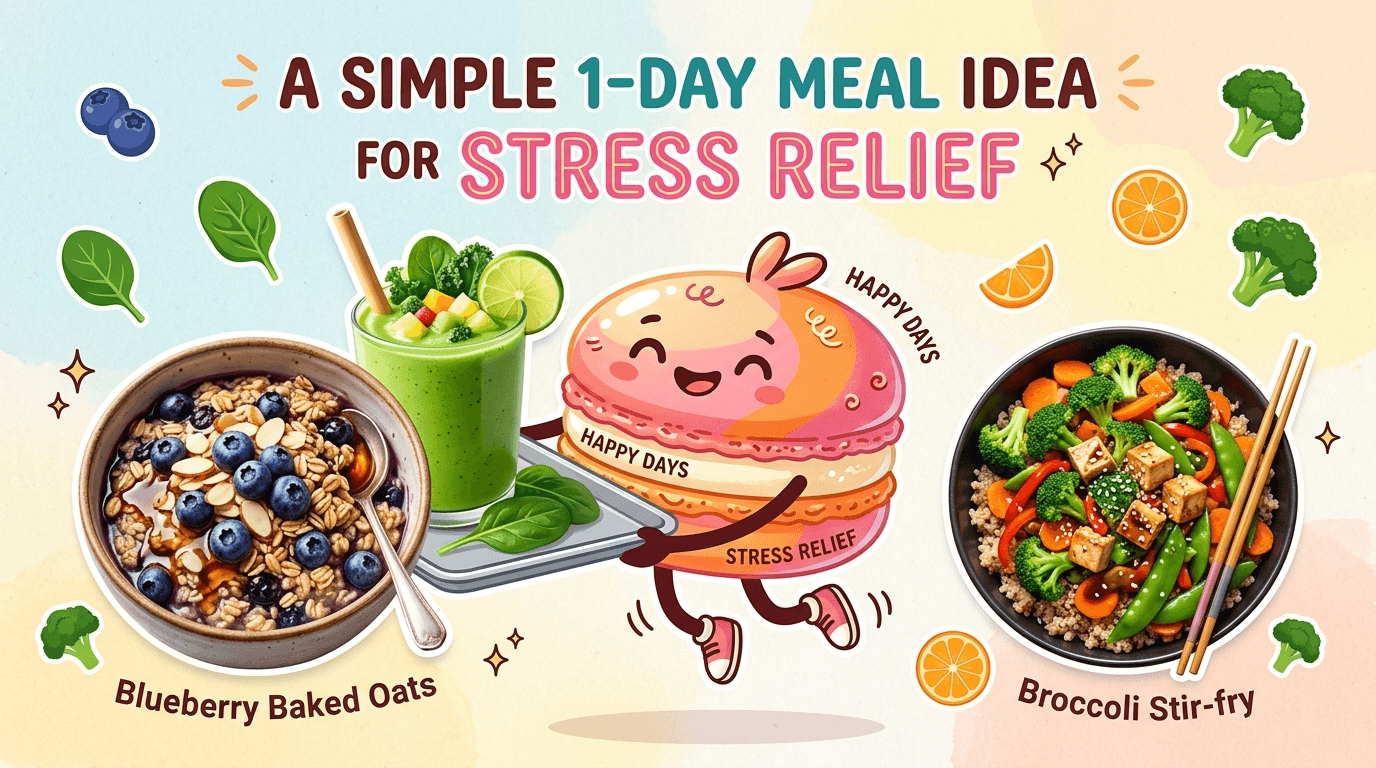
Start with blueberry baked oats (antioxidants + fiber), followed by a lunch of lentil soup with whole grain bread (plant protein + complex carbs). Snack on edamame (magnesium + protein) and walnuts (omega-3s). Dinner could be sheet-pan salmon with roasted sweet potatoes and broccoli (balanced macros + anti-inflammatory compounds). End with chamomile tea for its calming properties.
Healthy snacks and drinks for stress
Opt for snacks combining protein, healthy fats, and complex carbs—like cottage cheese with pineapple (bromelain aids digestion) or celery sticks with tahini (magnesium + fiber). For drinks, matcha provides calm alertness with L-theanine, while tart cherry juice contains natural melatonin precursors that may support better sleep during stressful periods.
Common mistakes when eating for stress
Skipping meals destabilizes blood sugar, triggering stress responses. Over-relying on caffeine and sugary snacks leads to cortisol spikes. Ultra-processed foods lack magnesium and fiber crucial for nervous system regulation. Meal timing matters—eating protein within an hour of waking prevents mid-morning crashes, while late-night sugar disrupts sleep cycles.
How Macaron can assist in meal planning for stress
The app suggests personalized alternatives—flaxseeds for omega-3s if you avoid fish, or pumpkin seeds for magnesium if you dislike greens. It tracks meal timing to prevent blood sugar dips, with reminders for balanced snacks every 3-4 hours based on your schedule. The grocery list feature prioritizes stress-supportive staples like canned salmon, frozen berries, and fermented foods.
Frequently Asked Questions
The gut microbiome produces neurotransmitters like serotonin that directly influence stress responses. Fermented foods like kefir and kimchi support this connection by increasing beneficial bacteria. Studies show regular probiotic consumption can improve stress resilience more effectively than occasional supplementation. Even simple additions like daily yogurt with live cultures may help modulate cortisol levels.
Opt for snacks combining protein and healthy fats like Greek yogurt with almond butter or avocado toast on whole grain bread. These provide sustained energy and help stabilize blood sugar, preventing stress-induced crashes. Dark chocolate (70%+) can also offer calming antioxidants.
Omega-3 fatty acids in fatty fish, flaxseeds, and walnuts help regulate cortisol production and reduce inflammation linked to chronic stress. They support brain function by maintaining cell membrane fluidity, which may improve stress response efficiency. Aim for 3-4 weekly servings of omega-3-rich foods for measurable benefits.
Consistent eating intervals regulate cortisol rhythms—skipping breakfast triggers stress responses, while small balanced meals every 3-4 hours maintain energy stability. Evening meals with magnesium-rich foods like almonds support better sleep quality. Avoid eating within 2 hours of bedtime to prevent digestion-related sleep disruptions that worsen stress recovery.
Limit caffeine (coffee, energy drinks) and alcohol, as they disrupt sleep and increase anxiety. Sugary beverages cause energy crashes. Instead, try herbal teas like chamomile or ginger, which have calming properties. Tart cherry juice provides natural melatonin precursors for better sleep hygiene during stressful periods.
Yes, the app identifies patterns like skipped meals or caffeine overuse that exacerbate stress. It suggests alternatives—matcha instead of afternoon coffee, or pumpkin seeds when craving salty snacks. The meal planner emphasizes stress-supportive foods while accommodating personal preferences and time constraints.
Try salmon with roasted vegetables (omega-3s + fiber) or lentil soup with whole grain bread (plant protein + complex carbs). Sheet-pan meals with cod, broccoli, and sweet potatoes provide balanced nutrition with minimal cleanup. These options deliver stress-modulating nutrients without complicated preparation during low-energy evenings.
Antioxidants in berries, dark leafy greens, and dark chocolate combat oxidative stress caused by elevated cortisol. They protect neurons from damage while supporting overall brain health. Regular consumption of antioxidant-rich foods may improve resilience to daily stressors more effectively than sporadic intake.
Read & discover
AI Personal Assistant
Free calculators


