Academic Burnout
Academic burnout can feel less like ordinary stress and more like a prolonged shutdown, where focus, motivation, and emotional energy all drop at once. Macaron helps students make sense of that pattern and build smaller, more realistic recovery steps around study, rest, and workload.
Academic Burnout
This short self-reflection helps you notice how academic pressure may be affecting your energy, focus, and motivation. It is designed to support honest check-ins and small next steps, not to judge how well you are coping.
This is a self-reflection module, not a diagnosis or clinical assessment.
Please answer every question before viewing your result.
This self-reflection is meant to help you notice patterns, not to label or diagnose you. If you are feeling hopeless, unable to function, or worried about your safety, please contact a trusted person, a mental health professional, or local emergency services right away.
Why Academic Burnout Feels Overwhelming for Students
Academic burnout is usually described as a response to prolonged academic stress, not a simple bad week. It is often framed as emotional, mental, and physical exhaustion that makes classes, assignments, and even routine studying feel unusually heavy. That distinction matters because many students assume they are lazy or undisciplined when the real issue is chronic overload that has been building for weeks or months.
The pressure often builds gradually. Deadlines stack up, sleep gets worse, and rest stops feeling restorative. Students may still be showing up to class or trying to keep pace, but internally they feel flat, frustrated, or detached. That mismatch between effort and energy is one of the clearest reasons academic burnout feels so discouraging and hard to explain to other people.
Common patterns include trouble starting work, reduced concentration, procrastination that comes from overwhelm rather than avoidance, and a growing sense of dread before assignments or exams. Some students also stop participating in class, withdraw from peers, or lose interest in subjects they once cared about. These signs can be easy to dismiss until they begin affecting grades, sleep, mood, or confidence. For a related Macaron page, see AI Meal Planner Free: Best Free Options That Are Actually Useful at https://macaron.im/blog/ai-meal-planner-free.
Macaron is designed to help students slow the cycle down and look at it more clearly. Instead of asking you to power through, it supports reflection on what is draining you, what is still manageable, and which routines are actually helping. That can be useful when the problem is not one dramatic crisis but a steady accumulation of pressure that has become hard to untangle and harder to recover from.
Recovery usually works better when it is specific. A smaller workload adjustment, a clearer study boundary, or a more reliable reset routine can be more effective than trying to overhaul everything at once. Macaron helps turn that insight into practical next steps so students can rebuild momentum without pretending burnout is solved by motivation alone or by simply waiting for energy to return.
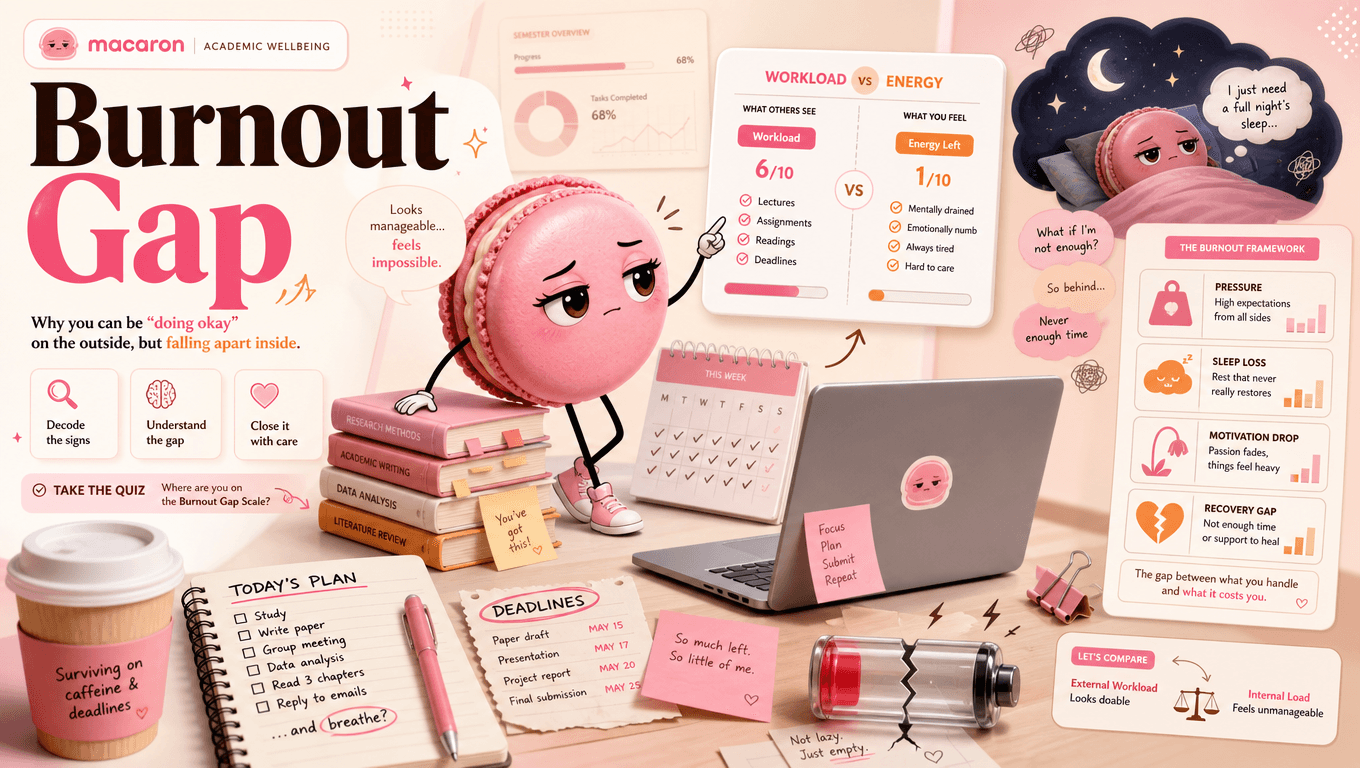
Why Academic Burnout Feels Overwhelming for Students
Academic burnout is more than being busy or temporarily stressed. It usually develops after weeks or months of sustained pressure, when deadlines, emotional strain, poor sleep, and constant performance demands start to wear down attention and motivation. Students often describe feeling mentally stuck, unusually irritable, or unable to recover even after a break. The hardest part is that the workload may still look manageable on paper, while the internal effort required to keep going keeps rising. That gap is what makes burnout feel confusing and hard to explain.
How Macaron Helps Students Recover with More Structure
Macaron supports recovery by helping students look at burnout in smaller, more workable pieces. That can include reflecting on what tasks are draining the most energy, checking in on daily capacity, and planning resets between study blocks instead of waiting for a full collapse. The goal is not to force productivity back immediately. It is to create a steadier structure around work and rest so students can reduce overload, notice patterns earlier, and rebuild a routine that feels realistic instead of punishing.
Signs of Academic Burnout You Shouldn’t Ignore
Academic burnout often shows up as more than just feeling tired. Students may notice constant exhaustion, trouble concentrating, emotional distance from classes, or a growing urge to avoid assignments because everything feels too heavy to start. It can also show up as dread before exams, guilt during rest, or the sense that time off does not actually help. These signs matter because burnout can look like laziness from the outside while actually reflecting chronic stress and depleted mental energy.
More About Academic Burnout
Academic burnout is often confused with ordinary tiredness, but the pattern is usually more persistent: chronic stress, emotional exhaustion, reduced participation, and a sense that rest does not fully restore you. That is why this page focuses on the lived experience of burnout rather than treating it as a single symptom. Students usually need help naming the pattern first, especially when they are still functioning on the outside but feel depleted on the inside.
Macaron’s support is built around the kinds of recovery steps students actually search for, such as workload reflection, energy check-ins, and breaking tasks into smaller pieces. Those tools are useful because burnout rarely improves through vague advice like just manage your time better. The more helpful question is often what is creating the overload, what can be reduced, and what can be made easier to start without adding more pressure.
Signs of academic burnout can overlap with stress, anxiety, depression, ADHD-related overload, or simple sleep deprivation, which is why careful interpretation matters. A student who is procrastinating may not be avoiding responsibility so much as feeling mentally blocked. Someone who seems disengaged may be emotionally drained rather than indifferent. This page keeps that ambiguity in view so readers can recognize patterns without overreading every bad day or self-blaming too quickly. Another useful Macaron comparison is Healthy Meal Plan for Keto - Macaron at https://macaron.im/eat-healthy/meal-plan/keto.
The recovery framing here is intentionally modest. Self-care, workload management, social support, and smaller study routines only help when they are translated into something concrete. Macaron supports that translation by helping students identify the pressure point, choose one realistic habit to rebuild, and protect one recovery routine that makes the next day easier. That is often more useful than trying to fix motivation directly. For a broader Macaron context, Healthy Meal Plan for Whole Foods - Macaron - Macaron AI at https://macaron.im/eat-healthy/meal-plan/whole-foods can help you compare the decision from another angle.
Because burnout can become serious, the page also keeps a clear boundary between self-guided support and professional help. If exhaustion is affecting safety, functioning, sleep, or mood, outside support may be necessary. That balance is important for trust: students need practical tools, but they also need honest guidance about when burnout is no longer something to handle alone and when a counselor, clinician, or campus support service should be involved.
Reclaim Balance and Motivation in Your Studies
Recovery usually starts with one clear pressure point, not a complete life reset. Macaron helps students identify what is draining them fastest, then choose one habit or boundary that can make the next study session less overwhelming. That might mean shortening a task, protecting a real break, or tracking which routines restore focus versus which ones deepen fatigue. The point is to rebuild momentum through small, repeatable changes that lower friction and make studying feel possible again.
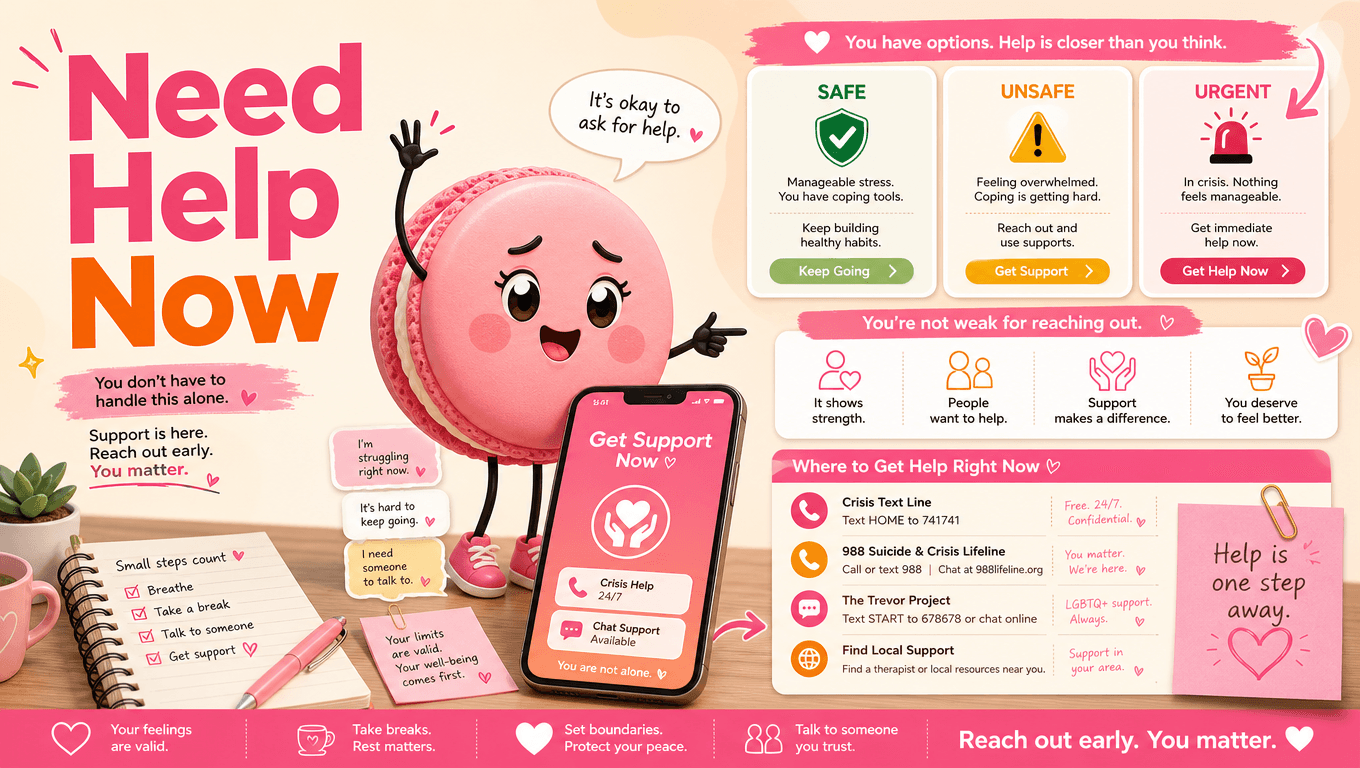
If You Need Immediate Support
This page is meant for self-guided support, but academic burnout can sometimes overlap with more serious distress. If you feel unsafe, unable to cope, or are having thoughts of self-harm, reach out for immediate help rather than trying to manage it alone. Crisis lines and local emergency services are appropriate when burnout is affecting your safety or functioning. Getting support early can make a meaningful difference, especially when exhaustion has started to affect sleep, mood, or your ability to get through the day.
Your Responses and Privacy
Because academic burnout involves sensitive student stress and emotional data, privacy matters. Macaron is provided by MINDAI PTE. LTD., and its Privacy Policy explains how information is collected, used, shared, protected, retained, and deleted. If you are using reflection tools during a stressful period, it is worth reviewing the policy so you understand what happens to your responses and what privacy options are available. Questions about data handling can be directed to contact@macaron.im.
Frequently Asked Questions
Academic burnout usually shows up as ongoing exhaustion, low motivation, reduced concentration, and a feeling that schoolwork takes far more energy than it should. Some students also become emotionally detached, procrastinate because everything feels overwhelming, or stop recovering fully even after rest. It can look different from ordinary tiredness because the pattern tends to persist across days or weeks rather than improving after a good night’s sleep or a weekend off.
Use Macaron to slow the problem down into smaller questions. You can check your energy level, reflect on what is causing the most overload, and map out a lighter next step instead of trying to fix everything at once. That is especially helpful when burnout makes starting feel harder than finishing. The aim is to reduce friction, protect recovery, and make the next study block more manageable rather than forcing a full comeback immediately.
Reach out for outside support if burnout is affecting your sleep, mood, safety, or ability to function day to day. It is also a good idea to talk to a licensed professional if you feel stuck in a cycle of exhaustion and dread that is not improving with rest or routine changes. If you are thinking about harming yourself or feel in immediate danger, contact crisis support or emergency services right away.
Macaron is useful because it turns a vague feeling of academic burnout into something you can inspect and respond to. Instead of telling students to just work harder, it helps them identify pressure points, notice what is draining energy, and choose one realistic recovery step. That practical structure matters when motivation is low and the problem is not lack of effort, but too much sustained strain for too long.
Normal stress usually rises around a specific deadline or event and eases when the pressure passes. Academic burnout is more persistent and tends to include emotional exhaustion, reduced motivation, and a sense that rest is not enough to restore you. Students may still be completing work, but it takes more effort and feels less sustainable. That difference matters because burnout often needs workload changes, recovery time, and support rather than just better time management.
Yes. Burnout can make it harder to start assignments, stay focused in class, and participate regularly. Some students miss deadlines, avoid discussion, or stop engaging with material they normally care about. The issue is not always a lack of ability; it is often depleted mental energy and reduced capacity to keep up with constant demands. Catching the pattern early can help you adjust expectations before the strain starts affecting more areas of school life. For a third-party check, The Silent Struggle: How to Spot and Manage Academic Burnout at https://blog.barry.edu/2025/10/10/the-silent-struggle-how-to-spot-and-manage-academic-burnout/ is worth comparing against the page summary.
The most realistic steps are usually small and specific: reduce one task, protect one break, reset sleep timing, ask for help with one deadline, or rebuild one study routine that feels manageable. Big changes can be useful later, but burnout often makes them hard to sustain at first. Macaron is designed to help you choose the next step that lowers friction instead of adding more pressure, which makes recovery more likely to stick. For another outside reference, What is Burnout? | Academic Success Center | Oregon State University at https://success.oregonstate.edu/learning-corner/balance-stress/burnout adds a second perspective.
It could be. Burnout symptoms can overlap with anxiety, depression, ADHD-related overload, and sleep deprivation, which is why it helps to look at the broader pattern rather than one bad day. If you are unsure what is driving the exhaustion, Macaron can help you reflect on triggers, routines, and pressure points, but it is not a diagnosis. If symptoms are persistent or severe, a licensed professional can help sort out what is going on. For outside context, Academic burnout as an educational complication and promotion ... at https://pmc.ncbi.nlm.nih.gov/articles/PMC6852272/ is a useful reference point.
Read & discover
AI Personal Assistant
Free calculators


