Myfitnesspal Calorie Tracker
MyFitnessPal users often quit after hitting logging fatigue. Macaron offers AI-powered tracking that learns your meal patterns and adjusts targets conversationally — ideal when database searches and rigid logging feel exhausting.
Why Traditional Calorie Trackers Fall Short
MyFitnessPal’s appeal is obvious: a huge food database, quick calorie totals, and a familiar path from intake to goal. The problem is that the same system that feels comprehensive on day one can become tedious once you are searching for restaurant dishes, estimating portions, and correcting entries that never quite match what you ate. For many casual users, the friction starts to outweigh the benefit.
The biggest source of confusion is the app’s net-calorie model, which mixes food intake with exercise burn and asks users to decide whether to eat back workout calories. That may suit experienced trackers, but it can feel like a second layer of math for people who simply want a practical daily target. Macaron avoids that debate by focusing on flexible goal setting and pattern awareness instead.
Manual logging also breaks down when meals are homemade, shared, or inconsistent. A bowl of leftovers, a restaurant lunch, or a smoothie made from whatever is in the kitchen can require several entries, portion guesses, and repeated edits. Macaron is built for those messy moments, using photo estimates, meal memory, and conversational context so tracking still works when precision is unrealistic. For a related Macaron page, see AI Diet Tracker: Best Apps to Help You Eat Better - Macaron at https://macaron.im/blog/ai-diet-tracker.
MyFitnessPal is strong for users who want detailed nutrition data, macro breakdowns, and a familiar database-first workflow. But that same depth can feel like too much for people who want awareness rather than a nutrition spreadsheet. Macaron takes the opposite approach: it keeps the interaction lightweight, learns from your habits, and lets you describe what changed instead of rebuilding your plan from scratch.
That tradeoff matters. Macaron is better when consistency is imperfect, meals vary, or you want a tracker that adapts to travel, busy weeks, and changing routines. MyFitnessPal still has an edge for users who want exhaustive food records, highly structured macro logging, or a large reference database. The best choice depends on whether you value precision more than ease of use.
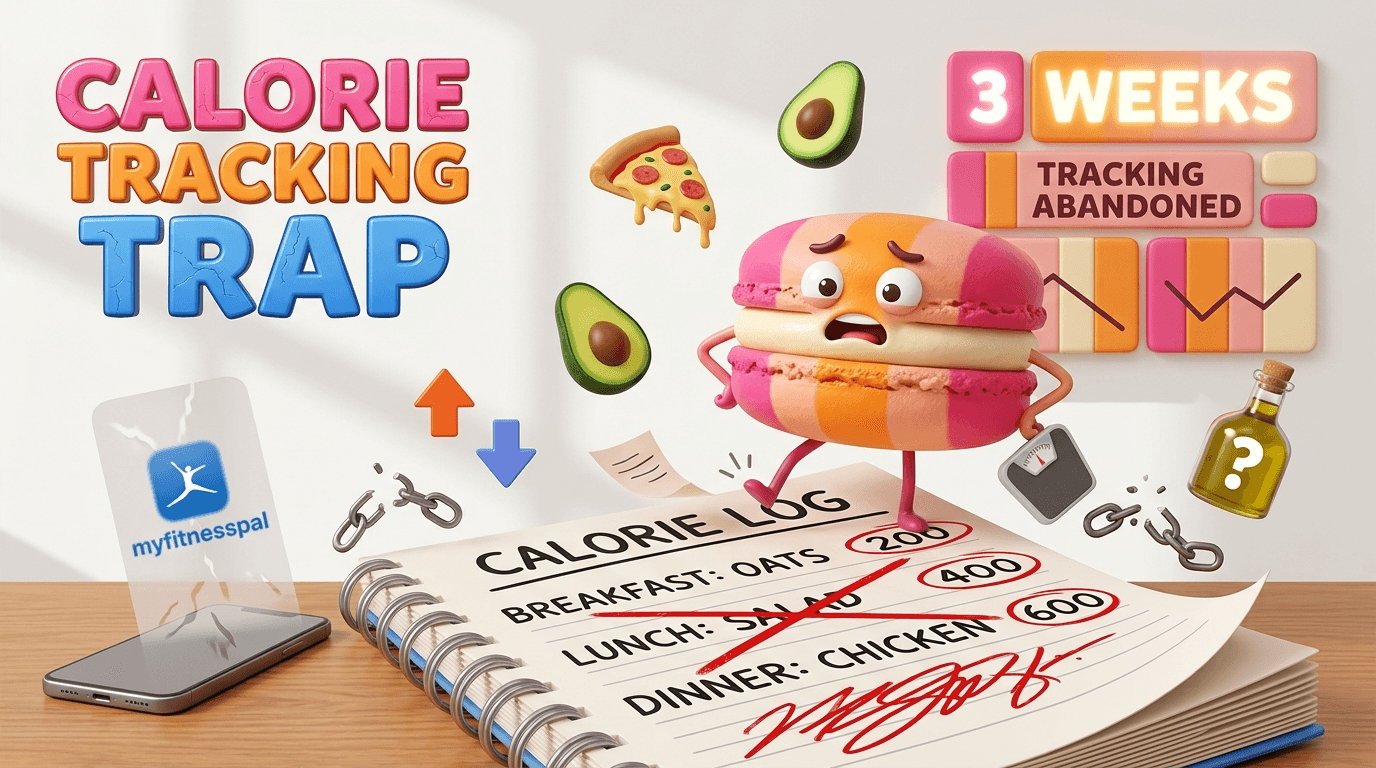
Why Traditional Calorie Trackers Fall Short
Traditional calorie trackers work best when your meals are predictable and you are willing to log every detail. In practice, that means searching for the closest database match, estimating portions, entering ingredients one by one, and deciding how to handle exercise calories. For many users, especially those eating out often or cooking at home, the process starts to feel like bookkeeping. Macaron is designed to reduce that friction by keeping the tracking useful even when the input is incomplete.
How AI Calorie Tracking Works
Macaron uses patterns instead of demanding perfect entries. If you usually eat a similar lunch, it can remember that pattern and estimate the calories when you describe it loosely or upload a photo. If your routine changes, you can explain the context in plain language, such as a travel week, a heavier training block, or a weekend of eating out. That makes the tracker more resilient than database-only tools, especially when you do not have time to log every ingredient.
More About Myfitnesspal Calorie Tracker
Macaron is built around the moments that make calorie tracking feel annoying: restaurant meals, mixed dishes, and days when you do not want to type every ingredient. Instead of forcing you to find the exact database entry, it uses photo-based estimates and conversational context to keep the log moving. That makes it more practical for people who want awareness without turning every meal into a data-entry task.
The app also handles goals more flexibly than a rigid calorie counter. If you are lifting more, traveling, eating lighter, or trying to maintain instead of cut, you can describe the change in plain language and adjust the plan without rebuilding everything manually. That is useful for people whose routines shift often, though users who want strict, fixed targets may still prefer MyFitnessPal’s more explicit structure.
Meal memory is another difference. Macaron can remember recurring meals and patterns, which helps when you eat the same breakfast, order the same lunch, or prep the same dinner each week. That reduces repeated setup work and makes the tracker feel less like a form to fill out. MyFitnessPal still has the stronger food database, but Macaron is often easier when the goal is speed and continuity. Another useful Macaron comparison is Macro Meal Planner: Hit Your Protein, Carb & Fat Targets - Macaron at https://macaron.im/blog/macro-meal-planner.
For people who meal prep, Macaron can be more forgiving than a recipe builder that expects exact grams every time. You can describe a familiar meal once and reuse it with portion changes as needed. That is a practical advantage for busy users, although serious macro trackers may still prefer MyFitnessPal when they want exact ingredient-level control and a broader nutrition reference library. For a broader Macaron context, AI Personal Assistant - Macaron AI at https://macaron.im/ai-personal-assistant can help you compare the decision from another angle.
The tradeoff is straightforward: Macaron favors convenience, adaptation, and conversational use, while MyFitnessPal favors depth, database coverage, and detailed reporting. If you are trying to stay aware of intake without obsessing over every number, Macaron is usually the lighter tool. If you need comprehensive nutrition logs, micronutrient detail, or a long-established food database, MyFitnessPal remains the stronger reference app.
What Macaron's AI Tracker Does Differently
Macaron is most useful when calorie tracking breaks down in real life. It can estimate restaurant meals from photos, remember recurring dishes, and adapt when your routine changes, which helps users who are tired of searching through database entries or correcting inaccurate matches. It also supports lighter tracking during busy periods, so you can keep a useful estimate even when you skip a meal or forget to log immediately. The tradeoff is that it is less suited to users who want highly exact, audit-style nutrition records.
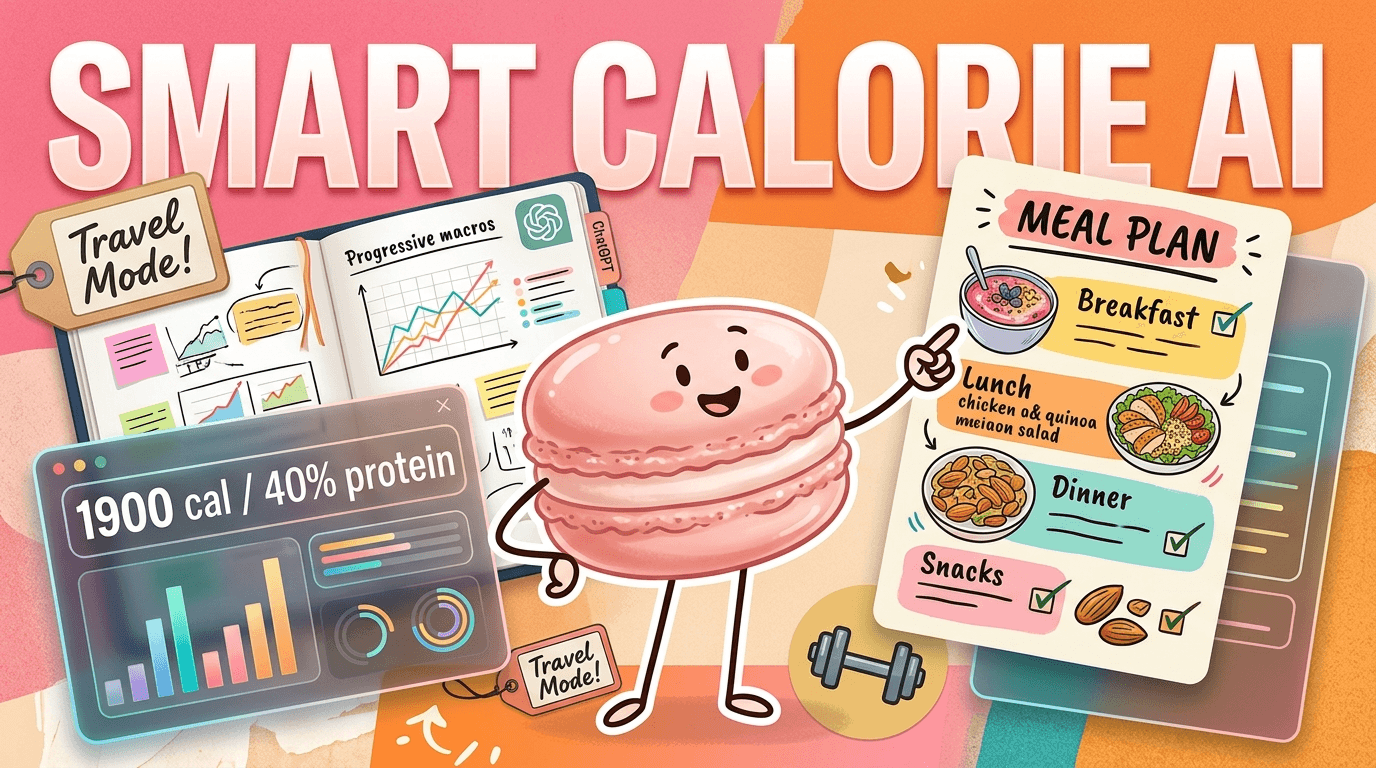
Get Your AI Tracker Now
A good way to start is to describe the outcome you want instead of building settings manually. You can ask Macaron to help with a cutting phase, a maintenance week, a travel schedule, or a lifting routine, and it will shape the tracker around that context. It can also suggest targets, reuse frequent ingredients, and adjust macros when your training changes. That is faster than configuring a traditional app, though users who enjoy detailed manual setup may still prefer MyFitnessPal’s more explicit controls.
Frequently Asked Questions
Yes, but it works differently. MyFitnessPal is built around manual logging, a large food database, and detailed nutrition records. Macaron is an AI assistant that helps you track intake through photos, conversation, and recurring meal patterns. That makes it easier for people who want practical awareness without spending time searching entries or correcting portions. If you need a highly structured nutrition archive, MyFitnessPal still has the deeper database.
For many people, yes. AI reduces the most tedious parts of tracking by estimating meals from photos, remembering common foods, and adjusting goals when your routine changes. That is especially helpful for restaurant meals, homemade dishes, and busy weeks when perfect logging is unrealistic. The tradeoff is that AI estimates are still estimates, so users who need exact numbers for competition prep or clinical tracking may prefer a manual app.
Yes. Photo-based tracking is one of the main ways Macaron reduces logging friction. Instead of forcing you to find the closest database match, it can estimate what is on the plate and use that as a starting point. This is especially useful for restaurant meals and mixed dishes where entries vary a lot. It is faster than manual search, though exact portion control will still be more reliable in a traditional tracker.
Macaron is a good fit for people who get tired of manual logging, eat out often, cook flexible meals, or want a tracker that adapts when life changes. It is also useful for users who want to stay aware of intake without managing a complex dashboard. People who prefer meticulous data entry, fixed macro targets, or detailed nutrition reports may still be happier with MyFitnessPal or another database-heavy app.
Macaron does not push you into the same food-minus-exercise math that confuses many MyFitnessPal users. Instead, it focuses on your goal and the pattern of your routine, then adjusts the tracker conversationally when workouts, travel, or eating habits change. That makes it easier to use day to day. If you want a strict exercise-calorie ledger, MyFitnessPal still offers a more explicit framework. For a third-party check, Calorie Calculator: Find Your Daily Calorie Goal - MyFitnessPal Blog at https://blog.myfitnesspal.com/how-to-calculate-caloric-needs/ is worth comparing against the page summary.
Usually, yes. Restaurant meals are one of the hardest parts of calorie tracking because database entries can be inconsistent and portion sizes are hard to judge. Macaron’s photo-based estimates and meal memory reduce the need to hunt for the perfect listing. That makes it more convenient for frequent diners. MyFitnessPal still wins if you want to compare many database entries or log every ingredient in detail. For another outside reference, How does MyFitnessPal work? at https://support.myfitnesspal.com/hc/en-us/articles/360032626011-How-does-MyFitnessPal-work adds a second perspective.
Yes. Macaron can remember recurring meals and reuse them as templates, which is helpful if you eat the same breakfast, prep lunches for the week, or rotate a few standard dinners. You can adjust portions without rebuilding the whole meal each time. That saves time compared with a more rigid recipe workflow. MyFitnessPal still has an advantage if you want exact ingredient-level recipe tracking and a larger food reference library.com/ is a useful reference point.com/ is a useful reference point.com/ is a useful reference point.com/ is a useful reference point.com/ is a useful reference point. For outside context, MyFitnessPal: Calorie Tracker & BMR Calculator to Reach Your Goals at https://www.myfitnesspal.com/ is a useful reference point.
Read & discover
AI Personal Assistant
Free calculators


