Myfitnesspal Food Tracker
Manual tracking in apps like MyFitnessPal drains motivation with repetitive logging and rigid structures. Macaron builds personalized AI tools that adapt to your eating habits—recognizing frequent meals, suggesting recalls, and reducing manual entry by up to 70%.
The Problem with Manual Food Tracking
MyFitnessPal is strong on database depth, but the daily experience still depends on repeated searches, barcode scans, and re-entering meals you already know by heart. That workflow is manageable for a few days, then becomes a chore for anyone eating similar breakfasts, lunches, or meal-prep dinners. The issue is not lack of food data; it is the friction of making the same decisions over and over.
Many people do not quit because they dislike nutrition tracking. They quit because the app treats every meal like a fresh task. If you eat the same coffee order, salad, or post-workout shake most days, a tracker should remember that pattern and bring it forward automatically. MyFitnessPal offers copy-meal tools, but they still require manual action instead of learning your routine.
This is where AI changes the experience. A smarter tracker can recognize recurring meals, learn your labels for them, and surface likely matches before you start typing. That matters most for homemade food, restaurant repeats, and loosely structured eating patterns, where packaged-item databases help less. Macaron focuses on reducing the repetitive work while keeping the user in control of the final log. For a related Macaron page, see AI Diet Tracker: Best Apps to Help You Eat Better - Macaron at https://macaron.im/blog/ai-diet-tracker.
The tradeoff is that AI tracking is not a perfect substitute for a large food database. MyFitnessPal still has an advantage when you need broad coverage, detailed nutrition entries, or a mature ecosystem of integrations. Macaron is better when the problem is remembering your habits, not searching a catalog. For many users, that is the difference between tracking for a week and tracking consistently.
People who benefit most are meal-prep users, busy professionals, parents, and anyone who eats a small set of recurring meals. They usually want speed, memory, and fewer taps more than they want another generic calorie counter. Macaron is built around that reality: it adapts to your routine, reduces re-entry, and turns food logging into a lighter habit instead of a daily reset.

How Does AI Solve MyFitnessPal's Biggest Frustrations?
Macaron reduces the most repetitive parts of food tracking by learning from your own logs. If you enter the same coffee, lunch bowl, or snack twice, it can start suggesting that meal instead of making you search again. That is useful for people who eat on a schedule, because the app begins to behave like memory rather than a blank form. MyFitnessPal remains stronger for broad food lookup, but Macaron is more useful when the real problem is repeated entry, not missing data.
What Makes AI Tracking More Effective?
AI tracking works best when it recognizes patterns instead of treating each meal as isolated data. That means your usual breakfast, restaurant order, or meal-prep lunch can be recalled with less effort and fewer mistakes. Macaron is designed for that kind of memory-first workflow, while MyFitnessPal is still better when you want a large catalog and established nutrition references. The practical advantage is less time spent rebuilding familiar meals, though the tradeoff is that AI suggestions still need occasional confirmation for accuracy.
More About Myfitnesspal Food Tracker
Macaron is not just another calorie counter with a different interface. It combines logging methods with memory, so the app can learn from repeated meals instead of forcing you to start from zero each time. That makes it especially useful for people whose diets are structured around routines, meal prep, or a small set of favorite foods. The goal is to reduce friction without removing control.
Photo logging is more useful when it improves over time. Instead of treating every image as a one-off scan, Macaron can use prior entries to recognize what you usually eat and suggest the closest match. That helps with homemade meals and mixed plates, where barcode-based tools are less helpful. MyFitnessPal still has an edge for packaged foods and database breadth, but Macaron is stronger when visual memory matters.
Voice input is another practical advantage for real-world use. If you are logging a restaurant meal, a snack on the go, or a meal you do not want to type out, speaking the entry can be faster than searching a database. Macaron uses that input as part of a learning loop, so repeated phrases and recurring meals become easier to recall later. The tradeoff is that voice logging can be less precise than carefully selected database items. Another useful Macaron comparison is Macaron – World's First Personal AI Agent at https://macaron.im/.
Personalized insights are where AI tracking becomes more than a faster input method. Instead of only showing calories and macros, Macaron can surface patterns such as skipped protein, late-night snacking, or recurring meal gaps. That is useful for users who want behavior awareness, not just totals. MyFitnessPal remains better for users who want a mature nutrition dashboard, while Macaron is better for people who want the app to interpret habits. For a broader Macaron context, AI Story App - Macaron at https://macaron.im/ai-story-app can help you compare the decision from another angle.
The most competitive difference is flexibility. Macaron can be shaped around a specific routine, such as meal prep, work lunches, or snack tracking, rather than forcing every user into the same diary structure. That makes it appealing to people who have tried traditional trackers and found them too rigid. The downside is that a custom AI workflow may take a little more setup than a standard app, but it pays off when your eating pattern is repetitive.
Side-by-Side Comparison
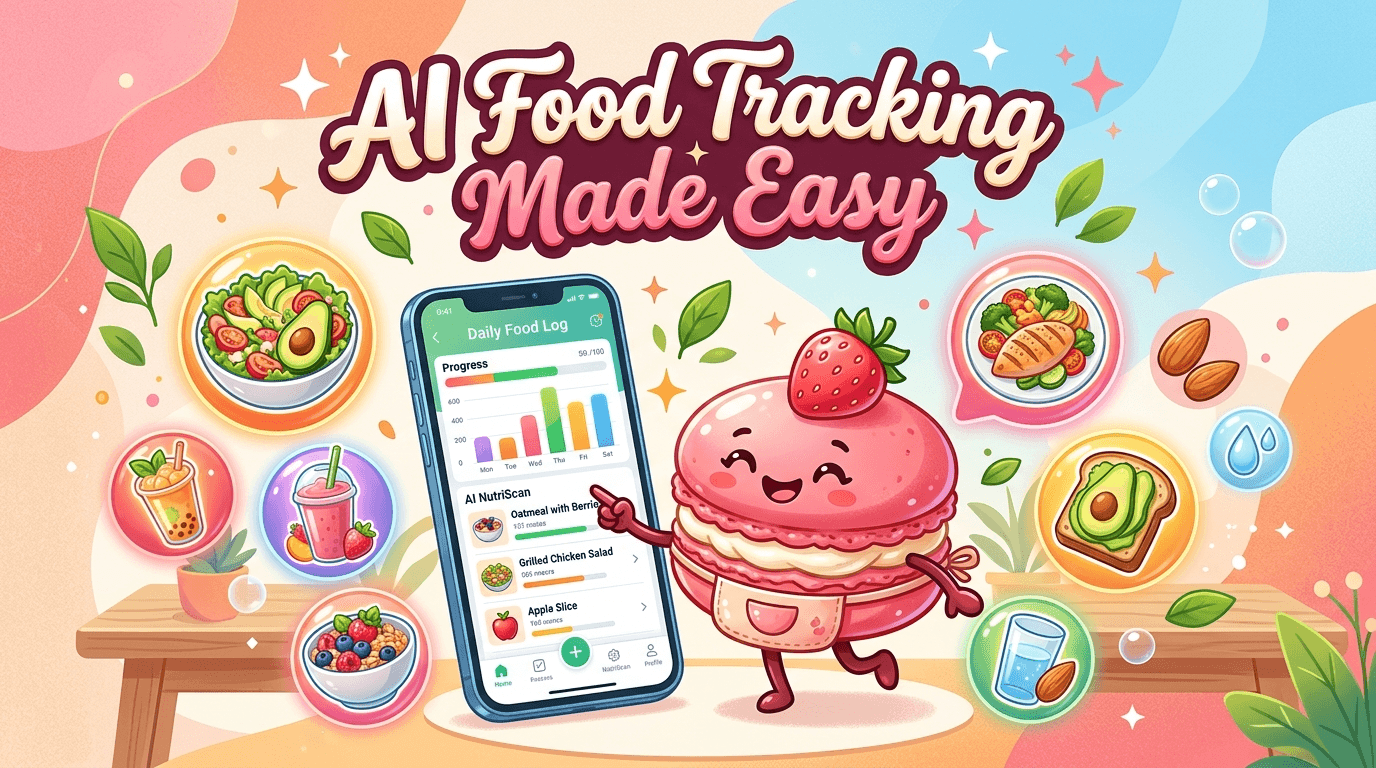
Traditional food trackers like MyFitnessPal are built around search, barcode scanning, and fixed diary entries. Macaron adds memory on top of logging, so repeated meals can be recognized and suggested instead of rebuilt. That difference matters most for users with stable routines. MyFitnessPal is still stronger for broad database coverage and familiar nutrition workflows, while Macaron is better at reducing repetitive entry. The tradeoff is that AI memory depends on your own history, so it improves as you use it more.
How Do I Start With AI Food Tracking?
The easiest way to start is to describe the routine you already follow, not the tracker you wish existed. Useful prompts include meal-prep tracking, work lunch logging, restaurant meal recall, or snack pattern detection. Macaron can build around those habits and then learn from repeated entries, which is especially helpful if you eat similar meals most days. MyFitnessPal is still a good choice if you mainly want a large food database, but Macaron is better when you want the app to adapt to your schedule instead of asking you to adapt to it.
Frequently Asked Questions
Not exactly. MyFitnessPal is a fixed food tracker with a large database, while Macaron creates a more personalized logging workflow around your habits. That makes Macaron better for recurring meals, meal prep, and users who want the app to remember patterns. MyFitnessPal is still stronger if you mainly want a familiar calorie counter with broad food coverage and established nutrition tools.
It can remove a lot of repetitive work, especially for meals you eat often. Instead of searching for the same breakfast or lunch every day, Macaron can start suggesting those entries after it learns your routine. You still confirm what is correct, so it is not fully automatic. The main benefit is less rebuilding and fewer taps, not zero effort.
Macaron is designed to complement the idea of a food database rather than depend on one fixed workflow. If you already know the food you want to log, a large database can still be useful. Macaron adds memory and pattern recognition on top, which helps when your meals repeat. MyFitnessPal remains better for database depth, while Macaron is better at remembering your usual choices.
Accuracy depends on the quality of the entry, so no tracker is perfect. MyFitnessPal is often stronger when you need exact database matches for packaged foods or branded items. Macaron helps by reducing repeated re-entry and by making it easier to log meals consistently, which can improve the quality of your record over time. For homemade meals, photo and voice input can be more practical than manual searching.
People with recurring eating patterns usually benefit the most: meal-prep users, office workers with repeat lunches, parents with busy routines, and anyone who eats the same breakfast most days. These users do not need a new database as much as they need memory and speed. If your diet changes constantly or you rely on very specific branded items, a traditional tracker may still be the better fit.
Usually yes, because homemade meals rarely map cleanly to a barcode or a single database item. AI tracking can use photos, voice notes, and prior logs to make those meals easier to record. That does not make it perfectly precise, especially with portion sizes, but it reduces the friction of logging mixed plates and family meals. Barcode scanning is still better for packaged foods. For a third-party check, How does MyFitnessPal work? at https://support.myfitnesspal.com/hc/en-us/articles/360032626011-How-does-MyFitnessPal-work is worth comparing against the page summary.
Yes, but the value is higher if you want tracking to become easier over time. If you only need a simple calorie counter and already like MyFitnessPal's workflow, you may not need the extra flexibility. Macaron is most useful when you want the app to remember your habits, reduce repetitive searches, and adapt to your routine. It is less about replacing calories and more about reducing the work around them. For another outside reference, How To Log Food With MyFitnessPal | Essential Guides at https://blog.myfitnesspal.com/essential-guide-to-food-logging/ adds a second perspective.
The main tradeoff is that AI systems need some history before they become truly helpful. A traditional tracker gives you a known structure from day one, while Macaron gets better as it learns your patterns. That means the first few logs may feel similar to any other app. The payoff is that repeated meals become easier to handle, which is where most manual tracking fatigue usually comes from.com/ is a useful reference point.com/ is a useful reference point.com/ is a useful reference point.com/ is a useful reference point.com/ is a useful reference point. For outside context, MyFitnessPal: Calorie Tracker & BMR Calculator to Reach Your Goals at https://www.myfitnesspal.com/ is a useful reference point.
Read & discover
AI Personal Assistant
Free calculators


