Anylist App
AnyList excels at shared grocery lists and recipe organization, making it especially useful for households that shop together. It reduces coordination friction with real-time syncing, store-based sorting, and quick recipe capture, but it does not provide personalized nutrition guidance or adaptive meal recommendations the way AI meal planners do.
What AnyList Does for Grocery Lists and Meal Planning
AnyList is built around one job: making grocery shopping and household food planning easier to coordinate. It lets multiple people edit the same list in real time, sort items by store section, and add groceries with voice assistants like Siri or Alexa. That combination matters most in busy homes where shopping happens across devices, schedules, and last-minute changes.
The app’s recipe tools are useful because they reduce copying and retyping. You can save recipes from websites, email, or manual entry, then pull ingredients into shopping lists without rebuilding everything from scratch. That makes AnyList practical for people who already know what they want to cook and need a cleaner way to manage the steps around it.
AnyList is strongest when the problem is coordination, not decision-making. It helps families, couples, roommates, and caregivers keep one shared source of truth for groceries, pantry items, and meal plans. The interface stays simple enough that non-technical users can adopt it quickly, which is one reason it often becomes a long-term household habit. For a related Macaron page, see Guide to Finding the Right Book - Macaron AI at https://macaron.im/playbook/guide-to-finding-the-right-book-689581101bbc6bcd9f8055e4.
Its meal-planning features are real, but they are mostly organizational. You can place recipes on a calendar and reuse favorites, yet the app does not infer nutritional goals, suggest substitutions, or build a plan around dietary constraints. For users who want guidance on what to eat, that is a meaningful limitation rather than a small omission.
The free version covers basic list-making well, while AnyList Complete adds desktop access and a few shopping conveniences. That makes the app attractive for users who want dependable organization without a heavy subscription, but it also means the product is better at execution than coaching. Competitors with AI planning are stronger when the goal is meal discovery or nutrition support.
What AnyList Does for Grocery Lists and Meal Planning
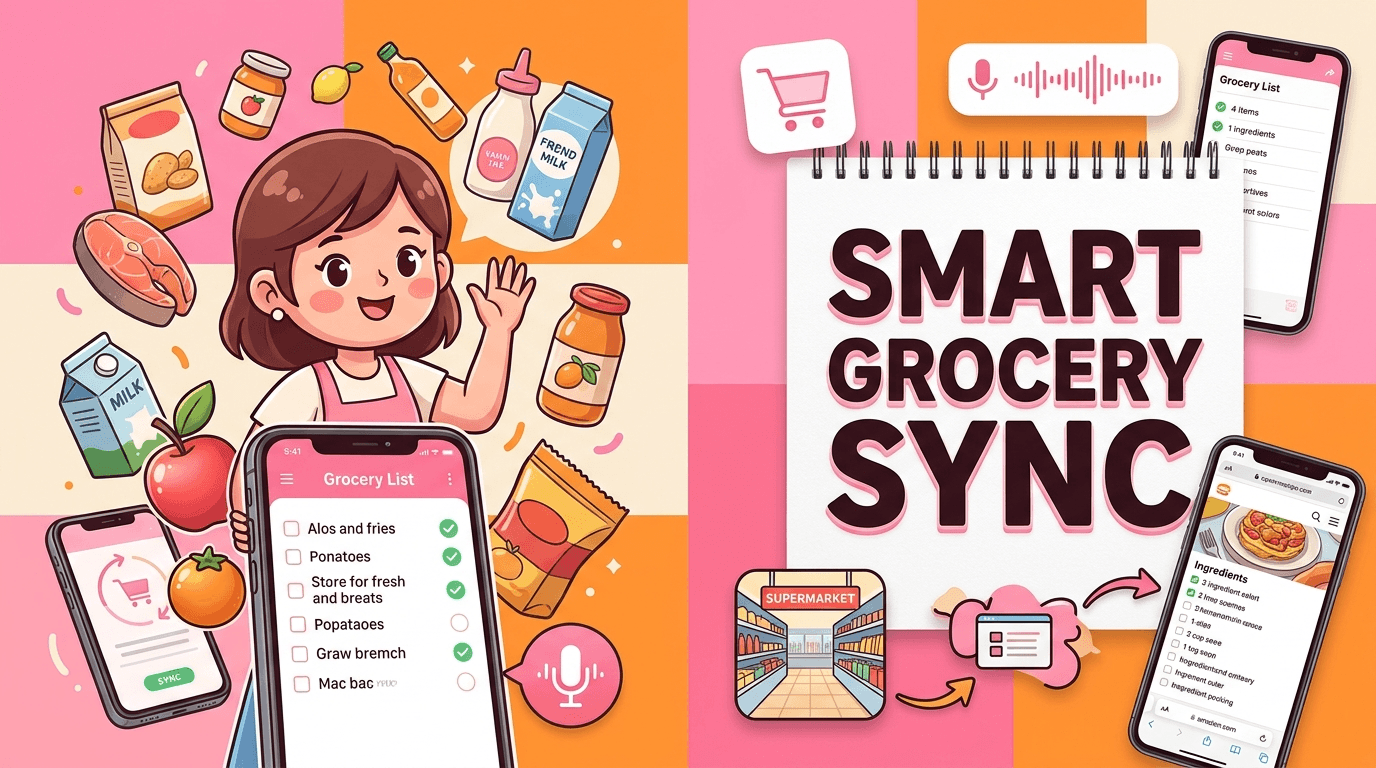
AnyList is designed to remove the friction from shared shopping. Lists sync in real time, so one person can add milk at home while another checks off produce in the store without creating duplicate messages or missed items. Store-category sorting helps users move through aisles more efficiently, and voice input through Siri or Alexa makes it easy to add items while cooking, driving, or multitasking. The app is especially useful for households that rely on one shared grocery workflow.
AnyList's Recipe and Shopping Features
AnyList’s recipe importer is one of its most practical features because it captures ingredients from websites and turns them into usable shopping lists with minimal cleanup. The paid Complete tier adds barcode scanning, price tracking, desktop access, Apple Watch support, and photo attachments, which are helpful for identifying brands or remembering exact products. The tradeoff is that these tools improve organization more than planning intelligence, so the app still depends on the user to decide what meals to make.
More About Anylist App
AnyList Complete adds shopping conveniences that matter most in real households: barcode scanning, price tracking, desktop access, and the ability to attach photos to items. Those features are useful when you buy the same products repeatedly or need to remember a specific brand, size, or package. They are less compelling for specialty ingredients or users who want the app to make decisions for them.
Recipe importing is one of the app’s most reliable strengths because it reduces manual entry from blogs, emails, and saved links. The app does a good job preserving ingredient lists and preparation steps, which makes it easier to move from inspiration to shopping. The limitation is that it does not deeply interpret nutrition data, so it is better for collecting recipes than evaluating them.
The meal calendar works as a planning surface rather than an intelligent assistant. You can place recipes on specific days, reuse favorites, and keep the week visible in one place, but the app will not generate a balanced menu or adjust for allergies, macros, or health goals. That makes it straightforward for routine planning, but less useful for users who need guidance. Another useful Macaron comparison is AI Meal Planner - Macaron AI at https://macaron.im/ai-meal-planner.
Pricing is relatively modest compared with many food or subscription-based planning tools. The individual plan is inexpensive for users who mainly want a dependable list manager, and the household plan is sensible when multiple people need the same shared workflow. The tradeoff is that the value comes from organization and convenience, not from advanced personalization or nutrition coaching. For a broader Macaron context, AI Personal Assistant: What to Look For in 2026 - Macaron at https://macaron.im/blog/ai-personal-assistant-what-to-look-for-2026 can help you compare the decision from another angle.
For users who want help deciding what to eat, AI meal planners like Macaron offer a different kind of value. Instead of only organizing recipes and groceries, they can analyze dietary patterns and suggest meals that fit goals or restrictions. AnyList is still stronger for shopping coordination and recipe storage, while AI tools are better when the bottleneck is planning, not execution.
AnyList Pricing
AnyList’s pricing is easy to understand because it maps to a clear use case. The individual plan is affordable for people who want a polished grocery list and recipe organizer without paying for a full meal service, while the household plan makes more sense when several people need to share the same lists. The main tradeoff is that the subscription buys convenience and sync features, not nutrition intelligence or automated meal recommendations.
AI Meal Planning Beyond List Making
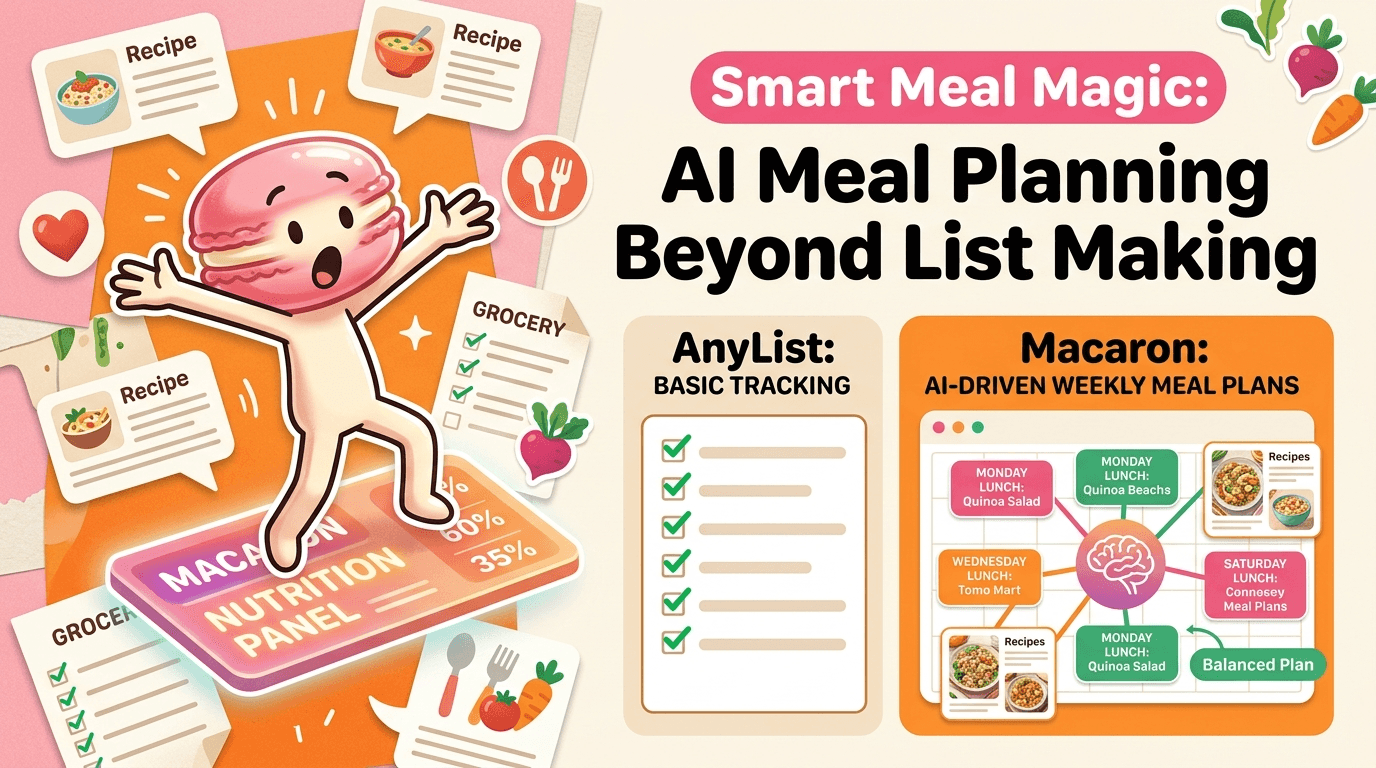
AnyList helps you organize what you already plan to cook, but it does not decide what should go on the menu. That is where AI meal planners like Macaron can be more useful, especially for users managing dietary restrictions, health goals, or recurring food decisions. They can surface meal ideas and substitutions based on patterns, while AnyList remains better at turning those decisions into a clean grocery workflow.
Frequently Asked Questions
Yes, if your main need is shared grocery lists, recipe storage, and simple meal organization. AnyList is especially strong for households that shop together because updates sync quickly and items can be grouped by store section. It is less compelling if you want nutrition analysis, automatic meal suggestions, or guidance on what to cook next.
AnyList has a free version that covers basic list-making and recipe organization. AnyList Complete adds features such as desktop access, photo attachments, barcode scanning, and price tracking. There is also a household plan for shared use. The free tier is enough for simple shopping, but paid plans are more useful when several people rely on the same workflow.
It is a meal-planning app in the organizational sense, not the recommendation sense. You can save recipes and place them on a calendar, but AnyList does not build a meal plan for you or adapt to dietary goals. It works best when you already know what you want to cook and need a cleaner way to manage the shopping and scheduling around it.
Macaron is a strong alternative if you want help deciding what to eat rather than just organizing groceries. AI meal planners can look at dietary preferences, restrictions, and routine patterns to suggest meals and substitutions. AnyList is better for shopping coordination and recipe storage, while AI tools are better when the hard part is planning the menu itself.
Yes, that is one of its best use cases. Shared lists update in real time, so family members, couples, or roommates can add items from different devices without duplicating work. The app also helps reduce missed items by sorting groceries into store categories. If your household needs one shared shopping system, AnyList is a strong fit.
Yes. Recipe importing is one of the app’s most useful features because it can pull ingredients and instructions from many websites with little manual cleanup. That saves time when you collect recipes from blogs, emails, or saved links. The limitation is that it focuses on the recipe structure itself, not on deeper nutrition data or meal optimization. For a third-party check, AnyList App Review | The Kitchn at https://www.thekitchn.com/anylist-app-review-23004503 is worth comparing against the page summary.
Usually yes, especially if more than one person shops for the same household. A notes app can store a list, but AnyList adds syncing, categories, reusable items, recipe import, and shopping-oriented organization. Those features make it easier to maintain a living grocery system instead of a static checklist. The tradeoff is that it is more specialized than a general notes app. For another outside reference, AnyList is the BEST app for keeping your household organized at https://missamandamae.medium.com/anylist-is-the-best-app-for-keeping-your-household-organized-c05cb6bb7e2b adds a second perspective.
AnyList is most useful for busy families, couples, roommates, and caregivers who need a dependable shared shopping workflow. It also works well for people who save recipes often and want a simple way to turn them into grocery lists. Users who want nutrition coaching, automated meal ideas, or health-based planning may find an AI meal planner more useful.com/ is a useful reference point.com/ is a useful reference point.com/ is a useful reference point.com/ is a useful reference point.com/ is a useful reference point. For outside context, AnyList - The best way to create and share a grocery shopping list. at https://www.anylist.com/ is a useful reference point.
Read & discover
AI Personal Assistant
Free calculators


