Bodyfast App
With over 50 million downloads, BodyFast positions itself as more than a fasting timer - offering AI-generated weekly plans and challenges. But its fasting-specific focus raises the question: do you want specialized support or a broader health companion like Macaron?
How Bodyfast's AI Fasting Coach Works
BodyFast is built around intermittent fasting rather than general wellness, and that narrow focus is its main strength. Instead of asking users to manage calories, macros, and workouts in one place, it centers the experience on fasting windows, progress checks, and weekly plan updates. For people who want a simple structure and less decision fatigue, that specialization can feel easier to follow than broader health apps.
The app’s core promise is adaptive coaching. BodyFast generates weekly fasting plans that can change based on user feedback and progress, which makes it more dynamic than a plain timer. It supports common schedules such as 16:8 and 14:10, and it pairs those plans with reminders, challenges, and recipe ideas. The tradeoff is that the “coach” is useful mainly if you want fasting guidance, not full nutrition management.
BodyFast also leans on motivation as much as tracking. Its onboarding and in-app prompts are designed to keep users engaged through streaks, tips, and lightweight community features. That can help beginners stay consistent during the first few weeks, when fasting habits are easiest to abandon. More experienced users may appreciate the structure, but some will find the motivational layer repetitive once the routine becomes familiar. For a related Macaron page, see Best AI Personal Assistant in 2025: A Test Suite You Can Reuse at https://macaron.im/blog/ai-personal-assistant-test.
The app’s scale is impressive, with tens of millions of installs and a long-running presence in the fasting category. Even so, install count does not automatically mean the best experience for every user. App store visibility and user discussions suggest that premium value, pricing clarity, and depth of tracking remain common decision points. In other words, BodyFast is well known, but it is not the obvious answer for everyone.
That is where the comparison with Macaron becomes useful. BodyFast is strongest when the goal is to manage fasting windows with minimal friction. Macaron is better suited to users who want a broader system for meals, habits, and daily planning after fasting ends. If you only need fasting support, BodyFast is focused and practical. If you want one app to handle the rest of your routine, a wider health companion is usually the better fit.
How Bodyfast's AI Fasting Coach Works
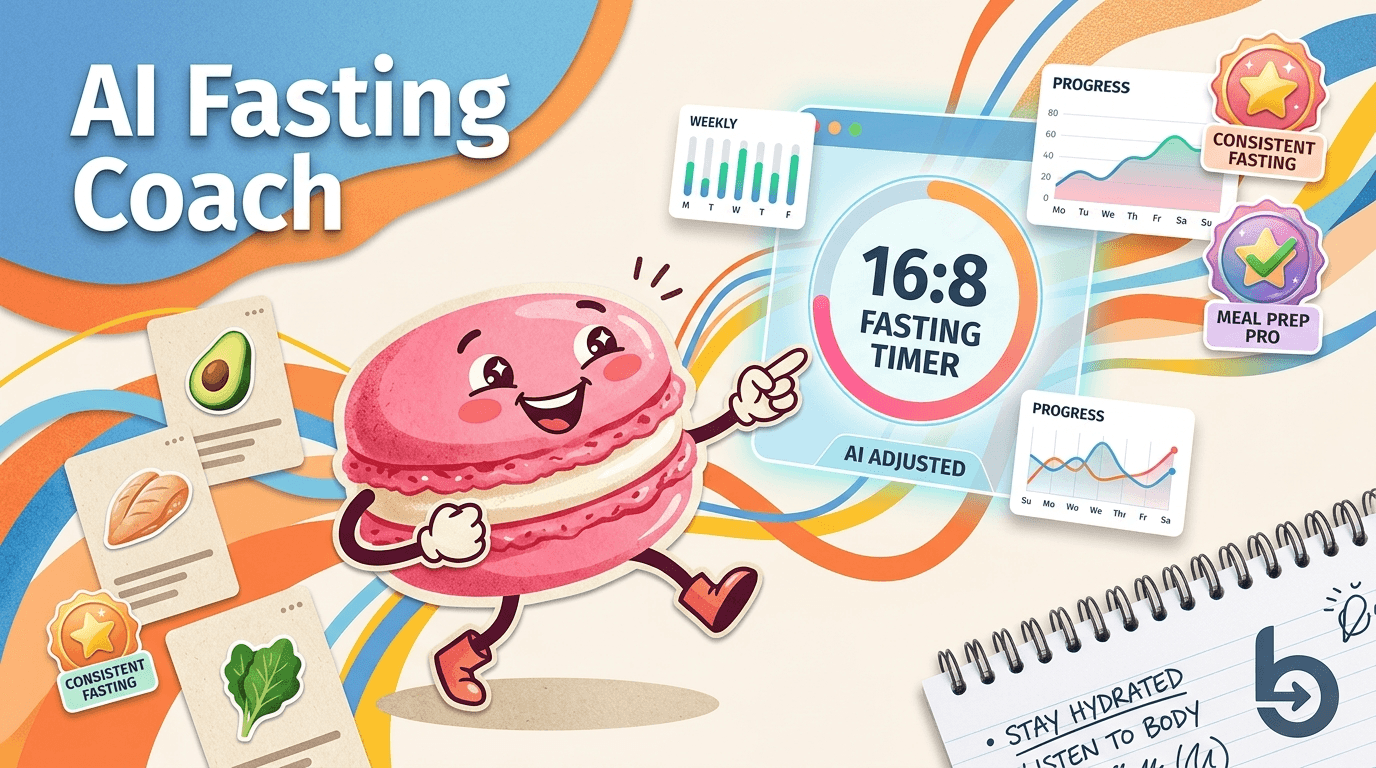
BodyFast’s coach builds weekly fasting plans around common time-restricted eating patterns such as 16:8 or 14:10, then adjusts those plans using user progress and feedback. That makes it more flexible than a static timer, especially for beginners who want guidance without manually choosing every schedule. The app also adds challenges, tips, and recipe suggestions to keep the routine from feeling mechanical. The limitation is that the “AI” experience is mostly about adaptive scheduling, not deep personalization across food, sleep, or lifestyle data.
Bodyfast vs Other Fasting Apps
BodyFast competes most directly with apps like Zero and Fastic, but it takes a slightly different approach by emphasizing weekly recalibration instead of a fixed fasting plan. That can make it feel more hands-on for users who want a coach-like experience. The downside is that its nutrition tools are still secondary, so it is less useful if you want meal planning, broader habit tracking, or detailed food logging. For fasting alone, it is strong; for a more complete health workflow, Macaron offers a wider set of tools.
More About Bodyfast App
BodyFast’s main feature is its fasting coach, which turns intermittent fasting into a guided routine rather than a manual timer. Users choose a goal, follow a plan, and receive weekly adjustments that can make the process feel more personal. This is helpful for people who want structure without having to research schedules themselves. The tradeoff is that the app stays tightly focused on fasting, so it does not try to solve the rest of your nutrition or wellness workflow.
The app adds motivation through challenges, reminders, and recipe content, which helps it feel less bare-bones than a simple countdown tool. That matters for beginners, because the hardest part of fasting is often consistency rather than understanding the schedule. Still, users who already know what they want may not need the extra nudges. Competitors with cleaner interfaces or more educational content can feel easier to use if you prefer a lighter, less guided experience.
BodyFast also includes a food scanner, but it is best understood as a supporting feature rather than a full nutrition system. It can provide basic insight, yet it does not replace a dedicated meal tracker or a broader AI food assistant. That is where Macaron stands out: it is designed to help with meals, preferences, and ongoing planning, not just fasting windows. If your goal is to manage what happens outside the fasting period, BodyFast’s toolkit can feel incomplete. Another useful Macaron comparison is Your Personal AI Assistant for Planning & Execution - Macaron at https://macaron.im/blog/macaron-ai-agent-guide.
Pricing follows the familiar freemium model, but the subscription experience is not especially transparent before download. That can be frustrating for users who want to compare value before committing. Premium access unlocks the coach and additional content, but the practical question is whether those extras are worth paying for when free timers already handle the basics. BodyFast is most compelling for users who want structure; it is less compelling if you only need a stopwatch. For a broader Macaron context, 20 AI Tools to Upgrade Your Daily Life - Macaron - Macaron App at https://macaron.im/blog/macaron-app-ai-tools-daily-life can help you compare the decision from another angle.
Community support is another area where BodyFast is useful but not fully unified. Some engagement happens in-app, while other discussion and accountability live elsewhere, which can make the experience feel fragmented. Macaron takes a broader approach by connecting habits, meals, and planning in one place, which is better for users who want continuity. BodyFast still has a clear advantage for fasting-first users, but it gives up breadth in exchange for specialization.
Bodyfast Pricing
BodyFast uses a freemium model with subscription pricing that can vary by region, which makes it harder to evaluate before installing. Premium typically unlocks the coach, plan adjustments, and recipe content, while the free version covers more basic fasting tracking. That structure works well if you already know you want the guided experience, but it can feel opaque for comparison shoppers. The main tradeoff is simple: you get a focused fasting coach, but you may pay for features that a basic timer app would not charge for.

How Macaron Extends Beyond Fasting
Macaron is built for the part of the journey that BodyFast does not cover well: what happens after the fasting window ends. Instead of stopping at timers and schedules, Macaron helps users plan meals, understand food choices, and keep track of habits over time. It can turn photos or simple descriptions into practical meal guidance, which reduces the gap between fasting and eating. That makes it a better fit for users who want one app to support the full day, not just the fasting hours.
Frequently Asked Questions
BodyFast is marketed as an AI fasting coach, but in practice it appears to rely on adaptive rules, user feedback, and scheduled plan changes rather than advanced conversational AI. The useful part is the weekly recalibration, which is more flexible than a static timer. The limitation is that it does not behave like a broad health assistant that can reason across meals, habits, and lifestyle data.
BodyFast is a strong choice if you want weekly plan adjustments and a more coach-like fasting experience. Zero is often simpler, while Fastic tends to appeal to users who want a polished interface and more beginner-friendly education. The best option depends on whether you value adaptive scheduling, visual simplicity, or content depth. BodyFast is more specialized, but not always the easiest app for every user.
Yes, mostly. BodyFast is centered on fasting windows, progress tracking, and related motivation tools, with recipes and a basic food scanner as supporting features. It is not designed to replace a full nutrition or habit app. If you want meal planning, broader wellness tracking, or a system that covers eating windows too, you will likely outgrow BodyFast and need something more comprehensive.
Because many people start with fasting and then realize they need help with the rest of the day. BodyFast is good at managing fasting schedules, but Macaron is better suited to meal planning, nutrition support, and ongoing habit tracking. The comparison matters for users who want to move from a single-purpose fasting tool to a broader daily companion without switching between multiple apps.
BodyFast pricing can vary by region and subscription offer, so the exact monthly cost is not always obvious before download. That lack of upfront clarity is one of the most common frustrations for users comparing fasting apps. The free version is useful for basic tracking, but the coach and premium content are behind the paywall. If you only want a timer, the subscription may not be necessary.
Yes, especially if you want a guided starting point. BodyFast helps beginners by suggesting fasting windows, giving weekly structure, and adding reminders that make the routine easier to maintain. It is less ideal if you want to learn the broader nutrition side of fasting, because the app stays focused on schedule management. Beginners who want more complete meal support may prefer a broader app from the start. For a third-party check, General Questions about the App - BodyFast at https://help.bodyfast.app/hc/en-001/sections/24446289542930-General-Questions-about-the-App is worth comparing against the page summary.
Not as its main focus. BodyFast is built around fasting duration and schedule adherence, so calorie and macro tracking are secondary at best. The app may provide some food-related features, but it is not a replacement for a dedicated nutrition tracker. Users who want to understand what they eat during feeding windows usually need a separate app or a more complete platform like Macaron. For another outside reference, BodyFast: Intermittent Fasting - Overview - Apple App Store - US at https://app.sensortower.com/overview/1189568780?country=US adds a second perspective.
The main tradeoff is specialization. BodyFast does fasting very well, but that focus means it leaves out broader meal planning, nutrition analysis, and long-term habit management. For users who only want fasting support, that can be a benefit because the app stays simple and targeted. For users who want one place to manage the full health routine, the narrow scope becomes a limitation.app/en/ is a useful reference point.app/en/ is a useful reference point.app/en/ is a useful reference point.app/en/ is a useful reference point.app/en/ is a useful reference point. For outside context, The Intermittent Fasting App - BodyFast at https://www.bodyfast.app/en/ is a useful reference point.
Read & discover
AI Personal Assistant
Free calculators


