Emeals Review
eMeals promises weekly meal plans and automated grocery lists to simplify dinner planning. But in 2025, users increasingly question whether rigid subscriptions still outperform flexible AI tools for personalized meal planning.
How eMeals Works
eMeals is built for people who want dinner decisions made in advance, not improvised at 5 p.m. Each week, it offers a set of recipes that users can choose from, then turns those selections into a shopping list. That structure is the main appeal: less planning friction, fewer forgotten ingredients, and a clearer path from recipe to cart for busy households.
The strongest use case is families or routine-driven cooks who already shop through Walmart, Kroger, or Instacart. In that setup, eMeals can reduce the number of separate steps between choosing meals and buying ingredients. The tradeoff is that the app works best when you accept its cadence and recipe rotation instead of expecting it to respond to changing schedules or pantry leftovers.
Unlike nutrition apps, eMeals is not trying to track macros, calories, or health metrics in depth. It is closer to a guided meal-planning system with grocery automation layered on top. That makes it useful for users who want practical logistics, but less helpful for people who want to fine-tune meals around exact ingredients, dietary targets, or same-day changes. For a related Macaron page, see Best Personal AI Agent Platform for 2025 - Macaron at https://macaron.im/blog/best-ai-agent-platform-2025.
Pricing in 2025 sits in a middle zone: more expensive than a basic recipe app, but still far below the cost of meal kits. Whether it feels worth it depends on how much value you place on convenience. If the grocery integrations save you repeated planning time, the subscription can make sense; if not, the cost is easier to question.
Macaron takes a different approach by generating meal ideas from what you already have, what you feel like eating, or how much time you have tonight. That flexibility is the key competitive difference. eMeals is stronger for predictable weekly structure, while Macaron is better for users whose plans change often and who want the app to adapt instead of asking them to adapt.
How eMeals Works
eMeals works like a guided recipe and shopping workflow. You choose from weekly menus, the app organizes ingredients into a categorized list, and then you can send that list into supported grocery services. The appeal is not culinary discovery; it is reducing the number of decisions between “what’s for dinner?” and “what do I need to buy?” That makes it practical for households that want a repeatable system rather than a blank canvas.
eMeals Meal Plans and Variety
The app offers a broad set of diet filters, including options such as keto, diabetic, plant-based, paleo, and quick-cook plans, which helps users narrow choices without building a plan from scratch. That said, variety is not the same as personalization. Long-term users often like the convenience at first, then notice familiar flavor patterns and similar cooking methods. The result is a good fit for beginners and a weaker fit for experienced cooks who want more control.
eMeals Pricing in 2025
eMeals pricing in 2025 typically falls in a subscription range that makes it cheaper than meal kits but more expensive than free recipe tools. That pricing can be reasonable if the app genuinely shortens planning and shopping time, especially for families who use grocery integrations every week. The downside is that the value is easy to lose if you only browse recipes occasionally or still prefer to manually edit most of the shopping list.
More About Emeals Review
eMeals is strongest when it removes small but repetitive chores. Instead of searching for recipes, building a list, and checking ingredients one by one, users get a pre-assembled workflow that can be completed quickly. That is why many reviews focus on time saved rather than culinary excitement. The product is designed to reduce planning effort, not to become the center of the cooking experience.
Its grocery integrations are a major differentiator, especially for users already shopping through Walmart or Instacart. The convenience is real, but it comes with a tradeoff: automated lists are only as good as the assumptions behind them. If your household buys smaller portions, swaps ingredients often, or dislikes certain produce quantities, you may still need to edit the list manually before ordering.
Recipe variety is broad enough for many households, but the system is still built around a weekly rotation. That structure helps users who want consistency, yet it can feel repetitive over time if you cook frequently or prefer more improvisation. In practice, eMeals is less about endless discovery and more about keeping dinner predictable without having to start from zero every week. Another useful Macaron comparison is Best Meal Planning Apps in 2026 - Macaron AI at https://macaron.im/blog/best-meal-planning-apps.
Compared with recipe managers like Paprika, eMeals does less for people who enjoy collecting, tagging, and organizing their own recipes. Paprika is better for building a personal cooking library; eMeals is better for users who want the app to do the planning work for them. That difference matters because the best tool depends on whether you want control or convenience. For a broader Macaron context, How Macaron AI Tackles the Problem with Traditional Task Lists at https://macaron.im/blog/macaron-ai-daily-planning-guide can help you compare the decision from another angle.
Macaron is more competitive when the meal plan has to react to real life. If you have leftovers, a late meeting, or a pantry you want to use up first, AI can generate a plan around those constraints immediately. The tradeoff is that Macaron does not replace eMeals’ grocery ecosystem as neatly, so users who value one-click shopping may still prefer the subscription model.
A Free AI Meal Planning Alternative
Macaron shows how AI meal planning differs from a fixed subscription. Instead of choosing from a preset weekly menu, you can ask for meals based on what is already in your kitchen, how much time you have, or what kind of dinner you want tonight. That makes it especially useful for people whose schedules change often or who want to reduce waste from unused ingredients. The tradeoff is that it is less centered on grocery-store automation than eMeals.
Quick Scorecard
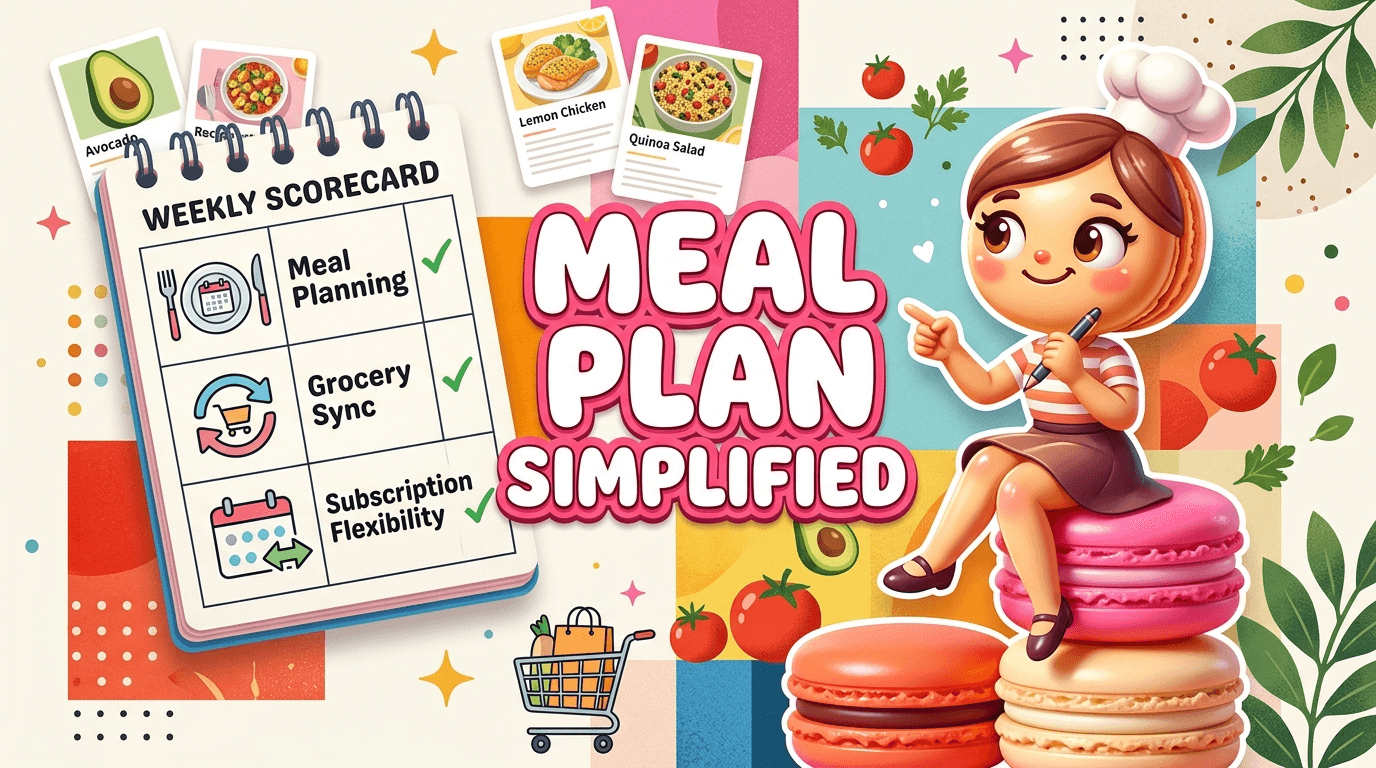
| Category | eMeals | |---|---| | Structure | Weekly menu rotation with preset diet paths | | Grocery Sync | Strong Walmart, Kroger, and Instacart support | | Flexibility | Limited swaps unless you manually edit or upgrade | | Cost | Subscription pricing in the mid-range | | Best For | Families and routine-driven cooks who want less planning |
Frequently Asked Questions
eMeals is worth it if your main problem is decision fatigue and you will actually use the grocery integrations. It can save meaningful time by turning meal selection into a short weekly task instead of a daily chore. If you prefer to browse recipes casually, shop manually, or change plans often, the subscription is easier to outgrow. In that case, a flexible AI planner may deliver more value.
No, eMeals is not free for full use. You can download the app without paying upfront, but the meal plans and core planning features require a subscription. The ingredients are still purchased separately through your grocery store or delivery service. That distinction matters because some users expect a meal kit experience, when eMeals is really a planning and shopping tool rather than a food delivery service.
It depends on how you cook. Paprika is better if you want to save, organize, and scale your own recipes into a personal library. eMeals is better if you want the app to choose meals, build the shopping list, and reduce planning work. Paprika gives more control and flexibility; eMeals gives more structure and convenience. Seasoned home cooks often prefer Paprika, while busy families may prefer eMeals.
They solve the same problem in different ways. eMeals uses preset weekly menus and grocery integrations, which works well for people who like routine. Macaron uses AI to adapt to pantry items, time limits, and last-minute changes, which is better for unpredictable schedules. The tradeoff is that eMeals is more established for shopping workflows, while Macaron is more responsive when dinner plans change.
It can, especially if you follow the shopping list closely and cook the meals you selected. Many users like that the app removes guesswork and helps them buy only what they need for the week. The limitation is that some grocery lists can include larger produce quantities than a household needs, which may create waste unless you edit the order. So the waste reduction benefit is real, but not automatic.
Pricing can vary by plan and promotion, but eMeals generally sits in a subscription range that is cheaper than meal kits and more expensive than free recipe apps. That makes it a middle-ground option rather than a budget tool. The real question is whether the time saved on planning and shopping justifies the subscription for your household. If you use it weekly, the value is easier to defend. For a third-party check, Reviews - eMeals at https://emeals.com/reviews/ is worth comparing against the page summary.
eMeals is best for families, busy professionals, and anyone who wants a repeatable dinner routine without spending time searching for recipes. It is also a good fit for users who already shop through supported grocery services and want fewer manual steps. People who enjoy improvising, cooking from leftovers, or changing meals at the last minute usually benefit less because the app is built around structure. For another outside reference, Read Customer Service Reviews of www.emeals.com - Trustpilot at https://www.trustpilot.com/review/www.emeals.com adds a second perspective.
The biggest downside is rigidity. eMeals is helpful when your week follows a plan, but less helpful when your schedule changes or your pantry already contains most of what you need. Some users also report recipe repetition over time and grocery lists that need manual cleanup. That means the app saves the most time for users who accept its system, and less for users who want a highly personalized experience.com/blog/2022/09/review-of-emeals-meal-planning-app/ is a useful reference point.com/blog/2022/09/review-of-emeals-meal-planning-app/ is a useful reference point.com/blog/2022/09/review-of-emeals-meal-planning-app/ is a useful reference point.com/blog/2022/09/review-of-emeals-meal-planning-app/ is a useful reference point.com/blog/2022/09/review-of-emeals-meal-planning-app/ is a useful reference point. For outside context, eMeals App Review: Pros and Cons - Plan to Eat at https://www.plantoeat.com/blog/2022/09/review-of-emeals-meal-planning-app/ is a useful reference point.
Read & discover
AI Personal Assistant
Free calculators


