Emotional Intelligence In Relationships
Emotional intelligence in relationships is about recognizing feelings, responding without defensiveness, and staying connected when stress or conflict shows up. Macaron helps you turn that into practical habits through reflection, communication check-ins, and tools for repair.
Emotional Intelligence In Relationships
This self-reflection module helps you notice how you respond to feelings, conflict, and closeness in relationships. It is designed to highlight patterns you can work with, not to judge whether you are a good or bad partner.
This is a self-reflection tool, not a diagnosis or clinical assessment.
Please answer every question before viewing your result.
This module is for self-reflection and relationship awareness only. If conflict feels unsafe, controlling, or emotionally overwhelming, consider reaching out to a trusted person or a qualified mental health professional for support.
Why Emotional Intelligence Is Central to Strong Relationships
Emotional intelligence in relationships is less about being calm all the time and more about noticing what is happening emotionally before it turns into a misunderstanding. It affects how partners listen, how they interpret tone, and whether a difficult moment becomes a repair opportunity or a bigger rupture. In everyday life, that means paying attention to timing, stress, and the emotional meaning behind words, not just the words themselves.
The most useful definitions of EQ in relationships usually center on self-awareness, empathy, emotional regulation, and relationship management. Those ideas matter because people rarely argue only about the surface issue. They are also reacting to feeling dismissed, misunderstood, or unsafe. Emotional intelligence helps you separate the immediate trigger from the deeper need, which makes it easier to respond with clarity instead of reflex.
When emotional intelligence is stronger, people are better able to name what they feel, hear what the other person is trying to say, and avoid turning every disagreement into a verdict on the relationship. That does not remove conflict, but it can make conflict more workable and less personal. A relationship with decent EQ is not one without tension; it is one where tension can be discussed without humiliation, punishment, or shutdown. For a related Macaron page, see Best Meal Planning Apps in 2026 - Macaron at https://macaron.im/blog/best-meal-planning-apps.
Macaron is designed to support that process with guided reflection that helps you slow down after tension, identify patterns, and think through what was said, what was felt, and what might need to happen next. The focus is on practical awareness, not abstract advice. That makes it useful for people who know they want to communicate better but need help translating insight into a real conversation or repair step.
If you are trying to understand emotional intelligence in relationships as a concept, the most useful lens is simple: it is the ability to stay emotionally present enough to communicate clearly, repair after friction, and notice the other person without losing your own center. That balance is what makes closeness feel safer, especially when the relationship is under pressure or the same issue keeps resurfacing.
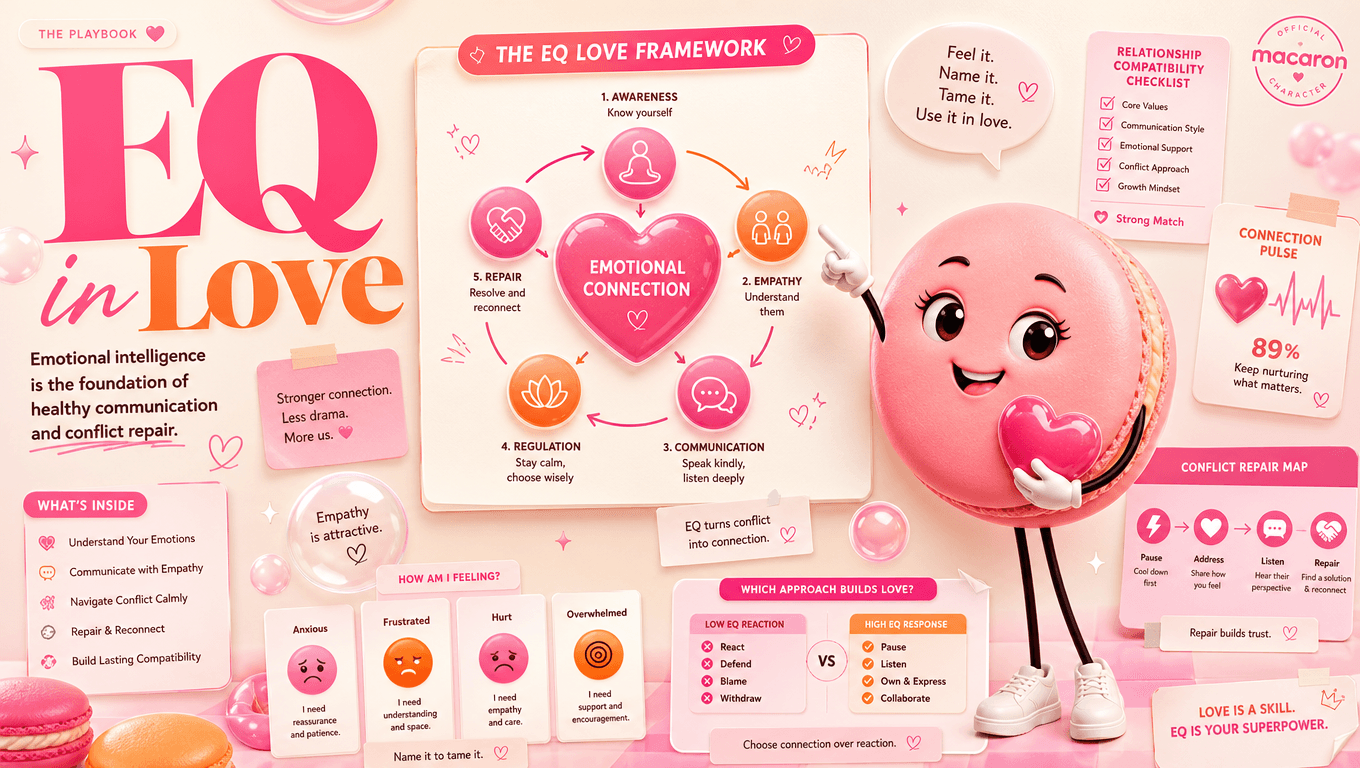
Why Emotional Intelligence Is Central to Strong Relationships
Emotional intelligence in relationships matters because attraction, compatibility, and good intentions do not automatically create good communication. People still need the ability to notice emotional cues, manage their own reactions, and respond in ways that keep the conversation usable. That is why EQ often becomes most visible during stress, disappointment, or conflict. It influences how you read each other's feelings, respond when tension rises, repair after hurt, express care without sounding defensive, and stay present instead of shutting down or escalating. When those skills are weak, small misunderstandings can snowball. When they are stronger, even hard conversations are more likely to lead somewhere constructive. The tradeoff is that emotional intelligence takes effort in the moment, while less skillful reactions can feel easier short term.
How Macaron Helps You Build Better Emotional Awareness in Love
Macaron supports emotional intelligence in relationships with tools that are meant for the moments people usually struggle with most, especially after conflict or during emotional overload. Guided reflection prompts help you slow down and separate what happened from how it felt, while communication check-ins make it easier to notice patterns before they become repeated arguments. The experience also includes empathy-focused perspective shifts, emotional regulation habits, and support for naming needs more clearly. That matters because many relationship problems are not caused by a lack of care, but by unclear expression, misread tone, or reacting too quickly to feel safe. Macaron is especially helpful for people who want structure after a tense exchange, though a therapist or couples counselor may still be better for entrenched conflict or safety concerns.
More About Emotional Intelligence In Relationships
A lot of people search this topic because they want examples, not theory. Emotional intelligence in relationships shows up in ordinary moments such as pausing before replying, asking a follow-up question instead of assuming intent, or noticing when a conversation is becoming reactive. Those small choices often matter more than dramatic gestures because they shape whether the interaction stays open or turns into a defensive loop.
Macaron helps translate those moments into usable habits. Instead of treating EQ as a vague ideal, the tools focus on reflection prompts, communication resets, and small behavior changes that make it easier to respond thoughtfully when emotions are running high. That approach is useful for people who want to improve their own patterns, especially if they tend to overexplain, withdraw, or react before they have fully processed what they feel.
This page also reflects a common search ambiguity: people may be asking what emotional intelligence means, how to show it, or how to tell whether a partner has it. The practical answer usually involves patterns of listening, accountability, boundary awareness, and the ability to repair after tension. Emotional intelligence is visible less in polished language and more in whether someone can stay respectful, curious, and responsive when the conversation gets uncomfortable. Another useful Macaron comparison is How Macaron AI Tackles the Problem with Traditional Task Lists at https://macaron.im/blog/macaron-ai-daily-planning-guide.
Relationship EQ is not the same as never getting upset. In fact, many healthy couples still disagree often. The difference is whether they can stay respectful, avoid escalation, and return to the conversation without punishment, withdrawal, or repeated blame. That distinction matters because conflict itself is not the problem; the problem is when conflict becomes a place where one or both people stop feeling emotionally safe enough to engage honestly. For a broader Macaron context, 20 AI Tools to Upgrade Your Daily Life - Macaron - Macaron App at https://macaron.im/blog/macaron-app-ai-tools-daily-life can help you compare the decision from another angle.
Macaron is most useful when you want support that connects insight to action. The goal is to help you notice what happens in real conversations, understand recurring triggers, and build steadier communication habits over time rather than relying on willpower alone. The tradeoff is that structured prompts can guide reflection, but they do not replace the nuance of live conversation, so some users may still prefer direct coaching or therapy for more complex relationship dynamics.
Practical EQ Skills for Couples and Close Relationships
Macaron helps you strengthen relationship EQ through skills that are simple in concept but difficult in the moment. That includes pausing before reacting, listening without preparing your defense, noticing how tone and timing affect the message, naming needs directly instead of hinting, and repairing after tension instead of disappearing or stonewalling. These skills matter because many couples are not arguing about one issue alone. They are also reacting to feeling unheard, dismissed, or misunderstood. Practicing these habits can reduce escalation and make it easier to stay emotionally available even when the conversation is uncomfortable. Over time, the relationship can feel less fragile and more workable. If you already communicate well, the main gain is consistency under stress; if you do not, the work may feel slow at first.
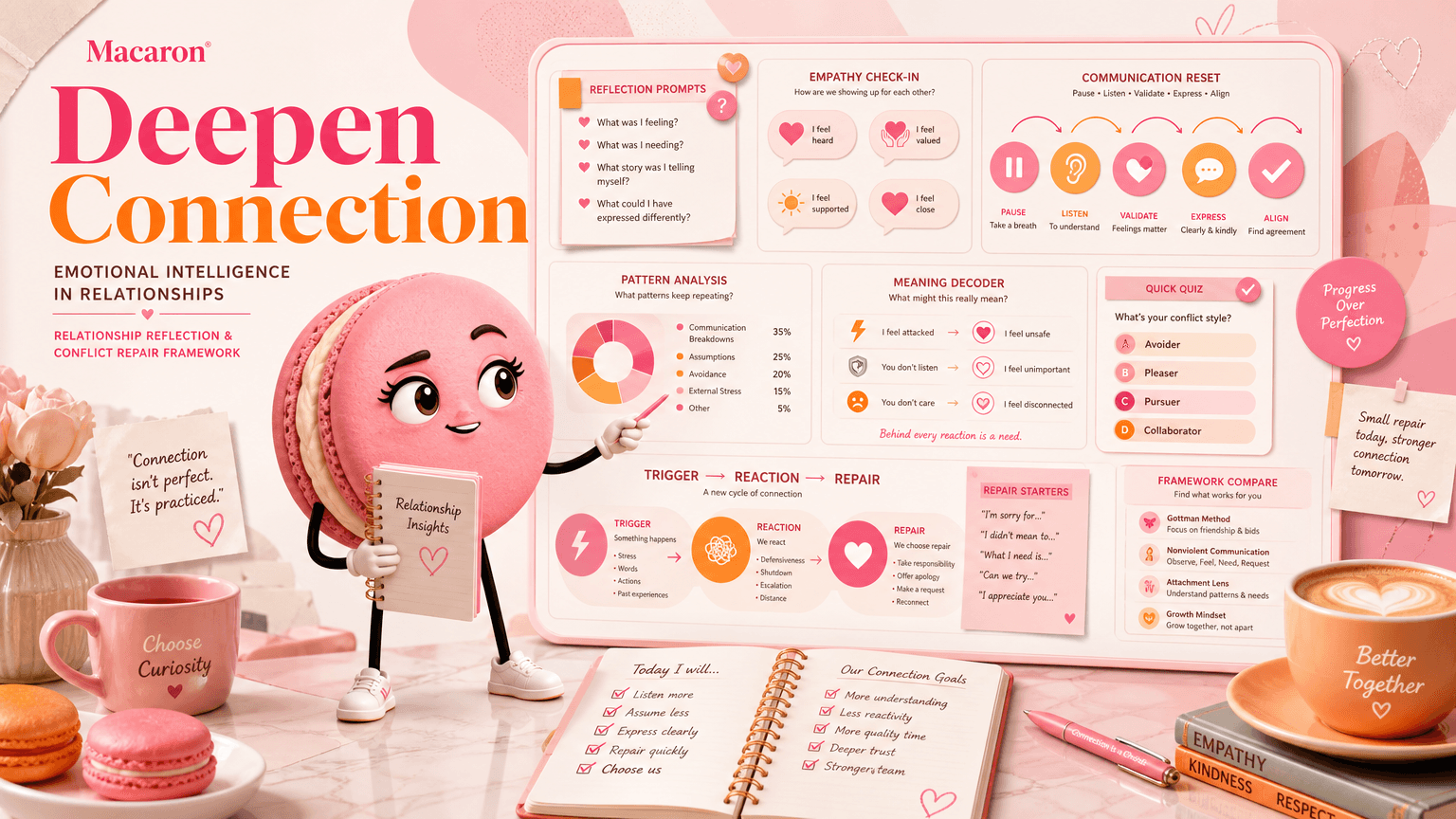
Deepen Your Connection
Macaron turns emotional intelligence in relationships into practical support through prompts and check-ins that help you look at patterns, not just isolated arguments. Relationship reflection prompts can clarify what triggered a reaction, empathy and listening check-ins can reveal where one person felt overlooked, and communication resets can help restart a conversation that went off track. Conflict repair support is especially useful when the issue is not whether you care, but how quickly the interaction became defensive or shut down. The habits here are designed to protect emotional steadiness, which often matters as much as the content of the disagreement itself. Compared with broader relationship apps, Macaron is more focused on post-conflict reflection and behavior change, though it is less specialized than dedicated couples therapy tools for deep relational repair.
Frequently Asked Questions
Emotional intelligence in relationships usually includes self-awareness, empathy, emotional regulation, listening, communication, and the ability to repair after conflict. It also includes noticing when your own stress, assumptions, or tone are shaping the interaction. In practice, that means being able to understand what you feel, recognize what the other person may be feeling, and respond in a way that keeps the conversation open rather than defensive. It is less about being perfect and more about handling emotional moments with enough clarity to stay connected.
Start with one repeatable habit rather than trying to change everything at once. You might pause before replying, reflect back what you heard, name your need directly, or ask a clarifying question before assuming intent. These small choices matter because relationship EQ is built through patterns, not one big conversation. It also helps to notice your triggers, especially if you tend to withdraw, interrupt, or get defensive when stressed. Over time, those everyday adjustments can make communication feel calmer and more accurate.
Repeated conflict often means the issue is not only the topic itself, but the pattern underneath it. That pattern may involve feeling unheard, reacting quickly under stress, avoiding direct needs, or using different conflict styles that keep colliding. If the same argument keeps returning, it can help to step back and look at timing, tone, assumptions, and what each person needs to feel safe enough to continue. If the pattern feels stuck, overwhelming, or unsafe, outside support can be a useful next step.
Macaron is useful when you want emotional intelligence in relationships to feel practical instead of abstract. The guided reflection helps you slow down after tension, identify what happened emotionally, and think through a better next step before the same pattern repeats. It can also support communication check-ins and repair habits, which are often the hardest parts to maintain consistently. If you are trying to build steadier conversations, clearer expression, and more empathy in real life, that kind of structured support can make the work easier to apply.
An emotionally intelligent partner usually listens without immediately turning the conversation into self-defense, can name feelings without blaming, and is willing to repair after a mistake. They tend to notice how their words affect you and can adjust when something lands badly. That does not mean they never get upset or always say the perfect thing. It means they can stay accountable, curious, and respectful even when the conversation is difficult. Consistency matters more than occasional insight.
Examples include pausing before answering in anger, asking what someone meant instead of assuming the worst, apologizing without adding excuses, and checking whether a partner wants advice or just listening. It can also look like setting a boundary calmly, naming a need directly, or returning to a conversation after cooling off. These behaviors are useful because they reduce misinterpretation and make repair possible. Emotional intelligence is often easiest to spot in how someone handles tension, not in how they act when everything is already going well. For a third-party check, How Emotional Intelligence Shapes Healthier Relationships at https://www.psychologytoday.com/us/blog/empower-your-mind/202410/how-emotional-intelligence-shapes-healthier-relationships is worth comparing against the page summary.
Emotional intelligence can absolutely be learned. Some people start with stronger self-awareness or empathy, but the core skills are built through practice: noticing feelings, slowing reactions, listening more carefully, and repairing after mistakes. That is why tools, reflection, and feedback can help. Personality may affect how quickly someone picks up the habits, but it does not determine whether they can improve. The main challenge is usually consistency, because these skills matter most when emotions are already running high. For another outside reference, How to Be Emotionally Intelligent in Romantic Relationships at https://www.helpguide.org/mental-health/wellbeing/emotional-intelligence-love-relationships adds a second perspective.
Emotional intelligence helps a relationship function better, but it is not a cure-all. If the relationship has major trust issues, repeated disrespect, or safety concerns, better communication alone will not solve the underlying problem. EQ can make it easier to talk honestly, understand each other, and repair after conflict, which is valuable. Still, some situations need firmer boundaries, outside support, or a decision about whether the relationship is healthy enough to continue. Emotional intelligence is a tool, not a substitute for mutual effort and safety. For outside context, Emotional Intelligence In Relationships: How To Develop Your EQ at https://www.gottman.com/blog/emotional-intelligence-in-relationships/ is a useful reference point.
Read & discover
AI Personal Assistant
Free calculators


