Emotional Numbness Test
An emotional numbness test can help when feelings seem muted, distant, or harder to access than usual. Macaron offers a guided reflection to help you notice patterns like shutdown under stress, loss of emotional range, and disconnection from yourself or others, while making clear that this is not a clinical diagnosis.
Emotional Numbness Test
This self-reflection helps you notice whether your emotional experience feels muted, distant, or harder to access than usual. It is designed to clarify patterns like shutdown, detachment, and autopilot so you can better understand what kind of support may help next.
This is a self-reflection tool, not a diagnosis or clinical assessment.
Please answer every question before viewing your result.
This reflection cannot tell you why you feel numb, and it is not a medical or mental health diagnosis. If your numbness is severe, sudden, linked to trauma, or comes with thoughts of self-harm, please contact a qualified professional or emergency support right away.
What This Reflection Can Help You Notice
An emotional numbness test is usually searched by people who feel less able to access emotion, not by people looking for a formal diagnosis. That can include feeling flat after stress, noticing that joy or sadness seem muted, or realizing that you are moving through the day without much emotional response. A useful reflection should help separate temporary shutdown from a longer pattern of disconnection, while also making room for the fact that numbness can feel different from one day to the next.
Macaron uses the emotional numbness test as a guided self-check that focuses on lived experience rather than labels. It helps you notice whether numbness shows up as emotional flatness, detachment, or a sense of being on autopilot. This is especially helpful when the experience is hard to describe, because emotional numbness often overlaps with stress, overwhelm, grief, trauma responses, burnout, or medication effects, and people may not know which explanation fits best.
This page is intentionally not a clinical scale. Emotional numbness can mean different things depending on context, and searchers often want help understanding whether they are feeling numb, dissociated, depressed, guarded, or simply exhausted. The reflection is designed to clarify those distinctions gently, without implying that every reduced feeling points to the same cause. That makes it more useful for self-understanding than a one-size-fits-all checklist. For a related Macaron page, see Best AI Personal Assistant in 2025: A Test Suite You Can Reuse at https://macaron.im/blog/ai-personal-assistant-test.
The test also helps you notice patterns that are easy to miss in daily life. Some people feel numb only during conflict or pressure, while others notice a broader loss of interest, reduced connection with hobbies, or a sense of watching life from the outside. Those details matter because they shape what kind of next step is most appropriate, from rest and grounding to a conversation with a clinician if the pattern is persistent or worsening.
If you are trying to name what is happening, the value of an emotional numbness test is often in the clarity it creates. Instead of asking only whether you feel bad, it asks how feeling has changed, when it changed, and what seems out of reach now. That kind of reflection can make the experience feel less vague and more workable, especially when you are trying to tell the difference between temporary shutdown and a deeper emotional pattern.
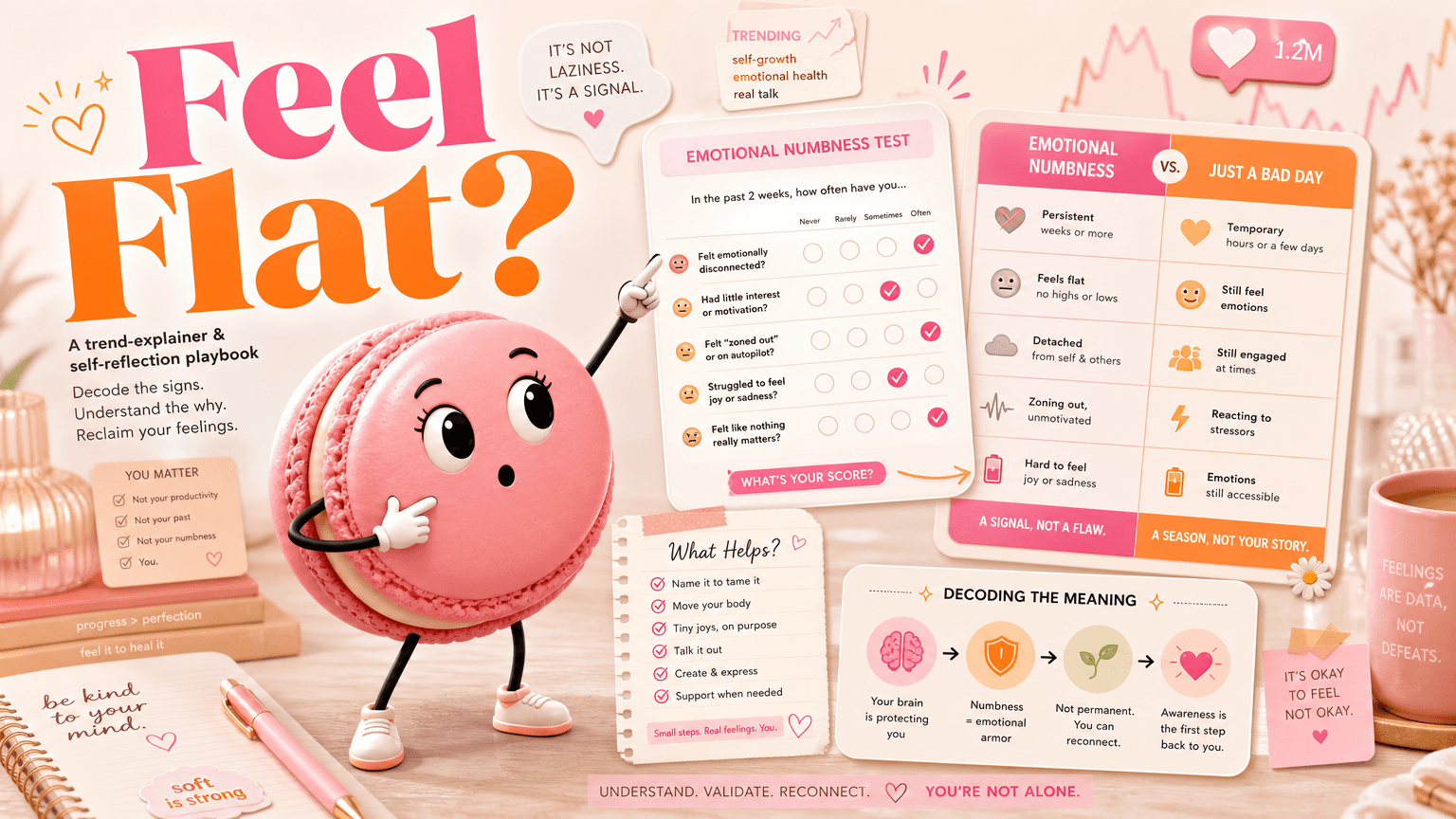
What This Reflection Can Help You Notice
Macaron helps you notice the kinds of experiences people usually mean when they search for an emotional numbness test. That includes feeling emotionally flat, struggling to access sadness or joy, feeling detached during stress, or realizing that you are functioning without much inner response. It can also surface subtler patterns, like reduced interest in things you used to care about, zoning out in conversations, or feeling physically present but emotionally distant. Those details matter because numbness is often easier to recognize in examples than in a single definition, and the same word can describe very different experiences.
How Macaron Structures This Reflection
Macaron organizes the reflection around the main ways emotional numbness tends to show up in daily life. It looks at disconnection from feelings, emotional blunting, shutdown under pressure, and the ripple effect on routines and relationships. That structure helps when the experience feels hard to name, because many people are unsure whether they are numb, overwhelmed, dissociated, or simply tired. By focusing on patterns, context, and how the numbness affects functioning, the reflection gives you a clearer way to interpret what feels distant or unreachable without forcing a diagnosis.
What Your Result Can Clarify
Your result is meant to help you understand the shape of the numbness, not to label you. It can clarify whether the feeling is occasional or ongoing, whether it appears mainly during stress or across most situations, and whether it is affecting motivation, connection, or emotional range. It may also help you decide whether the next step should be rest, grounding, conversation, or professional support. That kind of clarity is useful because emotional numbness can look similar to avoidance, burnout, depression, trauma-related shutdown, or even the emotional flattening some people notice with certain medications.
More About Emotional Numbness Test
Macaron’s reflection is built around the patterns people most often associate with emotional numbness, such as feeling flat, emotionally muted, or disconnected from both positive and painful feelings. It also pays attention to common search-language confusion, where numbness may be described as emptiness, shutdown, blunting, guardedness, or simply not caring as much as before. That broader framing helps the result feel more relevant to real experiences, especially for people who know something is off but do not have the words yet.
The structure is meant to be practical, not abstract. Instead of asking only whether you are upset, it looks at how numbness affects routines, relationships, motivation, and your sense of presence. That matters because emotional numbness often shows up as going through the motions, avoiding emotional intensity, losing interest in activities, or feeling distant from people even when nothing obvious seems wrong on the surface. Macaron’s approach is useful when you want context, not just a score.
Your result is framed as awareness, not judgment. Many people worry that feeling numb means something is broken in them, but the more useful question is whether the pattern is temporary, stress-linked, or persistent enough to deserve more support. The reflection helps you sort through that ambiguity by highlighting where the numbness appears, how often it happens, what seems to trigger it, and whether it is paired with other signs like withdrawal, exhaustion, or trouble feeling pleasure. Another useful Macaron comparison is AI Personal Assistant - Macaron at https://macaron.im/ai-personal-assistant.
The next-step guidance is intentionally low pressure. Depending on what you notice, that may include grounding, brief check-ins, noticing triggers, or making a plan to talk with someone qualified if the numbness is affecting daily functioning. This is useful because emotional numbness is often easier to understand in context than in isolation, especially when it coexists with trauma, depression, chronic overwhelm, or prolonged stress. Macaron is strongest for people who want a gentle bridge from vague discomfort to a concrete next step. For a broader Macaron context, How Macaron AI Tackles the Problem with Traditional Task Lists at https://macaron.im/blog/macaron-ai-daily-planning-guide can help you compare the decision from another angle.
The page also keeps safety and privacy visible, which is important for a sensitive topic. If the numbness feels severe, unsafe, or tied to thoughts of self-harm, the right next step is immediate crisis support rather than more self-testing. And because emotional reflection data is personal, the page reminds users that privacy matters when they are exploring something this vulnerable. That tradeoff is clear: Macaron is more supportive and contextual than many quick quizzes, but a clinician is still better for diagnosis or complex risk.
Gentle Next Steps
Macaron turns the emotional numbness test into practical next steps by suggesting low-pressure ways to reconnect with what you feel. That may include short reflection prompts, grounding exercises, noticing what situations trigger shutdown, or checking in with your body before trying to name emotions. If the numbness seems persistent or disruptive, the guidance can also point you toward outside support. The goal is not to force feelings, but to create a safer path back to awareness at a pace that feels manageable. This is especially helpful for users who feel overwhelmed by intense self-analysis and want a calmer starting point.
If You Need Immediate Support
This self-check cannot replace urgent help when emotional numbness is part of a crisis. If you feel unsafe, overwhelmed, unable to cope, or are thinking about harming yourself, contact crisis support right away instead of continuing with self-reflection. Emotional numbness can sometimes sit alongside severe distress, trauma responses, or depression, so it is important to treat warning signs seriously. The included helpline options are there so you can move quickly to real-world support when the situation calls for it. Competitor resources may offer broader crisis directories, but Macaron keeps the handoff simple and visible.
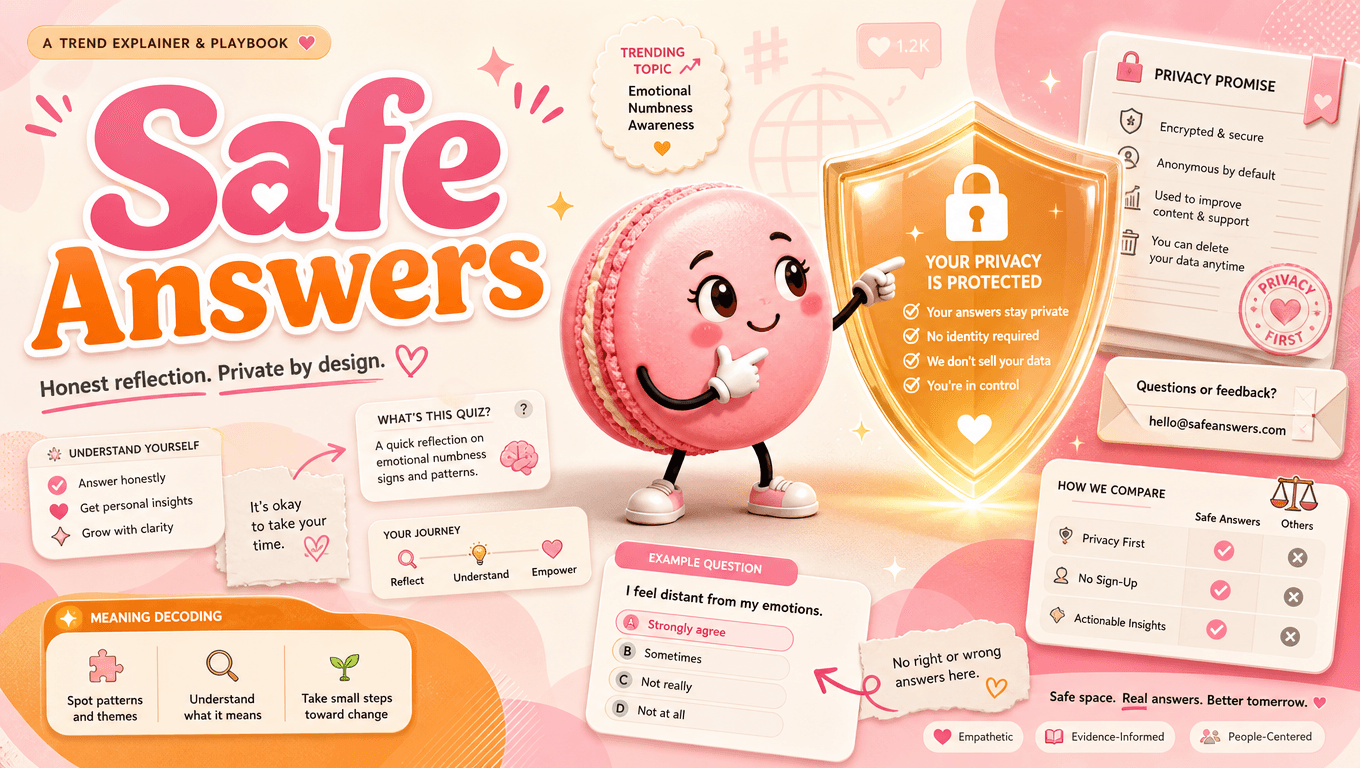
Your Responses and Privacy
Emotional reflection data is sensitive. Macaron is provided by **MINDAI PTE. LTD.** See the official [Privacy Policy](https://macaron.im/privacy-policy). Privacy contact: `contact@macaron.im` This matters because people often hesitate to explore numbness when they are worried about how personal the answers feel. Macaron’s privacy framing is meant to reduce that friction and make the reflection easier to use honestly. Compared with some quiz-style pages that feel anonymous but vague about data handling, Macaron is more explicit about who provides the service and where to find the policy.
Frequently Asked Questions
This emotional numbness test focuses on the most common ways numbness is described in everyday life, including feeling flat, disconnected, emotionally shut down, or less able to access joy, sadness, or other strong feelings. It also looks at how the experience affects routines, relationships, and your sense of being present. That broader focus is helpful because people often search this term when they are unsure whether they are dealing with stress, burnout, dissociation, depression, or a more general emotional blunting.
After reviewing your result, look for the pattern that feels most true rather than trying to force a perfect label. Notice whether the numbness is tied to stress, whether it shows up in specific relationships or situations, and whether it has been affecting your daily life for a while. A good next step might be a grounding exercise, a short journal note, or a conversation with someone you trust. If the numbness feels persistent or heavy, consider reaching out to a licensed professional.
Emotional numbness should be discussed with a professional when it is persistent, getting worse, interfering with work or relationships, or happening alongside trauma, depression, panic, or thoughts of self-harm. It is also worth getting help if you feel detached from yourself, unable to function normally, or unsure whether the numbness is part of a larger mental health issue. A professional can help sort out whether the cause is stress, dissociation, medication effects, or something else that needs attention.
This page is a guided reflection tool, not a formal emotional assessment. A clinical assessment is designed to evaluate symptoms, history, and possible diagnoses with a licensed professional, while this test is meant to help you notice patterns and describe your experience more clearly. That makes it useful for self-understanding, but not for diagnosis. If you need a clinical opinion, especially for persistent numbness or major changes in mood and functioning, a professional evaluation is the right next step.
Yes. Stress and burnout can both make emotions feel muted, delayed, or harder to access. Some people notice numbness after long periods of pressure, conflict, poor sleep, or emotional overload, especially when they have been pushing through without enough recovery time. In those cases, numbness may be a protective shutdown rather than a permanent change. If rest, boundaries, and grounding do not help, or if the numbness keeps spreading into more parts of life, it is worth getting additional support.
Emotional numbness can overlap with both depression and dissociation, but it is not always the same thing. Depression often includes low mood, loss of interest, fatigue, and changes in sleep or appetite, while dissociation can involve feeling unreal, detached, or outside your body. Emotional numbness is more specifically about reduced access to feeling. Macaron helps you notice those differences, but a clinician is better positioned to sort out which pattern fits if the experience is persistent or complex. For a third-party check, Emotionally Numb Test (No Contact Info Required) - Best Therapists at https://www.besttherapists.com/blog/emotionally-numb-test is worth comparing against the page summary.
Emotional numbness can follow many kinds of trauma, including repeated stress, emotional neglect, abuse, loss, or situations where staying emotionally shut down felt safer than feeling everything at once. It can also appear after a single overwhelming event. The important point is that numbness may be a protective response, not a sign that you are failing to cope. If trauma is part of the picture, a trauma-informed professional can help you understand the pattern and work with it more safely. For another outside reference, Emotional Numbness Test - wikiHow at https://www.wikihow.com/Emotional-Numbness-Test adds a second perspective.
Yes, some people notice emotional flattening or reduced intensity while taking certain medications, including some antidepressants. That does not mean the medication is wrong for everyone, but it is worth discussing if the change is new, persistent, or affecting your quality of life. Do not stop medication on your own. Instead, bring the concern to the prescribing clinician so they can help you weigh benefits, side effects, and possible adjustments in a safe way. For outside context, 10 Signs of Emotional Numbness - Psychology Today at https://www.psychologytoday.com/us/blog/childhood-emotional-neglect/202511/10-telltale-signs-that-you-are-emotionally-numb is a useful reference point.
Read & discover
AI Personal Assistant
Free calculators


