ENTJ In Love
ENTJ in love is best read as a lens for understanding how ambition, clarity, and commitment shape closeness, not as a fixed rulebook. Macaron helps you interpret the difference between healthy directness, pressure, and the kind of partnership that can actually hold long-term.
ENTJ In Love
This short self-reflection module helps you notice how ENTJ-style patterns may show up in love, especially around directness, loyalty, standards, and emotional pace. It is meant to support insight and conversation, not to decide whether a relationship is right or wrong.
This is a self-reflection tool, not a diagnosis or a clinical assessment.
Please answer every question before viewing your result.
This module is for reflection and relationship insight only. If your relationship involves fear, coercion, manipulation, or emotional harm, consider reaching out to a trusted person or a qualified professional for support.
What ENTJ In Love Can Help You Notice
ENTJ in love is most useful when you treat it as a way to notice patterns, not as a label that decides how a relationship will go. Search interest around this topic often centers on whether ENTJs are cold, intense, loyal, or hard to read, which suggests many people want a clearer picture of how affection is actually expressed. Macaron keeps the focus on reflection, so you can look at trust, standards, and emotional honesty without assuming every ENTJ behaves the same way.
A recurring theme in formal assessment contexts is that ENTJs often show care through action, planning, and follow-through rather than constant verbal reassurance. That can make them look straightforward and dependable to one partner, while another person may experience the same style as demanding or emotionally spare. This page helps you notice that tension more carefully, especially when love feels practical, goal-oriented, or tied to mutual growth.
Another common confusion is whether an ENTJ’s directness means they feel less deeply. The pattern in common user language suggests the opposite can be true: strong feelings may be present, but they are filtered through control, competence, and a preference for clarity over ambiguity. That means the real question is often not whether an ENTJ cares, but how they prefer to communicate care and what kind of response makes them feel respected. For a related Macaron page, see Best Personal AI Agent Platform for 2025 - Macaron at https://macaron.im/blog/best-ai-agent-platform-2025.
This lens can also help you separate healthy standards from relationship pressure. ENTJs are often described as wanting a partner who is logical, kind, emotionally mature, and willing to build something real, but high expectations can become difficult if they leave little room for softness, uncertainty, or different pacing. Looking at that tradeoff can make it easier to tell whether the relationship is collaborative or whether both people are quietly bracing themselves.
Use this guide to think through the recurring patterns that show up when an ENTJ is invested: loyalty, initiative, ambition, and a desire for a bond that can stand up in real life. The goal is not to decode every gesture as a fixed signal, but to help you read the relationship with more context. That is especially useful when love feels strong on paper yet still leaves questions about emotional access, timing, or long-term fit.
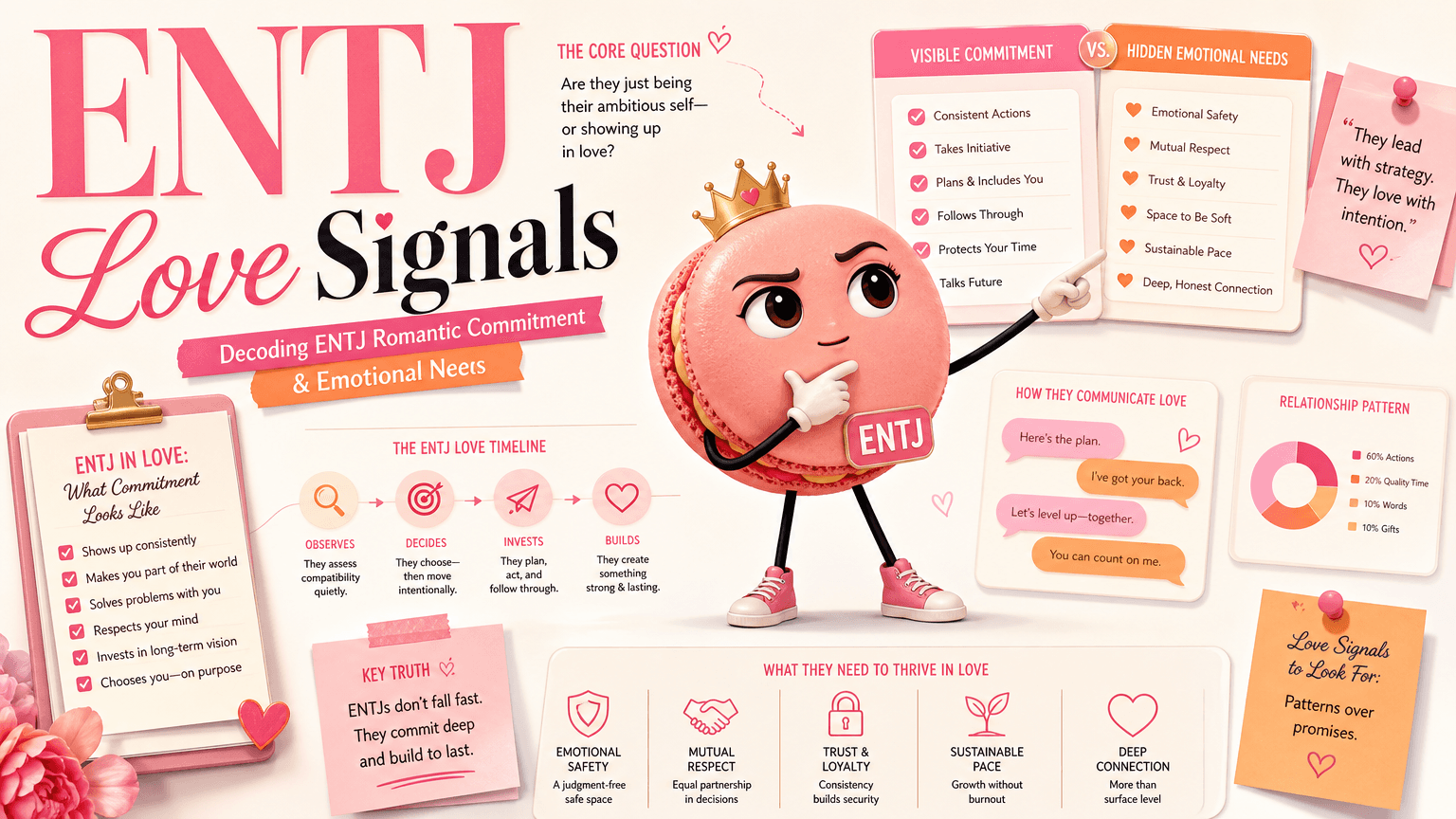
What ENTJ In Love Can Help You Notice
ENTJ in love can help you notice the difference between visible commitment and hidden emotional needs. Many people researching this topic are trying to understand whether an ENTJ’s seriousness means genuine attachment, and the answer usually depends on patterns over time. Look for consistency, initiative, and follow-through, but also pay attention to whether the relationship leaves room for mutual respect, emotional safety, and a pace that both people can sustain. This lens is especially helpful when affection is expressed through problem-solving, planning, or protecting the future rather than through constant verbal reassurance.
Where Love Can Feel Strong and Tense
This reflection can help you see why ENTJ relationships can feel both powerful and difficult to navigate. Strength often comes from decisiveness, loyalty, and a willingness to build something concrete, while tension can appear when directness is mistaken for emotional distance or when one partner feels evaluated instead of understood. The same traits that create momentum can also create friction if softness, timing, or vulnerability are missing. That makes this section useful for spotting when a relationship is moving with purpose and when it is becoming too sharp, fast, or one-sided to feel emotionally safe.
More About ENTJ In Love
People searching for ENTJ in love usually want more than a personality summary. They want to know what affection looks like in practice, how interest is shown, and why an ENTJ may seem confident in one moment and guarded in another. This section adds context around those patterns so you can interpret behavior more carefully instead of relying on stereotypes about being emotionless or overly controlling.
formal assessment patterns repeatedly point to action, competence, and consistency as major signals of care. An ENTJ may demonstrate love by making plans, solving problems, protecting the relationship’s direction, or investing energy in shared goals. That can feel deeply reassuring if you value reliability, but it can also create confusion if you are looking for softer cues like frequent reassurance, emotional disclosure, or spontaneous tenderness.
The strongest relationships for this type often seem to depend on mutual respect, intellectual engagement, and a partner who can meet directness without turning it into a power struggle. At the same time, common user discussions also show a recurring concern about emotional tension, especially when one person wants more warmth, slower pacing, or more visible vulnerability. This page helps you hold both sides at once so the relationship is not flattened into either praise or criticism. Another useful Macaron comparison is AI Personal Assistant - Macaron at https://macaron.im/ai-personal-assistant.
Another useful angle is the difference between standards and rigidity. ENTJs are often drawn to partners who are capable, self-aware, and willing to grow, but those preferences can become exhausting if every conversation starts to feel like evaluation. By naming that tradeoff, the page gives you a better way to ask whether the relationship is motivating both people or whether it is quietly turning affection into performance. For a broader Macaron context, AI Story App - Macaron at https://macaron.im/ai-story-app can help you compare the decision from another angle.
Macaron’s value here is practical interpretation. Instead of treating ENTJ in love as a personality myth, the guide helps you reflect on how trust is built, how conflict is handled, and what kind of emotional honesty actually works for the two people involved. That makes the page more useful for readers who are trying to understand a real relationship, not just a type description.
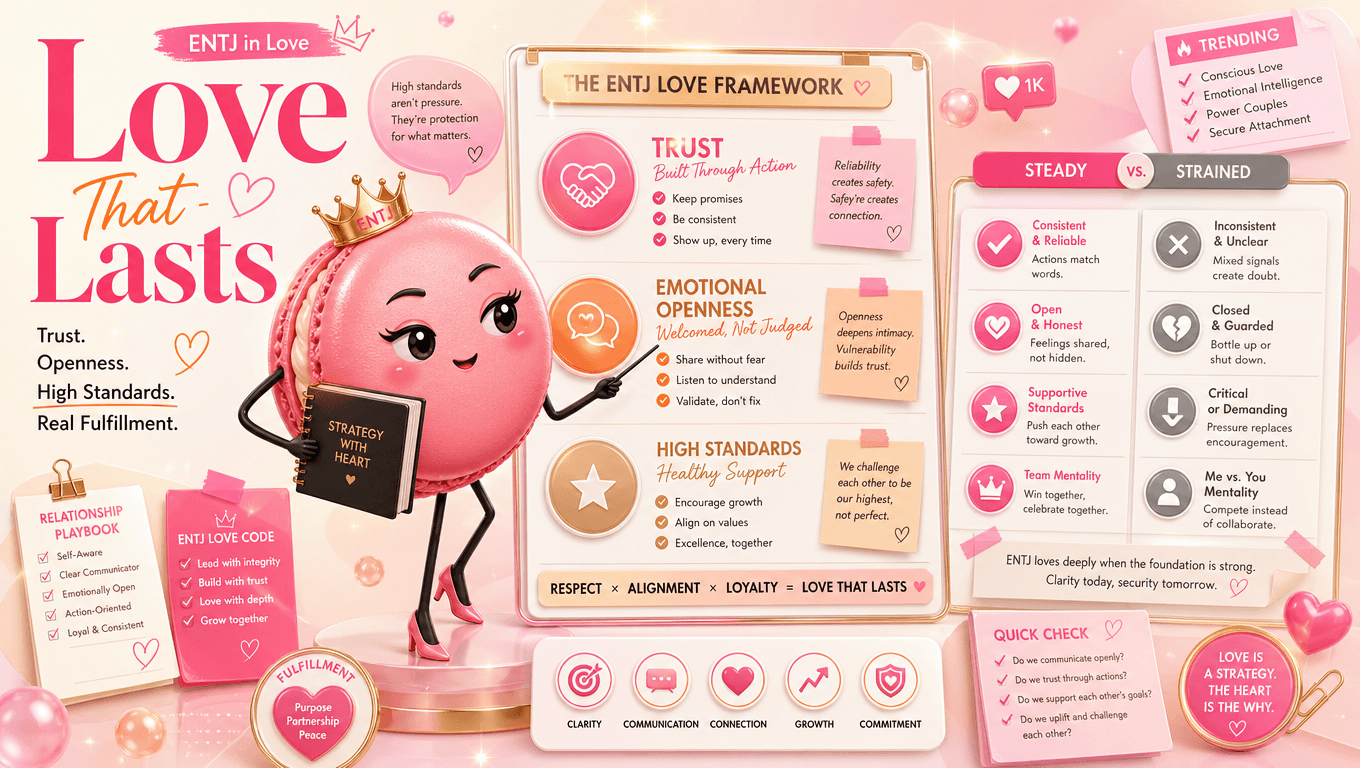
What Helps Love Feel More Fulfilling
Macaron helps you examine what makes an ENTJ relationship feel steady instead of strained. For many readers, the key questions are whether trust is built through action, whether emotional openness is welcomed rather than judged, and whether high standards are helping the bond or narrowing it. Fulfillment often depends on whether both people can be honest without turning every disagreement into a test of competence. This section is meant to clarify the difference between a relationship that challenges you in a healthy way and one that leaves you feeling like you must constantly prove yourself.
Build a Powerful Partnership
Macaron turns ENTJ in love insight into practical support by helping you think through the everyday mechanics of the relationship. That includes how to talk about expectations, how to handle conflict without escalating into control, and how to name needs clearly enough that they can actually be met. It also helps with long-term fit, which matters because many ENTJ-centered relationships are not just about chemistry but about whether two people can keep building together. The goal is to make partnership feel collaborative, not like a competition over who is more rational or more committed.
Frequently Asked Questions
ENTJ in love can help you reflect on how trust is built, how standards are communicated, and whether emotional honesty is creating closeness or pressure. It is especially useful if you are trying to understand why someone may seem highly committed through actions but less expressive in words. The goal is to notice patterns that affect partnership quality, such as follow-through, directness, and the ability to handle conflict without turning it into a power struggle.
That tension often appears when drive, loyalty, and ambition are strong, but softness, timing, or emotional clarity are not keeping pace. An ENTJ may show care by taking charge or solving problems, while the other person may want more reassurance, patience, or visible vulnerability. When both people interpret those differences as rejection or criticism, the relationship can feel intense even if the underlying commitment is real.
Yes. The same themes can show up in close friendships, family dynamics, and work relationships where trust, directness, and shared goals matter. ENTJ-style patterns often become visible anywhere someone is expected to lead, coordinate, or make decisions under pressure. That is why this lens can be useful beyond dating, especially when you are trying to understand how a person handles responsibility, feedback, and emotional boundaries.
Macaron helps you slow down and separate useful standards from expectations that are creating distance. It can guide you to ask whether a demand is protecting the relationship or making it harder to feel safe and connected. That matters when both people care deeply but keep missing each other’s signals. By making the pattern easier to name, Macaron helps you decide what needs to be clarified, softened, or renegotiated.
ENTJs often show love through actions first: planning, solving problems, protecting shared goals, and following through on commitments. Words can matter too, but they may not be the primary channel. If you rely heavily on verbal reassurance, the relationship can feel under-expressed even when the care is real. The useful question is whether the actions are consistent, considerate, and responsive to your needs, not just efficient or impressive.
A good fit is often someone who is emotionally mature, self-aware, and comfortable with direct communication. ENTJs usually do better with partners who can handle ambition without feeling threatened by it, and who can respond to feedback without turning every conversation into a contest. That said, a strong fit is not only about competence; it also requires warmth, patience, and enough flexibility to keep the relationship humane rather than purely goal-driven. For a third-party check, 6 Things ENTJs Do in Their Relationships That Are Unexpectedly ... at https://www.truity.com/blog/6-things-entjs-do-their-relationships-are-unexpectedly-sweet is worth comparing against the page summary.
The main tradeoff is that clarity and momentum can come with pressure. Many people appreciate the reliability, decisiveness, and long-term thinking, but may struggle if the relationship starts to feel like a project with constant evaluation. ENTJs can be excellent builders of partnership, yet they may need reminders that emotional safety is not the same as efficiency. Competitor type guides may describe this more simply, but Macaron is more useful when you need to judge whether the pressure is constructive or draining. For another outside reference, Understanding the ENTJ in love - Personality Central at https://personality-central.com/personality-types/entj-in-love/ adds a second perspective.
They may be more naturally comfortable with commitment, structure, and responsibility than with open-ended emotional vulnerability. That does not mean softness is absent; it may just be expressed in more selective or practical ways. If you want a partner who is openly tender all the time, that difference can matter. If you value steadiness and shared purpose, the relationship may feel strong. The key is whether both people can name what they need without expecting the other to become a different type. For outside context, ENTJ Personality - Romantic Relationships - 16Personalities at https://www.16personalities.com/entj-relationships-dating is a useful reference point.
Read & discover
AI Personal Assistant
Free calculators


