Fastic Reviews
Fastic's 246K+ App Store reviews show a strong 4.8/5 rating, with users praising its motivational design but some frustrated by upsells. We break down the patterns behind the numbers.
Common Positive Themes in Public Reviews
Fastic’s review profile is strongest on iOS, where a 4.8/5 average across 246,000+ ratings suggests the app solves a real behavior problem for many intermittent fasters. The most consistent praise is not about advanced analytics, but about making routine easier to stick with. That matters for users who need reminders, structure, and visible progress more than a clinical dashboard.
A recurring theme in positive reviews is motivation through design. Users mention the Frosties badge system, streak-style feedback, and progress graphs as reasons they keep opening the app. Compared with plain fasting timers, Fastic gives people a sense of momentum. That makes it especially appealing to beginners, inconsistent fasters, and anyone who responds well to small rewards and visual reinforcement.
Many reviewers also like that Fastic bundles several habits into one place. Fasting windows, water intake, sleep, steps, and sometimes calorie-related tools are all part of the appeal for users who do not want to juggle multiple apps. This all-in-one approach is convenient, though it can feel crowded for people who only want a timer and nothing else. For a related Macaron page, see How Macaron AI Tackles the Problem with Traditional Task Lists at https://macaron.im/blog/macaron-ai-daily-planning-guide.
The strongest success stories tend to come from users who keep things simple. Reddit comments often describe long-term use of the free version, with some people crediting the app for helping them reduce snacking or stay consistent over months. Those reviews suggest Fastic can be effective as a behavioral support tool, even when users do not rely on premium features.
The main tradeoff is that Fastic’s strengths are psychological rather than technical. It is built to encourage adherence, not to satisfy users who want precise fasting science or a minimalist workflow. That makes it a better fit for lifestyle-oriented users than for data-first fasters. Competitors like Zero or Life can be better for biometric depth, while Macaron is stronger if fasting is only one part of a broader nutrition routine.
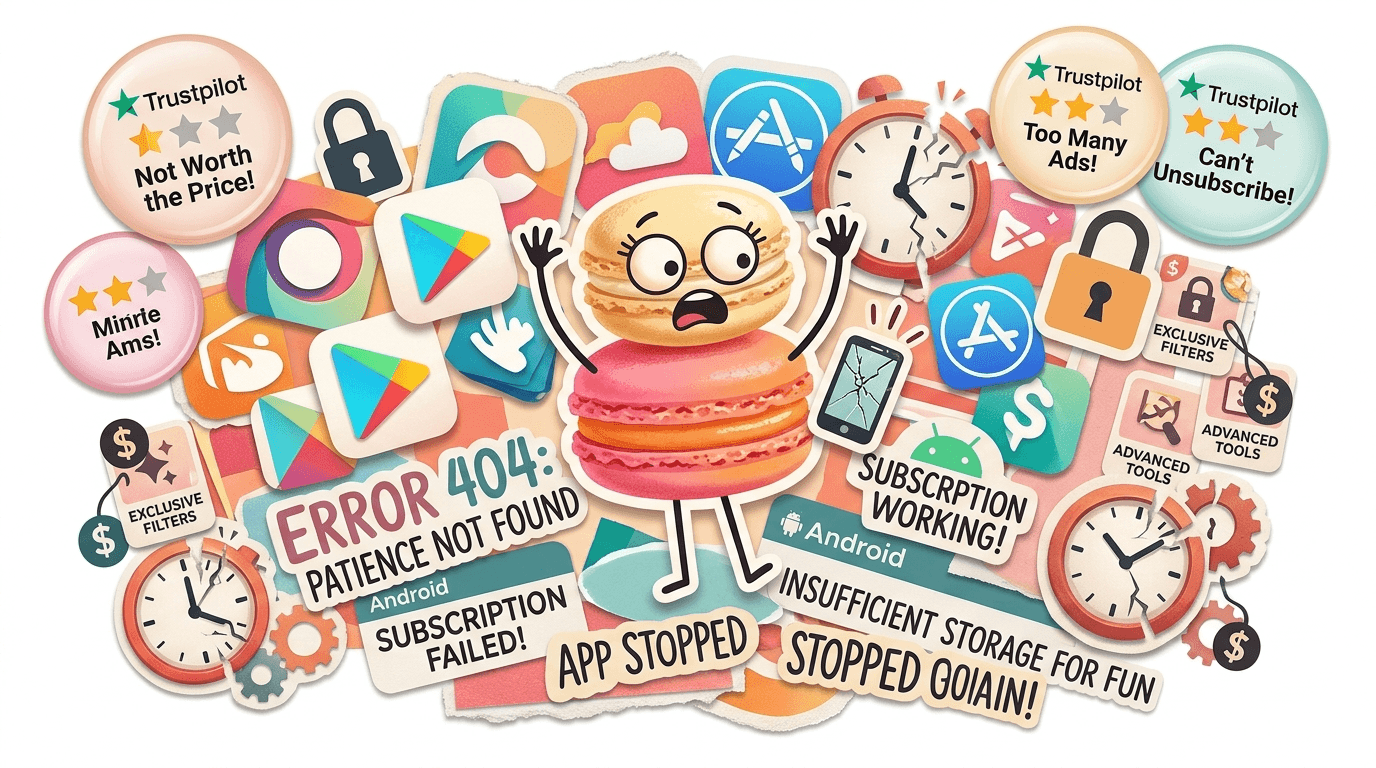
Common Positive Themes in Public Reviews
Users consistently praise Fastic for making fasting feel easier to maintain, not just easier to start. The Frosties reward system, streak cues, and progress graphs are mentioned as practical motivators that help people avoid breaking a fast impulsively. Reviewers also like the convenience of tracking water, sleep, steps, and fasting windows in one app. For beginners and habit-driven users, that combination can be more useful than a bare-bones timer. The limitation is that people who want deeper nutrition coaching or more advanced health data may eventually outgrow the app.
Common Critical Themes in Public Reviews
The most common complaints center on subscription pressure and unclear paywall boundaries. Android and third-party reviews frequently mention repeated upgrade prompts, confusion about what is free, and frustration when features appear to move behind payment. Some users also report bugs, especially around fasting duration displays and step tracking, which is a bigger problem for an app that relies on trust in the numbers. Fastic’s broader lifestyle positioning can also disappoint users who expected a simpler fasting timer. In that case, Easy Fast or Fastient may feel more straightforward, while Macaron is better if users want fasting inside a wider planning system.
More About Fastic Reviews
Fastic’s appeal is rooted in habit design. Reviews repeatedly show that users respond to the app’s visual feedback, reminders, and reward mechanics because they reduce the friction of staying consistent. That is a meaningful advantage for people who struggle with self-directed fasting plans. The downside is that the app’s motivational style can feel busy or overly guided for users who already know their routine.
The free tier is a major reason Fastic gets positive word of mouth. Many reviewers say the basic fasting timer, water log, and habit tracking are enough for everyday use, especially if the goal is consistency rather than optimization. This makes Fastic accessible to beginners and budget-conscious users. The tradeoff is that premium features are promoted often enough that some free users feel the app is constantly steering them toward an upgrade.
Platform differences matter. iOS reviews are notably stronger than Android reviews, and that gap is usually explained by stability complaints rather than feature philosophy. Android users are more likely to mention display errors, tracking glitches, and payment friction. For shoppers comparing apps, that means the same product can feel polished on one platform and frustrating on another, which is important if reliability is a priority. Another useful Macaron comparison is When Nano Banana Meets Macaron: Next‑Level AI Image Editing ... at https://macaron.im/blog/macaron-ai-essential-personal-assistant-features.
Fastic’s premium features, including AI meal scanning and more structured nutrition support, are often described as useful but not essential. Reviewers who like them tend to want convenience and quick logging, not detailed diet analysis. Users who expect the app to replace a dedicated nutrition tracker are more likely to be underwhelmed. Dedicated food apps still do better for macro precision, ingredient-level detail, and deeper coaching. For a broader Macaron context, Virtual Assistant AI vs. Human VA: Cost, Quality, and Privacy at https://macaron.im/blog/macaron-ai-vs-human-virtual-assistant can help you compare the decision from another angle.
When users leave Fastic, they usually split into three groups: minimalists who want a simple timer, data-oriented fasters who want cleaner metrics, and broader health users who want fasting inside a larger wellness workflow. That is where Macaron can be a stronger fit, because it connects fasting with meal planning instead of treating fasting as the whole product. The tradeoff is less fasting-specific gamification than Fastic offers.
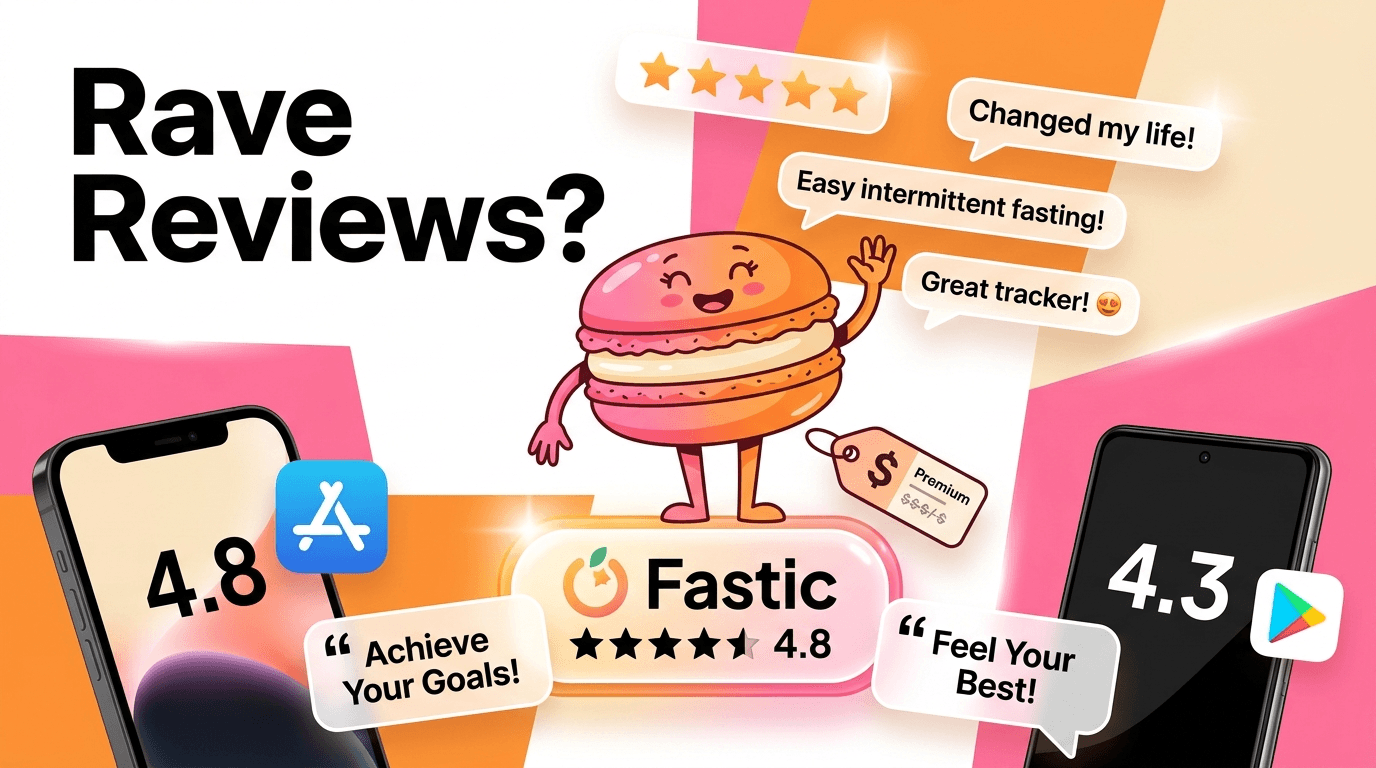
Fastic's Public App Store Rating
The iOS rating is a strong signal that Fastic works well for a large group of users, but the number needs context. High ratings are concentrated among people who value encouragement, visual progress, and convenience more than technical depth. Google Play feedback is less generous, with more complaints about bugs and payment friction. That split suggests the app’s core idea is popular, while execution quality varies by platform. For users comparing options, Fastic is strongest when motivation matters more than precision, but apps like Zero or Life can be better for users who want a cleaner, more data-heavy fasting experience.
What Some Users May Want Instead
Users who outgrow Fastic usually do so for one of three reasons: they want less upsell pressure, more precise fasting data, or a broader health workflow. Easy Fast and Fastient are common alternatives for people who only need a reliable timer without distractions. Zero and Life are better for users who care about advanced fasting tracking and cleaner interfaces. Macaron is a stronger choice for people who want fasting to sit alongside AI meal planning, nutrition guidance, and day-to-day habit support. The tradeoff is that Macaron is less specialized as a fasting-first app, but that can be an advantage for users managing multiple goals at once.
Frequently Asked Questions
Mostly yes, but the quality of feedback depends on platform and user expectations. iOS reviews are especially strong, with many users praising the app’s motivation tools and all-in-one tracking. Android and third-party reviews are more mixed because of bugs, subscription complaints, and confusion about the free tier. If you want encouragement and habit support, the reviews are favorable. If you want a minimalist or highly technical fasting app, the feedback is less convincing.
The most praised features are the Frosties reward system, progress graphs, and the sense of momentum they create. Users also like having fasting, water, sleep, and step tracking in one place, especially when they do not want to manage multiple apps. For beginners, these features make fasting feel more approachable. For experienced fasters, the appeal is usually convenience and motivation rather than advanced analytics or medical-style precision.
The biggest complaints are aggressive upgrade prompts, unclear subscription boundaries, and occasional technical issues, especially on Android. Some users also feel the app’s lifestyle branding overpromises compared with what the free version actually includes. When premium features are advertised heavily inside the app, free users can feel pushed rather than supported. That does not affect everyone equally, but it is a recurring theme across critical reviews.
Fastic is usually better for beginners and casual users who want structure, reminders, and visible progress. Advanced fasters often want cleaner data, fewer prompts, and more control over how the app behaves. Fastic can still work for experienced users, but its design is more coaching-oriented than analytical. If you already know your fasting routine and want a simple log, a lighter app may feel better.
Android reviews are more mixed than iOS reviews, mainly because users report more glitches and tracking inconsistencies. Some people use it without issue, but complaints about fasting duration displays and step tracking come up often enough to matter. If Android reliability is important to you, it is worth comparing alternatives before committing. On iPhone, the overall review picture is noticeably stronger.
For many users, yes. Reviewers often say the free version covers the essentials: fasting windows, basic reminders, and simple habit tracking. That is enough if your goal is consistency rather than deep nutrition analysis. The downside is that premium features are promoted frequently, so the free experience can feel crowded. If you want a quieter app with fewer upgrade prompts, a simpler timer may be a better fit. For a third-party check, Fastic app—-worth it or not!? : r/intermittentfasting - Reddit at https://www.reddit.com/r/intermittentfasting/comments/vble3t/fastic_appworth_it_or_not/ is worth comparing against the page summary.
Macaron is a softer alternative because it treats fasting as one part of a broader nutrition and habit workflow instead of the whole product. That makes it useful for people who want meal planning and daily structure without a fasting-only mindset. If you want pure fasting with minimal friction, Easy Fast is simpler. If you want more advanced fasting data, Zero or Life may be better choices. For another outside reference, Fastic Pricing 2026: Free vs Plus, Trial Rules, and Refund Options at https://nutriscan.app/blog/posts/fastic-pricing-2026-free-vs-plus-trial-refund-e13d2834f0 adds a second perspective.
Fastic is not ideal for users who dislike gamification, want a minimalist interface, or need highly precise fasting and nutrition data. It can also frustrate people who are sensitive to upsells or who expect every feature to be included without friction. In those cases, a simpler timer or a more data-focused app is usually a better match. Fastic works best when motivation is the main problem to solve.com is a useful reference point.com is a useful reference point.com is a useful reference point.com is a useful reference point.com is a useful reference point. For outside context, Read Customer Service Reviews of fastic.com - Trustpilot at https://www.trustpilot.com/review/fastic.com is a useful reference point.
Read & discover
AI Personal Assistant
Free calculators


