Fatsecret App
FatSecret remains one of the most trusted free calorie counters, offering reliable tracking without aggressive paywalls. But its classic approach now faces competition from AI tools that learn your habits.
What FatSecret Tracks and How
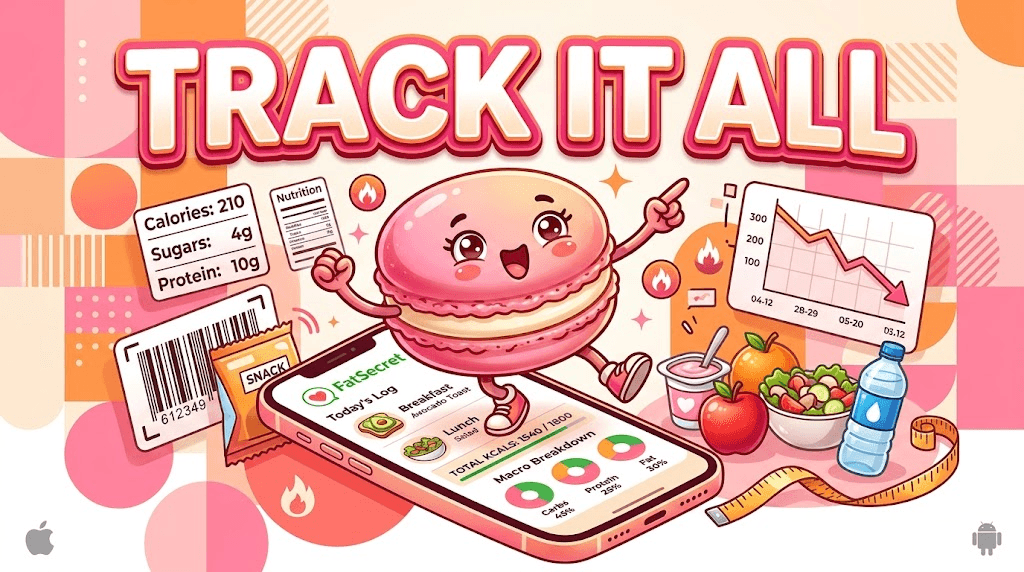
FatSecret has stayed relevant because it solves the core problem of calorie tracking without making users pay for basics. You can log foods, scan barcodes, review macros, and monitor weight trends in one place, which is enough for people who want a straightforward system. Its appeal is not novelty; it is predictability, low friction, and a free tier that still feels usable rather than restricted.
The app works best for users who already know what they want to track and prefer to do it manually. That includes people following a calorie target, athletes watching macros, and dieters who want a simple record of intake versus output. FatSecret is less about coaching and more about accountability, which makes it easier to trust when you want the numbers without a lot of interpretation.
A major reason for its longevity is the food database, which is broad enough to cover common packaged foods, restaurant meals, and many international items. The barcode scanner is one of the app’s most practical features because it speeds up logging for packaged products. The tradeoff is that some entries are user-generated, so accuracy can vary and occasional verification is still part of the workflow. For a related Macaron page, see Macaron App Download (iOS & Android): Official, Safe, and Fast Install at https://macaron.im/blog/macaron-app-download.
FatSecret also gives users a basic social layer through community forums and shared recipes. That can be useful if you want encouragement, meal ideas, or a place to compare notes with other people trying to lose weight. It is not the same as personalized coaching, though. The support is there if you seek it, but the app does not push you through the process with much automation.
In 2025, the main question is whether manual tracking still fits how people want to manage nutrition. FatSecret remains strong for users who value control and transparency, but AI tools now reduce typing, recognize meals from photos, and adapt suggestions over time. That makes FatSecret feel dependable and familiar, while newer apps feel more responsive for users who want less daily effort.
What FatSecret Tracks and How
FatSecret covers the essentials most calorie counters are built around: food logging, quick-add entries, macro breakdowns, exercise tracking, and weight trend charts. It is especially useful for users who want a single place to record meals and see how intake changes over time. The barcode scanner is practical for packaged foods, and the photo-based entry options can help with mixed or homemade meals, though they are not as advanced as AI-first tools. Its strength is consistency, not adaptation, so it works best when you want a stable system rather than a smart assistant that learns your habits.
FatSecret's Community Features
FatSecret adds a community layer that many calorie trackers skip, and that matters for users who stay motivated through shared accountability. People post recipes, ask for help with plateaus, and exchange practical tips about logging and meal planning. The Professional option also lets dietitians follow client progress, which can be useful in clinical or guided settings. The limitation is that this support depends on active participation, so users who want passive nudges, automatic check-ins, or personalized feedback may find AI-based apps more efficient.
More About Fatsecret App
FatSecret’s food database is one of its biggest strengths because it reduces the frustration of searching for everyday items. It includes packaged foods, restaurant meals, and many regional entries, which helps travelers and users with less common diets. The downside is that database breadth does not always equal perfect accuracy, especially when entries are user-submitted. For people who care about precision, the app works best when they verify unfamiliar items instead of assuming every listing is exact.
The reporting tools go beyond a simple calorie total and can show macros and a wider nutrient breakdown. That is useful for users who want to watch protein, fiber, iron, or other micronutrients instead of only total energy intake. The tradeoff is that these reports are more informative than actionable. If you already understand nutrition, they are valuable; if you want the app to tell you what to change next, AI-driven tools are usually better at translating data into guidance.
FatSecret also connects with health and fitness ecosystems, so steps, workouts, and weight data can live in the same workflow. That makes it easier to keep a fuller picture of progress without manually entering every activity. Still, the integrations are mostly about syncing information rather than changing recommendations in real time. Competitor apps with stronger AI can use activity patterns to adjust goals or suggestions automatically, which is a meaningful advantage for users who want less manual review. Another useful Macaron comparison is AI Meal Planner - Macaron AI at https://macaron.im/ai-meal-planner.
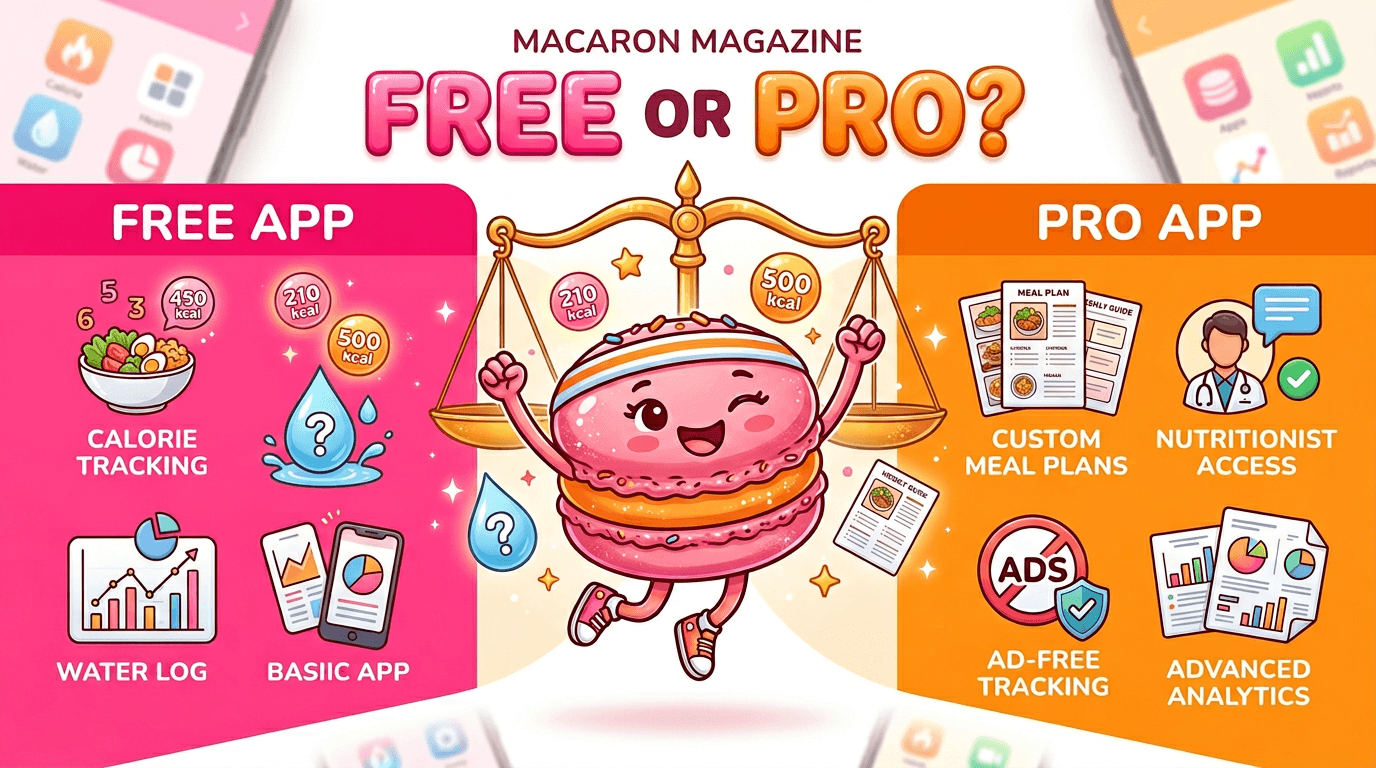
The premium tier exists, but it is not the main reason people choose FatSecret. Core logging remains free, which is the app’s strongest competitive advantage in a market where many alternatives lock barcode scanning, reports, or history behind subscriptions. Premium adds meal planning and water tracking, but those features feel more functional than personalized. Users who only need a reliable tracker may never need to upgrade, while users looking for adaptive coaching may still feel under-served. For a broader Macaron context, AI Personal Assistant - Macaron AI at https://macaron.im/ai-personal-assistant can help you compare the decision from another angle.
FatSecret’s overall design favors clarity over intelligence. That makes it appealing to people who want to stay in control of their own plan and avoid apps that over-interpret their behavior. The tradeoff is that it asks more from the user: you still need to log meals, review trends, and decide what to change. For disciplined trackers, that is acceptable. For users who want the app to do more of the thinking, Macaron and similar tools are easier to live with.
FatSecret's Free vs Pro
FatSecret’s free tier is the main reason many people keep using it, because it includes the features that matter most: food logging, barcode scanning, macro tracking, and basic reports. That is a stronger free offering than many competitors provide. Premium adds meal plans and water tracking, but those upgrades are relatively modest and do not fundamentally change the experience. The best fit for Pro is someone who wants structured meal templates or professional sharing, while casual users often get enough value from the free version alone.
Why AI Tracking Feels Different
AI nutrition tools like Macaron reduce the amount of manual work by learning recurring meals, interpreting photos, and suggesting next steps based on your goals. That changes the experience from record-keeping to guided decision-making. Instead of searching and logging everything from scratch, users can move faster and get contextual help when they need it. The tradeoff is less rigid control, which some experienced trackers prefer. FatSecret is still better for people who want a simple, transparent log; AI tools are better for users who want the app to do more of the heavy lifting.
Frequently Asked Questions
Yes, especially if you want a free, straightforward calorie tracker. FatSecret is still strong for manual logging, barcode scanning, and basic progress tracking, and it remains easier to justify than many apps that hide core features behind paywalls. It is less compelling if you want adaptive coaching, automatic meal recognition, or personalized suggestions. In that case, AI-based alternatives are more efficient, but they also give up some of FatSecret’s simplicity and control.
The core app is free, including food logging, barcode scanning, and basic reports. That is one of FatSecret’s biggest advantages because many competitors now charge for features that used to be standard. There is a premium tier with meal plans and water tracking, but most casual users can ignore it. The free version is the main product for many people, which is why the app still has a loyal audience.
For users who want a free tracker, FatSecret is often the better value because it does not push as many core features behind a subscription. MyFitnessPal can feel more polished and offers broader integrations, but the free experience is more limited. FatSecret is usually simpler for pure calorie counting and macro logging. MyFitnessPal may still be better if you care more about ecosystem support, premium features, or a more established upgrade path.
People switch to Macaron when they want less manual logging and more guidance. Macaron can learn common meals, help interpret photos, and offer contextual suggestions instead of just storing numbers. That makes it more useful for users who want nutrition tracking to feel lighter and more adaptive. The tradeoff is that it is less rigid than a classic tracker, so users who prefer total control may still like FatSecret better.
FatSecret is best for calorie counting, macro tracking, and basic weight management. It works well for users who already know their goals and want a dependable place to record meals and activity. It is also useful for people who want a free app with a large food database and a barcode scanner. If you need coaching, meal automation, or habit-based recommendations, FatSecret is less complete than newer AI-driven tools.
It is broad and practical, but not perfect. Many common packaged foods and restaurant items are easy to find, which makes daily logging faster. However, some entries are user-generated, so accuracy can vary and occasional double-checking is smart. That is true of most large nutrition databases. FatSecret’s advantage is coverage and convenience; the tradeoff is that users who want highly curated data may need to verify more often. For a third-party check, TUTORIAL: Fat Secret Calorie Counting App (a super basic guide) at https://www.runsforcookies.com/2021/08/fat-secret-app-tutorial.html is worth comparing against the page summary.
Yes, but it depends on how much guidance you want. Beginners who want a simple calorie counter can do well with FatSecret because the app is easy to understand and the free version is usable from day one. Beginners who need more structure may find it too manual, since it does not coach you through decisions very much. In that case, an AI app can be easier to follow because it offers more direction and fewer steps. For another outside reference, FatSecret and FatSecret Professional - MATRC at https://matrc.org/innovation_exchange/fatsecret-and-fatsecret-professional/ adds a second perspective.
The main tradeoff is control versus convenience. FatSecret gives you a stable, transparent tracking system with strong free features, but it expects you to do the work of logging and interpreting the data. That is great for disciplined users who want accuracy and simplicity. It is less ideal for people who want the app to learn their habits, reduce typing, or suggest changes automatically. Competitor apps are better at personalization, while FatSecret is better at straightforward tracking.com/ is a useful reference point.com/ is a useful reference point.com/ is a useful reference point.com/ is a useful reference point.com/ is a useful reference point. For outside context, Reach Your Weight Loss Goals with fatsecret at https://www.fatsecret.com/ is a useful reference point.
Read & discover
AI Personal Assistant
Free calculators


