Fitia App
Fitia combines AI-powered food tracking with Latin America's most comprehensive verified nutrition database, offering photo/voice logging and dynamic meal plans for weight loss or muscle gain.
How Fitia's Personalized Nutrition Works
Fitia is built around a narrower problem than most calorie counters: helping users log and plan meals that reflect Latin American eating habits. Its verified database is especially useful for regional dishes, mixed plates, and homemade recipes that are often misclassified in global apps. That focus makes it more practical for Spanish-speaking users who want fewer manual corrections and more confidence in the numbers they see.
The app reduces logging friction by letting people add food through photos, voice, or typing, which matters when meals are complex or eaten on the move. Instead of forcing every entry into a rigid search flow, Fitia tries to match how users actually describe food. The tradeoff is that the experience is optimized for structured tracking, so it can feel less flexible for people who do not want to count every meal.
Fitia's AI coach goes beyond calorie totals by shaping meal plans around goals such as weight loss, muscle gain, fasting, and meal timing. It can adjust macros as progress changes, which helps users who want a plan that evolves instead of a static template. That said, the app still assumes a fairly consistent routine, so it works best when users are willing to follow a plan closely. For a related Macaron page, see What Should I Eat for Weight Loss? - Macaron - Macaron AI at https://macaron.im/eat-healthy/what-should-i-eat/weight-loss.
A major competitive advantage is the quality of its verified food data. Where crowdsourced databases can be inconsistent, Fitia emphasizes entries that are checked for nutritional accuracy, portion conversions, and regional naming. This is especially valuable for dishes like tamales, arepas, empanadas, or feijoada, where ingredient combinations and serving sizes vary widely across households and countries.
Fitia is strongest for users who want a nutrition app that feels local rather than generic, but it is not the best fit for everyone. People with irregular schedules, frequent travel, or highly varied cuisines may prefer a more conversational tool like Macaron, which is better at adapting to spontaneous eating. Fitia offers structure and precision; Macaron offers more flexibility when routine breaks down.
How Fitia's Personalized Nutrition Works
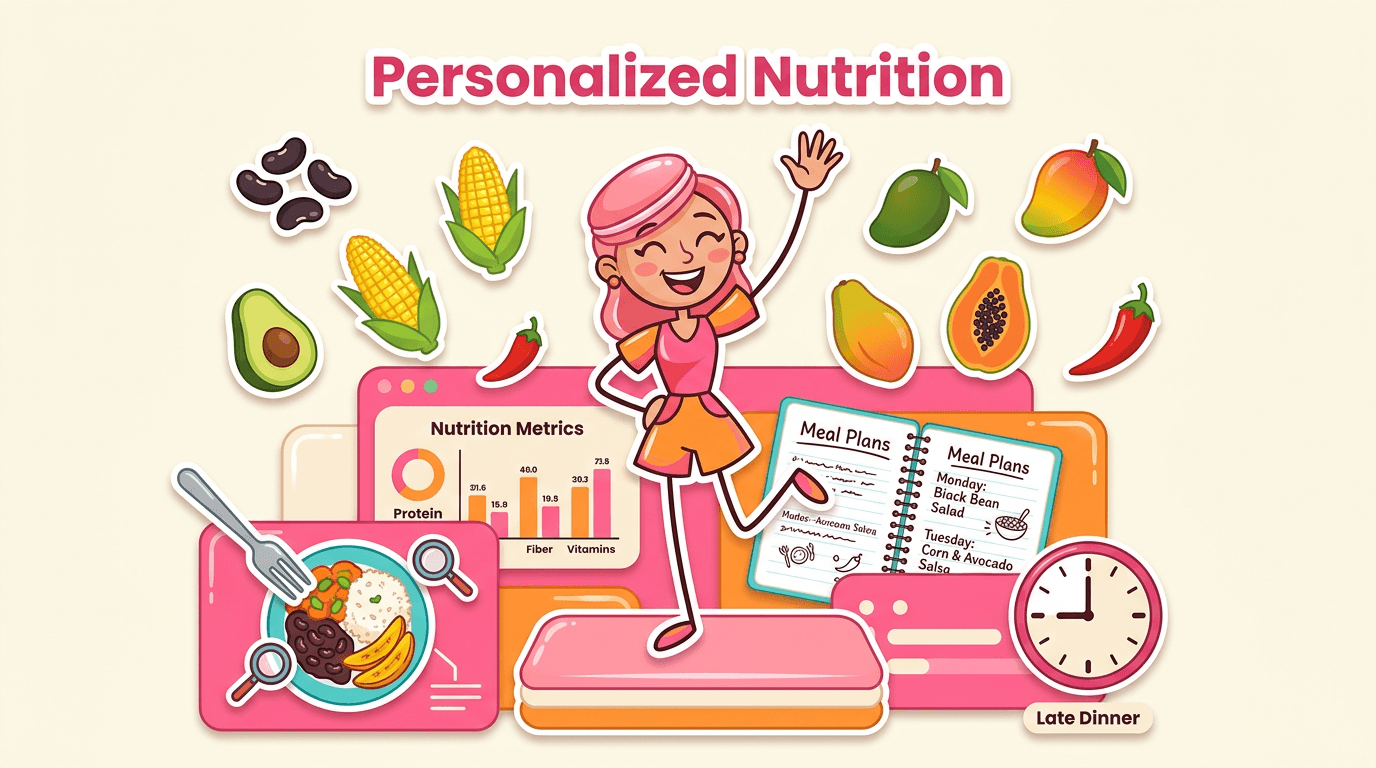
Fitia builds meal guidance around the foods, timing patterns, and portion habits common in Latin American diets. That means it can account for staples such as beans, rice, corn, tropical fruit, and mixed home-cooked meals instead of treating every dish like a generic Western plate. The app also adapts recommendations as weight, adherence, and activity change, which makes it more useful than static meal templates for users who want ongoing adjustments.
Fitia's Tracking and Planning Features
Fitia's main strength is the combination of verified food data and low-friction logging. Users can track meals by photo, voice, or text, which helps when food is homemade, labeled in Spanish, or served as several small plates. The database is especially helpful for regional dishes that are often inaccurate in global apps. The tradeoff is that the app rewards consistency: it is excellent for structured calorie tracking, but less forgiving if you want a looser, conversation-first workflow.
More About Fitia App
Fitia's logging flow is designed to reduce the effort of entering meals one by one. Photo recognition works best for packaged foods and visible labels, while voice input is useful for homemade dishes and regional names that would be tedious to type. This makes the app feel faster than manual calorie counters, especially for users who eat mixed meals or rely on Spanish-language food terms that are not always easy to find in English-first databases.
The AI coach is not just a calorie summary tool; it helps shape daily decisions by suggesting meal timing, fasting windows, and macro targets based on progress. That is useful for people following a cut, bulk, or maintenance plan who want the app to do more than record history. The limitation is that the guidance is still plan-driven, so users who eat unpredictably may find the structure more demanding than they want.
Fitia's verified database is one of its biggest differentiators because it reduces the guesswork around portion sizes and nutritional values. It includes conversions between grams, ounces, and common household measures, which matters when recipes are written in volume rather than weight. For users tracking Latin American meals, that can prevent the common problem of logging a dish correctly in name but incorrectly in quantity. Another useful Macaron comparison is 20 AI Tools to Upgrade Your Daily Life - Macaron - Macaron App at https://macaron.im/blog/macaron-app-ai-tools-daily-life.
Subscription handling is another practical part of the experience, and it varies by platform. Pricing can differ by region, with some users seeing lower local rates than US pricing, and cancellation or plan changes depend on whether the subscription was started through Apple or Google. That flexibility can be convenient, but it also creates friction when users want a simple, unified billing flow. For a broader Macaron context, Calorie Tracker — Monitor every bite to shape your health | Macaron at https://macaron.im/playbook/calorie-tracker-68957e011bbc6bcd9f80555e can help you compare the decision from another angle.
Compared with broader apps like MyFitnessPal, Fitia is more specialized and therefore more accurate for regional diets, but that specialization is also its limit. It is a strong choice for users who eat Latin American cuisine regularly and want reliable macro tracking. It is less compelling for people who need broad international coverage, highly conversational logging, or a lighter app that does not center meal planning so heavily.

Fitia Pricing
Fitia uses regional pricing, so the monthly cost can vary depending on where you subscribe and which store you use. The free version covers basic tracking, but the features that make the app most useful, such as AI coaching, meal planning, and deeper analytics, sit behind the premium tier. That makes the free plan good for testing the interface, but not enough for users who want ongoing guidance. The tradeoff is clear: lower entry cost, but meaningful limits unless you upgrade.
Macaron vs Fitia
Fitia is the better fit for users who want disciplined calorie tracking, regional food accuracy, and meal plans that reflect Latin American eating patterns. Macaron is stronger when the goal is flexibility: it handles spontaneous meals, travel, and irregular routines through natural conversation instead of a strict logging framework. Fitia wins on nutritional precision and structured planning, while Macaron is better for users who want fewer rules and more adaptability. The best choice depends on whether you value accuracy or freedom more.
Frequently Asked Questions
Fitia is a strong option for users who want accurate calorie tracking and meal planning built around Latin American food. Its verified database and multi-input logging make it easier to track regional dishes than many global apps. The main downside is that it works best for people who like structure. If you want a more conversational, flexible experience, Macaron may feel easier to use.
Fitia has a free tier that covers basic calorie tracking, but the features most users care about, such as AI coaching, meal planning, and deeper analytics, are part of the paid plan. Pricing can vary by region and by app store, so the exact monthly cost is not the same for everyone. The free version is useful for trying the interface, but it is limited for long-term progress tracking.
Fitia stands out because it focuses on Latin American nutrition instead of trying to cover every cuisine equally. That means better entries for regional dishes, more reliable portion conversions, and logging tools that work well for Spanish-speaking users. It is also more structured than many calorie apps, which helps people who want a clear plan. The tradeoff is less flexibility for users who do not want strict meal tracking.
Someone might choose Macaron if they want a more conversational way to manage food and routines without committing to rigid calorie tracking. Macaron is better for irregular schedules, travel, and spontaneous meals because it adapts through natural language rather than fixed meal plans. Fitia is stronger for precision and regional nutrition data, while Macaron is better when convenience and flexibility matter more than detailed macro structure.
Fitia's database is one of its biggest strengths because it relies on verified nutrition data rather than only crowdsourced entries. That makes it more dependable for regional dishes and homemade meals where global apps often have poor matches. Accuracy still depends on how carefully you log portions, though. If you estimate serving sizes loosely, the numbers will be less useful no matter which app you use.
Yes. Fitia is designed for both weight loss and muscle gain, and it can adjust meal plans based on your goal. Users trying to bulk may find the macro guidance and meal timing suggestions especially helpful, while people cutting weight can use the app to keep intake consistent. The app works best when you are willing to follow a plan closely and update it as your progress changes. For a third-party check, This Might Be the Smartest Nutrition App Ever – My Honest Review at https://www.youtube.com/watch?v=Gw2e37fRG-o is worth comparing against the page summary.
Fitia subscriptions are managed through the platform where you signed up, so iPhone users handle billing through Apple and Android users through Google Play. That can make cancellation or plan changes feel different depending on the device. Regional pricing can also vary, which is useful for some users but confusing for others. If you want one billing flow across devices, that is a limitation to keep in mind. For another outside reference, What's the best app for calorie-counting? I use FITIA : r/CICO - Reddit at https://www.reddit.com/r/CICO/comments/1i70zxi/whats_the_best_app_for_caloriecounting_i_use_fitia/ adds a second perspective.
For Latin American food, Fitia is usually the better choice because it focuses on verified regional dishes and more relevant naming conventions. MyFitnessPal has broader coverage overall, but its crowdsourced database can be inconsistent for homemade meals and local recipes. If you eat a wide range of global cuisines, MyFitnessPal may still be more versatile. If your diet is regionally specific, Fitia is often the more accurate tool.app/ is a useful reference point.app/ is a useful reference point.app/ is a useful reference point.app/ is a useful reference point.app/ is a useful reference point. For outside context, Fitia - AI Calorie Counter & Diet Plans at https://fitia.app/ is a useful reference point.
Read & discover
AI Personal Assistant
Free calculators


