How Does Weight Watchers Work
Weight Watchers works by assigning SmartPoints to foods based on nutritional value, giving members daily/weekly Points budgets. While effective for some, others find the branded system restrictive compared to personalized AI nutrition tools.
The Weight Watchers Points System Explained
Weight Watchers centers on SmartPoints, a scoring system that translates food choices into a single number instead of asking members to count calories, macros, or grams of fat separately. The score is influenced by protein, fiber, sugar, and saturated fat, so foods with more filling nutrients usually cost less. Each member gets a personalized daily and weekly budget, which creates structure without banning specific foods outright.
A major part of the appeal is flexibility. WW includes a large list of ZeroPoint foods such as eggs, fish, beans, fruit, and vegetables, which do not count toward the daily budget in most plans. That makes it easier to build meals around staples that are naturally filling. The tradeoff is that users still need to learn which foods are zero-point on their specific plan and track portions carefully for everything else.
The app is designed to reduce manual work. Members can scan barcodes, build recipes, log meals, and use photo-based food estimation tools that try to identify dishes and assign points automatically. That convenience helps people who want a guided system, but it still depends on consistent logging. For users who dislike entering every meal, the process can feel like a lighter version of calorie counting rather than a fully effortless solution. For a related Macaron page, see Best Personal AI Agent Platform for 2025 - Macaron at https://macaron.im/blog/best-ai-agent-platform-2025.
WW is often effective early because it makes eating patterns more visible. The system can help people notice high-point habits, reduce mindless snacking, and plan meals with more intention. The downside is that the structure itself becomes the work: success often depends on whether someone is willing to keep tracking long after the novelty wears off. People who prefer simple rules may do well; people who want less friction may not.
Compared with WW, Macaron takes a different approach by letting users describe goals in plain language and then generating personalized nutrition support around those needs. That can be easier for people who want flexibility, but it also means giving up the familiar guardrails of a points budget and the community features WW is known for. For some users, that tradeoff is worth it; for others, WW’s structure still feels more reassuring.
The Weight Watchers Points System Explained
WW’s SmartPoints framework turns nutrition into a simplified score so users can make decisions quickly without studying every label. Foods with more protein and fiber generally receive lower point values, while foods higher in sugar and saturated fat cost more. Members are given a daily budget plus a weekly buffer, which allows occasional flexibility. The benefit is clarity and structure; the drawback is that it still requires ongoing tracking and can feel rule-heavy for people who prefer a looser relationship with food.

Digital vs Premium Plans
The digital plan includes the core tools most people think of first: food tracking, barcode scanning, recipe calculation, and chat-based coaching. Higher tiers add workshops and, in some markets, support related to medication-based weight management. That broader ecosystem can be useful for people who want accountability and community, but it also ties the experience closely to WW’s own platform. Competitors like Macaron are simpler if you want fewer subscriptions and less app switching, though they do not replace WW’s group support model.
What the Research Says About WW
WW has a long track record because many users find the system easy to understand and easier to follow than open-ended dieting. The main strength is behavioral: it helps people notice patterns, plan meals, and stay within a defined framework. The main limitation is sustainability, since tracking can become repetitive and the branded rules may feel restrictive over time. Updates like ZeroPoint foods and rollover points are meant to improve adherence, but they do not remove the need for active participation.
More About How Does Weight Watchers Work
SmartPoints are calculated with a proprietary formula that tries to reward foods with more nutritional value and discourage foods that are easier to overeat. In practice, that means lean proteins, high-fiber foods, and produce often cost less than sweets, fried foods, or heavily processed snacks. The system is intentionally simpler than full nutrient tracking, but it still asks users to learn WW’s logic rather than relying on their own intuition alone.
Members usually work with two budgets: a daily allowance and a weekly reserve. The daily budget is personalized using factors such as age, weight, height, sex assigned at birth, and goals, while the weekly budget acts as a cushion for social events or higher-calorie meals. That structure is useful for planning, but it can also make the program feel like a constant accounting exercise if you eat out often or dislike logging.
WW’s app tries to reduce friction with barcode scanning, recipe builders, and photo-based food estimation. Those tools are helpful for packaged foods and simple meals, but they are less reliable when dishes are mixed, homemade, or portion sizes are unclear. That means the app is convenient for routine use, yet still not as hands-off as people sometimes expect when they hear about AI features. Another useful Macaron comparison is What Should I Eat Today? AI Tools That Help You Decide - Macaron at https://macaron.im/blog/what-should-i-eat-today.
The program also leans heavily on behavior change. Community features, coaching, and workshops are meant to help users stay consistent, reflect on habits, and handle setbacks without abandoning the plan. This can be valuable for people who want accountability and external structure. The tradeoff is that WW’s support is built around its own system, so the advice tends to reinforce points tracking rather than replace it with a more flexible method. For a broader Macaron context, Guide to Finding the Right Book - Macaron AI at https://macaron.im/playbook/guide-to-finding-the-right-book-689581101bbc6bcd9f8055e4 can help you compare the decision from another angle.
Macaron differs by focusing on adaptive guidance instead of a fixed scoring model. Users can ask for meal ideas, planning help, or tracking support in natural language, and the system adjusts as preferences change. That is especially useful for people who want less mental overhead. WW is still stronger if you want a well-known framework, workshops, and a shared community; Macaron is better when simplicity and personalization matter more than a formal program.
A Simpler, Free AI Alternative
Macaron is built for people who want nutrition support without learning a branded points system. Instead of assigning food values, it responds to plain-language requests, helps organize meals, and can adapt suggestions based on what you actually like to eat. That makes it easier to start and easier to keep using. The tradeoff is that it does not offer WW’s established community structure or the same level of program rigidity, which some users prefer for accountability.
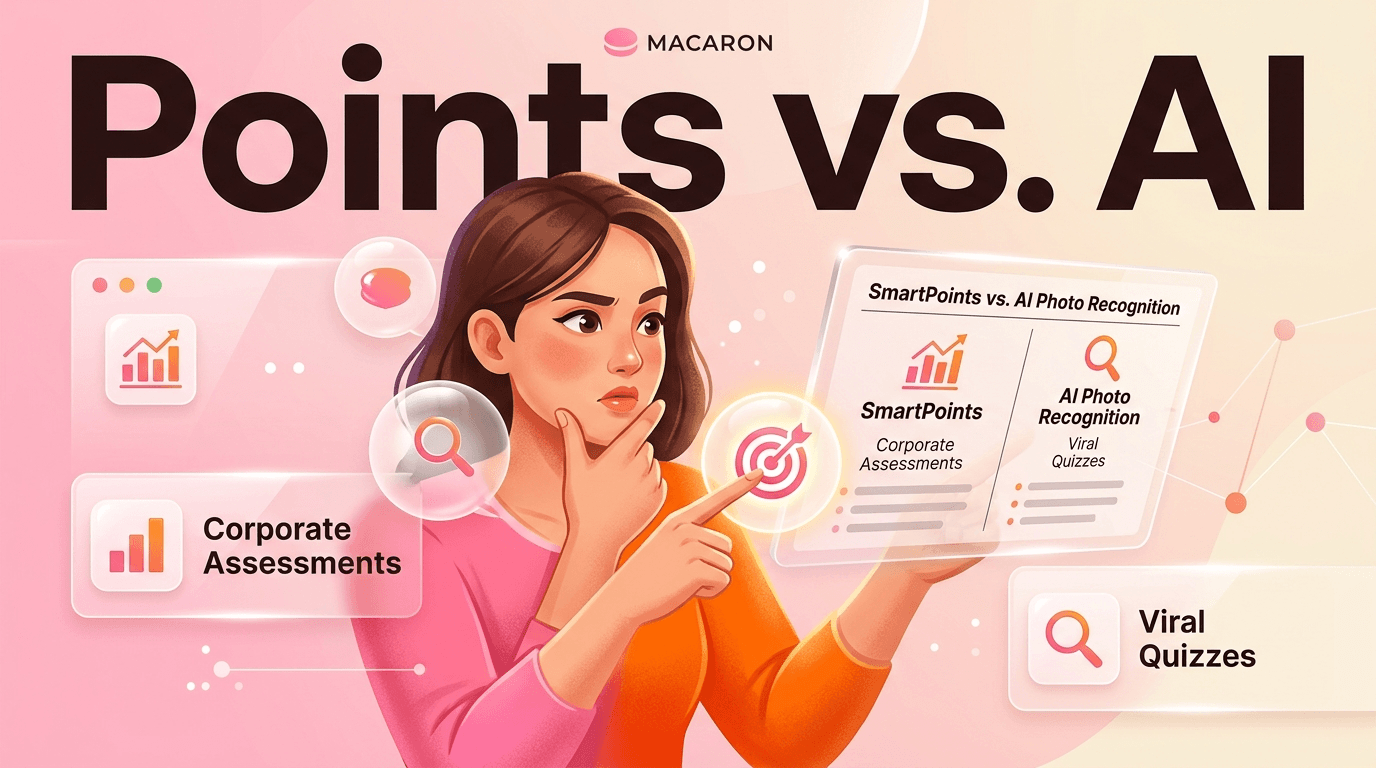
Quick Comparison
WW and Macaron solve the same problem in different ways. WW gives you a defined framework with SmartPoints, daily and weekly budgets, and a large support ecosystem. Macaron removes the scorekeeping and focuses on adaptive guidance that fits your habits. WW is better for people who want a familiar, structured program with clear rules. Macaron is better for users who want fewer steps, less logging, and more personalized help without committing to a formal diet system.
Frequently Asked Questions
Yes. SmartPoints are still the core of the program, and members continue to receive daily and weekly budgets. The formula is designed to make healthier choices easier by lowering the score of foods with more protein and fiber and raising the score of foods with more sugar and saturated fat. The system is still central even though the app and coaching features have expanded around it.
It can be for people who want a simpler decision-making system. SmartPoints combine several nutrition factors into one number, which is easier than comparing calories, protein, fat, and fiber separately. The tradeoff is that you still have to track food consistently. If you dislike logging or want a more intuitive approach, a flexible AI tool may feel easier to maintain.
Yes. The digital plan includes chat-based coaching, and higher tiers may include workshops or additional support. The coaching is useful for accountability and for learning how to use the program, but it is still centered on WW’s framework. If you want broader nutrition guidance that is not tied to a points system, you may need a different tool or an outside professional.
ZeroPoint foods are items that do not count against your daily budget on a given plan, such as many fruits, vegetables, eggs, fish, and beans. They are meant to make the program easier to follow by giving you a base of foods you can eat without constant calculation. The exact list can vary by plan, so it is important to check what applies to your membership.
The daily budget is your main allowance for everyday eating, while the weekly budget gives you extra flexibility for restaurant meals, celebrations, or higher-point days. Some plans also let you roll over unused daily points into the week. That design helps people stay on track without feeling trapped, but it still requires regular attention if you want to use the system well. For a third-party check, WeightWatchers (WW) Diet Review - Health at https://health.usnews.com/best-diet/weight-watchers-diet is worth comparing against the page summary.
For some people, yes. The system is straightforward at first, but the need to track every meal can become tedious over time. People who enjoy structure and routine often do well, while those who want a more relaxed or intuitive approach may lose interest. Long-term success usually depends on whether the user is comfortable making the program part of daily life. For another outside reference, WW (Formerly Called Weight Watchers) at https://www.webmd.com/diet/weight-watchers-diet adds a second perspective.
AI nutrition apps like Macaron are simpler for users who do not want to manage points at all. You can ask for meal ideas, planning help, or tracking support in plain language, and the system adjusts to your preferences over time. That removes the scoring step, though it also means giving up WW’s formal structure and community-based accountability.com/us/how-it-works?srsltid=AfmBOoo0oS_UvS-oKo02vp_umYmcSK9_5W9o7P8JZfyfOlO3_fR2eFY- is a useful reference point.com/us/how-it-works?srsltid=AfmBOoo0oS_UvS-oKo02vp_umYmcSK9_5W9o7P8JZfyfOlO3_fR2eFY- is a useful reference point.com/us/how-it-works?srsltid=AfmBOoo0oS_UvS-oKo02vp_umYmcSK9_5W9o7P8JZfyfOlO3_fR2eFY- is a useful reference point.com/us/how-it-works?srsltid=AfmBOoo0oS_UvS-oKo02vp_umYmcSK9_5W9o7P8JZfyfOlO3_fR2eFY- is a useful reference point.com/us/how-it-works?srsltid=AfmBOoo0oS_UvS-oKo02vp_umYmcSK9_5W9o7P8JZfyfOlO3_fR2eFY- is a useful reference point. For outside context, How the Weight Watchers Program Works: Find Your Plan at https://www.weightwatchers.com/us/how-it-works?srsltid=AfmBOoo0oS_UvS-oKo02vp_umYmcSK9_5W9o7P8JZfyfOlO3_fR2eFY- is a useful reference point.
Read & discover
AI Personal Assistant
Free calculators


