INFP In Love
INFP in love is best read as a lens for understanding emotional depth, tenderness, and the pull toward meaningful connection, not as a fixed script for any one person. Macaron helps you reflect on the patterns, tensions, and needs that often shape how this style of love is experienced in real relationships.
INFP In Love
This self-reflection module is designed to help you notice how tenderness, idealism, trust, and emotional pacing may show up in your love life. It is a practical lens for reflection, not a fixed description of any person or relationship.
This is a self-reflection tool, not a diagnosis or clinical assessment.
Please answer every question before viewing your result.
This module is for self-reflection only and cannot tell you who you are or what a relationship will become. If love, conflict, or uncertainty is causing significant distress, consider talking with a trusted person or a qualified mental health professional.
What INFP In Love Can Help You Notice
INFP in love is most useful as a way to notice how someone may approach romance through sincerity, emotional resonance, and a strong desire for meaning. Search intent around this topic often comes from people trying to understand why an INFP may seem reserved at first, yet become deeply invested once trust feels real. That pattern matters because it shifts the focus from surface chemistry to emotional fit, shared values, and the felt experience of being understood.
A common theme in the source material is that INFPs are described as loving quietly but intensely. That can mean affection is not always obvious in the early stages, but care may show up through attention, loyalty, thoughtful gestures, and a willingness to invest emotionally when the connection feels safe. For readers, that makes the question less about whether love is present and more about how it is expressed and whether it is being reciprocated in a way that can actually be sustained.
The same depth that makes love feel beautiful can also make it feel fragile. People looking up INFP in love are often trying to understand why inconsistency, mixed signals, or emotional distance can land so hard, especially when the relationship already feels significant in their inner world. That sensitivity is not a flaw by itself, but it does mean that uncertainty can take up more emotional space than it would in a more casual bond. For a related Macaron page, see Best Personal AI Agent Platform for 2025 - Macaron at https://macaron.im/blog/best-ai-agent-platform-2025.
This page treats INFP in love as a reflection tool, not a diagnosis or prediction. Personality language can help organize experience, but it cannot tell you whether a relationship will work, whether someone is compatible, or how any individual will behave in a specific situation. The useful question is not whether a label is accurate in the abstract, but whether the relationship is meeting the needs that matter most to you.
Macaron is designed to help you slow the story down and separate hope from fit. That means looking at emotional safety, shared values, communication style, and whether the connection is mutual enough to support the depth you want. Compared with generic type descriptions, the advantage is practical clarity: you can reflect on what is happening now, what is being repeated, and what tradeoff you may be making if you keep prioritizing potential over evidence.
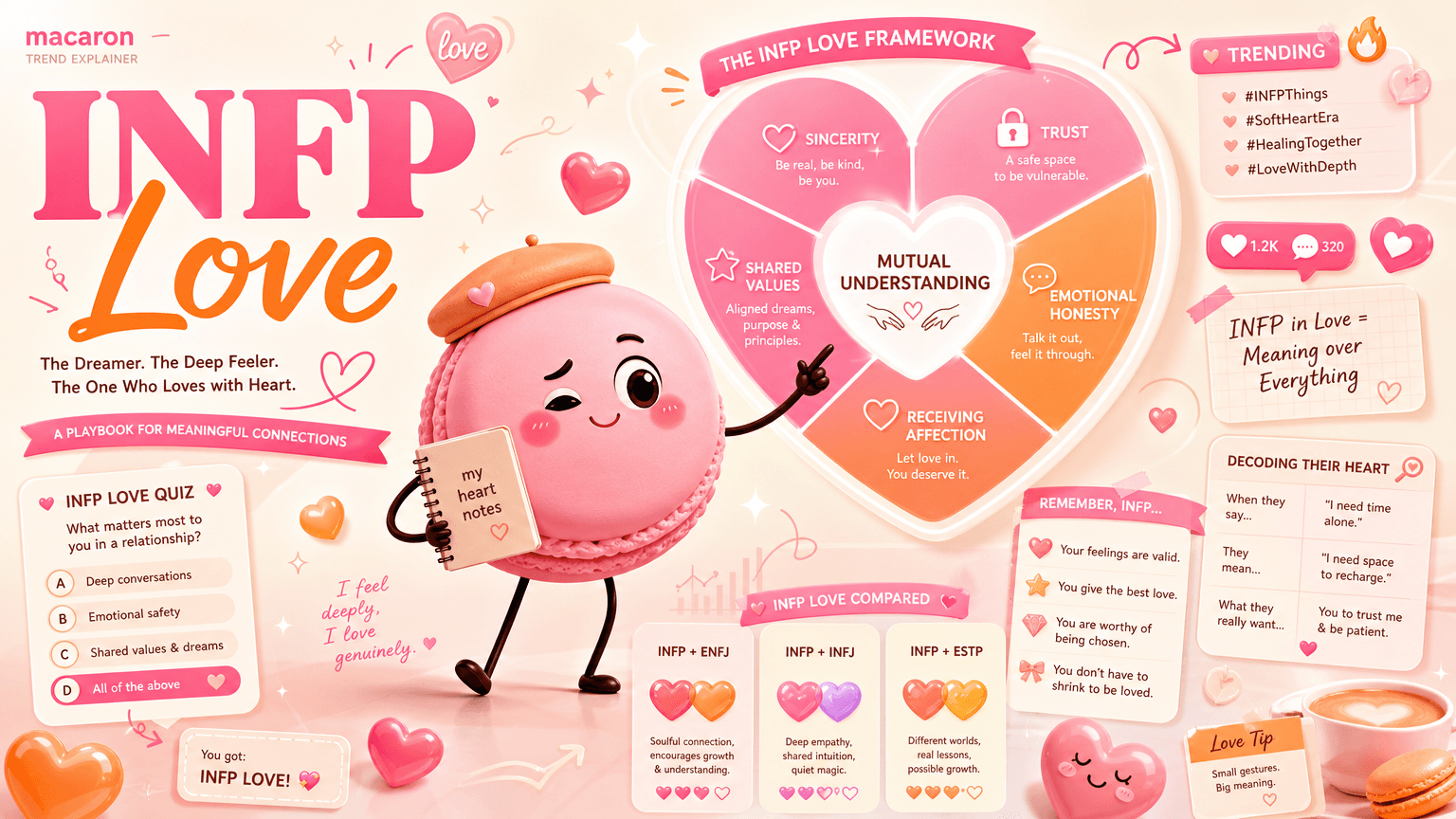
What INFP In Love Can Help You Notice
People searching for INFP in love are often trying to understand why this style of connection can feel so sincere, intense, and emotionally meaningful. The pattern that shows up most often is a preference for depth over casual chemistry, along with a strong pull toward shared values, trust, and emotional honesty. Macaron helps you notice whether the relationship feels mutual, whether affection is being expressed in ways you can actually receive, and whether the bond is built on real understanding rather than projection or fantasy. That makes it easier to tell the difference between being moved by a connection and being supported by one.
Where Love Can Feel Beautiful and Risky
This is where the idealism that often appears in INFP in love can become both a gift and a vulnerability. On the beautiful side, the connection may feel warm, tender, imaginative, and unusually personal, which is why many people describe it as emotionally rare or deeply memorable. On the risky side, it can be easy to attach to potential, overlook inconsistency, or stay emotionally open longer than the situation deserves. Macaron helps you examine the difference between a relationship that feels meaningful and one that is actually stable, reciprocal, and emotionally safe, while also acknowledging that some more direct dating apps may surface compatibility faster through clearer behavior signals.
More About INFP In Love
A recurring theme in the source material is that INFPs often want more than affection, they want emotional recognition. This section helps you notice whether a relationship feels genuinely seen, whether your feelings are being met with care, and whether the connection has enough sincerity to support vulnerability over time. That matters because for many people, being loved well is not just about being liked; it is about feeling understood without having to perform or shrink.
Search intent around INFP in love often includes questions like how they act, how they express love, and how to know when they are in love. The features below translate those questions into practical reflection so you can look for patterns such as consistency, openness, and the pace at which trust develops. Macaron is especially useful here because it turns vague emotional impressions into something you can compare across moments instead of relying on a single intense interaction.
There is also a useful distinction between idealism and compatibility. Many INFP descriptions emphasize dreaming, hope, and deep attachment to potential, but real relationships still depend on reliability, repair after conflict, and the ability to talk honestly when something feels off. That tradeoff is important: idealism can help you stay open to love, but it can also make it harder to notice when the relationship is asking you to accept too little in exchange for too much emotional investment. Another useful Macaron comparison is AI Story App - Macaron at https://macaron.im/ai-story-app.
Macaron focuses on the parts of love that are easy to miss when feelings are strong. That includes whether tenderness is becoming self silencing, whether reassurance is actually being received, and whether emotional effort is balanced enough that closeness does not become one sided. This is where Macaron differs from flatter personality content: it is built to help you evaluate the relationship structure around the feeling, not just the feeling itself. For a broader Macaron context, AI Calorie Tracker: How It Works and Best Options - Macaron at https://macaron.im/blog/ai-calorie-tracker can help you compare the decision from another angle.
If you are trying to understand INFP in love in a grounded way, the goal is not to flatten sensitivity into a stereotype. The goal is to give that sensitivity structure so you can protect depth, name needs clearly, and make decisions based on what is happening, not only what is hoped for. For readers who want a more direct, behavior-first comparison, other relationship tools may be better at quick matching, but Macaron is stronger when you want emotional nuance and self-reflection.
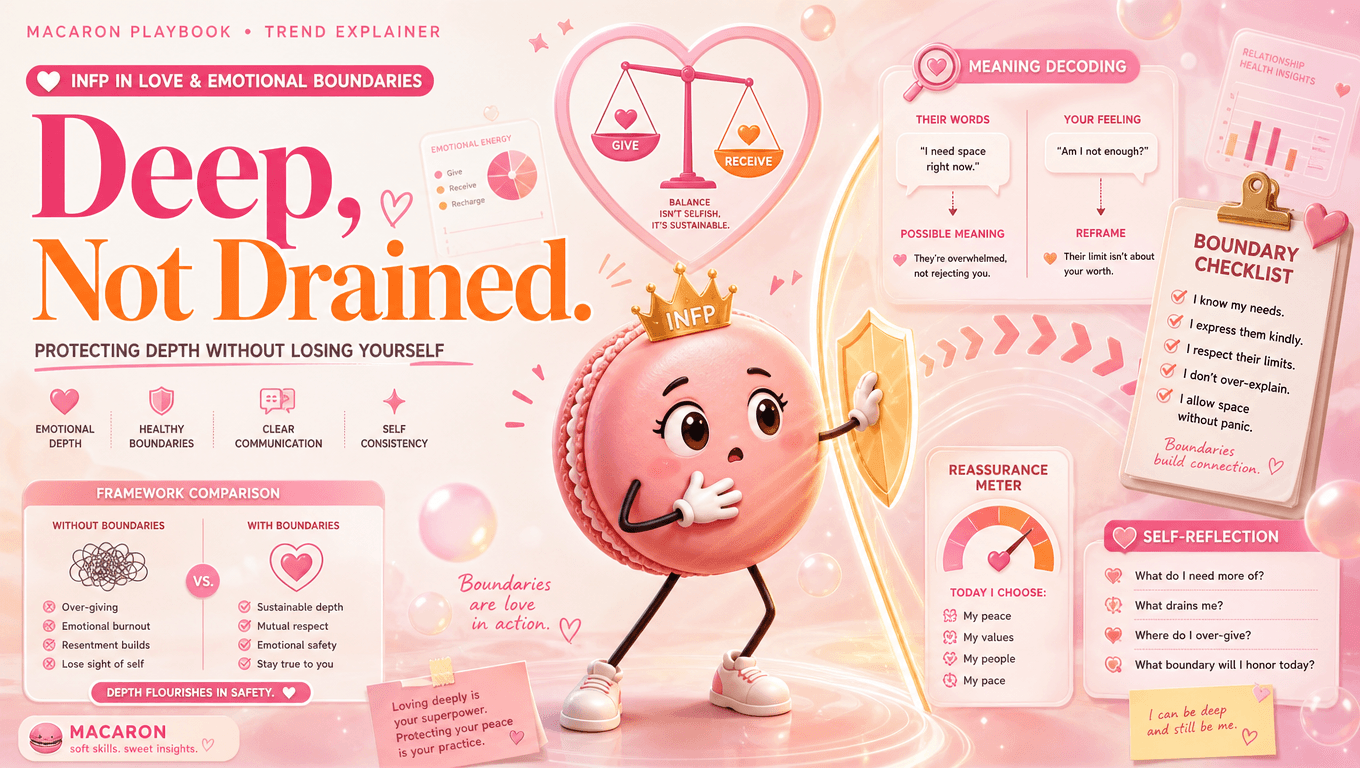
How to Protect Depth Without Losing Yourself
For many people, the hardest part of INFP in love is not feeling deeply, but knowing when depth is becoming self sacrifice. This section helps you look at whether you are softening your needs to preserve harmony, waiting too long for reassurance, or explaining away patterns that keep repeating. It also helps you identify the conditions that make love feel safe enough to stay open, such as clear communication, consistent effort, and room for your values and boundaries to remain intact. The tradeoff is that protecting yourself may feel less romantic in the moment, but it often preserves the very tenderness you are trying to keep alive.
Create More Soulful Connections
The most useful version of INFP in love insight is practical, not abstract. Macaron turns reflection into action by helping you clarify what you need, how you want to communicate it, and what kind of response actually counts as care. That can include noticing when you need more consistency, naming emotional needs without apology, and setting boundaries when a connection feels intense but not truly aligned. The goal is not to become less sensitive, but to make sensitivity easier to sustain in real relationships. If you want faster, more transactional matching, some competitor apps may feel simpler; Macaron is better when you want to understand the emotional pattern behind the choice.
Frequently Asked Questions
INFP in love can help you reflect on how you experience vulnerability, emotional safety, idealization, and the desire for real intimacy. It is especially useful for noticing the difference between a connection that feels meaningful in your inner world and one that is actually mutual, steady, and compatible in daily life. The term is best used as a lens for self understanding, not as a rulebook for how love must unfold.
That can happen when emotional resonance, shared values, and imagined potential all line up early. For someone drawn to depth, even a small sign of sincerity can feel significant, because the relationship is being evaluated not just for chemistry but for meaning. The risk is that intensity can arrive before enough evidence of consistency, so the feeling of importance may outpace the reality of the bond.
Yes. The same themes often appear in close friendship, creative partnerships, and other bonds where trust and emotional honesty matter. An INFP style of relating may show up anywhere someone wants to feel deeply understood, valued for their inner world, and safe enough to be authentic. Romance is just one place where those needs become especially visible.
Macaron helps you slow down and look for patterns instead of only reacting to the latest emotional high or low. It can help you notice whether disappointment is coming from mixed signals, uneven effort, or a mismatch between what you hope for and what the relationship can actually support. That clarity makes it easier to protect your softness without ignoring repeated signs that something is not working.
When INFPs feel safe, they often show love through attention, emotional presence, thoughtful gestures, and a willingness to share their inner world. They may not always be loud or highly performative, but their care can be steady and personal. The important detail is that safety matters: without trust, they may hold back, overthink, or keep their feelings private until the relationship feels emotionally dependable.
Common signs can include wanting deeper conversations, remembering details, making time for the person, and showing concern in quiet but consistent ways. They may also become more open, more affectionate, or more protective of the connection once they believe it is real. Still, the strongest sign is not intensity alone but whether their actions continue over time and match the care they say they feel. For a third-party check, How to know an INFP is in love - Personality Cafe at https://www.personalitycafe.com/threads/how-to-know-an-infp-is-in-love.96029/ is worth comparing against the page summary.
Watch for whether they feel emotionally safe, whether they can be honest about needs, and whether they respond well to consistency rather than pressure. INFPs may need time, gentleness, and room to process feelings, but that does not mean you should ignore avoidance or unclear commitment. A healthy connection should still include reciprocity, repair after conflict, and enough clarity that both people know where they stand. For another outside reference, What is it like to be loved by an INFP? How do they express their love? at https://www.quora.com/What-is-it-like-to-be-loved-by-an-INFP-How-do-they-express-their-love adds a second perspective.
Not always, but idealism is a common theme because many INFPs care deeply about authenticity, meaning, and emotional truth. That can make them hopeful and selective, but it can also make them vulnerable to projecting potential onto someone who has not yet shown consistency. The healthiest version of idealism keeps the heart open while still checking whether the relationship can support real life, not just a beautiful possibility. For outside context, Romantic Relationships | INFP Personality (Mediator) | 16Personalities at https://www.16personalities.com/infp-relationships-dating is a useful reference point.
Read & discover
AI Personal Assistant
Free calculators


