INTJ Dating
INTJ dating often feels slow when one person wants depth, honesty, and real compatibility while the other is still testing the waters. Macaron helps you read the patterns behind selectiveness, emotional pacing, and whether a connection has long-term potential.
INTJ Dating
This self-reflection module helps you notice how you approach INTJ dating patterns like pacing, trust, standards, and emotional clarity. It is designed to support thoughtful dating decisions, not to label you or your partner.
This is a self-reflection tool, not a diagnosis or a scientific assessment of personality or relationship health.
Please answer every question before viewing your result.
This module is for reflection and conversation, not for diagnosing personality, attachment style, or relationship problems. If dating is bringing up distress, fear, or repeated conflict, consider talking with a qualified mental health professional or trusted support person.
Dating as an INTJ: Strengths, Challenges, and Strategies
INTJ dating can feel frustrating when chemistry shows up early but trust, clarity, and shared standards take longer to develop. That gap is often where confusion starts, especially if one person expects fast emotional openness and the INTJ is still deciding whether the connection is worth investing in. For many INTJs, attraction is real only when it survives scrutiny, not just when it feels exciting in the moment.
A lot of INTJs are not looking for more dates, they are looking for better ones. Patterns in INTJ relationships consistently point to depth, directness, and time protection, which means casual small talk, vague intentions, and inconsistent effort can feel like a poor use of energy rather than harmless early-stage dating. Macaron is useful here because it helps separate genuine disinterest from a slower, more deliberate evaluation style.
That does not mean INTJs are cold or impossible to date. It usually means they prefer to observe, compare, and verify before they relax. In practice, that can look like slower disclosure, careful questioning, and a strong preference for people who can handle honesty without turning every direct comment into conflict. The upside is that once trust is earned, INTJs often bring steadiness and follow-through that many partners value. For a related Macaron page, see AI Novel Generator - Macaron at https://macaron.im/ai-novel-generator.
The challenge is that the same traits that help INTJs choose well can also make them over-filter. If every uncertainty becomes a red flag, dating can turn into a series of quick exits, missed chances, or a feeling that no one ever quite meets the standard for real connection. The tradeoff is real: high discernment protects against bad fits, but it can also reduce tolerance for the normal ambiguity that exists before a relationship settles.
Macaron treats INTJ dating as a pattern-reading exercise, not a personality stereotype. The goal is to help you tell the difference between healthy selectiveness and avoidant distance, so you can date with more clarity without forcing yourself into a style that feels unnatural. That makes the page especially useful for people who want practical judgment, not generic advice about being more outgoing or less particular.
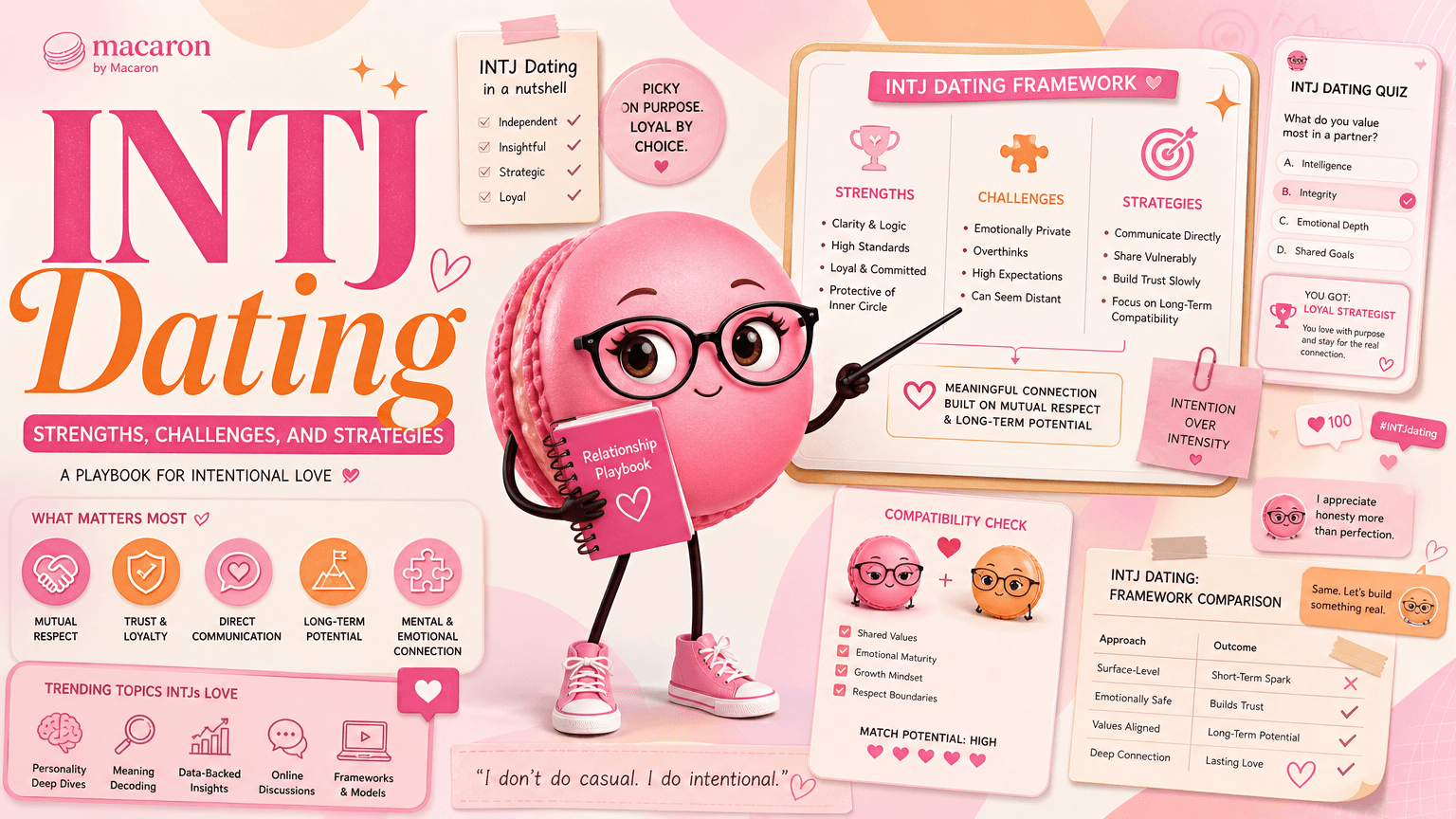
Dating as an INTJ: Strengths, Challenges, and Strategies
INTJ dating often feels strongest when attraction is matched by clarity, mutual respect, and long-term potential. Many INTJs bring strengths such as thoughtful selectiveness, direct communication, loyalty once committed, strong standards, and a preference for meaningful connection over social noise. Those strengths help filter for quality, but they can also make dating feel slow or overly rigid if every uncertainty gets treated like disqualifying evidence. Macaron helps you notice when discernment is serving you and when it is narrowing the field too aggressively.
What INTJs Should Look For in a Partner
Macaron uses INTJ dating as a practical lens for questions like whether the connection feels mentally and emotionally workable, whether both people can handle direct conversation, whether independence is respected, whether attraction still holds under real-life stress, and whether values and long-term goals are aligned. These questions matter because INTJs often do better with partners who are clear, self-directed, and comfortable with honest feedback. A good fit is not just someone who feels exciting at first, but someone whose behavior stays steady when life gets busy, opinions differ, or the relationship needs more than chemistry to continue.
More About INTJ Dating
INTJ dating often works best when attraction is matched by mental stimulation, emotional steadiness, and a sense that both people are being straightforward. Many INTJs are drawn to partners who can talk clearly, think independently, and show consistency over time rather than relying on charm alone. That preference is not about being aloof; it is often about wanting enough evidence that the connection can survive ordinary stress, not just an impressive first impression.
One recurring pattern in INTJ dating advice is that these daters tend to value their time highly. That can show up as fewer but more intentional dates, a preference for people who initiate with purpose, and a tendency to disengage when the connection feels unfocused or performative. Macaron is helpful because it turns that time sensitivity into a clearer read on effort, so you can tell whether someone is building momentum or simply occupying space.
Another common theme is that INTJs may appear reserved early on, not because they lack interest, but because they are still evaluating whether the relationship is worth deeper investment. This can be misunderstood as disinterest, so the real question is often whether the pace reflects caution, incompatibility, or simple preference for privacy. Competitor-style advice often stops at “they need space,” while Macaron helps you ask what that space is actually doing in the relationship. Another useful Macaron comparison is Macaron App - Download for iOS & Android at https://macaron.im/macaron-app.
The strongest INTJ connections usually have room for direct conversation about needs, boundaries, and future direction. When those conversations are avoided, the relationship can stall in ambiguity, which is especially draining for people who want to know where things are going before they commit more of themselves. The tradeoff is that directness can feel intense to some partners, so the best fit is often someone who can hear clarity without treating it as pressure. For a broader Macaron context, AI Personal Assistant - Macaron at https://macaron.im/ai-personal-assistant can help you compare the decision from another angle.
Macaron helps turn these patterns into practical reading, so you can notice when a relationship is becoming more grounded and when it is only producing temporary spark. That distinction matters because INTJ dating is often less about chasing excitement and more about identifying a connection that can actually hold up under real life. For users who want a structured way to review dates, signals, and pacing, this is more actionable than broad compatibility lists.
Common INTJ Dating Pitfalls
Some INTJs date well when they stay open without dropping their standards. Others get stuck in patterns like overanalyzing, emotional overcontainment, or moving from interest to doubt too quickly. Macaron helps you reflect on where caution becomes distance, when standards protect you, when standards block connection, how much emotional pacing affects trust, and which early signs matter most. This matters because INTJs can mistake discomfort with uncertainty for evidence of incompatibility. The useful question is not whether every date feels easy, but whether the pattern is moving toward more clarity, reciprocity, and emotional honesty over time.

Find More Meaningful Connections
Macaron turns INTJ dating into practical support through dating reflection prompts, communication check-ins, clarity around boundaries and standards, post-date pattern reviews, and support for distinguishing spark from fit. These tools are useful because INTJ dating often involves subtle decisions that are hard to judge in the moment, especially when someone seems promising but not fully consistent. By reviewing what was said, how effort was shown, and whether the pace felt sustainable, you can make better decisions about when to continue, when to pause, and when to walk away without second-guessing every instinct.
Frequently Asked Questions
INTJ dating is often shaped by selectiveness, long-term thinking, directness, and a stronger need for real compatibility before emotional investment deepens. Compared with more spontaneous dating styles, INTJs often want to understand a person’s values, communication habits, and reliability before they relax into the relationship. That can make early dating feel slower, but it also means the connection is usually being evaluated for substance, not just chemistry. The main difference is less about being difficult and more about needing enough evidence that the relationship can actually last.
Use them to reflect on recurring patterns in trust, pacing, standards, and whether the connection feels sustainable beyond initial attraction. A helpful approach is to look at what happens after the first good impression: does the person stay consistent, can they handle direct conversation, and do you feel more clear or more confused after spending time together? For INTJs, the value of these insights is not in labeling people quickly, but in noticing whether the relationship is becoming more mutual and workable as it develops.
It can feel draining when conversations stay superficial, expectations feel unclear, or emotional effort starts before trust has formed. Many INTJs also get tired when they feel they are carrying the burden of interpretation, such as trying to decode mixed signals or guess what the other person wants. Because time and energy matter a lot, repeated ambiguity can feel expensive rather than romantic. Dating becomes less draining when the other person is clear, consistent, and willing to build trust at a pace that feels reasonable.
Not necessarily. The better question is whether a standard protects what matters or simply blocks uncertainty. Standards around honesty, reliability, and shared goals usually help INTJs date better, not worse. The risk comes when standards become so broad or rigid that no real person can meet them, or when they are used to avoid the discomfort of getting to know someone imperfect. A useful standard should help you identify fit, not keep you permanently protected from vulnerability.
Interest often shows up through consistency, initiative, and focused attention rather than constant emotional display. An INTJ who is engaged may ask thoughtful questions, make time intentionally, remember details, and follow through on plans. They may still seem reserved, so the key is not volume of affection but whether their actions are deliberate. If they keep returning, keep investing, and keep making the interaction more specific, that usually matters more than whether they are openly expressive right away.
Often, yes, because many INTJs want enough evidence before they attach deeply. They may analyze compatibility, watch for consistency, and wait to see whether the relationship holds up under real conditions. That does not mean they feel nothing early on; it means they may not trust those feelings until they have been tested. For a partner, the practical takeaway is to be patient without becoming vague. Clear effort and steady behavior usually matter more than dramatic declarations. For a third-party check, 32 Relationship-Changing Tips For Dating an INTJ - Boo at https://boo.world/resources/dating-an-intj-tips is worth comparing against the page summary.
A good fit is often someone who is self-directed, emotionally steady, honest, and comfortable with direct conversation. INTJs usually do better with partners who respect independence but still show consistent interest, and who can discuss needs without turning every disagreement into a crisis. Intellectual compatibility helps, but so does reliability in everyday life. The strongest matches are often people who can handle depth, tolerate some privacy, and stay grounded when the relationship moves from theory into real commitment. For another outside reference, Romantic Relationships | INTJ Personality (Architect) - 16Personalities at https://www.16personalities.com/intj-relationships-dating adds a second perspective.
Macaron is more useful when you want to review actual patterns instead of just reading type descriptions. It can help you track whether someone’s effort is consistent, whether your own standards are helping or narrowing too much, and whether the pace of the relationship is building trust or stalling it. Generic advice often says INTJs need space or honesty; Macaron helps you decide what that means in a specific relationship, which is usually where the hard decisions happen. For outside context, 9 Unmistakable Signs You're Dating An INTJ - Thought Catalog at https://thoughtcatalog.com/heidi-priebe/2015/04/466008/ is a useful reference point.
Read & discover
AI Personal Assistant
Free calculators


