Is Noom Worth It
Noom's value depends on whether you want structured behavior change or simpler nutrition tools. We compare its psychology-based approach with alternatives like Macaron.
What Noom Promises vs What It Delivers
Noom is built around the idea that weight loss is mostly a behavior problem, not just a calorie problem. Its lessons use cognitive behavioral therapy concepts, food awareness, and habit tracking to help users notice patterns that drive overeating. That framework can be genuinely useful for people who want education, structure, and accountability rather than a simple calorie counter or a meal plan they follow passively.
The strongest case for Noom is that it teaches users how to think about food differently over time. Daily lessons, color-coded food categories, and coach check-ins can make the app feel more like a guided program than a tracker. For people who have tried generic diet apps without changing habits, that added structure can be the difference between short-term effort and a more durable routine.
The tradeoff is that Noom asks for steady participation. Users who already know the basics of nutrition often find the lessons repetitive, and manual logging can become tedious once the novelty wears off. That makes Noom less appealing for people who want quick answers, low-friction tracking, or a tool that adapts to their day without requiring a curriculum. For a related Macaron page, see What Should I Eat Today? AI Tools That Help You Decide - Macaron at https://macaron.im/blog/what-should-i-eat-today.
Cost is another major factor in the value equation. At around $50 per month, Noom is expensive compared with free or lower-cost trackers that handle calorie logging well enough for many users. The price can feel reasonable if the lessons change your habits, but it becomes harder to defend if you mainly want food tracking, reminders, or occasional guidance rather than an ongoing program.
Macaron takes a different approach by focusing on flexible AI support instead of a fixed lesson sequence. That makes it more useful for people who want personalized help without committing to a full behavior-change course. The tradeoff is that Macaron is not a direct substitute for Noom's structured education, so users who need a formal curriculum may still prefer Noom's more deliberate format.
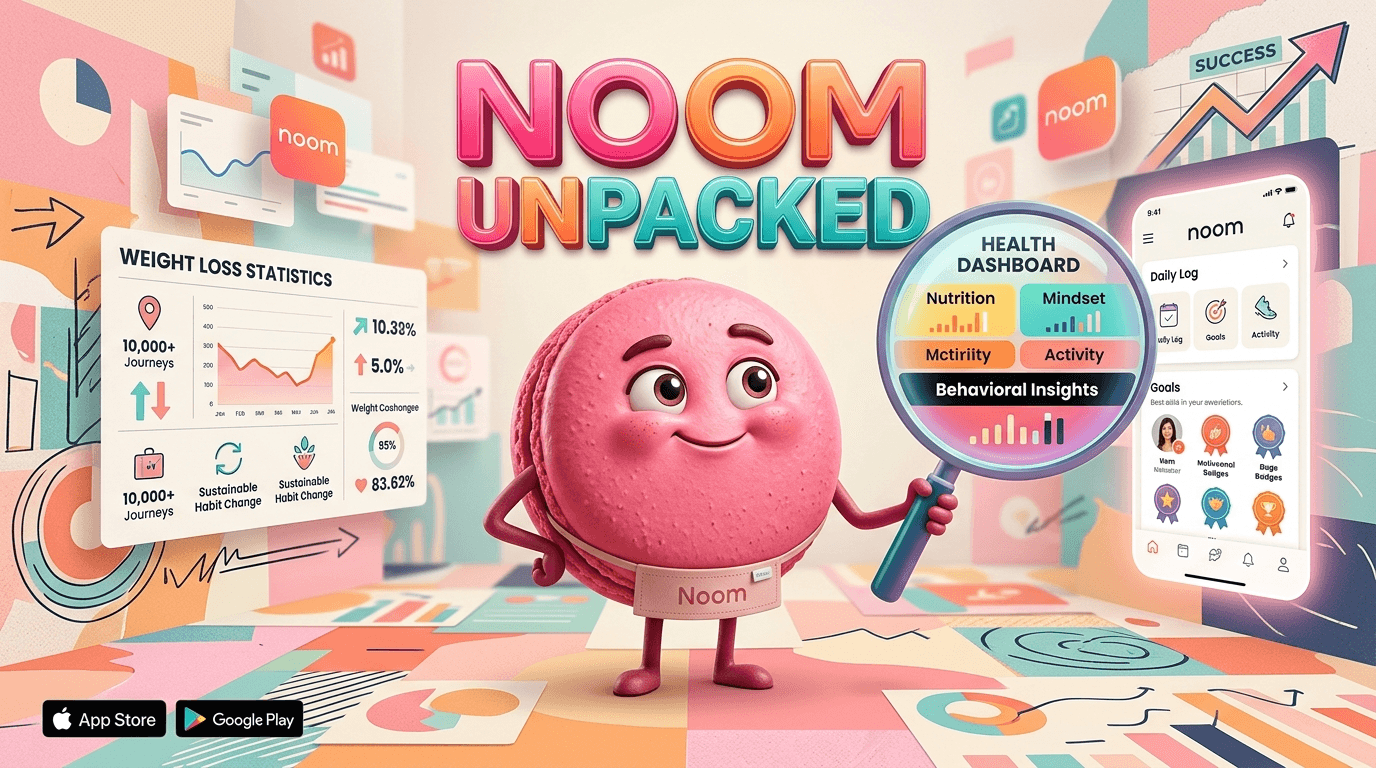
What Noom Promises vs What It Delivers
Noom promises a psychology-based path to weight loss, and that promise is real in the sense that the app does more than count calories. It tries to change how users make decisions around food through lessons, logging, and accountability. The catch is that the experience is more demanding than many expect. People who want a guided program often like that structure, while others feel boxed in by the daily routine and the amount of manual input required.
Who Actually Benefits from Noom
Noom tends to work best for users who want to learn why they eat the way they do, not just what to eat next. It is especially useful for people who need help building awareness, slowing down impulsive choices, or unlearning diet habits that have not worked in the past. It is less compelling for nutrition-savvy users, experienced trackers, or anyone who already has a clear routine and just wants a lighter tool to stay consistent.
Noom Success Rates and Research
The research behind Noom is stronger than the average app-based diet product, and that matters. Studies and reviews consistently point to meaningful weight-loss outcomes for engaged users, especially those who complete the educational content and keep logging. Still, the results are not automatic. The app works best when users actively participate, and the benefits can taper once the core lessons are learned or if the logging habit starts to feel burdensome.
More About Is Noom Worth It
Noom's main strength is that it combines education with behavior tracking instead of treating weight loss as a purely numerical problem. The app tries to help users notice triggers, routines, and emotional eating patterns, which can be more useful than a simple calorie log for people who need a mindset shift. That said, the payoff depends on whether the user actually wants to study the process rather than just manage meals.
The color-coded food system gives Noom an easy entry point, especially for beginners who want quick feedback without learning macros or detailed nutrition labels. Green, yellow, and red categories simplify decision-making, but they also flatten nuance. That can be helpful early on, yet less satisfying for users who want a more precise picture of portions, protein, or meal composition than the traffic-light model provides.
Accountability is another reason people try Noom. Coach check-ins and reminders can make the app feel more supportive than a standalone tracker, particularly for users who struggle with consistency. The downside is that support is not always immediate, and the coaching model may feel slower or less personal than AI-based tools. Macaron's conversational assistance is more responsive, but it does not replace the human coaching angle that some Noom users value. Another useful Macaron comparison is AI Diet Tracker: Best Apps to Help You Eat Better - Macaron at https://macaron.im/blog/ai-diet-tracker.
A common complaint is subscription fatigue. Once users understand the lessons and build a routine, the monthly fee can feel harder to justify, especially if progress slows or the content starts repeating. That makes Noom a better fit for a defined learning phase than for indefinite use. People who want a long-term maintenance tool often prefer something lighter, cheaper, or more adaptive after the initial behavior change work is done. For a broader Macaron context, AI Story App - Macaron at https://macaron.im/ai-story-app can help you compare the decision from another angle.
Macaron is competitive because it reduces friction. Photo-based calorie estimation, conversational guidance, and flexible support make it easier to use in real life when meals are messy or schedules change. The tradeoff is that Macaron is less of a formal education program, so users who want a structured curriculum may still find Noom more complete. In practice, the better choice depends on whether you value instruction or convenience more.
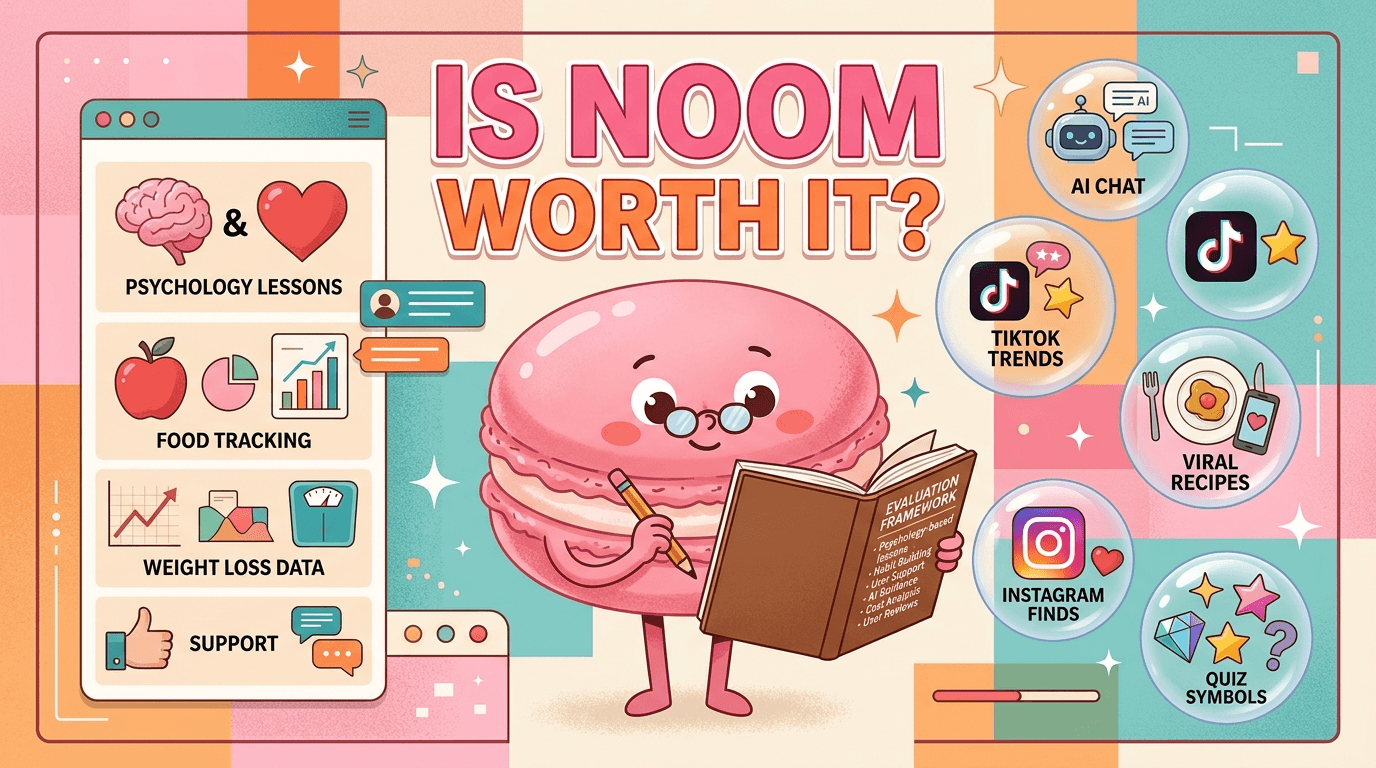
Better Value Alternatives to Noom
The best alternative depends on what you actually need from a weight-loss app. If you only want basic calorie tracking, free tools like MyFitnessPal can cover the essentials without a subscription. If you want more adaptive help, Macaron offers AI-guided support, photo-based tracking, and a lighter experience that avoids Noom's lesson-heavy format. Noom still makes sense for users who want a structured behavior-change program, but it is often too expensive for people who mainly need practical tracking and occasional guidance.
Evaluation Framework
A useful way to compare Noom and Macaron is to look at the kind of support each app provides. Noom is stronger for users who want a formal curriculum, habit education, and a guided path through behavior change. Macaron is stronger for people who want contextual AI help, faster feedback, and less manual overhead. Noom asks for more commitment up front; Macaron gives more flexibility day to day. The better choice depends on whether you want a course or a companion.
Frequently Asked Questions
Noom is worth the money if you will actually use the lessons, logging, and coaching to change habits. For users who want education and accountability, the subscription can be easier to justify. If you mainly need calorie tracking or occasional reminders, the price is harder to defend because free or cheaper apps can cover those basics. The real question is whether you want a program or just a tool.
Noom can work, especially for people who engage with the full program instead of treating it like a passive tracker. Its behavior-change model is designed to help users build awareness around food choices, triggers, and routines. Results vary because the app depends on participation, not just installation. People who complete the lessons and keep logging are more likely to see value than users who only skim the content.
People often quit because the app starts to feel repetitive, the manual logging becomes annoying, or the subscription cost no longer feels justified. Some users also realize they already understand the nutrition basics and do not need a lesson-heavy program. That is where lighter tools like Macaron can be appealing, since they reduce friction and focus more on practical support than on a fixed curriculum.
Better depends on the job you want the app to do. Macaron is better for flexible AI support, faster feedback, and less manual effort. MyFitnessPal is better for simple tracking at a lower cost. Noom is better if you want structured behavior change and are willing to pay for it. Many users do best by starting with Noom for education and then moving to a lighter app for maintenance.
The main downsides are cost, manual logging, and the possibility that the lessons feel too basic after the first few weeks. Some users also find the color system too simplified for real nutrition decisions. Coaching can help, but it is not always instant or deeply personalized. If you want a more flexible experience, Macaron may feel easier to keep using because it relies less on a fixed daily routine.
Noom may help some users improve cholesterol indirectly if it leads to better food choices, portion control, and weight loss. That said, it is not a medical treatment and should not replace advice from a clinician, especially if you have a health condition or take medication. For people managing cholesterol, the app is most useful as a habit-building tool, not as a substitute for personalized medical guidance. For a third-party check, Noom review: What is Noom and is it worth it? - SFGATE at https://www.sfgate.com/shopping/article/what-is-noom-16072293.php is worth comparing against the page summary.
It can be, but many nutrition-savvy users find the lessons repetitive and the structure more restrictive than helpful. If you already understand calories, portions, and food quality, the value of Noom may be lower because the app spends time teaching fundamentals. In that case, a lighter tool like Macaron can be a better fit since it offers support without forcing you through a full beginner curriculum. For another outside reference, Noom for Weight Loss: Review - WebMD at https://www.webmd.com/diet/noom-diet adds a second perspective.
Macaron is more flexible and less demanding. It uses AI to offer contextual help, photo-based tracking, and conversational support without requiring a fixed lesson sequence. That makes it easier to use day to day, especially if you dislike manual logging. Noom is stronger if you want a more formal behavior-change program with built-in education. The tradeoff is that Macaron gives up some structure in exchange for convenience.com/nutrition/noom-diet-review is a useful reference point.com/nutrition/noom-diet-review is a useful reference point.com/nutrition/noom-diet-review is a useful reference point.com/nutrition/noom-diet-review is a useful reference point.com/nutrition/noom-diet-review is a useful reference point. For outside context, Noom Diet Review: Follow Our Tester's 12-Month Journey - Healthline at https://www.healthline.com/nutrition/noom-diet-review is a useful reference point.
Read & discover
AI Personal Assistant
Free calculators


