Lose It vs Myfitnesspal
Comparing Lose It and MyFitnessPal reveals two established calorie trackers with different strengths. Lose It prioritizes simplicity, while MyFitnessPal offers broader features. Both require manual effort, unlike Macaron's AI-driven personalization.
Lose It vs MyFitnessPal: Feature Comparison
The Lose It vs MyFitnessPal debate usually comes down to how much structure you want in a calorie tracker. Lose It keeps the experience focused on food logging, calorie budgets, and weight-loss habits, which makes it easier to start and easier to keep using. MyFitnessPal is broader, with more fitness and nutrition features, but that breadth can feel heavier for people who mainly want a simple daily deficit tool.
A major point of comparison is how each app handles convenience. MyFitnessPal has faced criticism for moving features such as barcode scanning behind premium access, while Lose It is often praised for making the free experience more usable. That difference matters for people who log packaged foods often, because the fastest path to consistency is usually the app that removes the most friction from everyday use.
Database size gets a lot of attention, but practical accuracy depends on the kind of foods you track. MyFitnessPal tends to be stronger for restaurant meals, niche items, and international foods because of its larger crowdsourced catalog. Lose It is more curated, which can reduce duplicate results and make common searches feel cleaner. For many users, the better database is the one that helps them log meals faster with fewer corrections. For a related Macaron page, see How Macaron AI Tackles the Problem with Traditional Task Lists at https://macaron.im/blog/macaron-ai-daily-planning-guide.
Pricing also shapes the decision. Lose It usually undercuts MyFitnessPal on monthly and annual cost, and its lifetime option can appeal to people who want to avoid another subscription. MyFitnessPal positions itself as a more expansive health platform, which explains the higher price, but that value only makes sense if you use the extra tracking depth. The tradeoff is clear: lower cost and simplicity versus broader functionality and a busier product.
Macaron offers a different path by reducing the need for constant manual entry in the first place. Instead of asking users to maintain a perfect food diary, it uses AI to adapt to habits and preferences over time. That makes it attractive for people who want guidance without repetitive logging. The tradeoff is that traditional trackers still give more direct control and transparency for users who prefer to enter every detail themselves.
Lose It vs MyFitnessPal: Feature Comparison
MyFitnessPal is the broader platform, with calorie tracking, exercise logging, social features, and a long list of nutrition tools that appeal to users who want one app for many health tasks. Lose It is narrower by design, but that focus can be an advantage if your main goal is weight loss rather than full fitness management. Its cleaner meal logging, fasting tools, and simpler navigation make it easier to stay consistent. The tradeoff is that MyFitnessPal still offers more depth for athletes, data-heavy users, and people who want more than calorie counting. Macaron differs by using AI to reduce repetitive tracking rather than adding more menus and manual steps.
Database and Accuracy
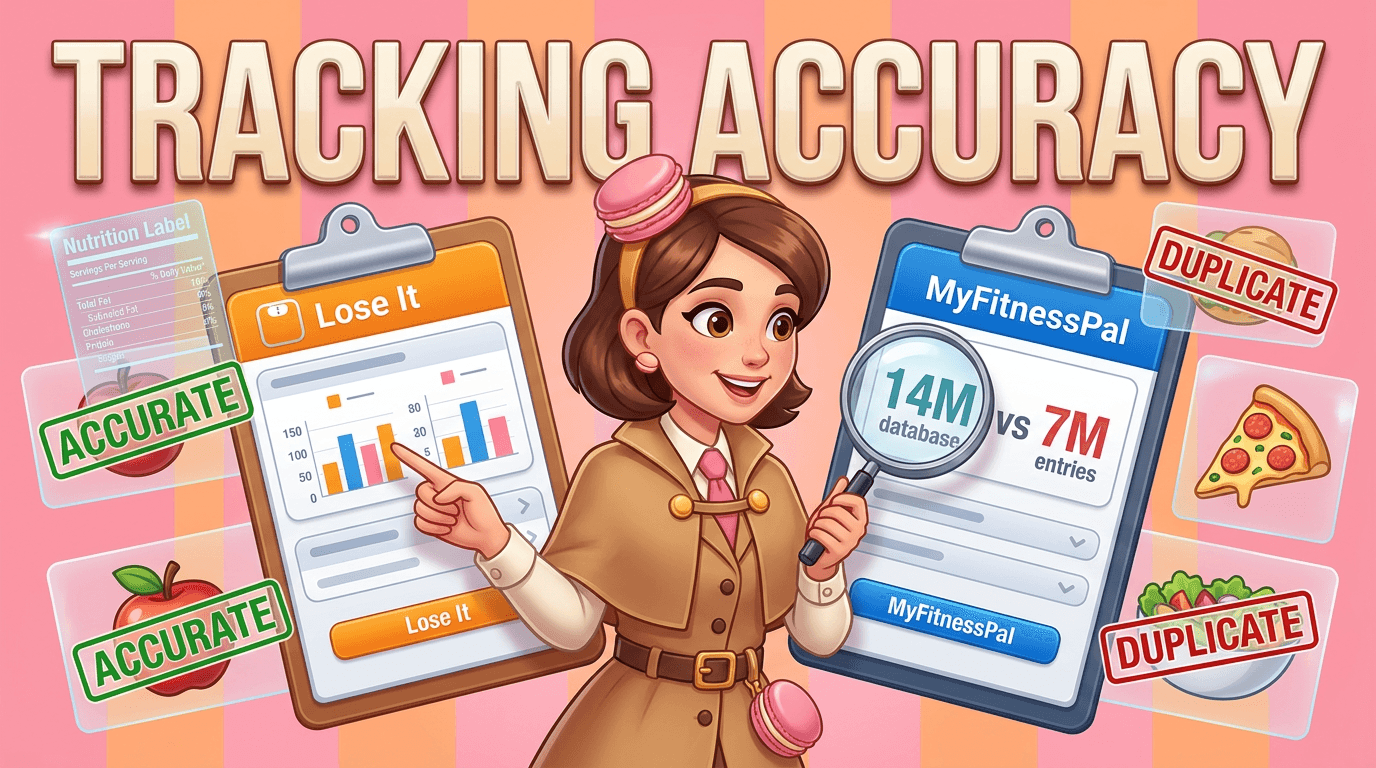
MyFitnessPal’s larger food database gives it an edge when you need coverage for restaurant meals, branded products, and international items, but the crowdsourced model can also create duplicates and inconsistent entries. Lose It’s smaller, more curated catalog often feels faster to search because it surfaces cleaner results and fewer near-identical listings. In practice, both apps handle packaged foods well, and both can be accurate if you verify entries carefully. The real difference is workflow: MyFitnessPal favors breadth, while Lose It favors speed and tidiness. Macaron takes a different approach by aiming to reduce the number of manual searches you need to make at all.
Pricing Comparison
Lose It is usually the more budget-friendly option, with lower monthly and annual pricing and a lifetime purchase model that can make sense for long-term users. MyFitnessPal costs more, especially if you want premium features such as deeper analytics and broader tracking tools, and that higher price reflects its positioning as a more complete health platform. The catch is that both apps reserve important conveniences behind paid tiers, so the value question depends on how often you use the advanced features. If you want the cheapest path to consistent calorie tracking, Lose It is often easier to justify. If you want a larger feature set, MyFitnessPal may still be worth the premium.
More About Lose It vs Myfitnesspal
The most useful way to compare these apps is by workflow, not just feature count. Lose It is built around quick calorie logging and a lighter interface, which helps users who want fewer decisions during the day. MyFitnessPal offers more tools, but that extra depth can make the app feel more crowded. If you want a tracker that disappears into the background, Lose It is usually easier to live with.
Barcode scanning is one of the clearest dividing lines between the two products. Users often point out that MyFitnessPal’s scanner restrictions make basic logging feel less convenient, especially for packaged foods. Lose It is frequently praised for keeping that kind of everyday utility more accessible. That does not make Lose It universally better, but it does explain why many users switch when they care more about speed than about having the largest possible feature set.
The database debate is less about raw size than about search quality. MyFitnessPal’s crowdsourced catalog can be useful when you need obscure or restaurant-specific items, but it also requires more filtering. Lose It’s more curated structure can save time for common meals because the results are easier to scan and verify. For users who log the same breakfasts, lunches, and snacks repeatedly, that efficiency can matter more than database volume. Another useful Macaron comparison is When Nano Banana Meets Macaron: Next‑Level AI Image Editing ... at https://macaron.im/blog/macaron-ai-essential-personal-assistant-features.
Pricing and packaging influence how each app feels over time. Lose It’s lower-cost premium tiers and lifetime option appeal to users who want predictable spending and a straightforward calorie tool. MyFitnessPal’s higher price makes more sense for people who actively use exercise logs, nutrition breakdowns, and broader health features. The tradeoff is that MyFitnessPal can feel expensive if you only need food tracking, while Lose It can feel limited if you want a full fitness dashboard. For a broader Macaron context, Guide to Finding the Right Book - Macaron AI at https://macaron.im/playbook/guide-to-finding-the-right-book-689581101bbc6bcd9f8055e4 can help you compare the decision from another angle.
Macaron stands apart by treating AI as the core experience rather than an add-on. Instead of asking you to build perfect habits through repetitive logging, it learns patterns and adapts suggestions around your routine. That is useful for people who want less friction and more guidance, but it is not the best fit for users who prefer complete manual control or who want a traditional food diary they can audit line by line.
Why Macaron Is the Smarter Third Option
Macaron is designed for users who are tired of treating nutrition tracking like data entry. Rather than starting with a blank log and asking you to fill in every meal, it uses AI to learn your habits, preferences, and recurring patterns so the experience becomes more personalized over time. That makes it especially useful for people who struggle with consistency, forget to log meals, or dislike app maintenance. The tradeoff is that Macaron is less like a traditional calorie ledger, so users who want full manual control, exact entry-by-entry auditing, or a familiar food diary may still prefer Lose It or MyFitnessPal. Its advantage is reducing friction, not maximizing checkbox-style tracking.
Quick Comparison Table
A side-by-side comparison makes the tradeoffs easier to see. Lose It is strongest for simplicity, lower cost, and a cleaner calorie-first workflow. MyFitnessPal is stronger for broader health tracking, exercise integration, and users who want a more established all-purpose platform. Both offer free versions, but the most useful conveniences are often reserved for paid plans, which is why many users judge value based on how often they log meals. Macaron changes the comparison by using AI to reduce manual effort rather than asking users to pay for more logging tools. That makes it appealing for people who want less routine work, while traditional trackers remain better for users who want explicit control over every entry.
Frequently Asked Questions
It depends on what you want the app to do. Lose It is usually better for users who want a simple calorie tracker with a clean interface, fast meal logging, and a strong focus on weight loss. MyFitnessPal is better if you want more exercise, nutrition, and social features in one place. The barcode scanner paywall has also made Lose It feel more appealing to many users who value convenience over breadth.
MyFitnessPal usually has the larger database, which helps when you need restaurant meals, international foods, or niche products. That said, a bigger catalog can also mean more duplicates and more time spent checking which entry is correct. Lose It’s smaller database is often easier to search because it is more curated. If you log a lot of packaged foods or repeat meals, either app can work well, but the better database depends on whether you value breadth or cleaner results.
Yes, in most cases Lose It is the cheaper option. Its monthly and annual plans are typically lower than MyFitnessPal’s, and the lifetime purchase option can be attractive if you expect to use the app for years. Lose It also tends to offer a more usable free experience for many people. MyFitnessPal can still be worth the higher price if you use its broader feature set, but for pure calorie tracking, Lose It usually offers better value.
The complaint is mostly about convenience. Barcode scanning is one of the fastest ways to log packaged foods, so when that feature moves behind a paid tier, the free version feels much less practical. Users who log snacks, groceries, or meal replacements often notice the change immediately. That is one reason some people switch to Lose It, which is often seen as more generous with everyday logging tools. For users who scan food often, this can be a deciding factor.
Lose It is usually easier for beginners because the interface is simpler and the app is more focused on calorie counting. That makes it less intimidating if you are just trying to understand portions, daily budgets, and weight-loss habits. MyFitnessPal can still work for beginners, but the extra menus and broader feature set may feel like more than you need at first. If your goal is to build a basic tracking habit quickly, Lose It is often the smoother starting point.
Often yes, especially if you want exercise logging, macro tracking, and a broader health dashboard in the same app. MyFitnessPal’s wider feature set makes it more suitable for users who care about training volume, nutrition detail, and long-term fitness data. Lose It can still support weight-loss goals well, but it is less expansive. If you are mainly focused on calorie control, Lose It may be enough. If you want a fuller training companion, MyFitnessPal usually has the edge. For a third-party check, MyFitnessPal vs Lose It App: Which is Best? - Randa Nutrition at https://randaderkson.com/myfitnesspal-vs-lose-it-app/ is worth comparing against the page summary.
Lose It’s biggest strength is also its limitation: it stays focused on calorie tracking, so users who want a broader health platform may find it too narrow. Some advanced analytics and premium conveniences are also gated behind paid plans. Its smaller database can be less helpful for obscure foods or certain restaurant items, even though it is often cleaner to search. If you want a simple weight-loss tool, that tradeoff is reasonable. If you want a full fitness hub, MyFitnessPal may fit better. For another outside reference, Lose It! vs MyFitnessPal: What's best in 2023 | Product Hunt at https://www.producthunt.com/stories/lose-it-vs-myfitnesspal adds a second perspective.
Macaron is a better alternative for people who want less manual logging and more adaptive help. Instead of making you enter every meal into a traditional tracker, it uses AI to learn your habits and tailor guidance over time. That can reduce friction for users who stop logging when the process feels tedious. The tradeoff is that it is less like a classic food diary, so users who want full manual control may still prefer Lose It or MyFitnessPal.app/blog/lose-it-vs-myfitnesspal is a useful reference point.app/blog/lose-it-vs-myfitnesspal is a useful reference point.app/blog/lose-it-vs-myfitnesspal is a useful reference point.app/blog/lose-it-vs-myfitnesspal is a useful reference point.app/blog/lose-it-vs-myfitnesspal is a useful reference point. For outside context, Ultimate Lose It vs Myfitnesspal Review for Reliable Food Logging at https://www.calai.app/blog/lose-it-vs-myfitnesspal is a useful reference point.
Read & discover
AI Personal Assistant
Free calculators


