Macrofactor vs Myfitnesspal
MacroFactor adapts your nutrition plan weekly based on actual progress data, while MyFitnessPal offers familiar tracking with a vast food database. Macaron creates personalized tools beyond rigid tracking systems for those who want nutrition help without logging fatigue.
MacroFactor vs MyFitnessPal: Macro Tracking
The MacroFactor vs MyFitnessPal comparison usually comes down to two different philosophies: coaching versus logging. MacroFactor is designed to interpret your weight trend, intake history, and goal direction so it can revise targets for you. MyFitnessPal is built to make food entry easy and familiar, which helps beginners start quickly but leaves more of the decision-making to the user when progress slows or goals change.
For people cutting, bulking, or trying to break through a plateau, the biggest difference is how each app handles calorie targets. MacroFactor uses trend-based TDEE estimates and updates them as your body weight changes, which can reduce the need for manual recalculation. MyFitnessPal still relies more heavily on static goal settings and user judgment, so it works best when you already know how to adjust your plan yourself.
MyFitnessPal still has a strong advantage in reach and convenience. Its large food database, barcode scanning, and long history make it easy to log common foods fast, especially for casual users or anyone who wants a free starting point. The tradeoff is that convenience does not equal coaching, and users who want the app to interpret their data rather than simply store it often find the experience too passive over time. For a related Macaron page, see Guide to Finding the Right Book - Macaron AI at https://macaron.im/playbook/guide-to-finding-the-right-book-689581101bbc6bcd9f8055e4.
Macaron fits a different category entirely. Instead of asking users to commit to strict daily logging, it can generate personalized nutrition tools from plain-language requests, such as meal planners for shift workers, quick breakfast ideas, or routine-based food helpers. That makes it useful for people who want support around nutrition decisions without adopting a full tracking habit or rebuilding their day around a macro dashboard.
Pricing also reflects the product strategy. MyFitnessPal offers a free tier with ads and paid upgrades for more features, which keeps the entry barrier low. MacroFactor is premium-only and asks users to pay for adaptive analytics and coaching logic. Macaron uses a free download model with optional premium features, which may appeal to users who want flexibility first and are willing to trade some tracking precision for a more personalized workflow.
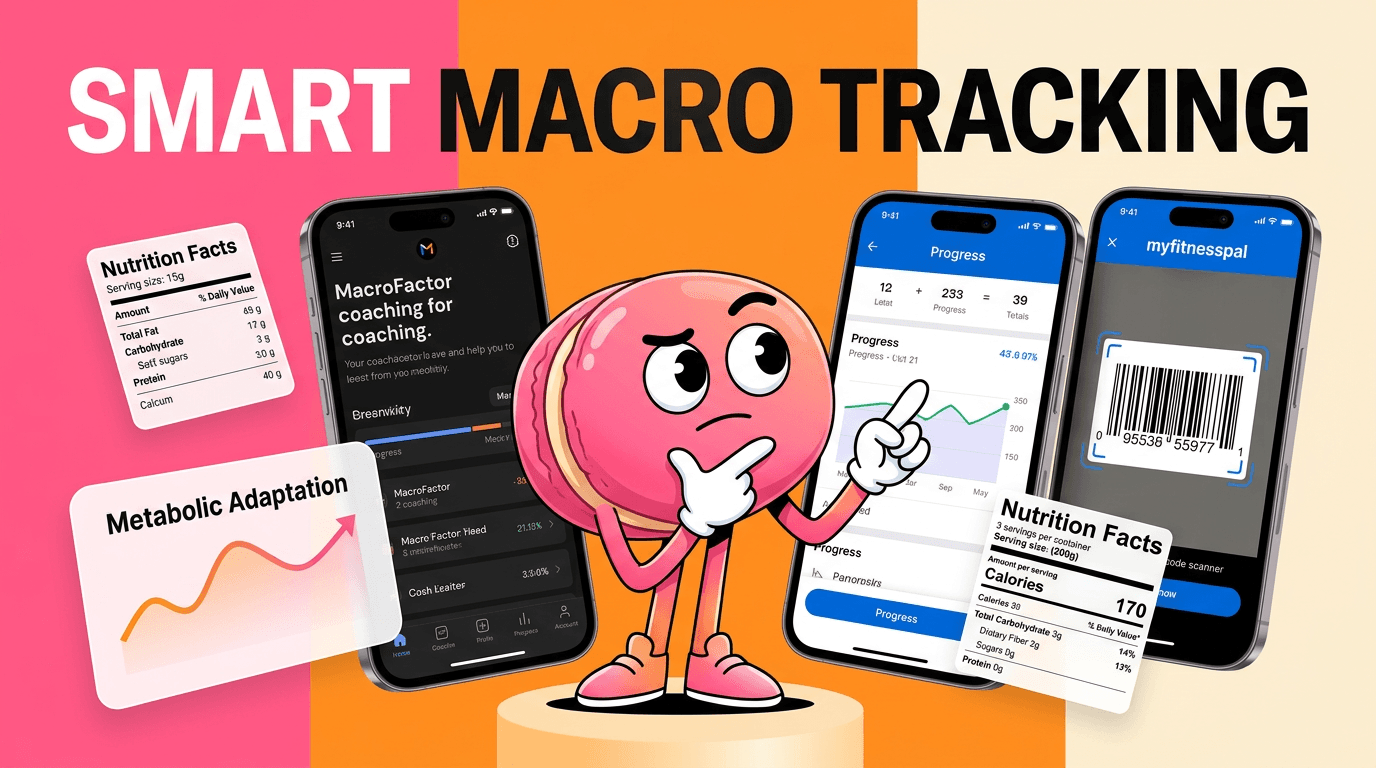
MacroFactor vs MyFitnessPal: Macro Tracking
MyFitnessPal is strongest when the main problem is food logging speed. Its crowdsourced database, barcode scanner, and familiar interface make it easy to record meals without much setup, which is why many beginners start there. MacroFactor takes a different approach: it treats logging as input for a coaching system that revises calorie and macro targets based on weight trends and intake patterns. That makes MacroFactor more useful when your goal is to stop guessing and let the app do the adjustment work.
Adaptive Algorithms Explained
MacroFactor’s core advantage is that it estimates TDEE from real-world data instead of relying only on a formula and an activity guess. As you log body weight and food intake, it refines the calorie target it recommends, which can be especially helpful after a cut, during a bulk, or whenever your routine changes. MyFitnessPal can still support macro tracking, but it does not actively reinterpret your progress in the same way, so users must make more of the coaching decisions themselves.
Pricing and Value
MacroFactor’s premium-only model makes sense if you want the app to behave like a nutrition coach rather than a simple tracker. MyFitnessPal is easier to justify for casual use because the free tier covers basic logging and the paid plan is optional. The tradeoff is that MyFitnessPal’s lower entry cost comes with more manual work and more ads in the free experience. MacroFactor costs less than MyFitnessPal Premium on a monthly basis, but it asks for a stronger commitment to consistent logging.
More About Macrofactor vs Myfitnesspal
MacroFactor stands out because it does not just record what you ate; it uses that data to revise your calorie target. That matters most when your body weight trend no longer matches the plan you started with. Instead of forcing you to calculate a new target by hand, it updates the recommendation for you. For users who want less guesswork and more structured feedback, that coaching layer is the main reason to choose it.
MyFitnessPal remains the more recognizable tracker because it lowers the barrier to entry. Its food database, barcode scanning, and broad device support make it easy to start logging quickly, which is useful for beginners, families, and anyone who wants a straightforward calorie diary. The downside is that the app is better at collecting data than interpreting it, so users who need adaptive guidance may outgrow it once their goals become more specific.
MacroFactor is also stronger for people who care about the quality of their nutrition data. It tracks more detailed metrics and is built around consistent weigh-ins, intake logging, and trend analysis. That makes it a better fit for athletes, physique-focused users, and people who want to understand maintenance calories more precisely. The tradeoff is that it rewards consistency, so it is less forgiving if you only want to log occasionally. Another useful Macaron comparison is Macaron – World's First Personal AI Agent at https://macaron.im/.
Macaron approaches nutrition from a different angle by reducing the need to maintain a rigid tracking habit. Its AI can create custom tools from natural language prompts, which is useful when your schedule, job, or family routine makes standard macro tracking unrealistic. It can also estimate meals from photos, giving users a lighter-weight option than full manual entry. That flexibility is appealing, although dedicated trackers still win on precision and auditability. For a broader Macaron context, World's First Personal AI Agent - Macaron at https://macaron.im/blog can help you compare the decision from another angle.
Taken together, the three apps serve different levels of commitment. MacroFactor is best for users who want the app to think with them and adjust targets automatically. MyFitnessPal is best for users who value familiarity, a large database, and a low-friction start. Macaron is best for users who want nutrition help shaped around real life rather than a fixed logging routine, even if that means giving up some of the measurement depth of a dedicated tracker.
Where Macaron Fits the Picture
Macaron is not trying to replace MacroFactor’s coaching engine or MyFitnessPal’s food database. It is designed for people who want nutrition support without committing to a strict tracking workflow. You can ask it to build tools around your schedule, habits, or constraints, such as meal ideas for night shifts, simple prep plans for busy weeks, or quick decision aids for breakfast and lunch. That makes it especially useful for users who have abandoned traditional trackers because the logging burden felt harder than the diet itself.

Comparison Table
| Category | MacroFactor | MyFitnessPal | Macaron | |---|---|---|---| | Core model | Adaptive nutrition coaching app | Mainstream tracking app | Personal AI nutrition companion | | Main strength | Weekly TDEE recalculations, plateau solutions | Massive food database (15M+ items), barcode scanning | Lifestyle-aware tool generation | | Tracking style | Mandatory consistent logging for algorithm accuracy | Flexible casual tracking | Optional photo/voice input | | Pricing model | Premium only ($11.99/month) | Free + paid tiers ($19.99/month premium) | Free download + in-app purchases | | Best fit | Users optimizing cuts/bulks | Casual trackers, beginners | Those wanting personalized systems |
Frequently Asked Questions
It depends on what you need the app to do. MacroFactor is better if you want adaptive calorie targets, trend-based TDEE estimates, and less manual recalculation when your weight changes. MyFitnessPal is better if you want a familiar interface, a huge food database, and a free starting point. In practice, MacroFactor suits users who want coaching logic, while MyFitnessPal suits users who mainly want a convenient tracker.
No, MacroFactor is a paid app with a trial period rather than a permanent free tier. That pricing reflects its focus on adaptive coaching and analytics instead of basic logging. If you only need occasional calorie tracking, MyFitnessPal’s free version may be enough. If you want a tool that updates targets based on your progress, MacroFactor’s subscription model is the tradeoff for that extra guidance.
Yes, but its AI is mainly aimed at making logging easier rather than changing your nutrition plan. It can help with barcode scanning, meal detection, and other convenience features. What it does not do is automatically reinterpret your progress and adjust your calorie target the way MacroFactor does. So MyFitnessPal’s AI helps you enter data faster, while MacroFactor’s system helps you act on the data.
Macaron is a better fit for people who want nutrition help without living inside a tracker. Instead of asking you to log everything, it can generate custom tools based on your routine, such as meal planners, quick recipe helpers, or schedule-aware food suggestions. That makes it useful for users who are tired of logging fatigue or who need nutrition support that adapts to work, family, or travel constraints.
MacroFactor is usually the strongest choice for weight loss if you want the app to help manage calorie targets as your body changes. Its adaptive approach is useful when progress slows or when your maintenance needs shift. MyFitnessPal can still work for weight loss, especially if you already know how to adjust calories manually. Macaron can help with planning, but it is not as precise for calorie control.
MacroFactor is often the better fit for bulking because it can update your intake targets as your weight trend changes. That reduces the chance of under-eating when your maintenance level rises. MyFitnessPal can also support bulking, but you need to monitor progress and adjust on your own. Macaron may help with meal structure and convenience, but it is not as strong for fine-tuned surplus management. For a third-party check, MacroFactor vs. MyFitnessPal: The Ultimate Calorie & Macro ... at http://www.goldiai.com/blog/macrofactor-vs-myfitnesspal-app-comparison is worth comparing against the page summary.
The biggest downside is that it is more of a logging tool than a coaching tool. It makes it easy to record food, but it does not automatically adjust your calorie target when your progress changes. For users who want guidance during plateaus or after metabolic adaptation, that can mean more manual work. It is still useful, but the burden of interpretation stays with the user. For another outside reference, MacroFactor vs. MyFitnessPal: Best App for Weight Loss & Muscle ... at https://www.justanswer.com/medical/tcobj-better-macrofactor-fittnes-pal.html adds a second perspective.
MacroFactor’s main tradeoff is that it expects consistent logging and regular weigh-ins so its recommendations stay accurate. If you do not want to track body weight and intake often, you may not get the full benefit. It is also a paid app, which may not suit casual users. In return, you get more adaptive guidance than a standard tracker usually provides.com/macrofactor-vs-myfitnesspal-2025/ is a useful reference point.com/macrofactor-vs-myfitnesspal-2025/ is a useful reference point.com/macrofactor-vs-myfitnesspal-2025/ is a useful reference point.com/macrofactor-vs-myfitnesspal-2025/ is a useful reference point.com/macrofactor-vs-myfitnesspal-2025/ is a useful reference point. For outside context, MacroFactor vs. MyFitnessPal: Which Macro Tracking App Wins in ... at https://macrofactor.com/macrofactor-vs-myfitnesspal-2025/ is a useful reference point.
Read & discover
AI Personal Assistant
Free calculators


