Myfitnesspal Free
While MyFitnessPal still offers a free version in 2025, critical features like barcode scanning and macro tracking now require Premium. Understand exactly what's still free and what's not.
MyFitnessPal Free Features in 2025
MyFitnessPal still has a free tier in 2025, but it now functions more like a basic logging shell than the all-in-one tracker many users remember. You can create an account, log food manually, record exercise, and track weight, which is enough for people who only need a simple calorie diary. The tradeoff is that the fastest and most convenient workflows are mostly reserved for paid plans.
The biggest change is not that free access disappeared, but that the free plan became more manual. Packaged foods, repeat meals, and detailed nutrition checks take more effort because the app pushes scanning, deeper analysis, and faster entry tools into Premium. That makes the free version workable for light use, but noticeably slower for anyone logging multiple meals a day or following a structured diet.
For users who want basic accountability, the free plan can still do the job. It is useful if you mainly want to see whether you are staying near a calorie target, checking body weight trends, or keeping a rough record of workouts. It is less useful if you need precise macro control, quick barcode entry, or long-term reporting without extra steps. Those limitations matter most when consistency depends on speed. For a related Macaron page, see Macro Meal Planner: Hit Your Protein, Carb & Fat Targets - Macaron at https://macaron.im/blog/macro-meal-planner.
MyFitnessPal’s current free experience also reflects a broader product strategy: keep the core database and account setup open, then place convenience features behind subscription tiers. That approach benefits casual users who only need the basics, but it creates friction for people who adopted the app specifically because it used to reduce manual work. In practice, the free plan is now a compromise between access and efficiency.
If you are deciding whether to stay on the free tier, the key question is how much manual effort you can tolerate. Users who log occasionally may find it sufficient, while meal preppers, athletes, and people managing diabetes or low-carb diets often need more detail than the free plan provides. That is where alternatives like Macaron become attractive, especially when you want faster logging without paying first.
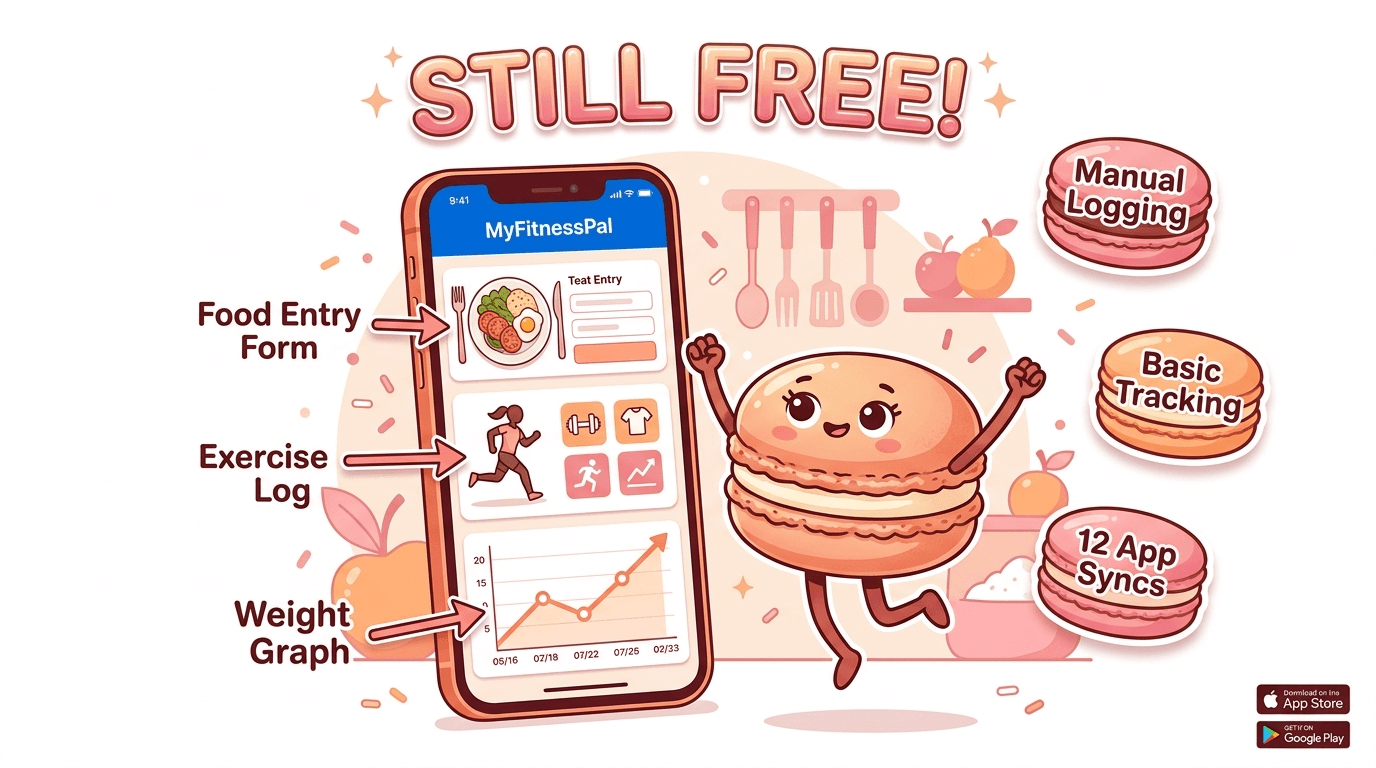
What Free Users Can Still Do in 2025
The free version still covers the essentials: manual food entry, exercise logging, weight tracking, and basic calorie awareness. You can build a diary, save common foods, and keep a running record of intake without paying. Some social and account-level features remain available too, including limited integrations with fitness apps. The limitation is that the workflow is now more hands-on, so the app works best for users who do not mind typing in most items themselves.
Premium Paywall: What Costs Money Now
MyFitnessPal now reserves several of its most time-saving tools for paid plans. Barcode scanning, meal scan features, intermittent fasting tools, detailed macro and nutrient analysis, and fuller export options are tied to Premium or higher tiers. That matters because these are the features that reduce friction for everyday logging. Free users can still track, but they do more of the work themselves, which is the main tradeoff versus subscribing.
More About Myfitnesspal Free
The free plan is still usable, but it is no longer the fastest way to maintain a food diary. Manual entry remains the backbone of the experience, and that is fine for a small number of meals or a simple calorie target. Once you start logging packaged foods, recipes, or frequent snacks, the lack of scanning and richer automation becomes obvious. The app still works; it just asks for more effort than it used to.
For many people, the real issue is not missing features in isolation but the cumulative slowdown. A barcode scanner saves time on every packaged item, gram-based macro tracking helps with precision diets, and better exports make it easier to review progress over weeks or months. When those tools move behind a paywall, the free tier becomes less about insight and more about basic record keeping. That is acceptable for some users and frustrating for others.
MyFitnessPal still has strengths that matter. Its food database is large, the interface is familiar, and the app is easy to start using without setup complexity. If you only need a lightweight calorie log, that simplicity can be enough. The downside is that the app’s best convenience features now sit in paid tiers, so users who want a smoother experience may feel pushed toward upgrading sooner than they expected. Another useful Macaron comparison is Eat This Much Review: Meal Planner and Alternatives - Macaron AI at https://macaron.im/blog/eat-this-much-review.
This is where newer apps change the comparison. Macaron, for example, focuses on reducing manual work with AI-assisted logging and photo-based input, which is useful for people who want speed without paying for a subscription. That does not make it universally better: MyFitnessPal still has a long-standing food database and broad name recognition. But if you care most about free convenience, Macaron is built around that need more directly. For a broader Macaron context, How Macaron AI Tackles the Problem with Traditional Task Lists at https://macaron.im/blog/macaron-ai-daily-planning-guide can help you compare the decision from another angle.
The best choice depends on your habits and your tolerance for friction. MyFitnessPal Free is still reasonable for occasional tracking, basic accountability, and users who already know the app well. It is weaker for low-carb users, athletes, and anyone who wants detailed nutrition data without extra subscriptions. Competitors can be better for automation, while MyFitnessPal remains stronger for familiarity and database depth.
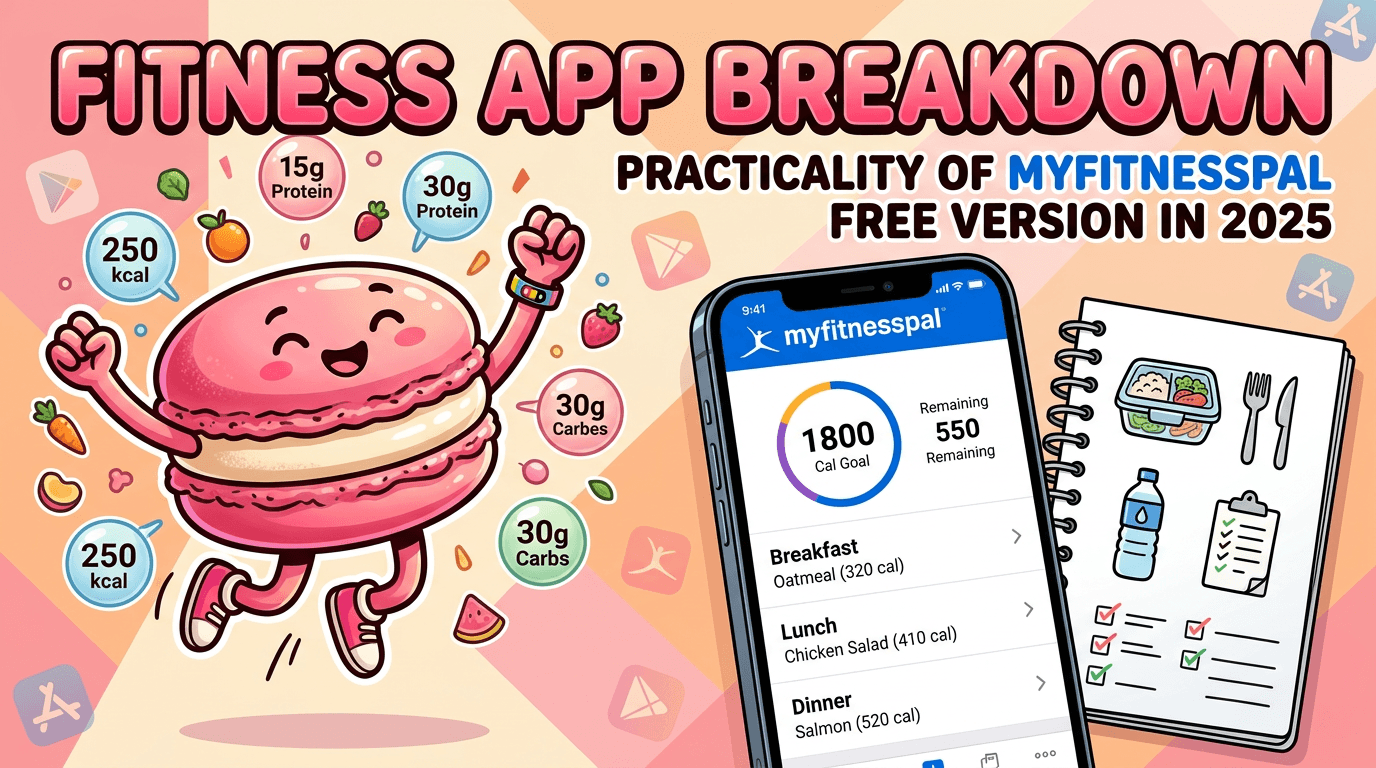
Is the Free Version Practical in 2025?
Yes, but only for a narrow kind of use. If you log a few meals a day, do not need barcode scanning, and are comfortable entering foods manually, the free version can still support basic calorie counting and weight monitoring. It becomes less practical for meal prep, packaged foods, or precise macro goals because every extra step adds friction. Users who value speed, accuracy, or detailed reporting will feel the limits quickly.
Top Free Alternatives With Premium Features
If you want more automation without paying, alternatives are now a serious option. Macaron stands out for photo-based logging and AI-assisted meal tracking, which reduces the amount of manual entry needed. Cronometer is stronger for micronutrient detail, and Lose It! is often preferred by users who want a simpler calorie tracker with barcode support. MyFitnessPal still has a familiar interface, but these alternatives can be better when the goal is convenience on a free plan.
Frequently Asked Questions
The free tier has lost several convenience features that used to make the app faster to use, including barcode scanning, meal analysis, intermittent fasting tools, gram-based macro tracking, and fuller export options. The core account and manual logging tools remain, but the experience is more limited than it was before these changes. For users who relied on quick entry or detailed reporting, the difference is substantial.
No. Barcode scanning is no longer included in the free plan, so packaged foods must be entered manually unless you upgrade. That makes the app slower for grocery items, snacks, and repeat products. If scanning is important to you, a free alternative like Macaron or a competing tracker with barcode support will usually feel more practical than MyFitnessPal Free.
The free version can still support weight loss if you are disciplined about manual logging and do not need advanced insights. Premium is easier to use because it reduces entry time and gives more detailed nutrition tools, which can help people adjust their diet more quickly. The tradeoff is cost versus convenience: free is workable, but premium is better for users who want less friction and more precision.
Macaron is one of the strongest free alternatives if barcode scanning and faster logging matter to you. It also adds photo-based input and AI-assisted tracking, which can reduce the amount of typing required. That said, MyFitnessPal still has a very large food database and a familiar interface, so users who already know the app may prefer staying put unless the missing features are a dealbreaker.
Only in a limited way. Free users can access some short-range or basic reports, but full history exports and more complete data access are tied to paid plans. That can be a problem if you want to review long-term trends, share records with a coach, or move your data into another tool. If exports matter, check the current limits before relying on the free tier.
It can work for very basic tracking, but many diabetics and low-carb users need more detailed nutrition data than the free plan provides. The lack of gram-based macro tracking and easier nutrient analysis makes it harder to manage carbs precisely. For that use case, a more detailed tracker such as Cronometer, or a more automated free option like Macaron, may be a better fit. For a third-party check, Behind the Paywall: MyFitnessPal Premium vs Free (2025 Deep Dive) at https://blog.mysimpleplan.com/post/behind-the-paywall-myfitnesspal-premium-vs-free-2025-deep-dive is worth comparing against the page summary.
Not in the way most users expect. The free plan is mainly for logging and basic tracking, while meal planning, fasting tools, and more advanced guidance are part of paid tiers. If you want the app to help organize meals or structure eating windows, you will likely run into upgrade prompts. Users who only need a simple diary may still be fine without those extras. For another outside reference, What is included in the free version? - MyFitnessPal Help at https://support.myfitnesspal.com/hc/en-us/articles/15457546881805-What-is-included-in-the-free-version adds a second perspective.
It is worth it if you want a familiar calorie log and do not mind manual entry. It is less compelling if you expect the app to save time, scan foods, or provide detailed nutrition analysis without paying. In that case, a free alternative may offer a better balance of convenience and cost. The free plan is usable, but it is no longer the most efficient option.com/ is a useful reference point.com/ is a useful reference point.com/ is a useful reference point.com/ is a useful reference point.com/ is a useful reference point. For outside context, MyFitnessPal: Calorie Tracker & BMR Calculator to Reach Your Goals at https://www.myfitnesspal.com/ is a useful reference point.
Read & discover
AI Personal Assistant
Free calculators


