Myfitnesspal Pricing
MyFitnessPal's pricing now spans Free, Premium ($79.99/year), and Premium+ ($99.99/year) tiers. The real question isn't just cost—it's whether paying removes the friction of manual food logging or just adds features to an already tedious process.
MyFitnessPal Free vs Premium: What You Actually Get
MyFitnessPal’s pricing is straightforward on paper but easy to misread in practice. The free plan covers basic calorie and exercise logging, while Premium and Premium+ add faster entry, custom goals, and planning tools. The real decision is not whether the app has tiers; it is whether the paid features meaningfully reduce the daily effort of tracking meals, or simply make the same workflow feel slightly less annoying.
Premium is priced at $79.99 per year or $19.99 month to month, and Premium+ sits at $99.99 per year or $24.99 monthly. That gap matters because many users compare the annual rate to other subscriptions without accounting for how often they actually log food. If you track every day, the annual plan can seem reasonable; if you log inconsistently, the monthly price can feel steep very quickly.
The strongest case for paying is convenience, not transformation. Premium unlocks barcode scanning, voice logging, meal scan tools, ad removal, and more detailed macro control. Those features help users who already know what they eat and want to record it faster. They do not fully solve the core pain point that drives many people away from food trackers: repeated manual entry, especially when meals are homemade or mixed dishes. For a related Macaron page, see AI Calorie Tracker: How It Works and What to Expect - Macaron at https://macaron.im/blog/ai-calorie-tracker-explained.
User feedback tends to split along usage style. Macro-focused athletes and people following structured nutrition plans often value the extra controls, while casual users usually find the free version enough for basic awareness. That divide is important because MyFitnessPal’s premium value depends less on feature count than on how disciplined and repetitive your tracking routine is. The app is strongest when your meals are predictable and your goals are specific.
Macaron approaches the same problem differently by reducing the need to type, search, and estimate. Instead of charging for a better manual tracker, it uses AI to interpret photos and natural language requests, which can be more useful for people who want less friction rather than more controls. The tradeoff is that MyFitnessPal still has the advantage in brand familiarity and database depth, while Macaron is better suited to users who want automation first.
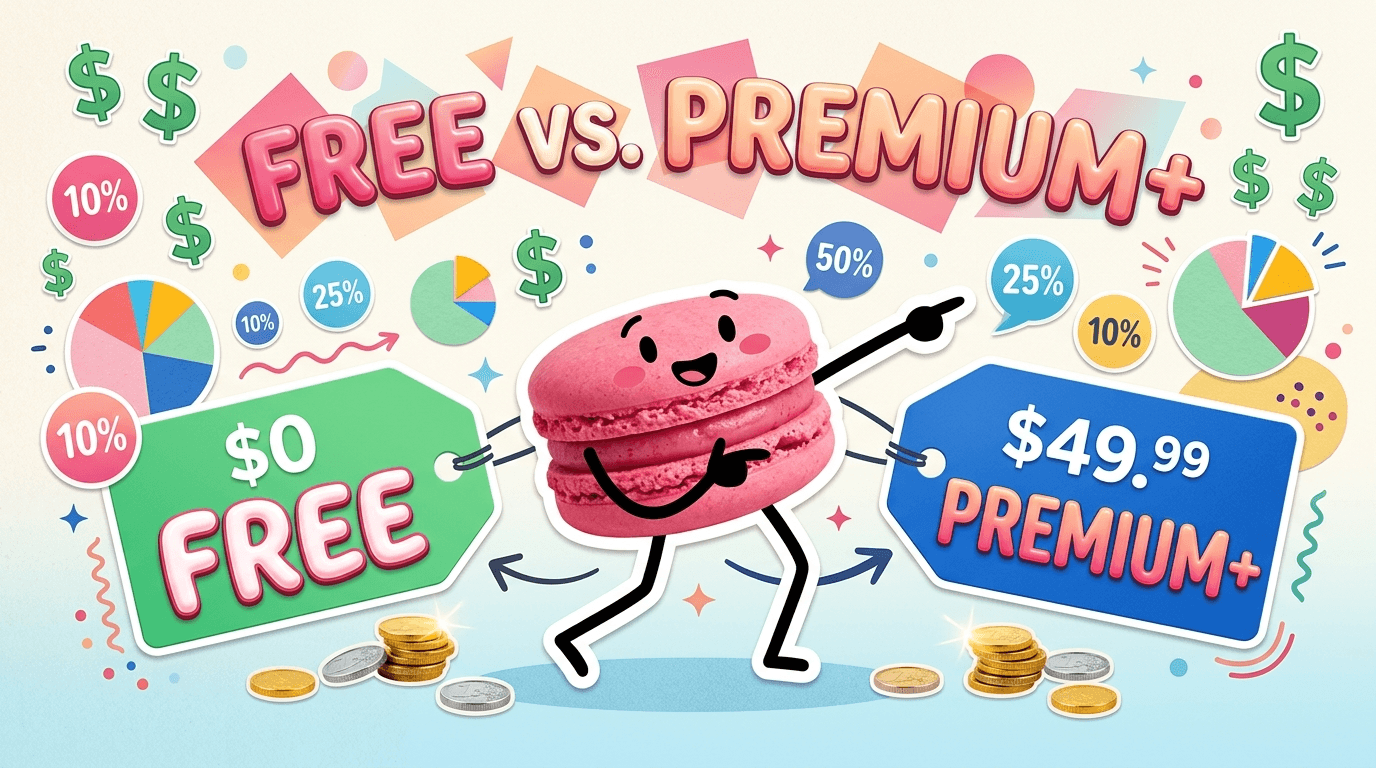
What's the Real Cost Difference Between MyFitnessPal Tiers?
MyFitnessPal’s pricing ladder is simple, but the real cost depends on how you subscribe and where you live. Free is $0, Premium is $79.99 per year or $19.99 per month, and Premium+ is $99.99 per year or $24.99 per month. The annual plans lower the effective monthly cost, but the month-to-month option is much more expensive if you keep the subscription active all year. Regional pricing can also change the equation, so the same plan may feel affordable in one market and overpriced in another.
Which Features Actually Justify MyFitnessPal's Premium Cost?
Premium is most defensible for users who log food every day and care about speed, consistency, and macro precision. The features that matter most are ad-free browsing, barcode scanning, custom calorie and macro targets, voice logging, and quicker meal entry. Those tools can save time, but they do not remove the need to identify ingredients, estimate portions, or correct database matches. That means Premium improves the experience without changing the underlying workload, which is why some users still feel the subscription is expensive for what it delivers.
How Does MyFitnessPal Pricing Compare to AI Alternatives?
Compared with MyFitnessPal, AI-first tools like Macaron shift the value proposition from logging assistance to logging reduction. Instead of paying for better search, faster entry, or more detailed manual controls, users can rely on photo-based recognition and conversational prompts to capture meals with less typing. That can be a better fit for busy people, beginners, or anyone who abandons trackers because the process feels repetitive. The tradeoff is that traditional apps still offer more mature food databases, more established community habits, and a familiar workflow for experienced trackers.
More About Myfitnesspal Pricing
MyFitnessPal’s free tier is useful, but it is intentionally limited in the places where frequent users feel friction most. It gives you a basic diary, exercise logging, and enough nutrition visibility to start building awareness. What it does not do is make tracking effortless. That distinction matters because many people do not quit calorie counting due to lack of data; they quit because the process of entering meals becomes tedious after the novelty wears off.
Premium is best understood as a convenience upgrade for people who already know they want to track consistently. Barcode scanning, voice entry, custom goals, and deeper nutrition views can reduce small annoyances throughout the day. For someone eating packaged foods or repeating the same meals, those features can be genuinely helpful. For someone cooking at home, eating out often, or changing recipes frequently, the time savings are smaller because the app still depends on manual confirmation and correction.
Premium+ adds meal planning and grocery list features, which broadens the app beyond logging. That can be useful for users who want one subscription to cover tracking, planning, and shopping organization. The downside is that the extra cost is not always matched by unique functionality, especially if you already use separate meal-planning or grocery apps. In that case, Premium+ can feel like a bundle of adjacent tools rather than a clear upgrade in tracking quality. Another useful Macaron comparison is Hi! I'm Macaron. at https://macaron.im/home.
Pricing confusion is common because MyFitnessPal’s quoted rates vary by billing cycle, platform, region, and promotion. Annual pricing looks more attractive than monthly pricing, but the upfront commitment is still meaningful. Some users also see different offers depending on whether they subscribe through the App Store, Google Play, or the web. That makes it harder to compare value cleanly, especially when competing apps publish simpler pricing and fewer temporary discounts. For a broader Macaron context, Playbook — AI Hacks for Daily Life, Family, Growth & Hobbies at https://macaron.im/playbook can help you compare the decision from another angle.
The biggest competitive pressure comes from AI tools that attack the problem at the source. Macaron is useful for people who want to describe a meal, snap a photo, or ask for help planning food without building a habit around manual logging. MyFitnessPal still wins for users who want a mature tracker with a large ecosystem and familiar nutrition workflows. Macaron’s tradeoff is that it is less established as a traditional database-first tracker, but it can be a better fit when the goal is to spend less time tracking overall.
Macaron: Premium Feeling Without a Traditional Tracker Mindset
Macaron takes a different approach from MyFitnessPal’s paid tiers by trying to remove the logging burden instead of polishing it. Rather than asking users to search databases, scan barcodes, and manually assemble meals, it uses AI to interpret photos and natural language requests. That makes it especially useful for people who dislike repetitive data entry, eat varied meals, or want a lighter habit to maintain. The tradeoff is that traditional trackers still have an edge in long-standing food database depth, but Macaron is more compelling when convenience matters more than manual control.
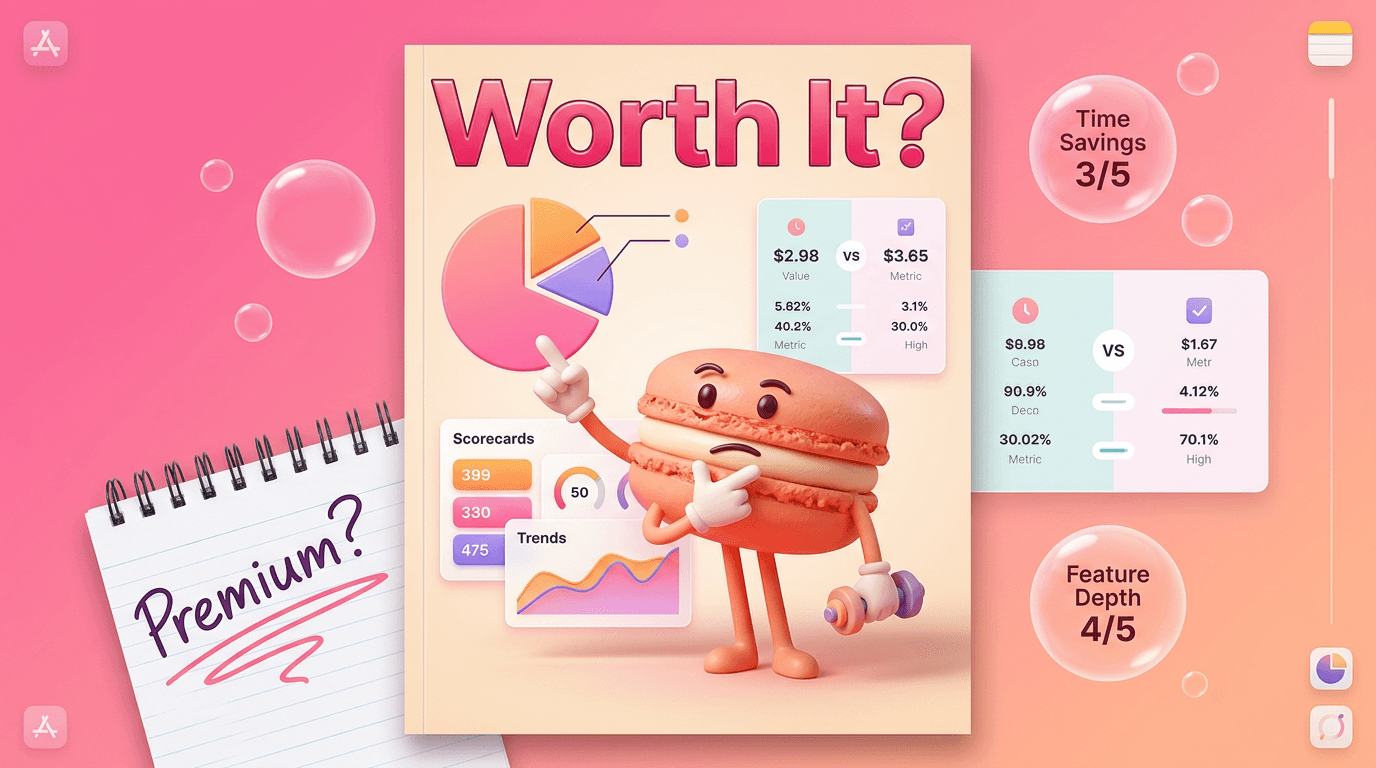
Value Scorecard: Is MyFitnessPal Premium Worth It?
MyFitnessPal Premium makes the most sense for users who log food daily, care about macro precision, and want a cleaner interface without ads. It is less compelling for casual users who only track occasionally or for people hoping a paid plan will eliminate the work of food logging. Premium+ adds planning tools, but those extras are only valuable if you will actually use them instead of relying on separate apps. If your main goal is faster manual tracking, Premium can help; if your goal is less tracking altogether, an AI-first app may be the better fit.
Frequently Asked Questions
It can be worth it if you log food every day, care about macro targets, and want faster entry with fewer interruptions. Premium is less compelling for casual users because the app still depends on manual logging, which is the main source of friction for many people. If your goal is to reduce the time spent tracking rather than improve the tracking interface, an AI-first alternative may offer better value.
Pricing varies because of regional taxes, app store policies, currency conversion, and local market strategy. That is why the same subscription can look much cheaper in one country and noticeably more expensive in another. The important thing is to compare the final billed amount, not just the headline price. If you travel or switch app stores, the offer you see may also change depending on where the subscription is processed.
Lose It! and Cronometer are common lower-cost alternatives for users who want structured nutrition tracking without paying MyFitnessPal’s full premium price. They can be better value if your priority is cost and you do not need MyFitnessPal’s specific ecosystem. Macaron is different: it is not just a cheaper tracker, but an AI-driven option that reduces manual entry. The best choice depends on whether you want a classic tracker or less tracking work overall.
Yes, discounts do appear, especially around seasonal promotions and new-user offers. The exact deal can vary by platform, region, and timing, so two users may see different prices on the same day. If you are considering Premium, it is worth checking the web, iOS, and Android offers before paying full price. Just keep in mind that a discount only helps if the app’s workflow is still a good fit for your habits.
The free plan covers basic calorie counting, exercise logging, and general nutrition awareness. That is enough for many casual users who mainly want to understand their intake without paying for extras. The limitations show up when you want faster logging, more detailed macro control, or a cleaner experience without ads. If you only track occasionally, Free may be sufficient; if you log daily, the missing convenience features become more noticeable.
Premium focuses on faster logging and more control over nutrition goals, while Premium+ adds meal planning and grocery list tools. Premium is the better fit if you mainly want to track intake more efficiently. Premium+ makes more sense if you want the app to help with planning meals before you shop or cook. The tradeoff is that the extra features are only useful if you want an all-in-one workflow rather than a dedicated tracking app. For a third-party check, MyFitnessPal Pricing 2026: Free vs Premium vs Premium+ at https://nutriscan.app/blog/posts/myfitnesspal-pricing-2026-guide-2ff09c399a is worth comparing against the page summary.
Macaron is a better fit for users who want less manual work and prefer AI-assisted food tracking. It can be especially helpful if you dislike searching databases, entering portions, or repeating the same logging routine every day. MyFitnessPal is still stronger for users who want a familiar tracker with a large nutrition database and established habits. In short, Macaron is better for automation, while MyFitnessPal is better for traditional tracking depth. For another outside reference, MyFitnessPal Membership Pricing: Everything to Know at https://blog.myfitnesspal.com/myfitnesspal-membership-pricing-tiers/ adds a second perspective.
Yes, especially if your goal is macro tracking, calorie control, or structured meal awareness. Premium’s custom goals and detailed nutrition views are useful for people following a plan closely. It is less ideal if your meals vary a lot or if you want the app to do more of the work for you. In those cases, the manual nature of the app can become the limiting factor, not the feature set.com/premium is a useful reference point.com/premium is a useful reference point.com/premium is a useful reference point.com/premium is a useful reference point.com/premium is a useful reference point. For outside context, Free Calorie Counter, Diet & Exercise Journal | MyFitnessPal at https://www.myfitnesspal.com/premium is a useful reference point.
Read & discover
AI Personal Assistant
Free calculators


