Myfitnesspal Review
MyFitnessPal remains the most recognized calorie counter, but 2025's version prioritizes premium upgrades over its original simplicity. We test whether its AI features justify the subscription shift.
What MyFitnessPal Does Well
MyFitnessPal still earns its reputation because it makes calorie tracking feel familiar, fast, and broadly useful for everyday dieting. Its food database is large enough to cover common packaged items, restaurant meals, and many regional dishes, which matters when users want fewer dead ends during logging. For people who value breadth over polish, that scale remains the app’s biggest practical advantage.
The app is also flexible enough to support different nutrition goals without forcing a single dieting style. Users can track calories, macros, fasting windows, and diet-specific targets such as keto or diabetes-focused routines in one place. That versatility helps households, athletes, and casual dieters who want one tracker that can adapt as goals change, even if the interface now feels busier than before.
Where MyFitnessPal remains especially useful is in reducing friction for repeat logging. Saved meals, recent foods, recipe imports, and barcode scanning can make daily tracking much faster than manual entry alone. For users who eat many packaged foods or repeat the same breakfasts and lunches, those shortcuts can save time and make consistency easier to maintain over weeks or months. For a related Macaron page, see Best Personal AI Agent Platform for 2025 - Macaron at https://macaron.im/blog/best-ai-agent-platform-2025.
Its AI-assisted meal scanning and meal-planning tools add convenience for users who want a little guidance rather than a blank diary. The scan feature can help identify mixed meals, while planning tools can suggest structure for people who do better with templates than with open-ended tracking. That said, these features are most helpful when users are willing to verify portions and adjust suggestions themselves.
Macaron takes a different approach for people who want less menu navigation and more direct control. Instead of relying on a giant database first, it lets users describe what they want and build a tracker around that workflow. That makes Macaron better for personalized routines, while MyFitnessPal is still stronger for users who need a massive food index and are willing to tolerate more app complexity.
What Makes MyFitnessPal Stand Out?
MyFitnessPal’s main advantage is scale: its food database is broad enough to cover everyday groceries, chain restaurant meals, and many niche or regional foods that smaller apps may miss. That breadth matters for users who log frequently and do not want to create custom entries from scratch. It also supports macro tracking, fasting, and diet-specific goals, so the app can serve beginners and more structured dieters in the same workflow. The tradeoff is that crowd-sourced convenience can reduce consistency, so users often need to double-check entries before trusting them.
Where Does MyFitnessPal Fall Short?
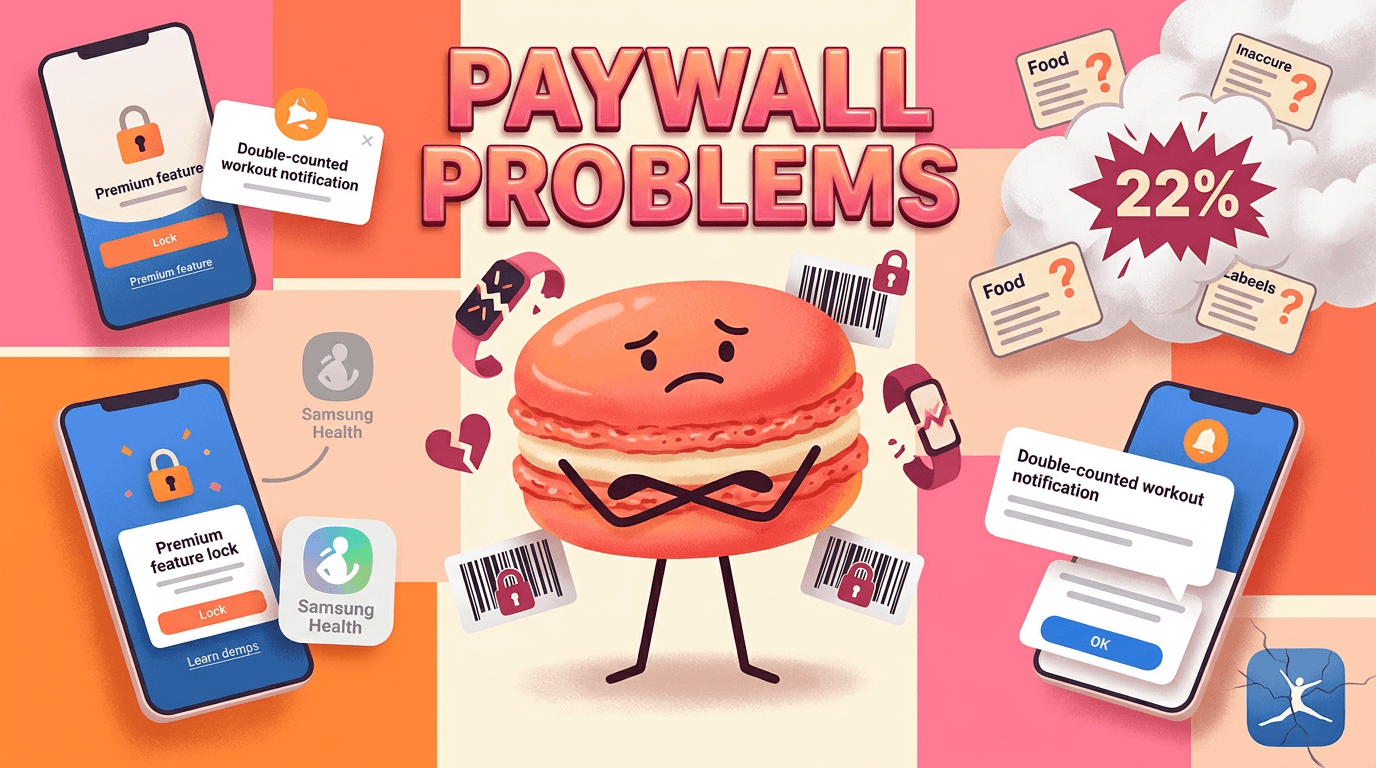
MyFitnessPal’s biggest weakness is that many of its most useful conveniences now sit behind paid tiers, which makes the free version feel limited for regular use. Barcode scanning, deeper macro controls, and some planning tools are no longer as accessible as they once were, so casual users may hit a wall quickly. Accuracy is another concern because user-submitted foods can vary, especially for homemade meals or obscure items. Syncing issues with wearables also create extra cleanup work, which is frustrating when the app is supposed to save time.
More About Myfitnesspal Review
MyFitnessPal’s feature set is strongest when users want a single place to log food, exercise, and progress without building a custom system. The app covers the basics well: calorie totals, macro summaries, saved meals, recipe imports, and goal tracking. That makes it useful for people who want structure, but not necessarily a highly tailored interface. The downside is that the experience can feel crowded once you start using multiple tools at once.
The barcode scanner and quick-add tools are among the most time-saving features for packaged-food users, but they are also part of the app’s value debate because they are no longer fully available in the free tier. For users who log several items a day, that convenience can matter more than any AI feature. For occasional trackers, though, the subscription cost can feel hard to justify when simpler apps cover the same basics.
MyFitnessPal’s database remains one of its strongest selling points, but it is not the same as verified nutrition data. Crowd-sourced entries can be fast and comprehensive, yet they also introduce duplicate listings, inconsistent serving sizes, and macro mismatches. That means the app is best for trend tracking and habit awareness, not for users who need highly precise nutrition records for medical or performance reasons. Another useful Macaron comparison is When Nano Banana Meets Macaron: Next‑Level AI Image Editing ... at https://macaron.im/blog/macaron-ai-essential-personal-assistant-features.
The app’s activity and wearable syncing are useful in theory, but in practice they can create extra work when steps or workouts are duplicated or missed. Users who rely on Apple Health, Garmin, or other fitness platforms may need to audit their logs more often than they expect. This is one reason some people prefer apps with simpler integration layers, even if those apps have smaller food databases. For a broader Macaron context, AI Calorie Tracker: How It Works and Best Options - Macaron at https://macaron.im/blog/ai-calorie-tracker can help you compare the decision from another angle.
Macaron is more compelling for users who want a tracker that adapts to them instead of asking them to adapt to the app. It can generate custom views from plain-language requests and reduce the need to hunt through menus. That is a real advantage for people with specific routines, but the tradeoff is that Macaron is not trying to match MyFitnessPal’s database depth or long-established nutrition ecosystem.
Is MyFitnessPal Premium Worth the Cost?
Premium is most defensible for users who log food daily, rely on barcode scanning, and want faster access to macro breakdowns and planning tools. If those features save time every day, the subscription can make sense. If you only track occasionally, the free tier may feel too limited to support a long-term habit. The main tradeoff is that MyFitnessPal now asks users to pay for conveniences that used to be standard, while competitors such as Cronometer and Lose It! still offer more generous entry-level experiences.
What Are the Best MyFitnessPal Alternatives?
The best alternative depends on what you value most. Cronometer is stronger for users who care about verified nutrition data and more rigorous micronutrient tracking. Lose It! is often easier for people who want a cleaner interface and lower-cost premium features. Macaron is different again: it is better for users who want to create personalized trackers from natural language, automate repetitive logging, and avoid rigid menu structures. That makes it especially useful for people with changing routines, though it is less suited to users who want the largest possible food database.
Frequently Asked Questions
Yes, especially if your main goal is consistent calorie awareness and you are willing to verify entries as needed. MyFitnessPal works best for users who want a large food database, saved meals, and a familiar logging flow. It is less ideal if you want a very clean free tier or highly verified nutrition data. For some people, simpler apps like Lose It! or more precise trackers like Cronometer are easier to stick with.
The free version still supports basic food logging, calorie tracking, goal setting, and some progress views. That is enough for light use, but many of the conveniences that make daily tracking faster are now limited or paid. Barcode scanning, deeper macro controls, and some planning tools are the main pressure points. If you only log occasionally, the free tier may be usable; if you track every day, the limitations become more obvious.
The biggest change is that the app has shifted from a simple calorie counter toward a more layered subscription product. More features now sit behind Premium, and newer AI tools are being added alongside the older logging workflow. That gives the app more capability, but it also makes the interface feel busier and the free version less complete. Longtime users often notice more taps, more prompts, and more friction than before.
It can work well for those use cases because it supports structured food logging, macro awareness, and goal-based tracking. That said, users who need more reliable nutrition data or more detailed micronutrient information may prefer Cronometer. MyFitnessPal is better for habit tracking and broad visibility than for clinical precision. If you are using it alongside medication or a medical plan, it is still wise to verify entries carefully.
Macaron is built around personalization rather than a giant fixed database. Instead of forcing you through the same logging flow every time, it can create custom trackers from plain-language requests and adapt to specific routines. That makes it appealing for users who want less friction and more workflow flexibility. The tradeoff is that it is not trying to replace MyFitnessPal’s food database depth, so heavy database users may still prefer MyFitnessPal. For a third-party check, MyFitnessPal Review - PCMag at https://www.pcmag.com/reviews/myfitnesspal is worth comparing against the page summary.
It can be worth it if you log food every day and regularly use barcode scanning, saved meals, or macro tools. Those features save time for frequent trackers. If you only need occasional calorie counting, the subscription may feel expensive for what you get. Competitors like Lose It! and Cronometer often provide a better value proposition, depending on whether you care more about ease of use or verified nutrition data. For another outside reference, MyFitnessPal Review (2026): Your New All-In-One Nutrition Sidekick? at https://www.garagegymreviews.com/myfitnesspal-review adds a second perspective.
It is accurate enough for trend tracking, but not always reliable enough to treat every entry as exact. Because many foods are user-submitted, serving sizes and macro values can vary. That is usually fine for general awareness and weight-loss habits, but it is a drawback for users who need precise nutrition records. If accuracy is your top priority, a verified database app like Cronometer is usually the safer choice.com is a useful reference point.com is a useful reference point.com is a useful reference point.com is a useful reference point.com is a useful reference point. For outside context, Read Customer Service Reviews of www.myfitnesspal.com - Trustpilot at https://www.trustpilot.com/review/www.myfitnesspal.com is a useful reference point.
Read & discover
AI Personal Assistant
Free calculators


