Myfitnesspal Reviews
With 4.7/5 from 2.3M ratings, MyFitnessPal remains popular but faces growing complaints about paywalls and complexity – we break down real user experiences.
What MyFitnessPal Users Love
MyFitnessPal still earns strong loyalty because it solves the hardest part of calorie tracking: making logging fast enough to stick with. The app’s huge food database, barcode scanning, and familiar interface remain the main reasons people keep returning after years away. For users who want a straightforward way to record meals, exercise, and weight trends, the core experience is still dependable and widely understood.
Longtime reviewers often describe MyFitnessPal as the default choice for food logging because it has been around long enough to feel familiar and stable. That matters for people who do not want to relearn a new system every time they open the app. Integrations with Fitbit and Apple Health also help users keep activity and nutrition in one place, which is especially useful for routine-driven weight-loss tracking.
The strongest praise centers on speed and coverage. Users like being able to search a food, scan a barcode, or reuse a saved meal without building everything from scratch. That convenience is why the app still shows up in recommendations for beginners and experienced trackers alike. It is also why many reviewers tolerate rough edges elsewhere, because the basic logging workflow still feels efficient. For a related Macaron page, see Calorie Tracker — Monitor every bite to shape your health | Macaron at https://macaron.im/playbook/calorie-tracker-68957e011bbc6bcd9f80555e.
At the same time, newer users often judge the app differently from long-term users. People who joined recently are more likely to expect richer free features, cleaner guidance, and more personalized support than the original calorie-counter model provides. That gap in expectations explains why the same app can feel indispensable to one group and overpriced to another.
Macaron is a stronger fit for users who want more guidance than logging alone. It can help turn goals into meal ideas and planning prompts instead of asking you to assemble every decision manually. The tradeoff is that MyFitnessPal still has the broader legacy database and a more established tracking workflow, so users who mainly want fast food entry may still prefer it.

What MyFitnessPal Users Love
MyFitnessPal’s biggest advantage is still its food database, which makes everyday logging faster than building meals from scratch. Reviewers repeatedly praise barcode scanning, saved meals, and the ability to find common packaged foods with minimal effort. The app also benefits from years of familiarity: many users already know how it works, which lowers friction for returning trackers. For people focused on calorie counting, that combination of speed, coverage, and habit formation remains hard to beat.
Top MyFitnessPal Complaints in 2025
The most common complaints now center on paywalls, not basic reliability. Reviewers say features that once felt essential, such as deeper macro insights or scanning tools, are increasingly tied to paid plans. Others mention app bloat, slower performance on older phones, and occasional scan mistakes that make logging less trustworthy. The result is a shift in sentiment: users are no longer only judging whether the app works, but whether the free tier still feels useful enough to justify staying.
More About Myfitnesspal Reviews
MyFitnessPal’s review profile is unusually split between legacy loyalty and newer frustration. The overall rating remains high because longtime users still value the app’s core tracking tools, but recent reviews are more critical of pricing and feature access. That makes the app look stable at a glance while hiding a more polarized experience underneath. For shoppers, the key question is not whether MyFitnessPal works, but which version of the product they are actually getting.
The app still performs best for people who want a broad, general-purpose calorie tracker rather than a specialized nutrition platform. It is strong for weight-loss logging, meal history, and quick food entry, but less compelling for users who need detailed micronutrient analysis, diabetes-oriented workflows, or medication-aware planning. Those users often find that the app’s scale is impressive, but its depth depends on the plan they are willing to pay for.
Recent testing and user feedback suggest the food database remains the app’s most defensible feature, even when other parts feel less polished. That matters because database quality is difficult for competitors to match at the same breadth. Still, barcode and meal-scan accuracy can vary, and reviewers notice when the app’s automation saves time versus when it creates cleanup work. In practice, the app is strongest when it reduces manual entry, not when it tries to do too much. Another useful Macaron comparison is AI Personal Assistant - Macaron AI at https://macaron.im/ai-personal-assistant.
MyFitnessPal’s newer meal-planning and AI positioning has created a second layer of expectations. Some users want a simple tracker and feel the app has become harder to navigate; others want a smarter nutrition assistant and find the guidance too limited unless they upgrade. That tension explains much of the review divide. The app is trying to serve both casual loggers and more advanced planners, but those groups want different things from the same interface. For a broader Macaron context, AI Calorie Calculator: How to Use One Accurately - Macaron at https://macaron.im/blog/ai-calorie-calculator can help you compare the decision from another angle.
Macaron competes differently by focusing on personalized planning rather than database-first logging. It is better for users who want meal ideas, goal-based suggestions, or help translating dietary constraints into action. MyFitnessPal still has the edge for sheer catalog depth and familiarity, while Cronometer is stronger for nutrient detail and Lose It! is often simpler for budget-conscious users. The best choice depends on whether the user values logging speed, nutrition depth, or guided planning.
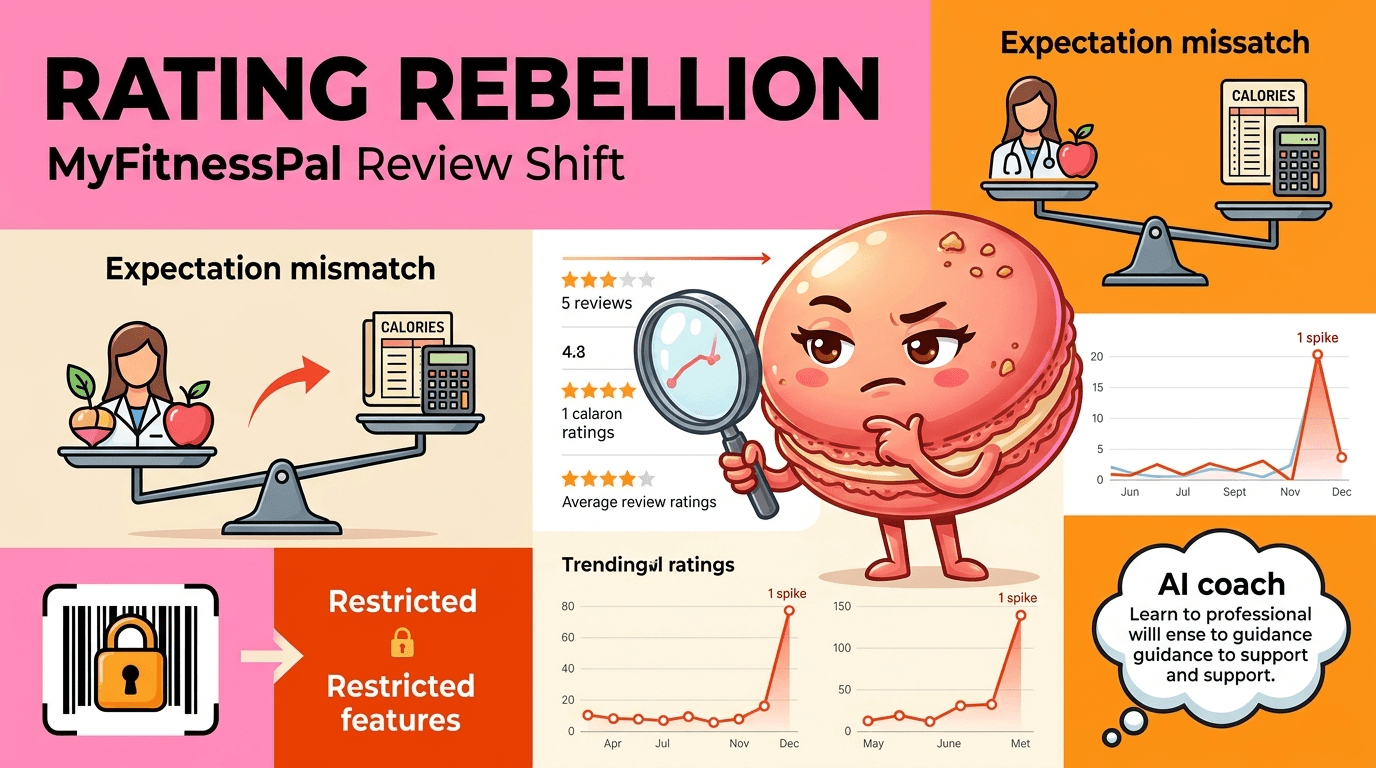
How MyFitnessPal Ratings Changed After the Rebrand
The headline rating has stayed strong, but review tone has become more divided since the rebrand and pricing changes. Many older reviews still reflect satisfaction with the original calorie-counting experience, while newer ones focus on feature restrictions and the feeling that the app is pushing users toward paid tiers. That creates a mismatch between the app’s current positioning and how many people still evaluate it. In practice, the rating is less a single verdict than a blend of old loyalty and new disappointment.
What Reviewers Switched To
Switchers usually leave for one of three reasons: they want a simpler free tracker, they need more detailed nutrition data, or they want AI-assisted planning instead of manual logging. Lose It! appeals to users who want a cleaner experience with fewer paywalls. Cronometer attracts people who care about micronutrients and more precise nutrition reporting. Macaron is a better fit for users who want personalized meal ideas, photo-based planning, and a more guided workflow. The tradeoff is that none of these alternatives fully matches MyFitnessPal’s legacy database breadth.
Frequently Asked Questions
Yes, but they are more mixed than the overall rating suggests. Longtime users still praise the food database, barcode scanning, and familiar workflow, which keeps the average high. Recent reviewers are more likely to mention paywalls, app bloat, and reduced value in the free tier. So the app is still well liked overall, but satisfaction depends heavily on whether you are a legacy user or a newer free-tier user.
The biggest complaints are feature paywalls, slower or bulkier app behavior, and occasional scan or database errors. Many reviewers feel that tools once considered core to tracking now sit behind Premium or Premium+ plans. Others say the app has become more complicated than it needs to be for simple calorie counting. The complaints are less about whether the app works and more about whether the current product matches the expectations of its long-time audience.
It can be, especially if you value a large food database and want a familiar, general-purpose tracker. Users who log often and rely on barcode scanning may still find the paid plan worthwhile. But casual trackers often prefer simpler or cheaper options because the free tier feels limited. If you want guided meal planning or more personalized support, a different app may offer better value for the same monthly cost.
Macaron is a stronger choice if you want the app to help plan meals instead of just record them. It can turn goals, dietary restrictions, and preferences into more tailored suggestions, which is useful for users who do not want to build every meal manually. The tradeoff is that it does not rely on the same legacy food database depth. If your priority is guidance over catalog size, Macaron is often the better fit.
It can help with basic food logging, but many diabetic users want more structured nutrition detail than the app provides out of the box. Reviewers who need tighter carbohydrate tracking, micronutrient visibility, or more specialized planning often look elsewhere. MyFitnessPal is usable for general monitoring, but it is not the most diabetes-focused option. Users with medical nutrition goals usually compare it against more detailed trackers before committing.
Some users use it alongside GLP-1 treatment, but reviews suggest the app is not built specifically around that workflow. People managing appetite changes, smaller meals, or protein-focused goals often want more tailored guidance than a standard calorie tracker provides. That is one reason some users look for alternatives that can adapt meal planning to medication-related needs. MyFitnessPal can still log intake, but it is not especially specialized for this use case. For a third-party check, MyFitnessPal Review - PCMag at https://www.pcmag.com/reviews/myfitnesspal is worth comparing against the page summary.
The biggest downside is that the app increasingly asks users to pay for features many people consider core. That changes the experience from a simple tracker into a more segmented product, where the free tier feels less complete. For some users, that is acceptable because the database is still excellent. For others, it makes the app feel less practical than newer alternatives that are simpler, cheaper, or more personalized. For another outside reference, MyFitnessPal Review (2026): Your New All-In-One Nutrition Sidekick? at https://www.garagegymreviews.com/myfitnesspal-review adds a second perspective.
It depends on what you want. Lose It! is often better for users who want a simpler, more affordable calorie tracker with less friction. Cronometer is better for people who care about nutrient detail and more precise reporting. MyFitnessPal still has the advantage in brand familiarity and database breadth, but competitors can be better if your priority is simplicity or nutrition depth rather than legacy scale.com is a useful reference point.com is a useful reference point.com is a useful reference point.com is a useful reference point.com is a useful reference point. For outside context, Read Customer Service Reviews of www.myfitnesspal.com - Trustpilot at https://www.trustpilot.com/review/www.myfitnesspal.com is a useful reference point.
Read & discover
AI Personal Assistant
Free calculators


